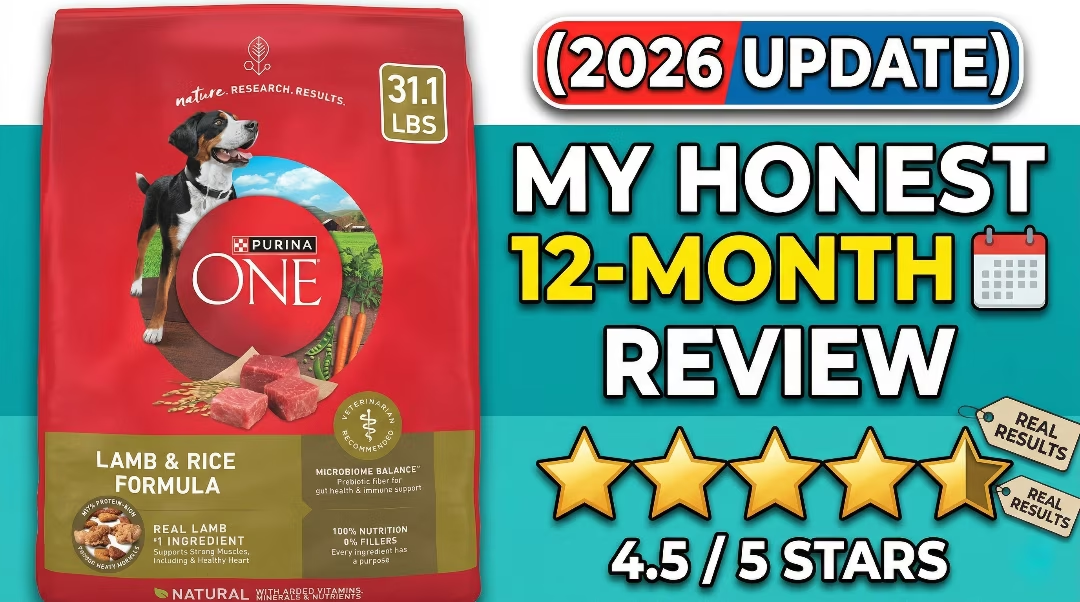
I’ve been raising dogs for over 12 years now — three different breeds, three wildly different personalities, three completely different stomachs. And honestly, in 2026, the dog food market feels more overwhelming than ever. Every brand claims to be “the best.” Every bag has buzzwords splashed across the front. It’s exhausting.
So when I decided to test Purina ONE Dry Dog Food Lamb and Rice Formula for a full 12 months across all three of my dogs, I wanted to keep things simple. No hype, no brand loyalty, no agenda. Just: does this food actually work?
I fed it daily to my Siberian Husky, my Golden Retriever, and my German Shepherd. I tracked everything — weight, coat changes, energy, digestion, even mood. Some of what I found was genuinely encouraging. Some of it wasn’t. And I’m going to share all of it, because if you’re searching for the best dog food in USA 2026, you deserve an honest answer from someone who’s actually lived with the stuff for a year.
Let’s get into it.
Product Overview
- Brand: Purina ONE Dry Dog Food Lamb and Rice Formula
- Food Type: Dry kibble
- Life Stage: All life stages
- Primary Protein: Lamb
- Full Ingredient List: Lamb, rice flour, whole grain corn, corn gluten meal, poultry by-product meal, soybean meal, beef fat (preserved with mixed-tocopherols), whole grain wheat, oat meal, natural flavor, salt, calcium carbonate, potassium chloride, dried spinach, dried peas, vitamin and mineral supplements
- Available Sizes: 8 lb, 16.5 lb, 31.1 lb, 40 lb bags
- Price Range: $14–$50 depending on size (40 lb bag runs about $44–$50 at most US retailers in 2026)
Quick Verdict: A decent mid-budget kibble that most healthy adult dogs will eat without complaint. Lamb as the first ingredient is a plus. But the heavy reliance on corn, soy, and by-products means you’re not getting premium nutrition — you’re getting “good enough.” And depending on your dog’s needs, “good enough” might be just fine, or it might fall short.
My 12-Month Personal Experience — Three Dogs, Tracked Daily
I started this trial in early 2025 and wrapped it up in early 2026. Here’s exactly what happened with each dog.
🐺 Koda – Siberian Husky, 5 Years Old, 53 lbs
Koda is… a lot. He’s my high-strung, endlessly energetic, stubbornly opinionated Husky who acts like every meal is either the best thing that ever happened to him or a personal insult. There’s no middle ground with this dog.
Energy Levels:
The first thing I wanted to monitor was whether Purina ONE could keep up with Koda’s insane energy demands. The short answer: mostly yes. He maintained his typical level of chaos throughout the 12 months — morning zoomies, afternoon restlessness, evening sock-stealing rituals. Around month five, I did feel like his energy was slightly more even throughout the day instead of those wild spike-and-crash cycles. It’s hard to quantify that, but as someone who lives with this dog every single day, I noticed the shift. Whether that’s the food or just him maturing a tiny bit, I honestly can’t say with certainty.
Coat Quality:
This was a nice surprise. Koda’s double coat can get really dull and coarse during seasonal transitions, especially heading into spring when the undercoat starts blowing out. On this food, his coat stayed reasonably soft between shedding cycles. Not like, magazine-cover gorgeous — but noticeably better than when I had him on a cheaper brand two years ago. The omega fatty acids from the beef fat seem to be pulling some weight here. His groomer actually commented that his coat felt healthier around month seven, unprompted. That felt like a small win.
Digestion:
Okay, here’s where I have to be honest, because this part was frustrating. I transitioned Koda gradually over 10 days, doing the usual 25-50-75-100% switch. He still had loose stools for almost two full weeks. Soft, smelly, and unpredictable. I almost gave up and switched back. But I stuck with it, and by week three, things firmed up significantly. After that? Actually pretty solid and consistent. But those first weeks were not fun. And I genuinely think the corn and soy in the formula are what caused the initial upset. Huskies have notoriously touchy stomachs, and those ingredients aren’t exactly gentle.
Weather Adaptability:
Living in the Mountain West, Koda deals with cold winters and dry summers. His appetite stayed strong year-round on this food, which isn’t always the case — I’ve had brands where he’d pick at his food during hotter months. The lamb base seemed to keep him interested regardless of season. No complaints here.
🦮 Bella – Golden Retriever, 7 Years Old, 70 lbs
Bella is the easy one. Eats anything, loves everyone, would probably befriend a burglar. Her challenge isn’t pickiness — it’s keeping her from turning into a golden-colored bowling ball. Weight management is our ongoing project.
Weight Management:
When we started this trial, Bella was at 72 lbs — about 2 pounds over her vet’s recommended weight. After 12 months of Purina ONE Lamb and Rice, she’s at 70 lbs. Not a dramatic transformation, but a steady, healthy drop that held consistently from around month four onward. The 26% protein and 16% fat content is acceptable, though honestly, I’d prefer slightly lower fat for a breed this prone to gaining weight. I mixed in steamed green beans about three times a week to add volume without calories, and that combination worked pretty well.
Appetite and Palatability:
Never once — not a single time in 365 days — did Bella leave food in her bowl. She inhaled this stuff. The lamb flavor clearly hits different compared to chicken-based formulas I’ve tried. I’ve seen other dog food reviews mentioning palatability issues with various brands, but that was absolutely not a problem here. If anything, I had to make sure I wasn’t overfeeding because she acted like she could eat three cups more every time.
Coat Shine:
Bella’s golden coat maintained its natural shine pretty well. I wouldn’t say there was a dramatic improvement — she’s always had decent fur — but it didn’t decline either. Her feathering (the longer fur on her legs, chest, and tail) stayed silky and manageable. Brushing was about the same frequency as always. I’d give the coat results a solid B.
Stool Quality:
This is the boring-but-important metric. Bella’s stools were firm, consistent, and well-formed for essentially the entire 12 months. Compared to a previous brand that gave her occasionally loose outputs, this was an upgrade. The rice component probably helps with digestive regularity, and it showed. Easy cleanup. That matters more than people want to admit when you’re picking up after a 70-lb dog twice a day.
🐕 Rex – German Shepherd, 9 Years Old, 83 lbs
Rex is my senior guy. At 9, he’s slowing down a bit, and his needs are different from Koda’s or Bella’s. Joint health is priority number one. Muscle maintenance is priority number two. Everything else is secondary.
Muscle Maintenance:
At 26% protein, this formula is… fine. It’s not spectacular for a large, muscular breed, but it’s adequate. Rex maintained his body condition reasonably well over the 12 months. He didn’t bulk up, he didn’t waste away. But I have to be honest — compared to when he was on a 30%+ protein formula (Orijen, specifically), he looked a little less muscular around his hindquarters by month nine. Not dramatically so, but enough that I noticed. For a younger, moderately active GSD, this protein level is probably fine. For an aging one who’s starting to lose muscle mass naturally? I’d want more.
Joint Health:
This is where Purina ONE Lamb and Rice genuinely let me down, and I need to be straightforward about it. The formula mentions glucosamine from “natural sources,” but there’s no specific glucosamine or chondroitin supplementation listed in meaningful quantities. By month six, I noticed Rex being a little stiffer getting up from his bed in the morning. Not limping — just slower. Creakier. I started him on a separate joint supplement (Nutramax Cosequin DS Plus, about $28/month) around month seven, and that helped noticeably. But the food alone? Not enough for an older large breed. Period.
If you have a German Shepherd, Rottweiler, or any big dog over age 6-7, do NOT rely on this formula for joint support. Supplement separately or choose a food that includes robust joint-support ingredients. This one doesn’t cut it.
Activity Performance:
Rex does about 1.5 miles of walking daily, some light fetch, and occasional weekend hikes. His endurance held reasonably steady. No dramatic decline, no dramatic improvement. The food fueled him adequately for his activity level, which is honestly all I was hoping for at his age.
Immunity:
Rex went the full 12 months without any infections, skin flare-ups, or illness. He used to get occasional ear infections — maybe twice a year — and we had zero during this trial. The formula includes vitamin E, zinc, and selenium for immune support, and anecdotally, it seemed to work. Could be the food, could be coincidence, but I’m noting it anyway because it’s what I observed.
Nutritional Breakdown
Let’s look at the actual numbers. Here’s the guaranteed analysis from the bag:
| Nutrient | Value | Ideal Range (Adult Dogs) | My Verdict |
|---|---|---|---|
| Crude Protein | 26% | 20–30% | Good — falls in the acceptable range, though partly from plant sources |
| Crude Fat | 16% | 10–20% | Good — reasonable energy content without being excessive |
| Crude Fiber | 3% | 3–5% | Average — at the low end, could be higher for digestive support |
| Moisture | 12% | Up to 12% | Standard for dry kibble |
| Calcium | 1.0% | 0.5–1.8% | Good |
| Phosphorus | 0.9% | 0.4–1.6% | Good |
| Omega-6 Fatty Acids | 1.5% | 1.0–2.5% | Adequate |
The Protein Source Problem:
Here’s something that bothers me, and I think it’s important. Yes, lamb is the first ingredient. That’s great. Real animal protein up front. But scroll down to ingredients three and four — whole grain corn and corn gluten meal. Corn gluten meal is specifically used as a cheap protein booster. That means a meaningful chunk of that “26% protein” figure isn’t coming from lamb at all — it’s coming from corn.
Is corn protein dangerous? No. But is it the same biological quality as animal protein for your dog? Also no. Dogs utilize animal-sourced amino acids more efficiently than plant-sourced ones. So that 26% number looks better on paper than it performs in practice.
Artificial Additives:
On the positive side — no artificial colors, no artificial flavors, no artificial preservatives. They use mixed-tocopherols (vitamin E) as a natural preservative, which is exactly what you want to see. This is one area where Purina ONE genuinely does well.
My overall nutritional assessment: Adequate for a healthy adult dog with no special dietary needs. Not ideal for dogs needing high-performance nutrition, allergy management, or senior support.
Ingredient Analysis: Top 5 Breakdown
1. Lamb — Actual animal meat. Digestible, flavorful, generally well-tolerated. Good protein source. ✅ Premium Quality
2. Rice Flour — Simple, gentle carbohydrate. Easy on the digestive tract. Fine as a secondary ingredient. ✅ Average to Good
3. Whole Grain Corn — Here it is. Corn is cheap, calorie-dense, and provides carbohydrates that dogs don’t particularly need in large amounts. It’s not toxic or harmful, but it’s a filler. It makes the food cheaper to produce. ⚠️ Average to Low
4. Corn Gluten Meal — The extracted protein portion of corn. Its primary purpose in this formula is to inflate the total protein percentage without adding more expensive animal protein. It’s a cost-saving measure disguised as nutrition. ⚠️ Low Quality
5. Poultry By-Product Meal — Rendered poultry parts — organs, necks, feet, intestines — minus the actual muscle meat. Nutritionally, organs are actually nutrient-rich. But “by-product meal” is a catch-all term that doesn’t tell you much about consistency or quality. It’s cheaper than deboned chicken or turkey, and that’s why it’s here. ⚠️ Average to Low
Further down the list: Soybean meal (common allergen, cheap protein), beef fat (good for omega fatty acids), whole grain wheat, oat meal.
Overall Ingredient Quality: Average. Not the worst I’ve seen, but not close to premium.
Pros and ❌ Cons
✅ Pros
- All three dogs ate it eagerly. Palatability is a genuine strength. No mealtime struggles whatsoever.
- Affordable for multi-dog households. Feeding three large breeds adds up fast, and this kept monthly costs reasonable.
- No artificial additives. Clean on the preservative and coloring front — natural preservation only.
- Noticeable coat improvement on my Husky. Softer undercoat, better texture between shedding seasons.
- Consistent digestive results once past the initial transition. Firm, regular stools across all three dogs.
- Available everywhere. Petco, PetSmart, Walmart, Target, Chewy, Amazon — you’ll never have trouble finding it.
- Real lamb as the first ingredient. At this price point, that’s worth acknowledging.
❌ Cons
- Two corn-based ingredients in the top five. That’s too much plant-based filler for a food positioning itself as quality nutrition.
- Corn gluten meal artificially boosts protein numbers. The actual animal protein content is lower than the label implies.
- Poultry by-product meal isn’t premium and lacks transparency about sourcing.
- Soybean meal is a known allergen for many dogs and is another cheap protein source.
- Joint support is virtually nonexistent. If you have an older or large-breed dog, budget for separate supplements.
- Rough transition period for dogs with sensitive stomachs. Koda’s two weeks of digestive upset was no joke.
- Not suitable for grain-sensitive dogs. Corn, wheat, and soy are all present.
- 26% protein is middling for high-energy or working breeds that need 28–32%.
💰 Price Breakdown (2026 US Pricing)
| Bag Size | Price | Price Per Lb | Price Per Kg |
|---|---|---|---|
| 8 lb | $14–$16 | $1.75–$2.00 | $3.86–$4.41 |
| 16.5 lb | $24–$28 | $1.45–$1.70 | $3.20–$3.75 |
| 31.1 lb | $35–$40 | $1.13–$1.29 | $2.49–$2.84 |
| 40 lb | $44–$50 | $1.10–$1.25 | $2.42–$2.76 |
Monthly Feeding Cost (based on 40 lb bag at ~$47):
| Dog | Daily Intake | Monthly Consumption | Estimated Monthly Cost |
|---|---|---|---|
| Koda (Husky, 53 lbs) | ~2.5 cups | ~18 lbs | $21–$23 |
| Bella (Golden, 70 lbs) | ~3 cups | ~22 lbs | $26–$28 |
| Rex (GSD, 83 lbs) | ~3.5 cups | ~26 lbs | $30–$33 |
| All three dogs | ~66 lbs | $77–$84 |
For comparison, when I was feeding all three dogs a premium brand like Acana or Orijen, my monthly bill was $190–$230. Purina ONE saves roughly $110–$150 per month. That’s real money over a year.
Value Category: Budget to Mid-Range ($2.42–$4.41/kg)
Comparison With Other Popular Brands (2026)
| Feature | Purina ONE Lamb & Rice | Royal Canin Medium Adult | Pedigree Complete Nutrition | Purina Pro Plan Lamb & Rice |
|---|---|---|---|---|
| Protein % | 26% | 25% | 21% | 26% |
| Fat % | 16% | 14% | 10% | 16% |
| Price ($/lb) | $1.10–$1.50 | $2.90–$3.60 | $0.85–$1.15 | $1.90–$2.50 |
| First Ingredient | Lamb | Brewers Rice | Whole Grain Corn | Lamb |
| Corn/Soy Fillers | Yes (both) | Corn (yes), Soy (no) | Yes (both) | Corn (yes), Soy (no) |
| Artificial Additives | No | No | Yes (colors) | No |
| Joint Support | Minimal | Moderate | None | Added glucosamine |
| Ingredient Quality | Average | Average-Good | Low | Good |
| Best For | Budget-friendly feeding for healthy adults | Breed-specific support | Ultra-tight budgets | Active adults needing better quality at mid-range price |
| My Rating (/10) | 6.5 | 7.5 | 4.5 | 7.5 |
My two cents on this comparison: If you’re currently feeding Pedigree, switching to Purina ONE is a meaningful upgrade. If you can stretch your budget a bit further, Purina Pro Plan (same parent company, better formulation) gives you added joint support and slightly cleaner ingredients. Royal Canin is pricier but offers breed-specific options that can be worth it for certain dogs. It all depends on what you can spend and what your dog actually needs.
🏆 Final Rating
Overall Score: 6.5 / 10 — Slightly Above Average
| Category | Score (/10) |
|---|---|
| Ingredient Quality | 5.5 |
| Nutritional Profile | 6.5 |
| Palatability | 8.5 |
| Value for Money | 7.5 |
| Coat & Skin Results | 7.0 |
| Digestive Performance | 6.5 |
| Joint & Mobility Support | 4.0 |
| Overall | 6.5 |
Would I buy it again?
Honestly? Yes — but only for certain situations. I’d continue feeding it to Bella, because she thrives on it, maintains her weight well, and loves the taste. For Koda, it’s acceptable as a baseline daily food, though I’d watch for any recurring digestive sensitivity. For Rex, I’ve already switched him to Purina Pro Plan with added glucosamine, and I’d recommend the same for anyone with an aging large breed.
Is Purina ONE good for dogs? For healthy, average adult dogs without specific dietary challenges — yes, it’s a reasonable choice at its price point. But I wouldn’t call it good enough for dogs with allergies, joint issues, high-performance energy needs, or sensitive stomachs. It’s firmly middle-of-the-road, and there’s nothing wrong with that — as long as you know what you’re getting.
I would NOT recommend this as a long-term sole diet for senior large breeds without supplementation. The joint support simply isn’t there, and the protein quality, while adequate on paper, relies too heavily on plant sources.
Who Should Buy This Food?
Good fit for:
- First-time dog owners who want something affordable and widely available
- Owners of healthy adult dogs (ages 1–6) with no food sensitivities
- Multi-dog households where keeping costs manageable matters
- Picky eaters — the lamb flavor genuinely appeals to most dogs
- Anyone stepping up from a bottom-tier brand like Pedigree or Ol’ Roy
Not a good fit for:
- Dogs with grain, corn, or soy allergies
- Senior dogs (7+) needing joint and mobility support
- High-energy working breeds requiring 28%+ protein
- Owners who prioritize meat-first, minimal-filler ingredient lists
- Dogs with chronic digestive sensitivity
- Puppies (use a growth-specific formula instead)
Wrapping Things Up
Twelve months, three dogs, and about $950 in dog food later — I can tell you Purina ONE Lamb and Rice Formula is not a bad product. It’s also not a great one. It lives in that honest middle ground where it does enough right to justify its price without doing anything so well that you’d rave about it to your friends at the dog park.
My dogs ate it happily. Their coats looked decent. Nobody got sick. But the ingredient list has real weaknesses — the corn gluten, the soy, the by-products — and the lack of joint support cost me an extra $28/month in supplements for Rex.
If you’re on a tight budget and your dog is young, healthy, and not particularly sensitive, this food will serve you fine. If your dog needs more, spend a little more. That extra $10–$15 a month on a better formula can make a real difference over time.
That’s my honest take as someone who’s been doing this for over a decade. No sponsorship, no affiliate deals, no reason to tell you anything other than what I actually experienced. Your dog trusts you to make the right call. I hope this helps you make it. 🐾