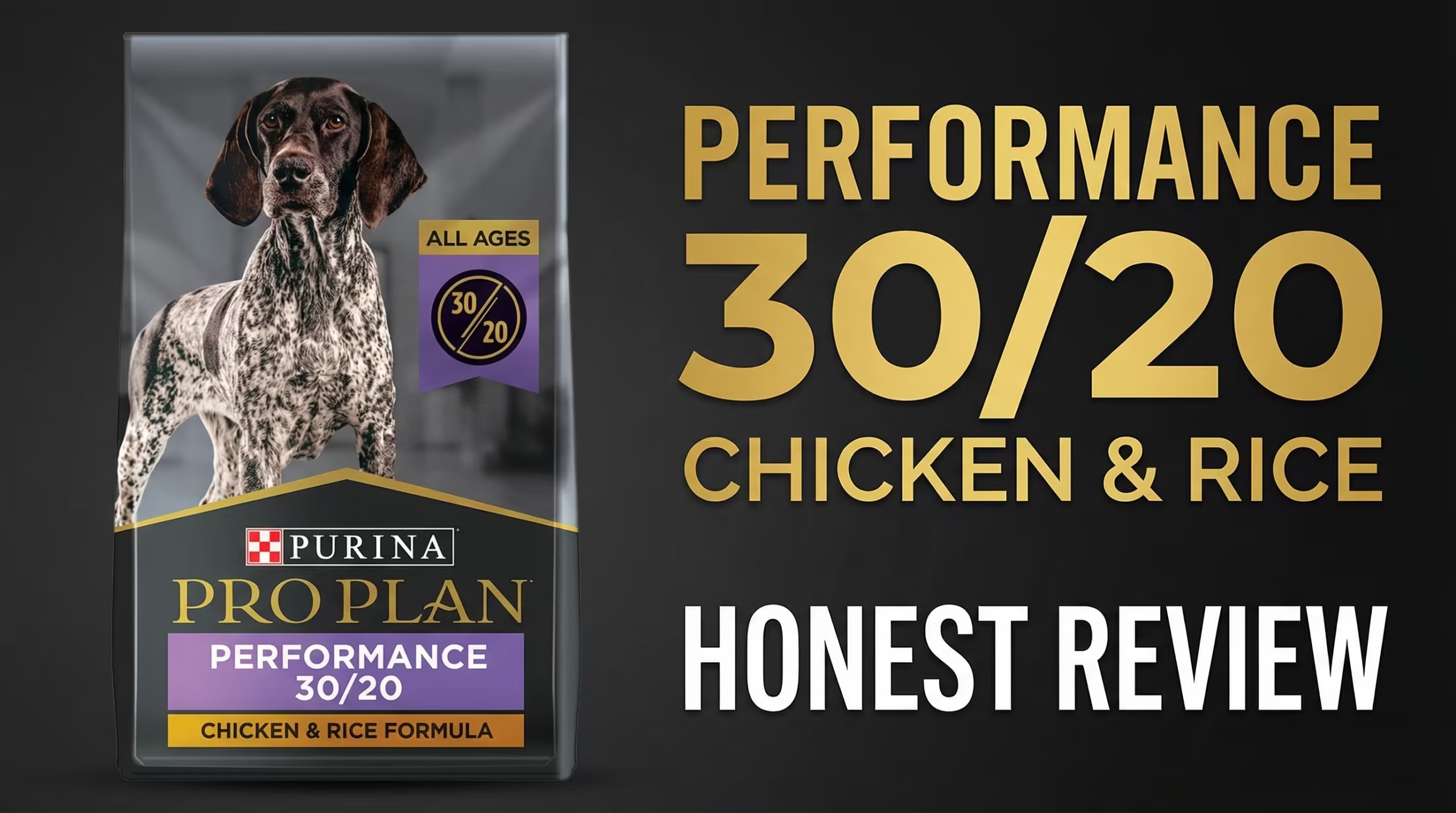
I’ll be honest — I wasn’t planning on trying Purina Pro Plan Performance 30/20 anytime soon. I’d been rotating through a couple of other foods for my pack, and everything was going reasonably well. But then my neighbor, who competes in agility with her Border Collies, mentioned she’d switched to this specific formula and saw noticeable improvements in stamina and recovery time. That got my attention.
I’ve been raising dogs for over twelve years now, and when someone whose dogs are actual athletes recommends something, I tend to listen.
So in early 2026, I picked up a bag and committed to feeding it exclusively to all three of my dogs for a full 30 days. I wanted to see if the “Performance” label was just marketing or if there was actually something to it.
My dogs aren’t competitive athletes, but they’re active enough that differences in energy, muscle tone, and recovery show up pretty clearly.
Here’s everything I noticed — the good, the surprising, and the one thing that genuinely bothered me.
Product Overview
Purina Pro Plan Performance 30/20 is designed specifically for active, sporting, and working dogs who need higher protein and fat to fuel their energy demands. The “30/20” refers to the protein and fat percentages — 30% protein and 20% fat — which is significantly higher than most standard adult maintenance foods that sit around 24–26% protein and 12–16% fat.
It’s part of Purina’s Pro Plan line, which is their premium tier (a step above Purina ONE, well above Dog Chow). The formula is grain-inclusive, using rice as the primary carbohydrate, and chicken is the first ingredient.
Key Details:
- Brand: Purina Pro Plan (Nestlé Purina PetCare)
- Formula: Performance 30/20 Formula, Chicken & Rice
- Life Stage: All life stages (puppies, adults, pregnant/nursing dogs, high-energy adults)
- Target: Active, sporting, and working dogs
- Primary Protein: Chicken
- Available Sizes: 6 lb, 18 lb, 37.5 lb, 50 lb bags
- Price Range: $18–$85 depending on bag size (USA retail)
- Where to Buy: Petco, PetSmart, Chewy, Amazon, Tractor Supply, Walmart
Quick Verdict: This is a genuinely high-performance food that delivers visible results in energy, muscle tone, and stamina for active dogs. The 30% protein is real and noticeable. But the high fat content (20%) can cause weight gain if you’re not careful with portions, and one of my dogs had a minor digestive adjustment period. It’s not for every dog, but for the right dog, it’s excellent.
Meet the Testing Crew
🐶 Remy — Australian Shepherd, 5 Years Old, 52 lbs
Remy is my perpetual motion machine. If this dog isn’t moving, something is wrong. He herds the chickens in our backyard (they hate him), he runs agility courses at the local park on weekends, and he goes on 5+ mile trail runs with me three times a week.
He’s lean, muscular, and his calorie needs are substantially higher than a typical couch-potato dog. I was particularly interested to see how a true high-performance food would affect his stamina and recovery, because if any of my dogs would benefit, it’d be him.
🐶 Gizmo — Pembroke Welsh Corgi, 4 Years Old, 29 lbs
Gizmo is my lovable little tank. He’s built low to the ground, slightly stocky (okay, he’s a little chunky — we’re working on it), and he has the personality of a dog three times his size. Corgis are surprisingly energetic despite their short legs, and Gizmo is no exception.
He’s also food-motivated to an almost comedic degree — he will do absolutely anything for a snack. I was mildly concerned about the 20% fat content given his tendency to gain weight, so I watched his portions very carefully during this trial.
🐶 Luna — Pointer Mix, 7 Years Old, 58 lbs
Luna is my senior girl. Well, “senior” might be a stretch at seven, but she’s definitely slowed down compared to her younger years. She’s a retired hunting dog (I adopted her at age four from a family whose kids developed allergies), and while she still loves a good hike, she’s not the tireless athlete she used to be.
She’s got some mild joint stiffness in her back legs that I manage with supplements, and her coat has gotten a bit duller over the past year. I wanted to see if the higher protein and fat would help her maintain muscle mass and possibly improve her coat.
My 1-Month Experience — Three Dogs, Three Very Different Results
I did a gradual seven-day transition, mixing increasing amounts of Pro Plan Performance with their previous food. Given the significant jump in protein and fat, I didn’t want to shock anyone’s digestive system. Smart move, as it turned out.
🐶 Remy — Australian Shepherd
Energy Levels: This is where the food really showed up. By the end of week two, Remy’s stamina on our long runs was noticeably better. He wasn’t tiring as quickly toward the end of our 5-mile trail runs, and his recovery time seemed faster — he’d be ready to go again within an hour or two instead of looking wiped out for the rest of the day.
During our weekend agility sessions, he was sharper and more focused. I can’t say for certain it was only the food — weather, his mood, a million other variables — but the timing lined up perfectly, and the difference was clear enough that my training partner commented on it without me saying anything.
Digestion: Mostly good. During the transition week, he had one day of slightly soft stool, but once he fully adjusted, his digestion was rock-solid. Stools were firm, well-formed, smaller in volume than on his previous food (which usually indicates better nutrient absorption), and didn’t have that awful smell that some high-protein foods produce.
Coat Condition: Remy’s coat was already in decent shape, but it got noticeably shinier and softer by week three. His black and white markings looked more vibrant, and the texture when I ran my hand along his back was smoother. The omega-6 fatty acids in the formula are probably doing their job here.
Behavior: Same high-energy, intense, slightly neurotic Australian Shepherd I know and love. No changes in temperament or behavior — just better physical performance.
Issues: None with Remy. This food seemed tailor-made for a dog like him — high-energy working breed with serious calorie demands. If I had any concern, it’s that he seemed hungrier between meals during the first two weeks, which I addressed by slightly increasing his portions. At 30% protein and 20% fat, the calorie density is high (~475 kcal/cup), but Australian Shepherds who actually work can burn through that easily.
🐶 Gizmo — Pembroke Welsh Corgi
Appetite: Gizmo has never met a food he didn’t like, and Pro Plan Performance was no exception. He inhaled every meal with his usual Corgi enthusiasm. The problem — and I saw this coming — is that this food is very calorie-dense. At 20% fat and ~475 kcal/cup, it’s designed for dogs who are running miles every day, not… Gizmo, whose idea of intense exercise is aggressively barking at the mailman.
Weight Changes: I measured portions carefully and even reduced his daily intake by about 10% compared to the feeding guidelines on the bag. Despite that, Gizmo still gained 0.6 lbs over the month. For a 29 lb Corgi, that’s a noticeable percentage.
Now, some of that might be muscle — Corgis are more muscular than people realize — but given his body type and activity level, I wasn’t thrilled with the upward trend. If I were to continue feeding him this formula, I’d need to reduce portions even further or significantly increase his exercise, neither of which is ideal.
Stool Quality: Excellent. Small, firm, consistent. No digestive upset at all. Whatever else I might say about this food being too rich for Gizmo, his stomach handled it beautifully.
Activity: Maybe slightly more energetic? Gizmo played a bit more enthusiastically with his toys and seemed more willing to go on longer walks. Hard to say if that was the food or just normal day-to-day variation in a Corgi’s mood.
Issues: The weight gain is the big one. This food is simply too calorie-dense for a moderately active small-to-medium breed. Gizmo would do better on a maintenance formula with lower fat content. The “Performance” line is targeted at working dogs for a reason, and Gizmo, bless him, is not that.
🐶 Luna — Pointer Mix
Strength & Muscle Tone: This was the surprise of the trial. Luna is seven, she’s slowing down, and I’ve noticed some muscle loss over the past year or so — nothing alarming, just the natural aging process. After a month on Pro Plan Performance 30/20, her muscle definition along her shoulders and hindquarters looked noticeably better.
Not dramatic, but visible enough that I did a double-take one morning when she was stretching. The 30% protein seems to have helped her maintain (or even slightly rebuild) lean muscle mass, which is huge for an aging dog.
Immunity & Overall Health: No health issues during the month. Her eyes stayed bright, her gums stayed pink and healthy, and she seemed generally in good spirits. She did have one minor ear issue early in the trial (slight redness and head-shaking), but it cleared up on its own within a few days and I don’t think it was food-related — she’s had occasional ear sensitivity for years.
Coat: This was the other big win. Luna’s coat went from dull and slightly rough to noticeably shinier and softer by week three. The change was dramatic enough that my vet commented on it during her routine checkup at the end of the month. The high fat content (20%) and omega-6 fatty acids are almost certainly responsible. For a senior dog whose coat quality had been declining, this was a genuinely welcome improvement.
Joint Stiffness: Hard to say definitively. Luna still has some stiffness in her back legs, especially first thing in the morning, but she seemed slightly more willing to go on longer walks and didn’t limp as much after exercise. Could be the food, could be the warmer spring weather we were having, could be placebo effect on my part. I’m cautiously optimistic but not ready to declare this a miracle joint food.
Any Issues: During the first week of the transition, Luna had two days of loose stools. Not full diarrhea, but definitely softer than normal. It resolved once she fully adjusted to the new food, but it was a reminder that high-protein, high-fat foods can be harder on sensitive digestive systems. After that initial adjustment, though, her stools were great for the rest of the month.
Nutritional Information Breakdown
Let’s talk numbers, because this is where Pro Plan Performance really differentiates itself.
| Nutrient | Value | Ideal Range | Verdict |
|---|---|---|---|
| Crude Protein | 30% | 20–30% | ✅ Excellent — top of the range |
| Crude Fat | 20% | 10–20% | ✅ Very High — top of the range, possibly excessive for non-working dogs |
| Crude Fiber | 3% | 3–5% | ✅ Acceptable — right at the minimum |
| Moisture | 12% | Up to 12% | ✅ Standard |
| Calories | ~475 kcal/cup | — | Very high — designed for working dogs |
What This Means:
The 30% protein is legitimately impressive and, based on the ingredient list, comes primarily from animal sources (chicken, fish meal, egg product). This isn’t inflated with plant proteins like corn gluten meal or soy. For active dogs, high-quality animal protein supports muscle maintenance, energy, and recovery. Remy and Luna both showed visible benefits from this.
The 20% fat is where things get tricky. Fat is an excellent energy source — it’s calorie-dense and provides sustained fuel for endurance activities. For a dog running agility courses, working livestock, or hunting all day, 20% fat makes total sense. For Gizmo, who runs about fifteen feet to bark at squirrels and then takes a nap? It’s overkill. This is why Gizmo gained weight even on carefully measured portions.
Fiber at 3% is on the lower end. Some dogs (particularly those prone to feeling hungry between meals) might benefit from a higher-fiber food for better satiety. Gizmo’s constant begging might partly stem from this, though to be fair, he begs regardless of what he’s eating.
Real Meat vs. Fillers:
Chicken is the first ingredient, which is great. But remember that “chicken” as listed includes moisture — once processed, its actual protein contribution shrinks. However, Pro Plan also includes fish meal and egg product higher up in the ingredient list, both of which are concentrated, high-quality animal proteins. This is a legitimately protein-rich formula, not a marketing trick.
There IS rice (a digestible carb source) and rice flour in the formula, which some people will call “fillers.” I don’t love the term “filler” for rice — it’s a perfectly reasonable carbohydrate that provides energy and is easy on digestion — but if you’re looking for a grain-free food, this isn’t it.
Additives:
The formula includes a standard suite of vitamins and minerals, plus some notable functional ingredients:
- Omega-6 fatty acids for coat and skin health (clearly effective based on Luna’s results)
- Glucosamine for joint health (1,500 mg/kg — decent amount, though not as high as joint-specific formulas)
- Live probiotics for digestive health (probably why Remy and Luna’s stools were so consistently good)
No artificial colors or flavors, which I appreciate.
Ingredient Analysis — What’s Actually in the Bag?
Top 5 ingredients:
- Chicken — Whole chicken as the first ingredient. Named animal protein. Good start. As mentioned, it includes water weight, so its actual protein contribution post-processing is less than it appears, but it’s still a quality ingredient.
- Rice Flour — Processed rice used as a carbohydrate source. Easily digestible, gentle on stomachs, but it’s a refined grain rather than whole grain. Not the worst thing in the world, but whole brown rice would be nutritionally better.
- Poultry By-Product Meal — And here we go. This is where Pro Plan loses some of its shine for me. “Poultry by-product meal” is a rendered product made from poultry parts not typically consumed by humans — necks, feet, intestines, undeveloped eggs. It’s not inherently bad — these parts do contain protein and some nutrients — but it’s a significantly lower-quality protein source than chicken meal or named poultry meals. It’s also vague (“poultry” could be chicken, turkey, or a mix), which bothers me. For a food marketed as premium, this is a cost-cutting ingredient. Rating: Average-to-Low.
- Fish Meal (source of glucosamine) — This is actually great. Fish meal is a concentrated, high-quality protein source rich in omega-3 fatty acids and glucosamine. It’s one of the better ingredients in this formula. Rating: Premium.
- Corn Gluten Meal — A plant-based protein derived from corn processing. It’s used to boost the protein percentage on the label without the expense of more animal protein. Dogs can’t utilize plant protein as efficiently as animal protein, so this is essentially a filler that inflates the protein number. I’m not thrilled to see it in the top five of a food that costs this much. Rating: Low-to-Average.
Overall Ingredient Quality Rating: Average-to-Good. The chicken, fish meal, and egg product provide a solid animal protein foundation. But the inclusion of poultry by-product meal and corn gluten meal in the top five drags down the overall quality. For a food positioned as premium and priced accordingly, I’d expect better. This ingredient list is a step up from Purina ONE or Dog Chow, but it’s not competing with true premium brands like Orijen, Acana, or Wellness CORE.
Pros & Cons — Based on 30 Real Days of Feeding
✅ Pros
- Genuinely high protein (30%) from primarily animal sources — Remy’s stamina and Luna’s muscle tone improvements were real and noticeable
- Excellent for active, working, and sporting dogs — if your dog actually burns the calories, this food delivers
- Visible coat improvements — Luna’s coat transformation was dramatic, Remy’s got shinier
- Good digestive performance after adjustment — stools were consistently excellent for all three dogs after the initial transition
- Includes glucosamine for joint support — helpful for large breeds and aging dogs
- Contains live probiotics — likely contributed to the great digestive results
- High calorie density means you feed less volume — important for dogs who need lots of energy but can’t eat huge portions
- Widely available — you’ll never struggle to find this food
❌ Cons
- Poultry by-product meal as the third ingredient — lower-quality protein source for a “premium” food
- Corn gluten meal in the top five — plant-based protein filler that reduces ingredient quality
- 20% fat is too high for non-working dogs — Gizmo gained weight despite careful portion control
- Calorie-dense formula requires careful measuring — easy to overfeed if you’re not paying attention
- Initial digestive adjustment period — Luna had loose stools for the first few days
- Fiber at only 3% — dogs may feel less satiated between meals (Gizmo certainly did)
- More expensive than standard maintenance foods — you’re paying a premium for the performance formula
- Not suitable for overweight or sedentary dogs — the high fat and calorie content will cause weight gain
Price Breakdown (USA — All Prices in $)
| Bag Size | Approximate Price | Price Per Pound | Price Per Kg |
|---|---|---|---|
| 6 lb | $18–$22 | ~$3.33/lb | ~$7.34/kg |
| 18 lb | $42–$48 | ~$2.56/lb | ~$5.64/kg |
| 37.5 lb | $68–$78 | ~$1.97/lb | ~$4.34/kg |
| 50 lb | $78–$90 | ~$1.68/lb | ~$3.70/kg |
Prices based on Chewy, Amazon, PetSmart, and Petco as of early 2026. Prices vary by retailer and promotions.
Monthly Cost Estimates:
The high calorie density (~475 kcal/cup) means you feed smaller portions than with lower-calorie foods, which somewhat offsets the higher per-pound cost.
- Small dog (Gizmo, ~29 lbs): ~1¼ cups/day → A 37.5 lb bag lasts roughly 8–9 weeks → ~$30–$35/month
- Medium dog (Remy, ~52 lbs): ~2¼ cups/day → A 37.5 lb bag lasts roughly 5 weeks → ~$52–$62/month
- Large dog (Luna, ~58 lbs): ~2½ cups/day → A 50 lb bag lasts roughly 5–6 weeks → ~$55–$68/month
Value for Money Verdict: This is where things get complicated. For a dog like Remy — genuinely active, high-energy, doing actual work — the value is good. The results justify the cost. For Gizmo and other moderately active or sedentary dogs? The value drops significantly because you’re paying for performance benefits your dog doesn’t need and might actually suffer from (weight gain). You can get perfectly good nutrition from foods costing 30–40% less if your dog isn’t an athlete.
Comparison Table: Purina Pro Plan Performance vs. Competitors
| Feature | Pro Plan Performance 30/20 | Purina Pro Plan Sport | Royal Canin Medium Adult | Diamond Naturals Extreme Athlete | Purina ONE SmartBlend |
|---|---|---|---|---|---|
| Protein % | 30% | 26% | 27% | 32% | 30% |
| Fat % | 20% | 16% | 17% | 25% | 17% |
| Fiber % | 3% | 3% | 1.3% | 3% | 3% |
| Price (35–40 lb bag, $) | $68–$78 | $58–$68 | $58–$68 | $48–$56 | $38–$44 |
| First Ingredient | Chicken | Chicken | Dehydrated Poultry | Chicken Meal | Chicken |
| Contains By-Products | Yes (3rd ingredient) | Yes | Yes | No | No |
| Grain-Free? | No | No | No | No | No |
| Best For | High-energy working dogs | Active dogs, athletes | Average adult dogs | Extreme athletes, endurance dogs | Everyday active dogs |
| Calories (kcal/cup) | ~475 | ~475 | ~363 | ~541 | ~400 |
| Rating (/10) | 7.9 | 7.4 | 7.2 | 8.2 | 7.6 |
Where Pro Plan Performance Stands:
Is Purina Pro Plan good for dogs? Yes — but specifically for active dogs. Looking at the best dog food in USA 2026 for working and sporting breeds, Pro Plan Performance 30/20 sits in the upper-middle tier. It’s not the absolute best (Diamond Naturals Extreme Athlete has cleaner ingredients and higher protein), but it’s widely available, backed by extensive research, and delivers real results.
It beats Royal Canin on protein content and beats Purina ONE on specialized performance nutrition. But the ingredient quality (poultry by-product meal, corn gluten meal) keeps it from reaching true premium status.
For the right dog — think border collies doing agility, labs that hunt, dogs training for sports — it’s an excellent choice. For the average family pet? You’re better off with something like Purina Pro Plan Sport or a standard maintenance formula.
Final Rating: 7.9 / 10
| Category | Score (/10) |
|---|---|
| Ingredient Quality | 6.5 |
| Nutritional Profile for Active Dogs | 9.5 |
| Nutritional Profile for Average Dogs | 5.5 |
| Digestive Performance | 8.5 |
| Coat & Skin Health | 9.0 |
| Value for Active Dogs | 8.0 |
| Value for Average Dogs | 6.0 |
| Overall | 7.9 |
Verdict: Good-to-Excellent for Active Dogs — Average-to-Poor for Sedentary Dogs
Purina Pro Plan Performance 30/20 is a tale of two foods. For Remy, my high-energy Australian Shepherd, it’s borderline excellent — improved stamina, better muscle tone, great coat, solid digestion. I’d rate it a 9/10 for him specifically.
For Gizmo, my moderately active Corgi, it caused weight gain and wasn’t necessary — maybe a 6/10. For Luna, my aging pointer mix, it delivered unexpected benefits in muscle maintenance and coat quality — a solid 8/10.
The food does exactly what it promises: it provides high protein and high fat to fuel performance and recovery in working dogs. The problem is that most dogs aren’t working dogs, and feeding this to a pet who lounges around most of the day is like putting race fuel in a minivan. It works, but it’s overkill and can cause problems.
Would I Buy It Again?
Yes, but only for Remy. I’ve already switched him to Pro Plan Performance as his everyday food, and I’m genuinely happy with the results. He’s thriving on it. For Luna, I’d consider rotating it in periodically — maybe 2–3 months per year — to help maintain muscle mass as she ages, but I’d watch her weight closely. For Gizmo? Absolutely not. He’s going back to a maintenance formula with lower fat content.
The rating of 7.9/10 reflects this nuance. It’s a very good food for the right dog. It’s not a universal recommendation, and that’s okay. Not every food should be.
Who Should Buy Purina Pro Plan Performance 30/20?
Ideal for:
- High-energy working breeds — Border Collies, Australian Shepherds, Belgian Malinois, working Labs, etc.
- Sporting and hunting dogs — pointers, retrievers, spaniels who actually work
- Dogs competing in agility, dock diving, or other canine sports
- Sled dogs, search and rescue dogs, police/military working dogs
- Underweight dogs who need to gain healthy weight — the high calorie density helps
- Owners who want a performance food backed by research — Purina invests heavily in canine nutrition science
NOT ideal for:
- Sedentary or low-activity dogs — the high fat will cause weight gain
- Overweight dogs — this will make the problem worse
- Small breeds who aren’t extremely active — Gizmo is my proof of concept here
- Senior dogs with low activity levels — unless they’re struggling to maintain weight
- Budget-conscious owners — you can get good nutrition for less if your dog doesn’t need performance fuel
- Owners who prioritize ingredient purity — poultry by-product meal and corn gluten meal are dealbreakers for some people
Final Thoughts
After twelve years of raising dogs, I’ve learned to match the food to the dog, not the dog to the food. Purina Pro Plan Performance 30/20 is an excellent example of a highly specialized formula that works brilliantly in the right context and poorly in the wrong one.
Remy runs five miles three times a week and does agility on weekends. He needs this food. Gizmo barks at the mailman and takes naps. He doesn’t. It’s that simple.
If your dog is genuinely active — and I mean actually active, not just “we go for a 20-minute walk daily” active — this food will likely deliver noticeable benefits. If your dog is a typical suburban pet who gets moderate exercise, save your money and get a standard maintenance formula with 24–26% protein and 12–15% fat.
Know your dog. Feed accordingly. And if you’re not sure whether your dog qualifies as “high-performance,” err on the side of a lower-calorie option. It’s much easier to add calories if needed than to take off excess weight once it’s on.
Remy says this food is a 10/10. Gizmo says it made him fat. Luna says her joints feel better but she’s undecided. And honestly? They’re all right.