I’ve been raising dogs for over twelve years now. Schnauzers, spaniels, tiny little fluffballs that think they run the house — you name it, I’ve probably cleaned up after it at 2 a.m. So when I say I’ve tested a lot of dog foods, I genuinely mean a lot. Some were great. Some were a complete waste of money. Most landed somewhere in the forgettable middle.
In early 2026, I decided to put Royal Canin Mini Adult Dry Dog Food through a proper one-month trial with my three small breed dogs. Not a casual “fill the bowl and forget” test. I tracked energy, stool quality, coat changes, appetite — the whole thing.
Because honestly, at the price Royal Canin charges, I wanted to know if it actually earns the premium reputation or if we’re all just paying for fancy packaging and marketing.
Here’s everything I found. The good, the not-so-good, and the stuff nobody else seems to mention.
What Is Royal Canin Mini Adult?
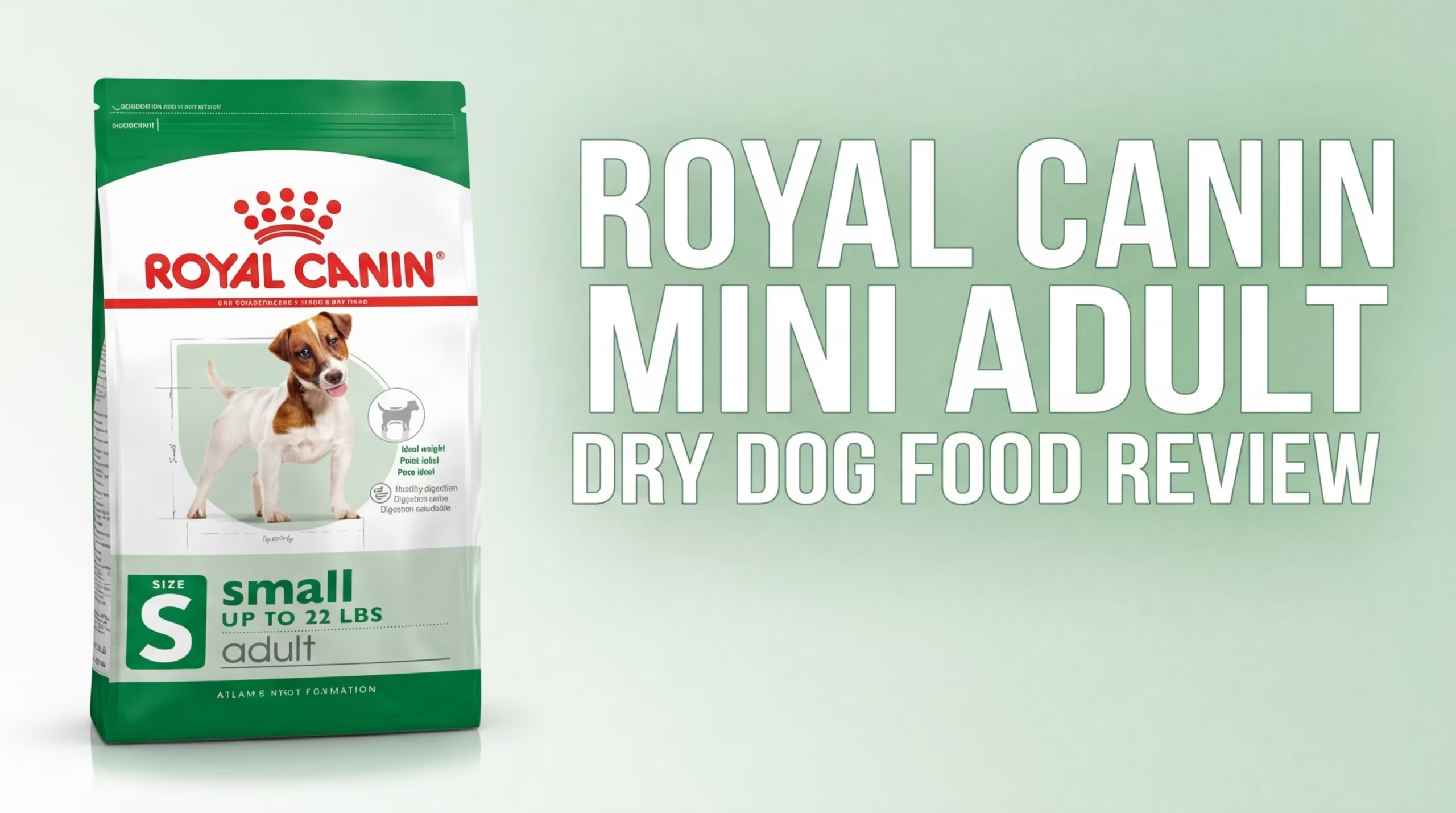
Royal Canin Mini Adult is a dry kibble formula designed specifically for small breed adult dogs weighing between 4 and 22 pounds (roughly 1–10 kg). It’s made by the Royal Canin brand, which is headquartered in France but widely available across the USA. They market it as a “precisely balanced” nutrition option with tailored kibble size for small jaws.
Key Details at a Glance:
- Brand: Royal Canin (Size Health Nutrition line)
- Life Stage: Adult (10 months to 8 years)
- Target Breeds: Small breeds under 22 lbs
- Main Protein Source: Dehydrated poultry protein
- Kibble Size: Small, round, easy to chew
- Available Sizes: 2.5 lb, 6 lb, 14 lb bags
- Price Range: $12–$45 depending on bag size (USA pricing)
- Where to Buy: Chewy, Amazon, PetSmart, local vet clinics
Quick Verdict: It’s a solid small breed food with noticeable results in coat quality and digestion — but the ingredient list has some things I’m not thrilled about, and the price stings a bit for what you’re actually getting.
My 1-Month Personal Experience — 3 Dogs, 3 Different Results
I transitioned all three of my dogs onto Royal Canin Mini Adult over about five days (mixing it gradually with their previous food). Here’s how each one responded.
Pepper — Miniature Schnauzer, 5 Years Old, 16 lbs
Pepper is my opinionated little guy. He’s got strong feelings about everything — where he sleeps, when he eats, which corner of the yard is acceptable for his morning business. He’s always been a moderately picky eater, and his stomach has given me grief more times than I can count. Gas that could clear a room. You know the type.
Energy Levels: Honestly, pretty consistent throughout the month. Pepper was already a fairly energetic dog, and I didn’t see a dramatic spike or dip. By week three, he did seem slightly more enthusiastic on walks, but I can’t say for certain it was the food or just the spring weather kicking in.
Digestion: This is where things actually impressed me. Pepper’s gas situation improved significantly by the end of week two. I’m not saying it disappeared entirely — he’s still a Schnauzer, after all — but the frequency dropped noticeably. His stools firmed up, too.
They’d been on the softer side with his previous food, and on Royal Canin Mini Adult, they were consistently well-formed. Small win, but if you’ve ever dealt with a gassy dog, you know how much this matters.
Coat Condition: His wiry coat looked a touch shinier around the three-week mark. Nothing dramatic, but my wife noticed it too, so it wasn’t just me being hopeful.
Behavior: No real changes. Still bossy. Still lovable. Still convinced the mailman is a threat to national security.
Issues: None significant with Pepper. If anything, I’d say the kibble size was slightly on the small side for him. He’s at the upper end of the “mini” weight range, and he tended to inhale the tiny pieces without chewing much. I had to use a slow feeder bowl to manage that.
Coco — Cavalier King Charles Spaniel, 3 Years Old, 13 lbs
Coco is my sweet, gentle, will-eat-literally-anything girl. Seriously, this dog has never turned down a meal in her life. She’s easygoing, cuddly, and has the metabolism of a hummingbird — she burns through calories fast because she’s constantly trotting around the house following whoever happens to be moving.
Appetite: No surprise here — Coco loved it immediately. She took to the Royal Canin kibble on day one like she’d been eating it her whole life. Never left a single piece in the bowl. The small kibble size was actually perfect for her smaller mouth. She seemed to chew it properly rather than just gulping it down, which was nice to see.
Weight Changes: Coco maintained her weight almost exactly throughout the month. She started at 13.1 lbs and ended at 13.3 lbs — basically negligible. I was pleased with this because weight management is something I keep an eye on with Cavaliers.
They’re prone to gaining extra pounds as they age, and the calorie content of this food (approximately 378 kcal per cup) seemed appropriate for her activity level at about ¾ cup per day split into two meals.
Stool Quality: Consistently good. Firm, well-colored, easy to pick up. Sorry for the graphic detail, but honestly, this is one of the most reliable indicators of whether a food is actually working, and Coco’s digestion handled this formula without a single hiccup.
Activity: Maybe a slight uptick in playfulness around week three? She was fetching her little stuffed duck more often than usual, but again, hard to attribute that entirely to food. Could’ve been seasonal energy.
Biscuit — Pomeranian, 7 Years Old, 8 lbs
Biscuit is my senior-ish little guy, and he’s the one I was most watchful about during this trial. He’s always had a sensitive stomach, he’s getting older, and his immune system isn’t what it used to be. He had a rough bout of skin allergies last year, and I’ve been cautious about what I feed him since.
Strength & Mobility: Biscuit seemed about the same mobility-wise. He’s got a slight stiffness in his back legs that I’ve been managing with supplements, and I didn’t expect a kibble change to affect that. It didn’t. But he also didn’t seem any worse, which I’ll take as neutral.
Immunity / Overall Health: No new allergy flare-ups during the month, which was a relief. His skin stayed calm, no excessive scratching or hot spots. I was a bit worried because Royal Canin Mini Adult contains wheat and corn — both of which can trigger sensitivities in some dogs — but Biscuit handled them fine.
That said, if your dog has a confirmed grain allergy, this food is NOT the one. It’s grain-inclusive, and they don’t try to hide that.
Coat & Appearance: His Pomeranian fluff stayed full and soft. I noticed slightly less shedding by week four compared to his previous food, but this could also be coincidence. His eyes looked bright. Overall, he just looked healthy.
Any Issues: Here’s my one complaint with Biscuit. During the first week of transition, he had a couple of days where he just didn’t want to eat. He’d sniff the bowl, take a few bites, and walk away. I think the taste profile was different enough from his old food that he was being stubborn about it.
By day eight or nine, he was eating full portions without protest, but those first few days had me second-guessing the switch. This is pretty normal with picky dogs during transitions, so I wouldn’t hold it against the food too heavily — but it’s worth mentioning for anyone with a finicky eater.
Nutritional Information Breakdown
Let’s get into the numbers. This is where things get interesting — and where I have some mixed feelings.
| Nutrient | Value | Ideal Range | Verdict |
|---|---|---|---|
| Crude Protein | 29% | 20–30% | ✅ Good — upper end of ideal |
| Crude Fat | 18% | 10–20% | ✅ Good — appropriate for active small breeds |
| Crude Fiber | 1.4% | 3–5% | ⚠️ Below average — quite low |
| Moisture | 10.5% | Up to 10% | ✅ Acceptable for dry kibble |
| Calories | ~378 kcal/cup | — | Moderate-to-high energy density |
The Good: Protein at 29% is solid for a small breed formula. Small dogs have faster metabolisms and typically need calorie-dense, protein-rich diets to maintain energy. The fat content at 18% supports coat health and provides concentrated energy without being excessive. I’d say the macronutrient profile is genuinely well-balanced for its intended audience.
The Concern: Fiber at 1.4% is lower than I’d like to see. Most canine nutritionists suggest 3–5% crude fiber for healthy digestion and satiety. Low fiber can sometimes mean dogs feel hungry faster between meals. Pepper, being my most food-motivated dog, did seem to beg more between meals on this food compared to his previous higher-fiber kibble. Something to keep in mind.
Real Meat vs. Fillers: The primary protein source is “dehydrated poultry protein.” It’s real animal protein, not a mystery ingredient, but it’s not fresh whole meat either. Dehydrated protein is a concentrated form that delivers high protein numbers on the label — which isn’t a bad thing, but it’s important to be transparent about it. You’re not getting fresh deboned chicken as the first ingredient here.
Additives: The formula includes a variety of added vitamins and minerals (vitamin A, vitamin D3, iron, zinc, manganese, etc.), which is standard and expected. There’s also the inclusion of L-carnitine, which supports fat metabolism. No artificial colors from what I can tell. Overall, the additive profile is reasonable and nothing raised any red flags.
Ingredient Analysis — What’s Actually in This Food?
Here are the top five listed ingredients:
- Dehydrated Poultry Protein — Primary protein source. Decent quality, concentrated animal protein. Not the same as “fresh chicken breast,” but it’s legitimate animal protein. Rating: Average-to-Good.
- Rice — A highly digestible carbohydrate source that’s gentle on the stomach. Common in many vet-recommended diets. No complaints here. Rating: Good.
- Animal Fats — Preserved with mixed tocopherols (vitamin E). A natural energy source, though “animal fats” is vague — I’d prefer they specified the exact source (chicken fat, for example). Rating: Average.
- Wheat — This is where some people will raise an eyebrow. Wheat is a filler grain that provides energy but limited nutritional value compared to higher-quality carbs. It can also trigger allergies in sensitive dogs. Rating: Average-to-Low.
- Corn / Corn Gluten Meal — Another common filler. Corn gluten meal does provide supplemental protein, but it’s plant-based protein — not as bioavailable for dogs as animal protein. This is one of my main gripes with this formula. Rating: Low-to-Average.
Overall Ingredient Quality Rating: Average. The protein foundation is decent, but the reliance on wheat and corn as prominent ingredients keeps this from earning a “premium” label in my eyes. For the price you’re paying, I’d expect fewer filler grains and more clearly identified protein sources. Brands like Orijen or Acana at a similar price tier use significantly better base ingredients.
Pros & Cons — Based on 30 Days of Real Use
✅ Pros
- Noticeable digestion improvement — All three dogs had consistently firm, healthy stools. Pepper’s gas reduced significantly.
- Kibble size is genuinely well-designed — Small, rounded pieces that small breed dogs can actually chew properly. Coco and Biscuit managed them easily.
- Good palatability — Two out of three dogs loved it immediately. Even picky Biscuit came around after the transition period.
- Coat quality improved — Subtle but visible improvement in shine and softness across all three dogs by the end of the month.
- No allergic reactions — Despite containing grains, none of my dogs had skin flare-ups or itching.
- Widely available — You can grab it at PetSmart, Chewy, Amazon, or your vet’s office. Not a niche product you have to hunt for.
- Calorie-appropriate for small breeds — The energy density matched my dogs’ needs without causing weight gain.
❌ Cons
- Fiber content is too low — At 1.4%, it’s noticeably below the 3–5% range most experts recommend. My dogs seemed hungrier between meals.
- Contains wheat and corn fillers — For a premium-priced food, the ingredient list could be much cleaner. These grains add bulk but limited nutritional value.
- Vague ingredient labeling — “Animal fats” and “dehydrated poultry protein” are not specific. Which animal? Which poultry? Transparency matters.
- Price is high relative to ingredient quality — You’re paying premium prices, but the ingredients are more mid-tier. It feels like you’re subsidizing the brand name.
- Picky eaters might resist initially — Biscuit took over a week to fully accept the food. If your dog is stubborn, expect a longer transition.
- Not suitable for grain-sensitive dogs — This one’s obvious, but it bears repeating. If your dog has grain allergies, skip this entirely.
Price Breakdown (USA — All Prices in $)
| Bag Size | Approximate Price | Price Per Pound | Price Per Kg |
|---|---|---|---|
| 2.5 lb | $12–$14 | ~$5.20/lb | ~$11.46/kg |
| 6 lb | $24–$28 | ~$4.33/lb | ~$9.55/kg |
| 14 lb | $40–$46 | ~$3.07/lb | ~$6.77/kg |
Prices based on USA retailers (Chewy, Amazon, PetSmart) as of early 2026. Prices may vary by region and promotions.
Monthly Cost Estimate:
For a single small breed dog eating about ¾ cup per day, a 14 lb bag lasts roughly 6–7 weeks. That puts your monthly cost at approximately $25–$32 per dog. For three dogs like mine? We’re looking at about $75–$95 per month. Not the cheapest option, but not outrageously expensive either. It falls in the upper-mid range.
Value for Money Verdict: Honestly? It’s okay value. You’re getting decent nutrition and noticeable results in digestion and coat health. But when I compare the ingredient list to what competitors offer at the same price point, I feel like Royal Canin leans hard on brand reputation rather than ingredient superiority. I’ve seen better ingredient lists from brands that cost $5–$10 less per bag.
Comparison Table: Royal Canin Mini Adult vs. Competitors
| Feature | Royal Canin Mini Adult | Hill’s Science Diet Small | Pedigree Small Dog | Purina Pro Plan Small Breed |
|---|---|---|---|---|
| Protein % | 29% | 24.5% | 21% | 29% |
| Fat % | 18% | 15.5% | 10% | 19% |
| Fiber % | 1.4% | 2.9% | 4% | 3% |
| Price (14 lb bag) | $40–$46 | $38–$44 | $18–$22 | $36–$42 |
| Ingredient Quality | Average | Average-to-Good | Low-to-Average | Good |
| Primary Protein | Dehydrated Poultry | Chicken Meal | Corn, Meat & Bone Meal | Chicken |
| Grain-Free Option | No | No | No | Yes (some lines) |
| Best For | Small breeds, digestion | Sensitive stomachs | Budget buyers | Active small breeds |
| Rating (/10) | 7.2 | 7.5 | 5.0 | 7.8 |
My Take on the Competition:
If you’re looking for the best dog food in USA 2026 for small breeds specifically, Purina Pro Plan Small Breed edges out Royal Canin in my experience — better ingredient transparency, comparable protein levels, slightly better fiber content, and a lower price per bag. Hill’s Science Diet is a solid alternative if your dog has a more sensitive stomach. And Pedigree? Look, it’s cheap, and it’ll keep your dog alive, but the ingredient quality is genuinely poor for long-term health. I wouldn’t recommend it as a primary diet.
Is Royal Canin Mini Adult good for dogs? Yes, it is. But “good” and “best” aren’t the same thing, and at this price, I expect more than just good.
Final Rating: 7.2 / 10
| Category | Score (/10) |
|---|---|
| Ingredient Quality | 6.5 |
| Nutritional Profile | 7.5 |
| Palatability | 8.0 |
| Digestion Performance | 8.5 |
| Coat & Skin Health | 7.5 |
| Value for Money | 6.0 |
| Overall | 7.2 |
Verdict: Good — but not exceptional.
Royal Canin Mini Adult is a reliable, well-formulated small breed dog food that delivers real results in digestion and coat quality. My dogs genuinely did well on it for 30 days, and I have no major health concerns about the formula. But the ingredient list doesn’t match the premium price tag, and the low fiber content is a legitimate shortcoming that I’d like to see them address.
Would I Buy It Again?
Maybe. If I caught it on sale at Chewy or PetSmart, sure — I’d grab a bag for Coco especially, since she thrived on it.
But at full price, I’d probably lean toward Purina Pro Plan Small Breed as my everyday go-to for better overall value.
File size
If Royal Canin cleaned up the ingredient list — dropped the vague “animal fats” labeling, reduced the corn/wheat content, and bumped up the fiber — I’d be much more enthusiastic about recommending it long-term.
I’m not saying don’t buy it. I’m saying go in with realistic expectations. It’s a solid 7 out of 10 food, not the 9 or 10 that the brand name might lead you to believe.
Who Should Buy Royal Canin Mini Adult?
Great fit for:
- Owners of small breed dogs (under 22 lbs) who need a reliable, easy-to-find daily kibble
- Dogs with no grain sensitivities who do well on grain-inclusive diets
- Pet parents who value digestive health — this food genuinely performs well in that area
- First-time dog owners looking for a widely available, vet-recognized brand to start with
Not the best fit for:
- Dogs with grain allergies or sensitivities (wheat and corn are prominent ingredients)
- Budget-conscious owners — there are comparable options at lower price points
- Owners who prioritize premium, whole-food ingredients — the list here is mid-tier at best
- Large or medium breed dogs — this formula is specifically sized and formulated for small breeds only