So here’s the thing. I’ve been feeding dogs for over twelve years now, and I’ve gone through enough food brands to probably fill a small warehouse. Some were amazing. Some made me genuinely angry at how bad they were. And a lot of them? They were just kind of… fine. Nothing special.
Hill’s Science Diet is one of those names that comes up constantly — at the vet’s office, in online forums, in conversations with other dog owners at the park. It’s practically everywhere. But “popular” doesn’t always mean “good,” and I’ve learned that the hard way more than once.
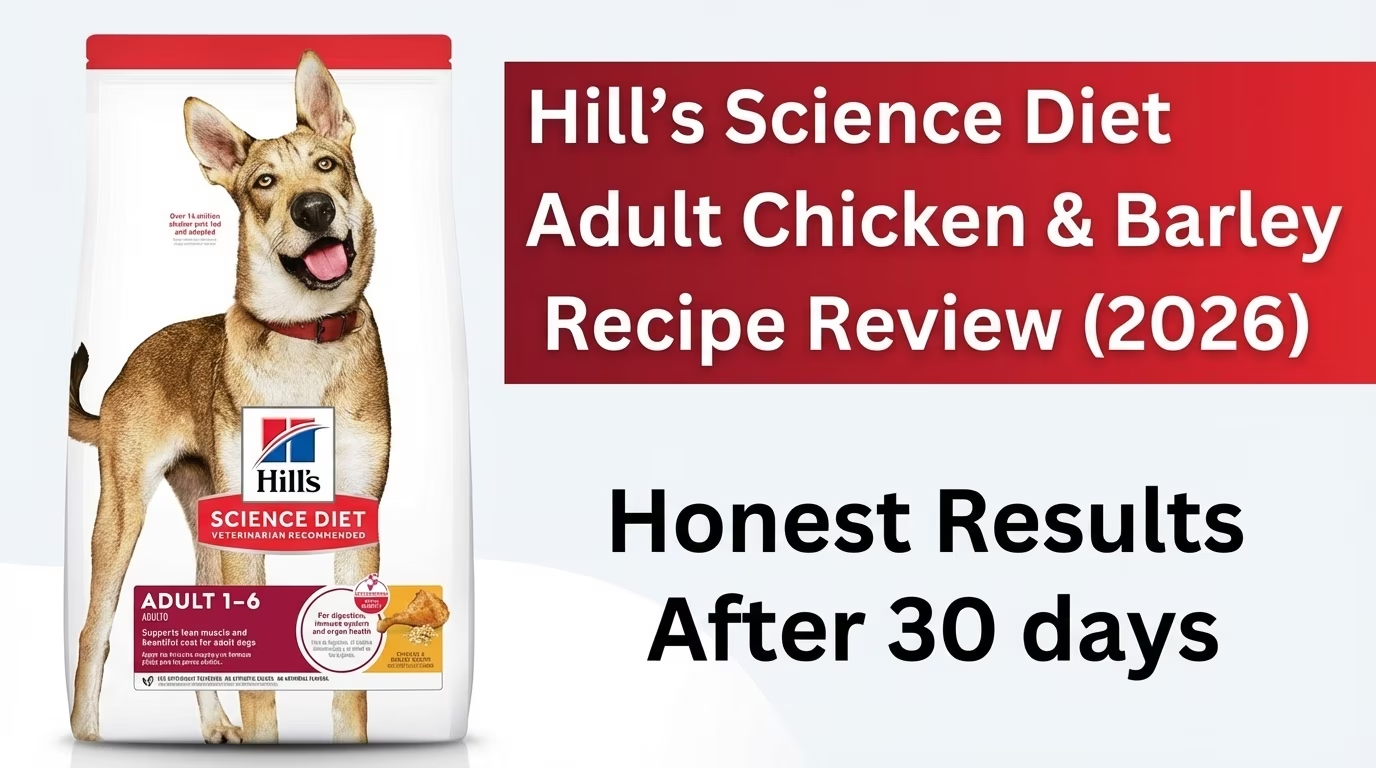
So earlier this year, in 2026, I picked up a big bag of Hill’s Science Diet Adult Chicken & Barley Recipe and committed to feeding it exclusively to my three dogs for a full month. I wanted to see what all the fuss was about, or if there even was any fuss to be had.
This is what actually happened. No sugarcoating, no brand loyalty, just what I saw with my own dogs.
Product Overview: Hill’s Science Diet Adult Chicken & Barley Recipe
Hill’s Science Diet has been around forever. It’s one of those brands your vet probably has stacked in the waiting room, and it carries a certain clinical respectability because of that. The Adult Chicken & Barley Recipe is their flagship everyday formula for adult dogs ages 1–6, and it’s positioned as a “science-backed” nutrition option.
Key Details:
- Brand: Hill’s Science Diet (Hill’s Pet Nutrition)
- Formula: Adult Chicken & Barley Recipe, Dry Dog Food
- Life Stage: Adult maintenance (1–6 years)
- Target: All breeds, all sizes
- Primary Protein: Chicken
- Available Sizes: 5 lb, 15 lb, 30 lb, 35 lb bags
- Price Range: $18–$72 depending on bag size (USA retail pricing)
- Where to Buy: PetSmart, Petco, Chewy, Amazon, Walmart, vet clinics
Quick Verdict: A dependable, well-balanced everyday kibble that doesn’t blow you away but quietly does its job. Digestion was great across the board. Ingredients are better than budget brands but still lean on some grains I’d rather not see. The price is fair for what you get — not cheap, not outrageous.
My 1-Month Personal Experience — Three Very Different Dogs
I transitioned all three of my dogs over about six days, gradually mixing Hill’s in with their previous food. I’ve learned the hard way not to rush food transitions. One bout of 3 a.m. diarrhea on your bedroom carpet teaches that lesson pretty fast.
Duke — Boxer, 4 Years Old, 68 lbs
Duke is my big goofy disaster. He’s all muscle, zero brain cells, and he approaches everything in life — food, walks, squirrels, the vacuum cleaner — with the same maximum-intensity enthusiasm.
He’s also had recurring skin irritation issues that seem to flare up with certain foods, so I pay extra attention whenever I switch him to something new.
Energy Levels: Duke is already a high-energy dog, so I wasn’t expecting a miracle here. That said, his energy felt more… sustained? I don’t know how else to describe it. On his old food, he’d have these wild bursts of chaos followed by dead-on-the-couch crashes.
On Hill’s, his energy seemed a bit more evenly spread throughout the day. Could be coincidence. Could be the food. Honestly, I’m not sure, but I noticed it enough to write it down.
Digestion: Really good. Duke’s stomach can be a drama queen, but he handled this food well from day one of the full transition. No gas explosions, no soft stools, no weird noises coming from his gut at night. This was probably the single best digestive result I’ve seen from him on any food in a while. The barley in the formula might be helping here — barley is a really gentle grain on the stomach compared to corn or wheat.
Coat Condition: This was the big one for me. Duke’s coat looked genuinely better by week three. Shinier, less dry patches behind his ears (that’s usually where his irritation starts), and he was scratching less. Now, I can’t say for certain the food fixed a skin issue — there are a hundred variables — but the timing lined up perfectly with the switch. I was cautiously impressed.
Behavior: Same lovable chaos. He did stop trying to eat grass on walks as often, which sometimes signals that a dog’s stomach is more settled. Small thing but I noticed.
Issues: The kibble is on the larger side, and Duke is a gulper. He barely chews anything. I had to keep using his slow feeder bowl, but that’s a Duke problem, not a food problem. No complaints about the formula itself.
Olive — Shih Tzu, 6 Years Old, 12 lbs
Olive is my little diva. She’s particular about everything. She’ll only drink water from a specific bowl, she refuses to go outside when the grass is wet, and she inspects every piece of food like a restaurant critic before she deigns to eat it. Feeding Olive a new food is always an adventure, and rarely a fun one.
Appetite: Surprisingly, Olive accepted this food with minimal fuss. She sniffed it suspiciously for the first couple of days — classic Olive — but by day four she was eating full portions without the dramatic pauses. The kibble is a bit big for her tiny mouth though. I noticed her struggling to crunch the larger pieces, and by week two I started lightly crushing some of the kibble before serving it. That helped, but it’s annoying that I had to do it at all. Hill’s makes small breed formulas for a reason, and I’d probably steer Shih Tzu owners toward those instead.
Weight Changes: Olive went from 12.1 lbs to 12.0 lbs. Essentially no change. Perfect. She’s always been right at her ideal weight, and this food maintained it without any adjustments to portion size. I was feeding her about ¾ cup per day split into two meals, following the bag’s guidelines for her weight.
Stool Quality: Excellent. And I mean genuinely excellent. Small, firm, easy to pick up, no weird color variations. Olive has had periods of loose stools on other brands, so this was a welcome improvement. Whatever blend of fiber sources Hill’s is using here, it agreed with her system.
Activity: About the same as usual. Olive isn’t exactly an athlete — her idea of exercise is walking from the couch to the food bowl — but she seemed content and comfortable throughout the month. Maybe slightly more playful with her squeaky toys in the evenings, but I might be reading too much into that.
Hank — Australian Cattle Dog, 3 Years Old, 42 lbs
Hank is my working-breed overachiever. This dog needs a job at all times or he starts inventing his own — usually involving the destruction of something I care about.
He’s lean, muscular, incredibly smart, and burns calories like a furnace. Feeding him enough quality protein has always been a priority for me because he’s just constantly moving.
Strength & Muscle Tone: This was my main concern with Hill’s Science Diet, because at 24.5% protein, it’s on the lower end of what I like to feed a high-energy working breed. And honestly? After a month, Hank looked fine. He didn’t lose muscle mass, didn’t seem weaker during our runs or agility practice. But he also didn’t look better than he did on his previous higher-protein food. I’d call it maintenance-level nutrition for him — adequate but not optimal for a dog with his workload.
Immunity & Overall Health: No issues. No skin problems, no ear infections (he’s prone to those), no signs of anything off. His teeth actually looked decent too — I’d read that Hill’s uses some kind of interlocking fiber technology in the kibble to help with tartar, and while I can’t verify if that worked in just one month, his breath didn’t get worse, which is more than I can say for some foods.
Energy & Endurance: Here’s where I was slightly disappointed. During our longer weekend hikes (we usually do 5–6 miles), Hank seemed to tire a little quicker toward the end of the month compared to when he was on a 30%+ protein food. Nothing alarming — he still completed every hike — but I could tell the difference. For a couch-potato dog, 24.5% protein is perfectly fine. For a cattle dog who thinks he’s training for the Olympics? I’d want more.
Any Issues: The only real problem I had with Hank was that he seemed slightly hungrier between meals. He started nosing around the kitchen more, which isn’t his usual style. The fiber content at 2.9% is below what I consider ideal, and I wonder if that contributed to him not feeling as satiated.
I ended up adding a small spoonful of pumpkin puree to his dinner to help with fullness, which worked, but it’s an extra step I shouldn’t need with a premium food.
Nutritional Information Breakdown
Here’s the guaranteed analysis, along with my honest take on each number.
| Nutrient | Value | Ideal Range | Verdict |
|---|---|---|---|
| Crude Protein | 24.5% | 20–30% | ✅ Good — solid mid-range |
| Crude Fat | 15.5% | 10–20% | ✅ Good — well-balanced |
| Crude Fiber | 2.9% | 3–5% | ⚠️ Slightly below ideal |
| Moisture | 10% | Up to 10% | ✅ Standard for dry kibble |
| Calories | ~363 kcal/cup | — | Moderate energy density |
The Good Stuff: The protein-to-fat ratio is genuinely well-balanced for an average adult dog. 24.5% protein with 15.5% fat gives you a food that supports lean muscle without being overly calorie-dense. For moderate-activity dogs — your average family pet who gets a walk and some playtime daily — this is a solid nutritional foundation. The calorie content at 363 kcal/cup is reasonable and makes portion control straightforward.
The Not-So-Good: Fiber at 2.9% is just barely under the 3% minimum I like to see. It’s not terrible, but it’s not great either. For dogs like Hank who need to feel full between meals, this could be an issue. I think Hill’s could easily bump this up without changing the formula’s overall balance, and it would make a real difference in satiety.
Real Meat vs. Fillers: Chicken is listed as the first ingredient, which is a good sign — it means it’s the primary component by weight before processing. However, keep in mind that fresh chicken contains about 70–80% water, so once it’s cooked down, the actual meat content shrinks significantly.
Chicken meal (the concentrated, water-removed version) appears later in the ingredient list as well, which does add legitimate animal protein. It’s not misleading, but it’s worth understanding how ingredient lists actually work.
Additives: The formula includes a standard vitamin and mineral supplement package — things like vitamin E, beta-carotene, taurine. Nothing unusual or concerning. Hill’s also adds L-carnitine for fat metabolism support and a blend of omega-6 fatty acids for coat health. All reasonable additions that I’d expect from a food at this price point.
Ingredient Analysis — Breaking Down the Top 5
- Chicken — Whole, fresh chicken as the first ingredient. Real animal protein. Good start. However, as I mentioned, fresh chicken loses significant weight during cooking due to water loss, so its actual contribution to the final product is less dominant than it appears on the label. Rating: Good.
- Whole Grain Wheat — A complete grain that provides energy and some B vitamins. It’s more nutritious than refined wheat, but it’s still wheat — a common allergen for some dogs and not the most premium carbohydrate option. I’d prefer sweet potato or oats here. Rating: Average.
- Cracked Pearled Barley — Now this one I actually like. Barley is one of the better grains you can put in dog food. It’s gentle on digestion, has a lower glycemic index than wheat or corn, and provides decent fiber and nutrients. I suspect this is a big reason why digestion was so smooth for all three of my dogs. Rating: Good-to-Premium.
- Whole Grain Sorghum — A gluten-free ancient grain that’s becoming more common in dog food. It’s a solid, easily digestible carbohydrate source with antioxidant properties. I have no complaints about sorghum — it’s a legitimately good ingredient. Rating: Good.
- Corn Gluten Meal — And here’s where my enthusiasm drops. Corn gluten meal is a processed byproduct of corn processing. It boosts the protein percentage on the label, but it’s plant protein — significantly less bioavailable for dogs than animal protein. It’s essentially a cost-effective way to inflate the protein number without adding more expensive meat. Rating: Low-to-Average.
Overall Ingredient Quality: Average-to-Good. The grain choices (barley and sorghum in particular) are genuinely better than what you’ll find in most competing brands at this price. But the inclusion of corn gluten meal as a protein booster and whole grain wheat as a primary carb keep it from reaching premium status.
It’s a step above Pedigree, roughly on par with Royal Canin, and a step below brands like Orijen or Wellness CORE.
Pros & Cons — After 30 Real Days
✅ Pros
- Outstanding digestive performance — This was the standout. All three dogs, three different breeds, three different stomach sensitivities — and every single one had perfect digestion throughout the month. Firm stools, no gas, no upset stomachs. I give credit to the barley and sorghum for this.
- Noticeable coat improvement — Duke’s coat was visibly shinier and his dry patches improved. Olive and Hank both had healthy, glossy coats by week three.
- Well-balanced macronutrients — The protein-to-fat ratio is sensible for average adult dogs. Not too rich, not too lean.
- Good palatability — Even my pickiest eater (Olive) accepted it within days. Two out of three dogs seemed to genuinely enjoy the taste.
- Barley and sorghum are excellent grain choices — Hill’s picked better grains than most competitors at this price. That matters.
- Available literally everywhere — PetSmart, Petco, Chewy, Amazon, Walmart, your vet’s office. You’ll never struggle to find a bag.
- Vet-recommended brand — For what it’s worth, Hill’s is one of the most commonly recommended brands by veterinarians in the USA. That carries some weight.
❌ Cons
- Protein might be too low for high-energy breeds — At 24.5%, it’s fine for average dogs but fell short for my active Australian Cattle Dog. Working breeds and athletic dogs probably need more.
- Fiber content is below ideal — 2.9% is close to the recommended minimum but doesn’t quite reach it. Some dogs may feel hungrier between meals as a result.
- Corn gluten meal is a lazy ingredient — It’s a plant-based protein booster that doesn’t belong in a food calling itself premium. I always side-eye corn gluten meal.
- Kibble size is too large for small breeds — Olive struggled with the standard-size pieces. Small breed owners should look at Hill’s Small Bites or Small Paws formulas instead.
- Price doesn’t quite match ingredient quality — You’re paying upper-mid-tier prices for mid-tier ingredients. The vet endorsement and brand name account for some of that markup.
- Not grain-free — Obviously. If your dog has grain sensitivities or allergies, this food is a non-starter.
Price Breakdown (USA — All Prices in $)
| Bag Size | Approximate Price | Price Per Pound | Price Per Kg |
|---|---|---|---|
| 5 lb | $18–$20 | ~$3.80/lb | ~$8.38/kg |
| 15 lb | $36–$42 | ~$2.60/lb | ~$5.73/kg |
| 30 lb | $55–$62 | ~$1.95/lb | ~$4.30/kg |
| 35 lb | $62–$72 | ~$1.91/lb | ~$4.21/kg |
Prices based on Chewy, Amazon, PetSmart, and Petco as of early 2026. Prices fluctuate with promotions and availability.
Monthly Cost Estimate:
For a medium-sized dog like Hank (~42 lbs), Hill’s recommends roughly 2½ cups per day. A 30 lb bag lasted me about 5 weeks for him alone. So the monthly cost for one medium-sized dog is approximately $40–$50. For all three of my dogs combined, I spent roughly $85–$110 per month. That’s a noticeable chunk, but not unreasonable for a brand of this caliber.
Value for Money Verdict: Fair. Not spectacular, but fair. You’re getting reliable, consistent nutrition with genuinely good digestive results. The price is justified by the quality of certain ingredients (barley, sorghum, real chicken) — but it’s somewhat undermined by the inclusion of corn gluten meal and wheat.
If Hill’s cleaned up those two ingredients, I’d call this excellent value. As it stands, it’s decent value with room for improvement.
Comparison Table: Hill’s Science Diet vs. Competitors
| Feature | Hill’s Science Diet Adult | Royal Canin Medium Adult | Pedigree Complete Nutrition | Purina ONE SmartBlend |
|---|---|---|---|---|
| Protein % | 24.5% | 27% | 21% | 30% |
| Fat % | 15.5% | 17% | 10% | 17% |
| Fiber % | 2.9% | 1.3% | 4% | 3% |
| Price (30 lb bag, $) | $55–$62 | $58–$68 | $22–$28 | $38–$44 |
| Primary Protein | Chicken | Dehydrated Poultry | Meat & Bone Meal | Chicken |
| Ingredient Quality | Average-to-Good | Average | Low | Good |
| Grain Choices | Barley, Sorghum, Wheat | Wheat, Corn | Corn, Wheat | Rice, Oat Meal |
| Best For | Average adult dogs, sensitive stomachs | Breed-specific needs | Budget buyers | Active dogs, good value |
| Rating (/10) | 7.5 | 7.2 | 5.0 | 7.8 |
Where Hill’s Stands:
Looking at the best dog food in USA 2026 in this price category, Hill’s Science Diet Adult is a respectable middle-of-the-pack performer. It beats Royal Canin slightly on grain quality (barley and sorghum vs. wheat and corn) and ties on overall reliability.
It absolutely destroys Pedigree on every metric that matters. Purina ONE SmartBlend, though, edges it out on protein content, price, and arguably ingredient transparency — making it the better overall value in my opinion.
Is Hill’s Science Diet good for dogs? Yes, genuinely yes. It’s a safe, reliable, well-researched food that most dogs will thrive on. It’s just not the best option in its price range, and I think that distinction matters when you’re spending $55+ on a bag of kibble.
Final Rating: 7.5 / 10
| Category | Score (/10) |
|---|---|
| Ingredient Quality | 6.5 |
| Nutritional Profile | 7.5 |
| Digestive Performance | 9.0 |
| Palatability | 7.5 |
| Coat & Skin Health | 8.0 |
| Value for Money | 6.5 |
| Overall | 7.5 |
Verdict: Good — reliable and effective, but not the best bang for your buck.
Hill’s Science Diet Adult Chicken & Barley Recipe is the kind of food that won’t let you down. Digestion was fantastic across all three of my dogs — probably the best category performance I saw during this test. Coats improved, energy stayed stable, and nobody had any adverse reactions. It does what it promises.
But it doesn’t wow me, and at this price point, I want a little bit of wow.
Would I Buy It Again?
Yes, but selectively. I’d absolutely buy it again for Duke. His skin improved noticeably, and his digestion was the best it’s been in months. For Duke specifically, this food earned a permanent spot on my shortlist. For Olive, I’d grab the Small Bites version instead — the standard kibble is simply too big for her. And for Hank? Honestly, no. He needs higher protein for his activity level, and I’d switch him back to something in the 28–32% range.
So it’s a conditional yes. It depends entirely on your specific dog, which I think is the most honest answer I can give.
Who Should Buy Hill’s Science Diet Adult Chicken & Barley?
Ideal for:
- Average adult dogs (1–6 years) with moderate activity levels
- Dogs with sensitive stomachs — the digestion performance here is genuinely excellent
- First-time dog owners who want a safe, vet-backed option they can trust without overthinking
- Medium and large breed dogs who can handle the standard kibble size
- Owners who value consistency and wide availability over cutting-edge ingredients
Not ideal for:
- High-energy working breeds or very active dogs who need 28%+ protein
- Small breed dogs (get the Small Bites or Small Paws formula instead)
- Dogs with grain allergies or wheat sensitivities
- Budget-conscious owners who can get comparable nutrition from Purina ONE at a lower price
- Pet parents who insist on grain-free or limited-ingredient diets
Look, no dog food is perfect for every dog. I’ve been doing this long enough to know that. But Hill’s Science Diet Chicken & Barley is a legitimately solid, dependable choice that most dogs will do well on.
It’s not flashy, it’s not trendy, and it’s not going to win any ingredient purity awards. But it works. And sometimes, that’s exactly what you need.
Just maybe don’t feed it to your cattle dog who runs six miles on weekends. He’ll want more.