I’ve been buying dog food for over twelve years now, and I’ll be honest — I usually skip right past Iams in the pet store aisle. It’s always just kind of… there. Not the fancy grain-free stuff, not the budget-basement option either. Just middle-of-the-road, been-around-forever Iams. But when a friend mentioned her vet specifically recommended it for her Boxer mix, I got curious enough to actually give it a real shot.
So in early 2026, I picked up a bag of Iams ProActive Health Adult MiniChunks and committed to feeding it to all three of my dogs for a full month. No mixing with other foods, no hedging my bets. Just a straight 30-day trial to see if this grocery-store staple could actually hold its own against the fancier brands I’d been rotating through.
Spoiler: I was genuinely surprised by some of what I found.
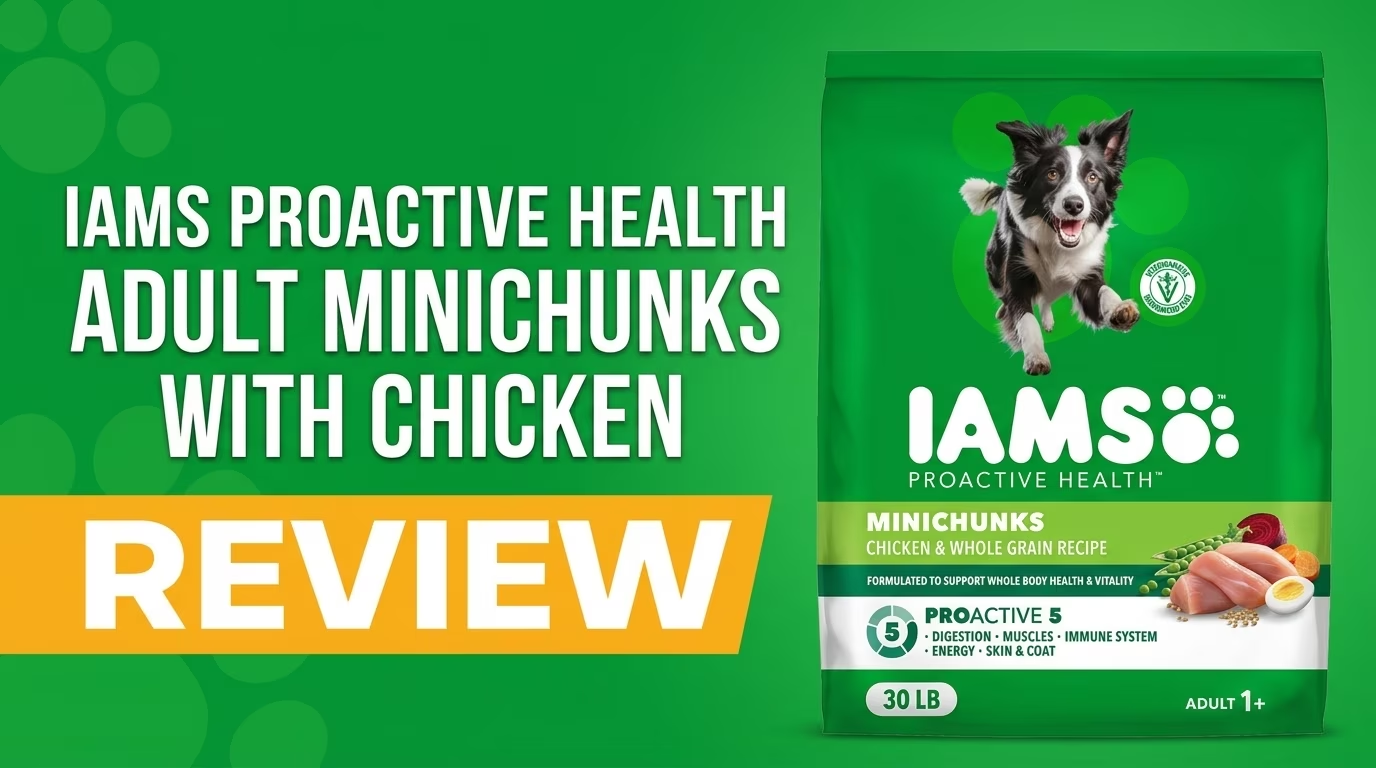
Product Overview: Iams ProActive Health Adult MiniChunks with Chicken
Iams ProActive Health is their standard adult dog food line — nothing fancy, nothing trendy, just straightforward nutrition that’s been on shelves since I was a kid. The “MiniChunks” version uses smaller kibble pieces designed for small-to-medium breeds, though honestly, any size dog can eat it.
It’s grain-inclusive (which is actually what a lot of vets are recommending again after the whole grain-free/DCM scare), chicken-based, and positioned as an everyday maintenance food for adult dogs.
Key Details:
- Brand: Iams (Mars Petcare)
- Formula: ProActive Health Adult MiniChunks, Chicken
- Life Stage: Adult (1+ years)
- Target: Small to medium breeds, all breeds really
- Primary Protein: Chicken
- Available Sizes: 7 lb, 15 lb, 30 lb, 40 lb bags
- Price Range: $15–$50 depending on size (USA retail)
- Where to Buy: Literally everywhere — Walmart, Target, Kroger, Petco, PetSmart, Amazon, your local grocery store
Quick Verdict: Iams ProActive Health is a solid, no-frills food that performed better than I expected. All three dogs maintained healthy weight and energy, coats looked good, and digestion was mostly smooth. The ingredient list isn’t going to win awards, but it’s not bad either. For the price — especially if you catch it on sale — it’s genuinely decent value. Not premium, but honest and functional.
Meet My Three Testers
🐶 Benny — Cocker Spaniel, 7 Years Old, 32 lbs
Benny is my easygoing, food-motivated golden boy. Cocker Spaniels are prone to weight gain and ear infections, so I’m always watching his waistline and monitoring for any signs of yeast or irritation in those floppy ears.
He’s got a gorgeous coat when it’s healthy, but it gets greasy and dull fast if his diet isn’t right. He’s not picky — he’d eat cardboard if I put it in his bowl — so palatability testing with him is pretty useless. But he’s a good bellwether for overall health impacts.
🐶 Ruby — Jack Russell Terrier, 4 Years Old, 14 lbs
Ruby is my tiny, neurotic firecracker. She’s got endless energy, a prey drive that makes walks… exciting, and a stomach that lets me know immediately if something doesn’t agree with her. Jack Russells are generally hardy little dogs, but Ruby’s had issues with certain proteins in the past (beef doesn’t work for her), so I was curious how she’d handle a chicken-based formula. She’s also annoyingly picky sometimes, which makes her a good test for whether dogs will actually want to eat the food.
🐶 Moose — Pit Bull Mix, 5 Years Old, 68 lbs
Moose is my gentle giant rescue who thinks he’s a lapdog. He’s muscular, strong, and needs quality protein to maintain his build. Pits can be prone to skin allergies, so I watch closely for any itching, hot spots, or coat changes when trying new foods. He’s got a pretty bomb-proof digestive system and will eat absolutely anything, but he’s my canary-in-the-coal-mine for skin and coat health.
My 1-Month Experience — Three Dogs, Mixed Results
I did a gradual five-day transition, mixing Iams with their previous food in increasing proportions. No one had any digestive upset during the switch, which was a good sign right off the bat.
🐶 Benny — Cocker Spaniel
Energy Levels: Benny maintained his usual moderate energy throughout the month. He’s not a hyperactive dog to begin with — he’s happy with a couple of walks and some backyard sniffing time — and that didn’t change. No noticeable increase or decrease. Just steady, consistent Benny energy.
Digestion: Really solid here. Benny’s stools were well-formed, consistent, and regular throughout the entire trial. No gas issues (he can get gassy on some foods), no stomach upset, no weird sounds in the night. The 4% fiber content seems to be hitting the sweet spot for him.
Coat Condition: This is where I saw the most noticeable change, and it was positive. Benny’s coat stayed shiny and soft throughout the month. It didn’t get that greasy, heavy feeling that sometimes happens when he’s on lower-quality food. I was brushing out less loose hair than usual, and his feathering on his legs and ears looked healthy. The omega-6 fatty acids in the formula (which Iams lists as a feature) seem to be doing their job.
Behavior: Same sweet, food-motivated Benny. No changes in mood, temperament, or behavior.
Issues: About halfway through the trial, I noticed Benny’s ears getting slightly more waxy than usual. Not infected — no smell, no redness, no head-shaking — but definitely more buildup. I’ve dealt with Cocker ear infections before, and this wasn’t that, but it’s something I’m keeping an eye on. It could be the food, could be seasonal allergies, could be nothing. Didn’t progress beyond slightly more cleaning needed.
🐶 Ruby — Jack Russell Terrier
Appetite: Ruby ate it. Not with wild enthusiasm, but she ate full portions every meal without too much fuss. The MiniChunks kibble size was perfect for her small mouth — easy to chew, easy to crunch. She did her usual sniff-and-circle routine for the first few days (Jack Russell food inspection protocol), but once she deemed it acceptable, she was consistent.
Weight Changes: Ruby started at 14.2 lbs and ended at 14.1 lbs. Basically no change, which is exactly what I wanted. She’s at a healthy weight, and I wanted to maintain it. The feeding guidelines on the bag were accurate for her — I gave her about ⅔ cup per day split into two meals, and it kept her lean and energetic.
Stool Quality: Here’s where we hit a small bump. During week two, Ruby had a few days of softer stools. Not full diarrhea, but definitely looser than her normal firm poops. It resolved on its own by the end of that week and didn’t come back.
I’m not entirely sure what caused it — could’ve been the food, could’ve been she ate something questionable in the yard (she’s a terrier, they eat everything), could’ve been stress from construction noise in the neighborhood. Hard to say. But it’s worth noting.
Activity: Ruby maintained her usual manic energy levels. Still zooming around the house, still trying to chase every squirrel within a three-mile radius, still demanding we throw the ball 47,000 times a day. No complaints about energy or stamina.
Overall: Ruby did fine on Iams, but I didn’t see any dramatic improvements either. She’s a healthy dog to begin with, so maintenance was really all I was looking for. The brief digestive wobble was the only concern, and it wasn’t severe or sustained.
🐶 Moose — Pit Bull Mix
Strength & Muscle Tone: Moose maintained his muscle mass well throughout the month. At 27% protein, Iams ProActive Health isn’t the highest-protein food out there, but it was adequate for his moderate activity level (daily walks, some playtime, not an athlete). He didn’t look leaner or more defined, but he also didn’t lose any condition. For a family pet Pit Bull, 27% protein seems to be enough.
Immunity & Overall Health: No health issues during the trial. Moose stayed healthy, active, and his usual goofy self. His gums stayed pink, eyes bright, no signs of anything amiss.
Coat Condition: Moose’s short coat stayed sleek and shiny. Pit Bulls don’t have demanding coat needs, but a healthy coat is still a good indicator, and his looked good throughout. No dry patches, no excessive shedding, no hot spots (which he’s prone to).
Any Issues: The only thing I noticed — and this might be coincidental — was that Moose seemed slightly hungrier between meals than he’d been on his previous food. He started giving me more hopeful stares around mid-morning and mid-afternoon, like he was expecting snacks.
I didn’t change his portions (I was following the feeding guide on the bag), and he wasn’t losing weight or looking thin, so I’m chalking it up to maybe this food being less satiating than what he’d been eating before. The 4% fiber is on the lower end of the ideal 3-5% range, which could explain the satiety issue.
Otherwise, Moose did great. Healthy, happy, strong, no complaints.
Nutritional Information Breakdown
Let’s talk actual numbers, because this is where Iams shows its mainstream roots.
| Nutrient | Value | Ideal Range | Verdict |
|---|---|---|---|
| Crude Protein | 27% | 20–30% | ✅ Good — solid mid-to-high range |
| Crude Fat | 14.5% | 10–20% | ✅ Good — moderate, appropriate |
| Crude Fiber | 4% | 3–5% | ✅ Acceptable — within range but on lower end |
| Moisture | 10% | Up to 12% | ✅ Standard for dry kibble |
| Calories | ~376 kcal/cup | — | Moderate energy density |
What This Means in Practice:
The 27% protein is respectable. It’s higher than budget foods (which often sit around 21-23%) but not as high as performance or premium formulas (which can hit 30-35%). For an average adult dog with moderate activity, 27% is plenty. It’s coming from a mix of chicken, chicken by-product meal, and corn gluten meal (more on that below), so it’s not all high-quality animal protein, but it’s not terrible either.
Fat at 14.5% is right in the moderate sweet spot. Enough to support skin and coat health without being excessive for less active dogs. All three of my dogs maintained healthy coats, which suggests the fat content and fatty acid profile are doing their job.
Fiber at 4% is technically within the acceptable 3-5% range, but it’s on the lower end. This might explain why Moose seemed less satisfied between meals. Higher fiber generally means better satiety. Not a dealbreaker, but worth noting.
Real Meat vs. Fillers:
Chicken is the first ingredient, which sounds good on paper. But let’s be real — “chicken” as listed includes moisture, so once it’s processed, the actual chicken content by weight is substantially lower than it appears.
The second ingredient is “chicken by-product meal.” This is where Iams starts to show its budget-conscious roots. By-product meal is rendered chicken parts (organs, necks, feet, etc.) that aren’t typically consumed by humans. It’s not inherently bad — organs actually have nutritional value — but it’s definitely a lower-quality protein source than whole chicken meal.
Corn meal and whole grain sorghum round out the carb profile. These are fillers in the sense that they’re cheap carbohydrates, but they’re not the worst offenders (corn gluten meal, which also appears, is less ideal).
Additives:
Iams includes added vitamins and minerals, omega-6 fatty acids (for coat health), and prebiotics (dried beet pulp) for digestive support. Nothing alarming in the additive profile, but nothing particularly impressive either. It’s functional, standard stuff.
Ingredient Analysis — What’s Really Inside?
Top 5 ingredients:
- Chicken — Real chicken is the first ingredient, which is good. But remember, this includes water weight. Once processed, it drops significantly in actual contribution. Rating: Average-to-Good.
- Chicken By-Product Meal — Rendered chicken parts including organs and other non-meat parts. Lower quality than named chicken meal, but not the worst ingredient. Provides protein, just not premium protein. Rating: Average-to-Low.
- Corn Meal — Ground corn used as a cheap carbohydrate and filler. Easy to digest for most dogs, but not nutritionally dense. Rating: Low-to-Average.
- Whole Grain Sorghum — A whole grain that’s actually better than corn nutritionally. Gluten-free, easier to digest, decent fiber source. This is a pleasant surprise in a mainstream food. Rating: Average.
- Dried Beet Pulp — A fiber source and prebiotic that supports digestive health. Actually one of the better fiber ingredients in commercial dog food. Rating: Good.
Overall Ingredient Quality Rating: Average. This is a mainstream, budget-conscious formula. It’s not loaded with premium proteins or superfoods, but it’s also not complete junk. The chicken and chicken by-product meal provide the protein foundation. The grains are middle-of-the-road (corn meal is meh, sorghum is better). The inclusion of dried beet pulp is actually a positive.
If you’re comparing this to Blue Buffalo or Orijen, it’s going to lose on ingredient quality. If you’re comparing it to Pedigree or Ol’ Roy, it’s going to win. It’s solidly in the middle tier.
Pros & Cons — The Real Talk
✅ Pros
- Affordable and widely available — you can grab this at literally any grocery store or pet store in America
- Good protein content (27%) for a mainstream food — higher than many budget brands
- All three dogs maintained healthy weight without me needing to adjust portions
- Decent coat health — Benny’s coat in particular looked good throughout
- Solid digestive performance for Benny and Moose — firm stools, no major issues
- Includes prebiotics (beet pulp) for digestive support
- MiniChunks kibble size is genuinely well-sized for small-to-medium dogs
- Grain-inclusive formula — vets are increasingly recommending this over grain-free
- No artificial colors or flavors
❌ Cons
- Chicken by-product meal as second ingredient — lower-quality protein source
- Corn meal as a primary carb — cheap filler with limited nutritional value
- Lower fiber (4%) may not keep dogs feeling full — Moose seemed hungrier between meals
- Ruby had brief digestive upset during week two (could be food-related, could be coincidence)
- Benny’s ears got slightly waxier — may or may not be related to the food
- Not ideal for dogs with grain sensitivities — contains corn and sorghum
- Ingredient quality is decidedly average — this isn’t a premium food, and it shows in the ingredient list
- Contains corn gluten meal — plant-based protein used to boost protein numbers cheaply
Price Breakdown (USA — All Prices in $)
| Bag Size | Approximate Price | Price Per Pound | Price Per Kg |
|---|---|---|---|
| 7 lb | $13–$16 | ~$2.07/lb | ~$4.56/kg |
| 15 lb | $22–$26 | ~$1.60/lb | ~$3.53/kg |
| 30 lb | $33–$38 | ~$1.17/lb | ~$2.58/kg |
| 40 lb | $40–$50 | ~$1.12/lb | ~$2.47/kg |
Prices based on Walmart, Target, Amazon, Petco as of early 2026. Frequently on sale for 10-20% less.
Monthly Cost Estimates:
- Small dog (Ruby, ~14 lbs): ~⅔ cup/day → 15 lb bag lasts ~6+ weeks → ~$14–$18/month
- Medium dog (Benny, ~32 lbs): ~1½ cups/day → 30 lb bag lasts ~5–6 weeks → ~$24–$30/month
- Large dog (Moose, ~68 lbs): ~3 cups/day → 40 lb bag lasts ~4 weeks → ~$40–$50/month
Value for Money Verdict: This is where Iams really shines. For $24–$30/month for a medium dog, you’re getting decent nutrition, respectable protein content, and consistent results. It’s not the cheapest option (Pedigree is cheaper), but it’s significantly less expensive than premium brands (Blue Buffalo, Wellness, Orijen) while delivering surprisingly comparable day-to-day results.
Is Iams good for dogs? For the price, honestly, yes. You’re not getting boutique ingredients or cutting-edge nutrition science, but you’re getting a functional, balanced food that keeps dogs healthy. If you’re on a budget or just don’t want to spend $60–$80/month on dog food, Iams is a smart middle-ground choice.
Comparison Table: Iams ProActive Health vs. Competitors
| Feature | Iams ProActive Health MiniChunks | Royal Canin Medium Adult | Pedigree Adult Complete | Purina ONE SmartBlend | Blue Buffalo Life Protection |
|---|---|---|---|---|---|
| Protein % | 27% | 27% | 21% | 30% | 24% |
| Fat % | 14.5% | 17% | 10% | 17% | 14% |
| Fiber % | 4% | 1.3% | 4% | 3% | 5% |
| Price (30 lb bag, $) | $33–$38 | $58–$68 | $22–$28 | $38–$44 | $58–$68 |
| First Ingredient | Chicken | Dehydrated Poultry | Corn | Chicken | Deboned Chicken |
| Contains By-Products | Yes | Yes | Yes | No | No |
| Grain-Free? | No | No | No | No | No |
| Best For | Budget-conscious buyers | Breed-specific needs | Extreme budget | Mid-range quality | Premium buyers |
| Rating (/10) | 7.2 | 7.2 | 5.0 | 7.6 | 7.8 |
Where Iams Stands:
Looking at this comparison, Iams sits comfortably in the “budget-friendly but not bottom-tier” category. It ties with Royal Canin on protein but costs 40% less. It destroys Pedigree on ingredient quality and protein content while costing only slightly more. It falls behind Purina ONE and Blue Buffalo on ingredient purity (those brands don’t use by-products), but it’s also cheaper.
For the best dog food in USA 2026 in the budget-to-midrange category, Iams is a genuinely solid pick. It’s not going to win awards, but it’s going to keep your dog healthy without breaking the bank.
Final Rating: 7.2 / 10
| Category | Score (/10) |
|---|---|
| Ingredient Quality | 6.0 |
| Nutritional Profile | 7.5 |
| Digestive Performance | 7.0 |
| Coat & Skin Health | 7.5 |
| Palatability | 7.0 |
| Value for Money | 8.5 |
| Overall | 7.2 |
Verdict: Good — A solid, affordable, no-nonsense food that does the job.
Iams ProActive Health Adult MiniChunks is exactly what it claims to be: a mainstream, everyday dog food that provides balanced nutrition at a reasonable price. It’s not going to wow you with exotic proteins or superfood ingredients, but all three of my dogs stayed healthy, maintained good weight, and had decent energy and coat quality throughout the month.
The ingredient list is middle-of-the-road (chicken by-product meal and corn meal keep it from being premium), but the nutritional profile is respectable and the real-world results were good. For the price — especially if you catch it on sale — it’s legitimately hard to beat for value.
Would I Buy It Again?
Yes, but situationally.
If I were on a tight budget or needed to feed multiple dogs without spending $150+/month, I’d absolutely buy Iams again. It’s a safe, consistent, widely-available option that I know won’t cause problems.
For Benny specifically, I might stick with it long-term. He did really well on it, and at $24–$30/month for a Cocker Spaniel, the cost is very manageable.
For Ruby, I’m on the fence. The brief digestive upset during week two makes me slightly hesitant, even though it resolved. I might try another month to see if it was a fluke.
For Moose, I’d probably upgrade him to something with slightly higher protein and better satiety (maybe Purina ONE or Kirkland), just because the “hungry between meals” thing bothered me a bit.
Bottom line: Iams is a good food. Not great, not bad, just good. And sometimes good is exactly what you need.
Who Should Buy Iams ProActive Health MiniChunks?
Ideal for:
- Budget-conscious dog owners who want decent quality without premium prices
- First-time dog owners looking for a safe, widely-recommended starter food
- Small to medium breeds — the MiniChunks kibble size is genuinely well-designed
- Dogs without grain sensitivities — this is grain-inclusive, which most dogs tolerate fine
- Multi-dog households where cost per dog matters
- People who shop at regular grocery stores and want something better than Pedigree but don’t want to make a special trip
Not ideal for:
- Dogs with grain allergies or sensitivities — contains corn and sorghum
- Performance or working dogs — 27% protein is adequate but not optimal for high-energy athletes
- Owners who prioritize ingredient purity — by-product meal and corn meal won’t satisfy ingredient snobs (and I say that as someone who cares about ingredients)
- Large/giant breeds with high protein needs — adequate but not ideal; they’d benefit from 30%+ protein
- Dogs with chicken sensitivities — this is chicken-based
- Premium buyers — if you want boutique ingredients and cutting-edge nutrition, look elsewhere
My Honest Bottom Line
After twelve years of feeding dogs, I’ve learned to separate marketing hype from actual results. Iams doesn’t have the sexiest packaging or the trendiest ingredient buzzwords. It’s just… there. Boring. Functional. The Toyota Camry of dog food.
File size
And you know what? Sometimes that’s exactly what you need.
All three of my dogs stayed healthy on it. Nobody lost weight, nobody gained unwanted pounds, coats looked good, energy was solid. The few minor issues I noticed (Ruby’s brief loose stools, Moose’s increased hunger, Benny’s ear wax) were small and not definitively food-related.
Is it the best dog food in USA 2026? No. But is it a reliable, affordable, widely-available option that’ll keep your dog healthy? Yes. And for a lot of dog owners, that’s all that matters.
If you’re feeding Iams now and your dog is doing well, keep feeding it. If you’re considering switching TO Iams from a premium brand, you’ll probably notice a slight step down in ingredient quality but likely won’t see major health differences. If you’re considering switching FROM Pedigree or Kibbles ‘n Bits TO Iams, your dog will probably benefit from the upgrade.
It’s a 7.2 out of 10, and that’s a perfectly respectable score for a food that costs $1.12–$1.60 per pound.