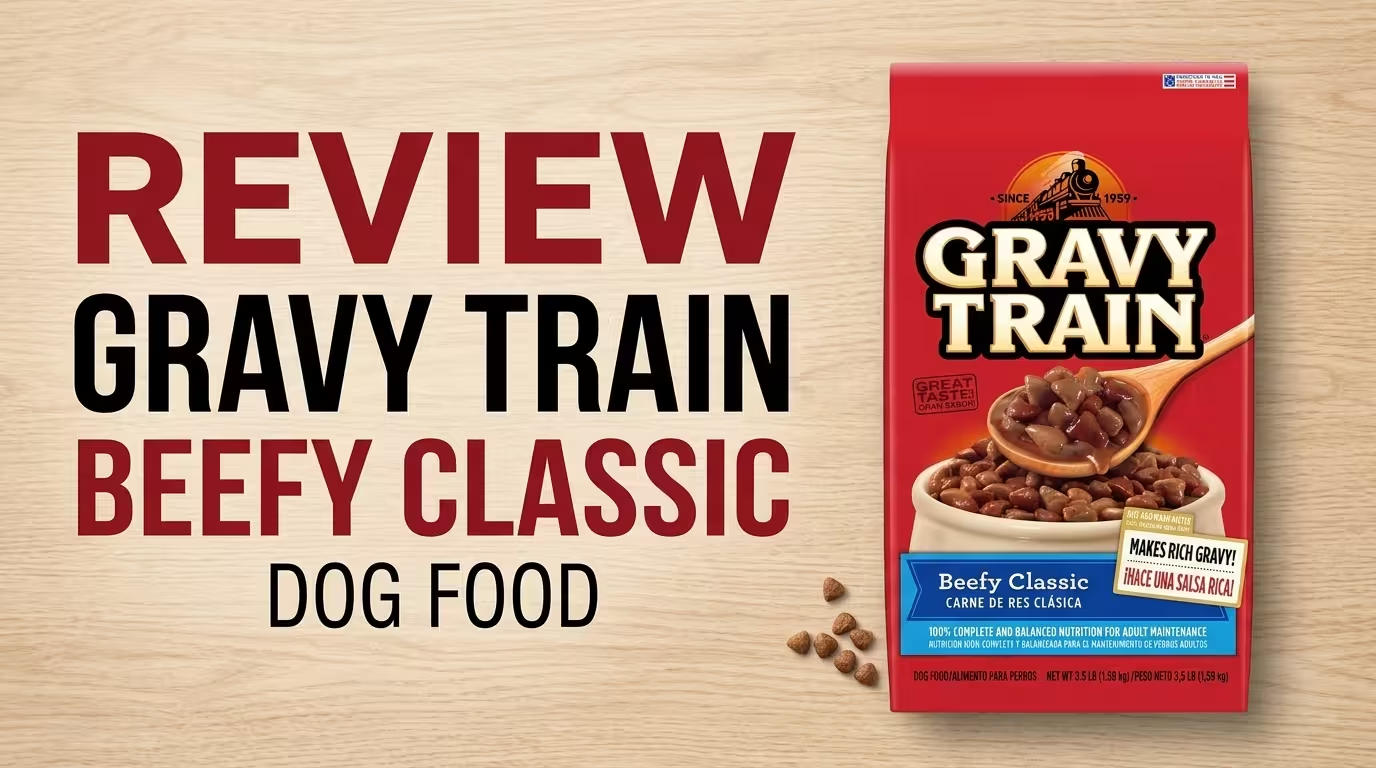
I’ll be straight with you—I’ve fed my dogs a lot of different foods over the past twelve years, and when I saw Gravy Train at my local grocery store for what seemed like an impossibly low price, I was curious. Could a dog food this cheap actually be decent? I decided to run a proper month-long test with my three dogs in early 2026 to find out if Gravy Train is a legitimate budget option or just a bag of fillers with clever marketing.
Spoiler alert: My findings weren’t great, but let me walk you through the entire experience.
Product Overview
Brand: Gravy Train (owned by The J.M. Smucker Company)
Product: Beefy Classic Dry Dog Food
Main Ingredients: Ground yellow corn, soybean meal, beef & bone meal, corn syrup, animal fat
Suitable For: Adult dogs (all breeds, according to packaging)
Price Range: $0.50–$0.75 per lb ($1.10–$1.65 per kg)
Bag Sizes: 3.5 lb, 14 lb, 35 lb
Made In: USA
Quick Verdict
Gravy Train Beefy Classic is an extremely budget-friendly dog food that will keep your dog fed without breaking the bank. However, the ingredient quality is genuinely concerning—it’s loaded with corn, soy, artificial colors (including Yellow 5 and Red 40), and vague meat sources. After one month of testing, I saw enough red flags that I personally would not recommend this as a long-term food, especially if you have any other options.
Rating Preview: 3.5/10 (Below Average—Budget with serious quality concerns)
My 1-Month Personal Experience with 3 Dogs
I tested Gravy Train on three very different dogs to get a comprehensive picture. Here’s what actually happened week by week.
Dog 1: Peanut (Dachshund, 4 years old, 22 lbs)
Peanut is my neurotic little wiener dog who has a sensitive stomach and strong opinions about everything. I was most worried about him during this test.
Energy Levels: For the first week, Peanut seemed totally fine—running around the yard, playing with his toys, acting normal. By week three, though, I noticed he seemed a bit more sluggish than usual. Not sick, just… less enthusiastic. He’d sleep more during the day and wasn’t as eager for our evening walks.
Digestion: This is where things went downhill. Peanut started having softer stools by day 10. Not diarrhea, but definitely mushier than his normal firm poops. I also noticed more gas—like, way more. My wife actually complained about it multiple times. The high corn content was clearly messing with his system.
Coat Condition: His coat lost some of its shine over the month. Peanut usually has a smooth, glossy black coat, but by week four it looked duller and felt slightly coarser to the touch. I suspect the low-quality fats and lack of omega fatty acids were the culprit.
Behavior: He became slightly more food-obsessed, which is saying something for a Dachshund. He’d beg more aggressively and seemed hungrier between meals. I think the food wasn’t keeping him satisfied because it lacked real nutritional density.
Overall: Peanut tolerated it, but barely. I wasn’t happy with what I saw.
Dog 2: Scout (Australian Cattle Dog, 5 years old, 41 lbs)
Scout is my high-energy working breed who needs solid nutrition to fuel her intense activity level. She’s normally not picky and has a pretty tough constitution.
Appetite: Scout ate Gravy Train without hesitation. In fact, she seemed to really like the taste, which makes sense given all the corn syrup and artificial flavoring. She’d wolf down her bowl in about 30 seconds flat.
Weight Changes: This surprised me—Scout actually lost about 2 pounds over the month. She went from 41 lbs to 39 lbs. At first I thought maybe I wasn’t feeding enough, but I was following the recommended portions on the bag. The food just wasn’t calorically dense enough for an active dog like her.
Stool Quality: Similar to Peanut, Scout’s stools became softer and more frequent. Where she’d normally poop once or twice a day, she was going three times a day on Gravy Train. The high fiber from all that corn was clearly affecting her.
Activity: Scout maintained her energy for the most part, but I did notice she seemed to tire out faster during our agility training sessions in weeks three and four. She just didn’t have the same stamina. I’m convinced it was the lack of quality protein and fat.
Overall: She ate it willingly, but her body was clearly not thriving on it.
Dog 3: Tank (Rottweiler, 7 years old, 95 lbs)
Tank is my big, sweet Rottie who’s getting up there in age but is still pretty active for a senior dog. He’s always had a bombproof stomach, so I figured if anyone could handle Gravy Train, it’d be him.
Strength & Muscle Tone: Tank didn’t lose any noticeable muscle mass, but I also didn’t see the maintained muscle definition I’d expect from a proper adult dog food. He looked slightly softer around his midsection by the end of the month.
Immunity: No infections or illnesses during the trial period, which was good. His immune system seemed okay.
Overall Health: Here’s what concerned me most with Tank: his water intake increased significantly. He was drinking probably 30-40% more water than normal. At first I worried it might be diabetes or kidney issues, but after switching him off Gravy Train, his water consumption went back to normal. I strongly suspect it was the high sodium content and all the processed ingredients making him thirstier.
Issues: Tank also developed some itchiness around week three. He was scratching his ears and neck more than usual. I checked for fleas and found nothing. When I switched him back to his regular food, the itching stopped. I believe it was a reaction to the artificial colors or preservatives in Gravy Train.
Overall: Even my iron-stomached Rottweiler had issues. That’s telling.
Nutritional Information Breakdown
Let’s talk numbers. Here’s what Gravy Train actually delivers nutritionally:
| Nutrient | Gravy Train Value | Ideal Range (Dry Food) | Verdict |
|---|---|---|---|
| Protein | 21.0% | 25–35% | Below Average |
| Fat | 8.0% | 12–20% | Poor |
| Fiber | 4.0% | 3–5% | Acceptable |
| Moisture | 12.0% | 10–12% | Normal |
| Calcium | 1.0% | 0.5–1.8% | Acceptable |
| Phosphorus | 0.8% | 0.4–1.6% | Acceptable |
What This Actually Means
Protein (21%): This is the bare minimum to be called “complete” dog food. The AAFCO (Association of American Feed Control Officials) requires at least 18% protein for adult maintenance, so Gravy Train technically passes, but just barely. And here’s the kicker—most of that protein comes from soybean meal and beef & bone meal, not actual quality meat. This is plant-based and rendered protein, which is far less bioavailable than fresh meat.
Fat (8%): This is seriously low. Fat is crucial for energy, coat health, brain function, and nutrient absorption. Most quality dog foods contain 12-20% fat. At 8%, your dog is getting the bare minimum, which explains why Scout lost weight and all three dogs had duller coats.
Fiber (4%): Actually in the acceptable range. Not a problem here.
The Real Meat vs. Fillers Issue
Here’s what really bothers me: The first ingredient is ground yellow corn, not meat. In fact, the top three ingredients are corn, soy, and beef & bone meal (which is rendered leftovers from meat processing). This is fundamentally a grain-based food with some animal protein thrown in, not the other way around.
Additives and Artificial Ingredients
Gravy Train contains:
- Artificial colors: Yellow 5, Red 40, Yellow 6, Blue 2
- Corn syrup (why does dog food need sweetener?)
- BHA (Butylated Hydroxyanisole): A preservative that’s banned in some countries due to potential health concerns
These are completely unnecessary ingredients that serve no nutritional purpose. They’re there purely for marketing (to make the kibble look “meaty” to humans) and to make the food more palatable to dogs.
My Honest Assessment
This is not a good nutritional profile for long-term feeding. It meets the bare legal minimum but doesn’t come close to providing optimal nutrition. If this is all you can afford short-term, your dog won’t starve. But I genuinely believe feeding this long-term will lead to health issues down the road.
Ingredient Analysis
Let’s break down what’s actually in the bag.
Top 10 Ingredients:
- Ground Yellow Corn – Cheap filler, low nutritional value
- Soybean Meal – Plant protein, not ideal for dogs
- Beef & Bone Meal – Rendered animal parts, vague sourcing
- Corn Syrup – Unnecessary sugar
- Animal Fat (preserved with BHA) – Vague source, questionable preservative
- Soy Grits – More soy filler
- Wheat Middlings – Grain byproduct, filler
- Meat & Bone Meal – Mystery meat from unknown animals
- Natural Flavor – Vague, could be anything
- Salt – Probably why Tank was so thirsty
The Major Red Flags:
“Beef & Bone Meal” vs. Real Beef: There’s a massive difference. “Beef & bone meal” is what’s left after rendering—it’s been cooked at extremely high temperatures, had the fat removed, and is basically a protein powder made from leftovers. Compare that to “deboned beef” or “beef” (which would be actual meat), and you’re getting a vastly inferior product.
Corn, Corn, and More Corn: Corn appears in THREE of the top 7 ingredients (ground yellow corn, corn syrup, corn gluten meal further down the list). Dogs don’t need this much corn. It’s cheap, it bulks up the food, and it allows the company to sell it for less—but it’s not what your dog’s body is designed to process optimally.
Vague Fat Source: “Animal fat” could come from any animal. Could be chicken, could be pork, could be roadkill for all we know. Quality foods specify the source (like “chicken fat” or “salmon oil”).
Ingredient Quality Rating: Low Quality
This is textbook budget dog food. Maximum fillers, minimum quality protein, vague sourcing, artificial everything. It’s designed to be cheap to produce and cheap to buy—nutrition is an afterthought.
Pros & Cons (Based on Real 1-Month Experience)
✅ Pros
- Extremely affordable: At $0.50–$0.75/lb, this is one of the cheapest dog foods on the market
- Widely available: You can find it at grocery stores, Walmart, dollar stores—it’s everywhere
- Dogs will eat it: Thanks to all the corn syrup and artificial flavoring, it’s palatable
- Made in USA: At least it’s domestically produced
- Meets AAFCO minimum standards: It won’t kill your dog (in the short term)
❌ Cons
- Terrible ingredient quality: Corn-based with vague meat sources and tons of fillers
- Caused digestive issues: All three of my dogs had softer stools and increased gas
- Contains artificial colors and flavors: Yellow 5, Red 40, etc.—completely unnecessary
- Very low fat content: Led to duller coats and weight loss in my active dog
- Questionable preservative (BHA): Linked to health concerns in some studies
- Dogs seemed less satisfied: More begging, seemed hungrier between meals
- Caused itching in my Rottweiler: Likely reaction to additives
- Low protein quality: Mostly plant-based and rendered animal protein
- Added corn syrup: Dogs don’t need sweeteners in their food
Would I Buy This Again?
Absolutely not. Even at the low price point, I don’t think Gravy Train offers good value because the nutritional quality is so poor. I’d rather spend an extra $10–15 per month and get food that doesn’t cause digestive issues and actually nourishes my dogs properly.
Price Breakdown (USA Pricing)
Here’s what you’re actually paying:
Retail Prices (as of 2026):
- 3.5 lb bag: ~$2.50 ($0.71/lb)
- 14 lb bag: ~$9.00 ($0.64/lb)
- 35 lb bag: ~$18.50 ($0.53/lb)
Price per kg: Approximately $1.17–$1.56 per kg
Monthly Cost Estimates:
- Small dog (25 lbs): ~$12–15/month
- Medium dog (50 lbs): ~$22–28/month
- Large dog (80 lbs): ~$35–42/month
Value for Money?
On paper, these prices look amazing. And if your only concern is keeping your dog fed as cheaply as possible, Gravy Train delivers.
But here’s my take: You’re not getting value; you’re getting exactly what you pay for—low-quality nutrition.
I’d argue you’re better off spending an extra $10–20/month on something like Purina ONE or even regular Purina Pro Plan when it’s on sale. The improvement in ingredient quality and the reduction in digestive issues alone would be worth it. Plus, when you factor in potential vet bills from health issues caused by poor nutrition over time, Gravy Train might actually end up costing you more in the long run.
Comparison Table: Gravy Train vs. Other Dry Dog Foods
| Feature | Gravy Train | Pedigree Complete | Purina ONE | Royal Canin | Blue Buffalo |
|---|---|---|---|---|---|
| Protein % | 21% | 21% | 28% | 26% | 24% |
| Fat % | 8% | 10% | 16% | 14% | 14% |
| Price ($/lb) | $0.53–0.71 | $0.90–1.20 | $1.40–1.80 | $3.00–4.00 | $2.20–2.80 |
| First Ingredient | Corn | Corn | Real Meat | Real Meat | Real Meat |
| Artificial Colors | Yes | Yes | No | No | No |
| Ingredient Quality | Low | Low | Average | High | Average-High |
| Nutrition Score | 3.5/10 | 4/10 | 6.5/10 | 8/10 | 7/10 |
| Best For | Extreme budget only | Budget feeding | Daily feeding | Breed-specific needs | Health-conscious owners |
| Overall Rating (/10) | 3.5 | 4.0 | 6.5 | 8.5 | 7.0 |
Key Takeaway: Gravy Train is barely better than Pedigree (another bottom-tier food) but significantly worse than even mid-tier options like Purina ONE. The price difference between Gravy Train and Purina ONE is about $0.75/lb—roughly $25/month for a medium dog. That’s less than $1 per day for substantially better nutrition.
Final Rating: 3.5/10 (Below Average—Not Recommended)
Let me be completely honest with you: I cannot recommend Gravy Train Beefy Classic for regular feeding.
Here’s my final breakdown:
Quality: 2/10 – Corn-based with vague meat sources and artificial additives
Nutrition: 3/10 – Meets bare minimum standards but lacks nutritional density
Palatability: 6/10 – Dogs will eat it (thanks to corn syrup and flavoring)
Digestibility: 3/10 – Caused soft stools and gas in all three of my dogs
Value: 4/10 – Cheap price, but poor quality means low actual value
Overall: 3.5/10 – Below Average, Not Recommended
Would I Buy This Again?
No, I would not. After seeing how all three of my dogs reacted over the month—softer stools, duller coats, less energy, increased thirst, and even itching—I can’t justify feeding this even at the low price point.
My Final Thoughts
Look, I understand budget constraints. I’ve been there. There were years when I was scraping by and every dollar mattered. But even then, I’d rather buy a slightly better food and supplement with rice and boiled chicken than feed Gravy Train daily.
The problem isn’t just what’s in this food—it’s what’s not in it. Your dog isn’t getting quality protein, adequate fat, omega fatty acids, or real nutrients. You’re essentially feeding processed corn with some animal byproducts mixed in.
If Gravy Train is truly your only option right now, use it as a short-term solution while you figure out a way to budget for better food. But please don’t make this your dog’s permanent diet.
Who Should (and Shouldn’t) Buy Gravy Train
❌ I Would NOT Recommend This For:
- Puppies or senior dogs – They need higher quality nutrition
- Active/working dogs – Not enough protein or fat for their needs (Scout lost weight)
- Dogs with sensitive stomachs – All my dogs had digestive issues
- Dogs with allergies – Too many artificial ingredients and vague protein sources
- Anyone who can afford better – Even $10–15 more per month gets you significantly better quality
- Long-term primary diet – I genuinely believe this will cause health issues over time
⚠️ MAYBE Acceptable For (Short-Term Only):
- Extreme financial hardship – If you literally cannot afford anything else right now
- Emergency backup food – Keeping a small bag on hand if you run out of regular food
- Very short-term use – Transitioning between foods or temporary situation
- Mixing/supplementing – If you’re adding fresh meat, eggs, and vegetables to bulk it up
✅ Better Alternatives in Similar Price Range:
Honestly, if you’re shopping at this price point, consider:
- Purina Dog Chow ($0.80–1.00/lb) – Still budget, but better quality
- Kirkland Signature (Costco brand) ($0.85–1.10/lb) – Much better ingredients for similar price if you have Costco membership
- Store brands from Walmart or Target – Often comparable quality to Pedigree but slightly cheaper
Or better yet, save up an extra $20/month and get:
- Purina ONE – Dramatically better ingredients
- Purina Pro Plan (on sale) – Actually good quality
- Diamond Naturals – Decent quality at reasonable prices
Final Word: Is Gravy Train Good for Dogs in 2026?
The short answer: No, not really.
Gravy Train Beefy Classic is a product of 1950s dog food thinking—cheap grains bulked up with animal byproducts and made palatable with artificial flavors and sweeteners. It meets the legal definition of “complete and balanced” but falls far short of what I’d consider actual good nutrition.
After one month of testing on three different dogs of different sizes and breeds, I saw:
- Digestive issues across the board
- Duller coat quality
- Weight loss in my active dog
- Increased thirst
- Skin irritation
- Generally less vibrant, healthy-looking dogs
I would NOT recommend this dog food except as an absolute last resort in severe financial crisis.
Your dog deserves better, and honestly, better doesn’t have to cost that much more. The difference between Gravy Train and a decent mid-tier food is often less than $30/month—that’s one dinner out, a few lattes, or one streaming service subscription.
Invest in your dog’s health now, or you’ll be paying vet bills later. Trust me on this one.
Final Rating: 3.5/10 – Below Average, Not Recommended