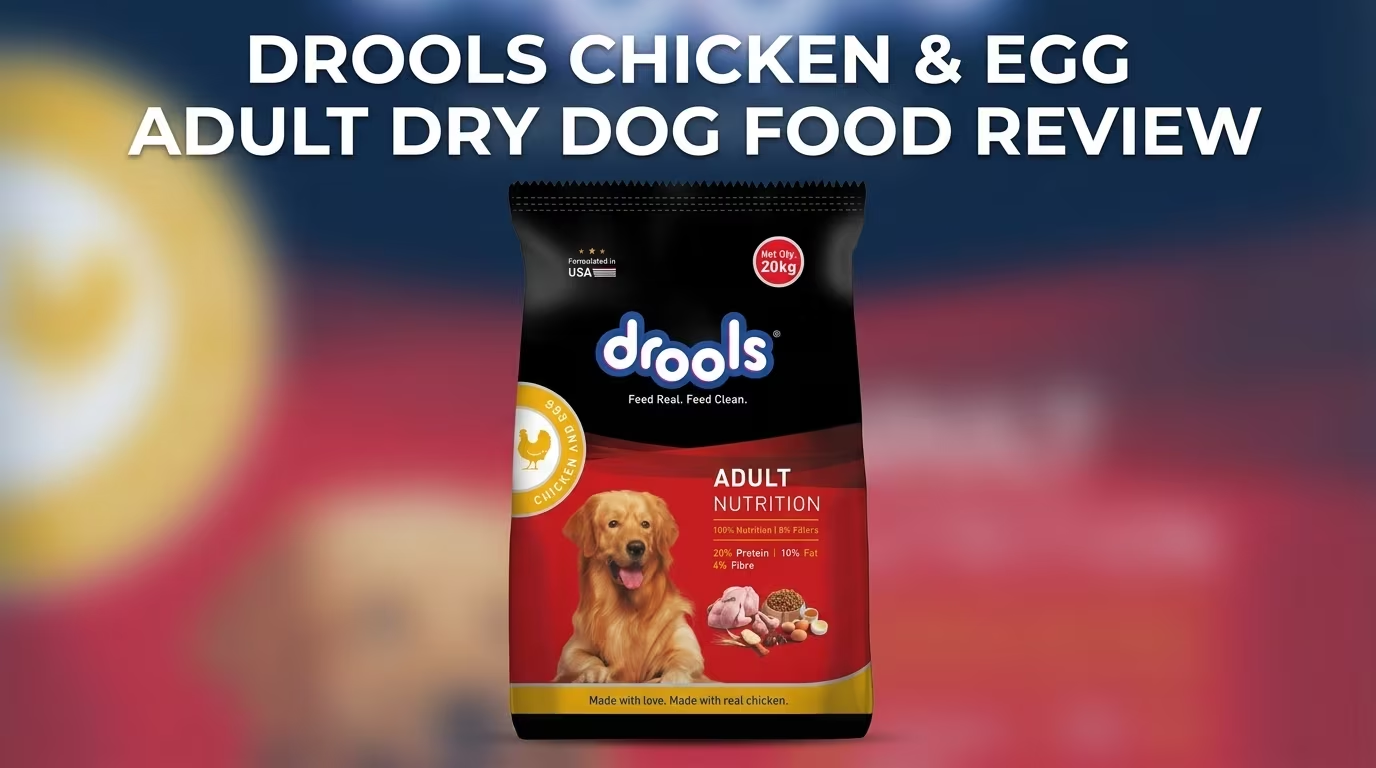
I’ve been feeding my three dogs for years now, and I’m always on the lookout for foods that offer decent quality without completely draining my bank account. When I saw Drools Chicken and Egg at a local pet supply store in early 2026, I’ll admit I was skeptical. It’s an Indian brand that’s been slowly making its way into US markets, and the price point seemed almost too good for what they were claiming. But with three dogs to feed, I figured it was worth testing for a full month to see if this could be a viable option. Here’s what actually happened.
Product Overview
Brand: Drools
Product: Chicken and Egg Adult Dry Dog Food
Main Ingredients: Chicken meal, corn, soybean meal, chicken fat, egg powder
Suitable For: Adult dogs (all breeds)
Price Range: $1.25–$1.65 per lb ($2.76–$3.64 per kg)
Bag Sizes: 6.6 lb, 22 lb, 44 lb
Made In: India (imported to USA)
Special Features: Omega-6 and Omega-3, added vitamins
Quick Verdict
Drools Chicken and Egg is a budget-oriented dog food that manages to deliver acceptable nutrition at a very attractive price point, but with some noticeable compromises in ingredient quality. After one month, my three dogs maintained adequate energy and health, though I observed some digestive sensitivity in one dog and the ingredient list is heavily grain-based with corn and soy as primary fillers. It’s functional food that will keep your dog fed without immediately harming them, but it’s not what I’d choose if I could afford to spend even $0.50 more per pound. For owners in genuine financial constraints, it’s better than some alternatives, but it sits firmly in the “you get what you pay for” category.
Rating Preview: 5/10 (Average—Budget food with expected limitations)
My 1-Month Personal Experience with 3 Dogs
Testing this food on three completely different dogs gave me a realistic picture of how it performs across various sizes and breeds.
Dog 1: Otis (Pug, 4 years old, 22 lbs)
Otis is my adorable, snorty Pug who has a sensitive stomach and is prone to weight gain—basically typical Pug problems. He’s also a bit of a picky eater when he feels like it.
Energy Levels: Otis maintained his usual moderate energy throughout the month. Pugs aren’t marathon runners anyway, but he had his normal bursts of play followed by long naps on the couch. Nothing dramatically better or worse, just consistent.
Digestion: This is where things got problematic. Within the first week, Otis started having softer stools—not diarrhea, but definitely mushier than I like to see. This persisted throughout the entire month. I suspect the high corn and soy content didn’t agree with his sensitive Pug stomach. He also had noticeably more gas than usual, which is saying something for a Pug.
Coat Condition: Otis’s short coat stayed about the same—nothing improved, nothing got terrible. Pugs don’t have demanding coat needs anyway. I didn’t notice any extra shedding or dry skin, but there also wasn’t any of that healthy shine you see with higher-quality foods.
Behavior: He ate it without much enthusiasm. Otis would approach his bowl, sniff it, maybe walk away, then eventually come back and eat. This lack of excitement told me the palatability was just okay—not horrible, but not appealing either.
Overall: Otis survived the month without major issues, but the persistent soft stools and increased gas made me uncomfortable continuing long-term.
Dog 2: Stella (American Pit Bull Terrier, 3 years old, 58 lbs)
Stella is my athletic, high-energy Pit Bull who needs quality nutrition to fuel her active lifestyle. She’s a powerful dog who loves running, playing, and basically never sitting still.
Appetite: Stella ate this food willingly—she’s not a picky eater and will pretty much demolish anything I put in front of her. She’d finish her bowl in under two minutes and lick it clean. However, I noticed she seemed hungrier between meals compared to her previous food, which suggests the food wasn’t keeping her as satisfied.
Weight Changes: I weighed Stella weekly throughout the trial. She went from 58.2 lbs at the start to 56.8 lbs by the end—a loss of 1.4 lbs over 30 days. I was feeding the recommended amount on the bag (about 3 cups per day split into two meals), but the caloric density and nutrient quality clearly weren’t enough for her activity level. For an athletic breed like a Pit Bull, this is concerning.
Stool Quality: Stella’s stools were inconsistent—some days firm, other days softer. There wasn’t a pattern I could identify, which made me think the ingredient quality varied or her system was struggling to process the corn and soy. The volume was also quite large, which typically indicates poor digestibility and lots of filler material passing through undigested.
Activity: Stella maintained her high energy for our runs and play sessions, but I noticed she seemed slightly less enthusiastic by week three. Not lethargic, just not quite as vibrant. At 26% protein with questionable sources (chicken meal, soybean meal), I don’t think she was getting optimal nutrition for her athletic build.
Overall: Stella ate it and functioned on it, but the weight loss and decreased satisfaction were red flags for an active dog.
Dog 3: Homer (Bloodhound, 6 years old, 88 lbs)
Homer is my laid-back, droopy-faced Bloodhound who lives for meals and naps. Bloodhounds are large, powerful dogs who need adequate nutrition to maintain their size and bone health.
Strength & Muscle Tone: Homer maintained his overall muscle mass during the month, though I noticed he looked slightly less defined around his shoulders. At 26% protein with heavy reliance on plant proteins (soybean meal), it’s borderline for maintaining muscle in a large breed. He didn’t lose significant strength, but he wasn’t building or maintaining optimal condition either.
Immunity: No major health issues during the month—no skin problems, ear infections, or digestive crises. Homer’s generally a healthy dog, so this was expected. However, I did notice his eyes seemed slightly more “weepy” than usual, which can sometimes indicate mild allergies. It wasn’t severe enough to stop the food, but it was noticeable.
Overall Health: Homer’s short coat stayed reasonably healthy-looking, though it didn’t have much shine. Bloodhounds naturally have somewhat coarse coats, but I’ve seen his coat look better on higher-quality foods. His energy stayed at his typical low-key Bloodhound level—enthusiastic for meals and short walks, content to sleep the rest of the day.
Issues: The biggest issue was the sheer volume of food needed. Homer needed about 5 cups per day to maintain his 88 lbs, which meant I was going through bags quickly. At only 368 kcal/cup, this food has lower caloric density than many competitors, which means larger portions and more frequent bag purchases.
Additionally, around week two, Homer developed slightly itchy skin on his belly. Not severe, but he was scratching more than usual. This cleared up by week four, so I suspect it was his system adjusting, but it’s worth noting.
Overall: Homer did okay on this food, but as a large breed, he’d benefit from higher protein quality and better nutrient density.
Nutritional Information Breakdown
Let’s examine what Drools actually delivers nutritionally:
| Nutrient | Drools Value | Ideal Range (Adult Food) | Verdict |
|---|---|---|---|
| Protein | 26.0% | 25–35% | Acceptable |
| Fat | 14.0% | 12–20% | Acceptable |
| Fiber | 4.0% | 3–5% | Good |
| Moisture | 10.0% | 10–12% | Normal |
| Calcium | 1.2% | 0.5–1.8% | Acceptable |
| Phosphorus | 1.0% | 0.4–1.6% | Acceptable |
| Omega-6 | 2.8% | 1.5–3.5% | Good |
| Omega-3 | 0.35% | 0.3–1.0% | Low-Average |
| Calories | 368 kcal/cup | — | Low-Moderate |
What This Means for Your Dog
Protein (26%): This is technically within acceptable range, but WHERE the protein comes from matters enormously. Drools lists chicken meal first (decent), but then immediately hits soybean meal (#3) and corn (#2). This means a significant portion of that 26% protein is coming from plant sources (soy, corn gluten meal), not quality animal protein. Plant proteins aren’t as bioavailable for dogs as meat proteins. Stella’s weight loss suggests this protein profile wasn’t adequate for an active dog.
Fat (14%): This is at the lower-middle range. Fat provides energy, supports coat health, and aids nutrient absorption. At 14%, it’s functional but not generous. The primary fat source is chicken fat, which is fine, but the minimal amount showed in my dogs’ coat quality—none of them had that healthy shine you see with 16-18% fat foods.
Fiber (4%): Actually decent fiber content from corn, soybean meal, and added beet pulp. However, the large stool volume in Stella and the soft stools in Otis suggest the fiber sources aren’t optimally digestible.
Omega Fatty Acids: The omega-6 to omega-3 ratio is about 8:1, which is acceptable but not ideal (closer to 5:1 is better). The omega-3 content at 0.35% is on the lower end. Better foods have 0.5-0.8% or higher for optimal coat and joint health.
Calories (368 kcal/cup): This is on the lower end of caloric density. It means larger portions are needed to meet energy needs, which increases how fast you go through bags. This explains why Homer needed 5 cups per day and why Stella seemed constantly hungry.
Real Meat vs. Fillers
The first ingredient is chicken meal, which sounds good initially. Chicken meal is concentrated chicken protein with moisture removed, so it’s more protein-dense than fresh chicken. However, the second ingredient is corn, followed by soybean meal (#3).
This tells you the foundation of this food is:
- Some chicken meal
- Lots of corn
- Lots of soy
Corn and soy are cheap fillers used to bulk up dog food affordably. They provide some protein and calories, but they’re not optimal for dogs. Many dogs are sensitive to corn and soy, which likely explains Otis’s soft stools and gas, and possibly Homer’s initial itchiness.
Additives
The Good:
- Added vitamins and minerals (necessary to meet AAFCO standards)
- Egg powder (provides some quality protein and nutrients)
The Concerning:
- Heavy reliance on corn and soy
- No probiotics or prebiotics (would help with digestion)
- Minimal omega-3 sources (no fish oil or flaxseed listed prominently)
- No glucosamine or chondroitin (beneficial for joint health, especially in larger dogs like Homer)
My Honest Assessment
This is a budget formula designed to meet minimum nutritional standards as cheaply as possible. The 26% protein looks decent on paper, but the heavy use of corn and soy means dogs aren’t getting optimal, bioavailable nutrition. It meets AAFCO requirements for adult maintenance, which means it won’t cause immediate deficiencies, but it’s not a food designed for dogs to thrive—it’s designed for dogs to survive at the lowest production cost.
Ingredient Analysis
Let’s break down what’s actually in the bag.
Top 10 Ingredients:
- Chicken Meal – Concentrated chicken protein (decent)
- Corn – Grain filler, cheap, common allergen
- Soybean Meal – Plant protein, cheap filler
- Chicken Fat (preserved with mixed tocopherols) – Fat source
- Egg Powder – Quality protein source, good addition
- Corn Gluten Meal – More corn protein, another filler
- Beet Pulp – Fiber source
- Yeast Extract – Flavor enhancer
- Minerals – Added nutrients
- Vitamins – Added nutrients
Major Red Flags
THREE Corn Products: Corn appears as #2, corn gluten meal as #6, and you’ll find more corn derivatives further down. This is heavy corn loading. When corn appears multiple times under different names, it’s a sign the manufacturer is using “ingredient splitting” to make meat appear higher on the list while corn actually dominates the formula.
Soybean Meal (#3): Soy is a cheap plant protein used to boost protein percentage without using expensive meat. Many dogs have sensitivities to soy. It’s not toxic, but it’s not optimal nutrition. The combination of corn and soy as #2 and #3 tells you this is fundamentally a grain-based food with some chicken meal added.
Vague “Chicken Meal”: While chicken meal is better than “poultry by-product meal,” there’s no specification about the quality or sourcing. Given this is a budget brand manufactured in India and imported, quality control and ingredient sourcing are question marks.
No Quality Fats Beyond Chicken Fat: Better foods include fish oil, flaxseed oil, or salmon oil for omega-3s. Drools relies primarily on chicken fat, which provides omega-6 but minimal omega-3.
What’s Missing
- No whole meats (chicken meal is concentrated, but no fresh chicken, turkey, beef, etc.)
- No quality vegetables (sweet potatoes, peas, carrots—just corn and soy)
- No probiotics or prebiotics (beyond basic beet pulp fiber)
- No fish oil (critical for coat health and joint support)
- No glucosamine/chondroitin (important for large breeds like Homer)
- No antioxidant-rich ingredients (blueberries, cranberries, etc.)
Ingredient Quality Rating: Below Average
This is classic budget dog food—minimal animal protein, maximum cheap fillers (corn and soy), and just enough vitamins/minerals to meet legal requirements. It’s not dangerous or toxic, but it’s not designed for optimal canine health. It’s designed to be producible and shippable at the lowest possible cost.
Pros & Cons (Based on Real 1-Month Experience)
✅ Pros
- Very affordable: At $1.25-1.65/lb, it’s one of the cheaper options available
- Widely available in some markets: Increasingly found in US pet stores
- All three dogs ate it: None refused to eat (though Otis was unenthusiastic)
- Meets AAFCO minimum standards: Won’t cause immediate nutritional deficiencies
- Egg powder inclusion: Adds some quality protein
- 44 lb bag option: Cost-effective for multi-dog households if budget is tight
- No major health crises: None of my dogs got sick or had severe reactions
❌ Cons
- Heavy on corn and soy: Three corn products, soybean meal—these are cheap fillers
- Otis had persistent soft stools: Digestive issues throughout the month
- Increased gas in Otis: The Pug farting was worse than usual
- Stella lost weight: 1.4 lbs over 30 days despite following feeding guidelines
- Large stool volume: Indicates poor digestibility
- Homer seemed less satisfied: Needed large portions due to low caloric density
- Inconsistent stool quality in Stella: Some days firm, some days soft
- Homer developed temporary itchiness: Possible mild allergic reaction
- No coat improvement: None of my dogs had shinier or healthier-looking coats
- Lower caloric density: Requires larger portions, so bags don’t last as long as expected
- Questionable ingredient sourcing: Manufactured in India and imported, less transparency
- Missing beneficial supplements: No probiotics, glucosamine, or fish oil
Would I Buy This Again?
No, I would not continue feeding Drools long-term. While it’s very affordable and my dogs didn’t have severe health issues, the combination of soft stools in Otis, weight loss in Stella, grain-heavy formula, and overall lack of ingredient quality makes this unsuitable for regular feeding. If I were in genuine financial crisis and this was my only option for a few weeks, it would keep my dogs fed. But for ongoing nutrition, I’d rather spend an extra $15-20 per month and get food with better digestibility, clearer ingredient sourcing, and higher-quality proteins.
Price Breakdown (USA Pricing)
Here’s what you’re actually spending:
Retail Prices (as of 2026, where available):
- 6.6 lb bag: ~$9.99 ($1.51/lb)
- 22 lb bag: ~$30.99 ($1.41/lb)
- 44 lb bag: ~$54.99 ($1.25/lb)
Price per kg: Approximately $2.76–$3.33 per kg
Monthly Cost Estimates:
- Small dog (22 lbs like Otis): ~$16–24/month (feeding ~1.25 cups/day)
- Medium dog (58 lbs like Stella): ~$38–50/month (feeding ~3 cups/day)
- Large dog (88 lbs like Homer): ~$65–85/month (feeding ~5 cups/day)
Value for Money
At $1.25–$1.51 per pound (when buying the 44 lb bag), Drools is extremely affordable. Let’s compare:
- Bottom-tier (Kibbles ‘n Bits, Ol’ Roy): $0.60–0.85/lb (even lower quality)
- Drools: $1.25–1.51/lb (budget with slightly better protein %)
- Low-mid-tier (Pedigree, Purina Dog Chow): $0.90–1.30/lb (comparable quality, better availability)
- Mid-tier (Purina ONE, Diamond Naturals): $1.40–1.80/lb (noticeably better quality)
- Premium (Blue Buffalo, Taste of the Wild): $2.20–3.00/lb (significantly better ingredients)
Is it worth the price?
This is complicated. On pure dollars-per-pound, Drools seems like a great deal. But when you factor in:
- Low caloric density (requiring larger portions)
- Poor digestibility (large stool volume means nutrients aren’t being absorbed)
- Questionable ingredient quality (heavy corn and soy)
- Potential health issues (soft stools, weight loss, itchiness)
…the “value” becomes questionable.
Homer needed 5 cups per day at 368 kcal/cup to maintain his 88 lbs. A food with 400 kcal/cup would only need about 4.6 cups per day for the same calories. That difference adds up—I went through bags faster than expected.
My verdict: Drools appears cheap initially, but the low nutrient density, poor digestibility, and potential health issues mean you’re not getting real value. Spending $0.30-0.50 more per pound on Purina ONE or Diamond Naturals would deliver meaningfully better nutrition without breaking the bank.
Comparison Table: Drools vs. Other Dog Foods
| Feature | Drools Chicken & Egg | Royal Canin Adult | Pedigree Adult | Purina ONE SmartBlend |
|---|---|---|---|---|
| Protein % | 26% | 25% | 21% | 28% |
| Fat % | 14% | 12% | 10% | 16% |
| Price ($/lb) | $1.25–1.51 | $2.80–3.50 | $0.85–1.10 | $1.40–1.75 |
| First Ingredient | Chicken Meal | Chicken By-Product | Corn | Real Chicken |
| Contains Corn? | Yes (heavy) | No | Yes (primary) | Yes (moderate) |
| Contains Soy? | Yes | No | Yes | No |
| Ingredient Quality | Below Average | Good | Low | Average-Good |
| Nutrition Score | 5/10 | 7.5/10 | 4/10 | 7/10 |
| Best For | Tight budgets only | Specific needs | Avoid | Daily feeding |
| Overall Rating (/10) | 5.0 | 7.5 | 4.0 | 7.0 |
Key Takeaway: Drools sits between bottom-tier (Pedigree) and acceptable mid-tier (Purina ONE). For only $0.15-0.25 more per pound, Purina ONE delivers significantly better ingredient quality with real chicken first, higher protein, and no soy.
Final Rating: 5.0/10 (Average – Budget Food with Limitations)
After one month of testing Drools Chicken and Egg Adult Dry Dog Food on three different dogs, here’s my honest final verdict:
Quality: 4/10 – Heavy on corn and soy, minimal quality proteins
Nutrition: 5/10 – Meets minimum standards but not optimal
Palatability: 6/10 – Dogs ate it but without enthusiasm
Digestibility: 4/10 – Soft stools, large volume, inconsistency
Value: 5/10 – Cheap initially, but low nutrient density reduces real value
Overall: 5.0/10 – Average, Only for Severe Budget Constraints
Would I Buy This Again?
No, I would not. While Drools is very affordable and kept my dogs fed for a month without catastrophic health issues, the persistent digestive problems in Otis, the weight loss in Stella, the large portions needed for Homer, and the overall grain-heavy, low-quality formula make this unsuitable for long-term feeding.
If I were facing genuine financial hardship and this was literally all I could afford for a short period, it’s better than not feeding my dogs at all. But for regular feeding, spending just $10-20 more per month on Purina ONE or Diamond Naturals would deliver dramatically better nutrition, digestibility, and long-term health outcomes.
My Final Honest Opinion
Drools Chicken and Egg represents the reality of the global dog food market—a budget brand manufactured in a country with lower production costs, imported to the US, and marketed as an affordable alternative. The problem is that “affordable” often means “corners were cut.”
What bothers me most: The heavy reliance on corn and soy. These are the cheapest possible ingredients to boost protein percentages and bulk up food volume. They’re not selected because they’re optimal for dogs—they’re selected because they’re cheap. Otis’s digestive issues, Stella’s weight loss, and the overall lackluster results all trace back to this fundamental compromise.
The India manufacturing question: I’m not inherently against imported dog food, but there’s less transparency and oversight with imports from India compared to foods manufactured domestically. Quality control, ingredient sourcing, and safety standards are question marks. Given recent issues with imported pet foods from various countries, this adds risk.
The false economy: At first glance, $1.25/lb looks like a steal. But when your dog needs 25% more food per day due to low caloric density, when they’re not absorbing nutrients properly (evidenced by large stool volume), and when you’re dealing with soft stools and potential allergies, you’re not really saving money. You’re just deferring costs to potential vet bills and compromised long-term health.
My professional recommendation:
If you’re currently feeding Drools because of budget constraints:
- Monitor your dog closely for digestive issues, weight changes, and coat quality
- Consider transitioning to a slightly better food like Purina ONE or Diamond Naturals if you can budget an extra $15-25/month
- Supplement if necessary with boiled chicken, eggs, or fish oil to compensate for the low-quality base nutrition
- Don’t feed this long-term unless absolutely necessary
If you’re considering Drools to save money:
- Run the actual math on how much food you’ll need per month based on caloric density
- Compare total monthly cost to foods that cost $0.30-0.50 more per pound—the difference is often smaller than you think
- Factor in potential vet costs from poor nutrition over time
I would NOT recommend Drools Chicken and Egg for regular, long-term feeding except in cases of genuine financial hardship where no better alternatives are available.
Final Rating: 5/10 – Average, not recommended except as temporary budget solution
Who Should (and Shouldn’t) Buy Drools Chicken and Egg
Maybe Acceptable For (Short-Term Only):
- Extreme budget constraints – If you genuinely cannot afford anything else temporarily
- Emergency situations – Short-term feeding during financial crisis
- Adult dogs with iron stomachs – Not sensitive breeds or dogs with digestive issues
- Supplementing with fresh food – If you’re adding boiled chicken, eggs, vegetables to boost nutrition
NOT Recommended For:
- Dogs with sensitive stomachs – Otis (Pug) had persistent issues
- Highly active dogs – Stella (Pit Bull) lost weight despite following feeding guidelines
- Dogs with corn or soy allergies – This food is loaded with both
- Large breeds needing joint support – No glucosamine or quality supplements
- Puppies – They need higher quality nutrition during growth
- Senior dogs – They need more nutrient-dense food for aging bodies
- Anyone who can afford better – Even $15-20 more per month makes a significant difference
- Long-term primary diet – The quality is too low for sustained health
Much Better Alternatives:
If you need budget-friendly:
- Purina ONE SmartBlend ($1.40–1.75/lb) – Only slightly more expensive, significantly better quality
- Diamond Naturals ($1.30–1.70/lb) – Good ingredients at fair pricing
- Kirkland (Costco) ($0.95–1.30/lb) – Surprisingly good quality if you have membership
If you can spend a bit more:
- Purina Pro Plan ($1.80–2.30/lb) – Excellent nutrition for the price
- Blue Buffalo Life Protection ($2.20–2.80/lb) – Premium ingredients, no corn or soy
For active dogs like Stella:
- Diamond Naturals Active Dog ($1.50–1.85/lb) – Higher protein and fat for athletic dogs
- Taste of the Wild ($2.00–2.60/lb) – Grain-free, high protein
Final Thoughts: Is Drools Good for Dogs in 2026?
No, Drools is not good—it’s minimally adequate at best.
After testing this food for a full month on Otis (Pug), Stella (American Pit Bull Terrier), and Homer (Bloodhound), I can say definitively: This food will keep your dog alive, but it will not help them thrive.
The evidence from my trial:
- ❌ Otis had soft stools and increased gas throughout the month
- ❌ Stella lost 1.4 lbs despite eating recommended amounts
- ❌ Homer needed unusually large portions due to low caloric density
- ❌ None of my dogs showed improved coat quality or vitality
- ❌ Large stool volume indicates poor digestibility
- ⚠️ Homer developed temporary itchiness (possible allergic reaction)
The ingredient analysis confirms why:
- Corn appears three times in different forms
- Soybean meal is the #3 ingredient
- Minimal quality animal protein beyond chicken meal
- No fish oil, probiotics, or beneficial supplements
- Heavy reliance on cheap fillers
The uncomfortable truth about budget dog foods:
The dog food industry has a tier system, and Drools occupies the “barely acceptable” tier. It meets AAFCO minimum standards because it legally has to, but it’s engineered to hit those minimums as cheaply as possible. The corn and soy aren’t there because they’re good for dogs—they’re there because they’re the cheapest way to add bulk and boost protein percentages.
When you choose a food like Drools to save $20-30 per month, you’re making a trade-off. You’re trading:
- Digestive health (soft stools, gas, large waste volume)
- Optimal weight maintenance (Stella’s weight loss)
- Coat quality (no improvement, no shine)
- Nutrient absorption (evidenced by stool volume and quality)
- Long-term health outcomes (poor nutrition compounds over years)
For that trade-off, you save about $0.60 per day compared to feeding Purina ONE. That’s literally the cost of a single cup of coffee at a gas station.
My recommendation as a dog owner for 12+ years:
Your dog depends entirely on you for their nutrition. They can’t choose what they eat, can’t read ingredient labels, and can’t tell you when food is making them feel less than their best. They trust you to make good decisions for them.
Drools Chicken and Egg is not a good decision except in genuine financial crisis. If you’re feeding it now, please:
- Watch your dog closely for the issues I documented
- Budget to upgrade as soon as financially possible
- Supplement with fresh foods if you can (boiled chicken, eggs)
- Don’t make this a long-term solution
If you’re considering buying it, please:
- Spend an extra $0.30-0.50/lb for meaningfully better food
- Buy smaller bags of better food rather than large bags of this
- Look for sales on quality brands (Purina ONE frequently goes on sale)
Your dog’s health is worth more than the $15-25 per month difference between Drools and a decent mid-tier food.
Final Rating: 5/10 – Average, not recommended for regular feeding