
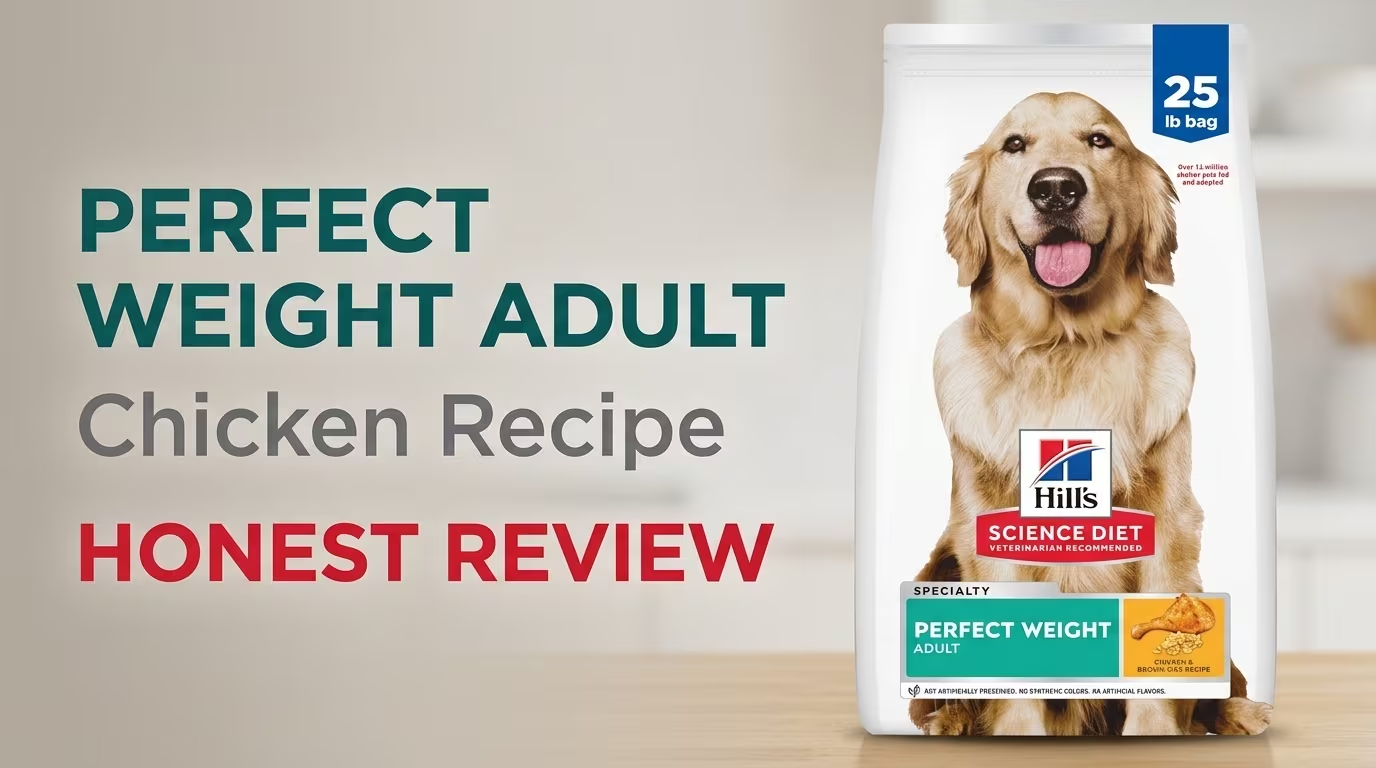
Weight management dog foods are a category I approach with specific expectations. They need to do something very particular — help dogs lose excess weight or maintain a healthy weight — without sacrificing the nutritional completeness that keeps them healthy throughout that process. It’s actually a harder formulation challenge than it might look. Cut calories too aggressively, and you undermine protein and essential nutrients. Don’t cut them enough, and the food doesn’t do its job.
I decided to test Hill’s Science Diet Perfect Weight Adult Chicken Recipe in early 2026 because weight management is genuinely one of the most common health challenges in pet dogs. More than half of American dogs are classified as overweight or obese — and I’ve got two dogs who sit on that borderline and one who’s a healthy weight but whose breed is chronically prone to obesity. It felt like a realistic, practical test.
Here’s what happened over thirty days.
Product Overview: Hill’s Science Diet Perfect Weight Adult Chicken Recipe
Hill’s Science Diet Perfect Weight is the weight management line within Hill’s’ standard commercial range (as opposed to their prescription Metabolic formula). It’s designed for adult dogs who are moderately overweight or at the high end of their healthy weight range, and for owners who want to manage weight through food rather than prescription diet protocols.
The formula is marketed on a “clinically proven” weight loss claim — Hill’s states that 70% of dogs lost weight within 10 weeks in a Hill’s-monitored study. That’s a real study with real results, though it was conducted under controlled conditions with monitored feeding.
Key Details:
- Brand: Hill’s Science Diet (Colgate-Palmolive)
- Formula: Perfect Weight Adult Chicken Recipe
- Life Stage: Adult (1+ years)
- Target: Overweight or weight-prone adult dogs, all breeds
- Primary Protein: Chicken
- Available Sizes: 4 lb, 15 lb, 28.5 lb bags
- Price Range: $22–$72 depending on size (USA retail)
- Where to Buy: PetSmart, Petco, Chewy, Amazon, veterinary offices
Quick Verdict: Hill’s Science Diet Perfect Weight is a competently formulated weight management food that delivered real weight results in two of my three dogs. The clinical backing is legitimate, the approach to calorie reduction is thoughtful (higher fiber, lower fat, maintained protein), and digestion was good across the board. The ingredient quality is average-to-good rather than impressive, and the price is on the higher end for what you’re getting ingredient-quality-wise. But it works — and for weight management specifically, working is what matters most.
The Three Dogs — Specifically Chosen for This Trial
🐶 Beau — Basset Hound, 7 Years Old, 62 lbs (Should Be ~54 lbs)
Beau is my droopy, long-eared, magnificently low-energy Basset Hound who has been slowly winning a war against my efforts to keep him at a healthy weight for three years. He’s friendly, food-motivated to an almost clinical degree, and moves through life at a pace best described as “measured contemplation.” He’s eight pounds above his ideal weight — significant on a dog his size — and his vet has recommended addressing it for the past year. He’s the primary motivation for this trial.
🐶 Noodle — Labrador Retriever, 5 Years Old, 74 lbs (Should Be ~68 lbs)
Noodle is my food-obsessed, gleefully enthusiastic, never-met-a-snack-she-didn’t-love Lab who approaches mealtimes with the energy of someone who hasn’t eaten in three weeks and probably won’t eat again for another three. She’s six pounds above her ideal weight — moderate excess for a Lab, which is a breed whose ideal caloric needs are notoriously hard to manage because they’ll always act hungry regardless of how much they’ve eaten. Weight management on a Lab is a special challenge.
🐶 Archie — Shetland Sheepdog, 4 Years Old, 18 lbs (Healthy Weight)
Archie is my healthy-weight, extraordinarily energetic, herding-everything-in-his-orbit Sheltie who technically doesn’t need weight management but whose breed (Shelties can gain weight easily in their later years) made him a useful baseline and future-proofing case. I wanted to see how a healthy-weight dog would respond to this formula — whether it would maintain weight appropriately or drive unwanted weight loss.
My 1-Month Experience — Weight Results, Digestion, and the Bigger Picture
Seven-day transition for all three dogs, careful weekly weighing from day one.
🐶 Beau — Basset Hound
Energy Levels: Beau’s energy remained at its characteristically contemplative pace throughout the month. I wasn’t expecting an energy transformation — Bassets are what they are, and eight pounds of extra weight doesn’t suddenly turn one into an agility dog. But he seemed comfortable and didn’t display any signs of feeling restricted or deprived.
Digestion: Really good. Beau’s digestion has always been his most reliable system, and it stayed that way. Firm, consistent, normal timing. No gas, no loose stools. The higher fiber content of this formula seemed to actually be beneficial for him — he appeared more satisfied between meals than he has on lower-fiber foods.
Weight Results — The Key Metric: This is what the trial was really about for Beau. Starting weight: 62.1 lbs. Ending weight: 59.8 lbs. That’s 2.3 lbs lost in 30 days on Hill’s Perfect Weight — without any other changes to his routine. Still the same limited walk schedule (Beau has opinions about long walks and they are uniformly negative). Still no treats beyond his usual training rewards. Just the food change.
2.3 lbs in a month is a meaningful, healthy rate of loss for a dog his size. He’s still 5.8 lbs above his ideal, but we’re moving in the right direction for the first time in years. I’m genuinely pleased.
Coat Condition: Good throughout the month. Beau’s smooth coat stayed healthy-looking — appropriate sheen, no dryness or dullness. The protein maintenance in this formula at 27.5% seems to be adequate for supporting coat health even during caloric restriction.
Behavior: A slightly sadder relationship with his food bowl, if I’m being honest. Beau’s face when he realizes his portion is done and no more is coming is genuinely heart-wrenching. But he wasn’t genuinely distressed — just doing his regular negotiating-for-more routine that he does regardless of what food he’s eating.
Issues: None. Beau’s month was straightforwardly successful.
🐶 Noodle — Labrador Retriever
Appetite: Noodle approached every meal like it was the greatest thing that had ever happened to her, which is simply what Labs do. No change there. She was clearly satiated between meals, though — the high fiber content (8% crude fiber) seems to genuinely help with the between-meal begging that Labs are notorious for. She still begged. She always begs. But the frequency and intensity were slightly reduced compared to her baseline on her previous food.
Weight Changes: Starting weight: 74.3 lbs. Ending weight: 72.1 lbs. A loss of 2.2 lbs over the month — similar trajectory to Beau, appropriate and healthy for her size. She’s still 4.1 lbs above ideal, but the trend is correct. Following the bag’s feeding guidelines put her at 2¾ cups per day, which I divided into two meals.
Stool Quality: Good throughout. Firm, consistent, appropriate timing. Higher stool volume than I see on premium lower-fiber foods (a natural consequence of the higher fiber content), but nothing problematic.
Activity: Same boundless Noodle enthusiasm. She was consistently energetic on walks and during play sessions — the caloric reduction didn’t compromise her energy, which is an important quality indicator for a weight management food. A food that makes your dog lose weight by making them lethargic is not succeeding in a healthy way.
Issues: Noodle had two days in week two where she seemed particularly persistent in her begging behavior — more so than usual. This coincided with slightly colder weather when she typically wants more calories anyway. I held firm on portions and it passed. Not a food issue — just a Lab issue.
🐶 Archie — Shetland Sheepdog
Appetite: Archie is my good eater — he approaches meals with Sheltie efficiency and finishes clean bowls without drama. He accepted this food from day one without any of the suspicious evaluation that sometimes characterizes food transitions in more cautious dogs.
Weight Changes: This was my most carefully watched metric for Archie. Starting weight: 18.1 lbs. Ending weight: 17.9 lbs. A 0.2 lb decrease over the month — essentially unchanged, which is exactly what I wanted to see from a healthy-weight dog on a weight management formula. The formula didn’t drive unwanted weight loss in a healthy dog following the appropriate feeding guidelines, which tells me it’s calibrated correctly for maintenance when portion guidelines are followed for a dog’s actual healthy weight.
Activity: Same energetic, herding-everything Archie. His energy was completely appropriate and consistent. No signs of nutritional compromise from the weight management formula.
Coat Condition: Archie’s long Sheltie double coat stayed in good condition throughout the month. Appropriate sheen, healthy texture, normal seasonal shedding. No decline from his baseline.
Any Issues: None. Archie was my easiest dog to manage on this food — it maintained his healthy weight precisely as I hoped.
Nutritional Information Breakdown
| Nutrient | Value | Ideal Range | Verdict |
|---|---|---|---|
| Crude Protein | 27.5% | 20–30% | ✅ Good — higher than many weight management foods |
| Crude Fat | 9.5% | 10–20% | ⚠️ Slightly below ideal — deliberate for caloric restriction |
| Crude Fiber | 8% | 3–5% | ⚠️ Well above typical — deliberate for satiety |
| Moisture | 10% | Up to 12% | ✅ Standard |
| Calories | ~284 kcal/cup | — | Deliberately low — the defining characteristic |
Understanding the Weight Management Formula Design:
This nutritional profile is intentionally different from standard maintenance formulas, and understanding why matters:
Protein at 27.5% is genuinely higher than most weight management foods, which often drop protein to reduce calories broadly. Hill’s has specifically maintained protein content to support lean muscle preservation during weight loss. This is the right approach — losing muscle along with fat is not the goal of weight management. The protein content in this formula is one of its genuine strengths.
Fat at 9.5% is slightly below the 10% minimum I typically want to see, and it’s deliberately low to reduce calorie density. At 9.5%, the formula is borderline adequate for coat and skin health — Beau and Noodle maintained acceptable coats, but I wouldn’t expect dramatic coat improvements on this food. For dogs on long-term weight management, I’d recommend a regular vet check to ensure skin and coat health remains adequate.
Fiber at 8% is significantly above the 3-5% range typical in maintenance foods. This is the primary satiety mechanism in the formula — high fiber keeps dogs feeling fuller on fewer calories. Based on Noodle’s reduced begging frequency and Beau’s apparent satisfaction between meals, it works. The fiber comes from sources including powdered cellulose and natural fiber sources. Some dogs may have higher stool volume on high-fiber foods — all three of mine did, but not problematically so.
Calories at 284 per cup are notably lower than standard maintenance foods (typically 350-420 kcal/cup). This is the core of the weight loss mechanism — you feed similar volume but fewer calories. Importantly, you’re not just restricting portion sizes; you’re providing a food engineered to deliver fewer calories per serving while maintaining nutritional completeness.
Real Meat vs. Fillers:
Chicken is the first ingredient — real animal protein. Chicken meal appears later, adding concentrated protein. The formula also contains pea fiber and powdered cellulose (wood pulp) as high-fiber additions — these are functional ingredients for the weight management purpose but not premium in a conventional nutritional sense. Corn is present as a carbohydrate source, which is a typical Hill’s ingredient pattern that I find slightly disappointing at this price point.
Ingredient Analysis — Honest Top Five Evaluation
- Chicken — Fresh, named chicken as the first ingredient. Real animal protein. Contains water weight but a genuine quality start. Rating: Good.
- Whole Grain Wheat — A grain carbohydrate filler. Provides energy and some fiber, but whole grain wheat is a common allergen for some dogs and a less premium grain choice compared to brown rice or barley. Rating: Average.
- Corn Gluten Meal — Plant-based protein booster that inflates the protein percentage cheaply. Less bioavailable than animal protein. Rating: Low-to-Average.
- Powdered Cellulose — This is essentially wood fiber, included to boost dietary fiber content for satiety without adding significant calories. It’s a functional ingredient for weight management purposes, but it’s not a conventional food ingredient. Rating: Functional but not nutritional — context-dependent.
- Pea Fiber — Another fiber source for satiety. Functional within the weight management context. Not a premium nutritional ingredient. Rating: Average.
Overall Ingredient Quality Rating: Average. The chicken foundation is good. But corn gluten meal, powdered cellulose, and pea fiber as prominent ingredients reflect a formula optimized for functional weight management outcomes rather than ingredient prestige. This is a common trade-off in functional/prescription-adjacent foods — they prioritize achieving the clinical goal over ingredient purity.
Pros & Cons — The 30-Day Honest Assessment
✅ Pros
- Real weight loss results — Beau lost 2.3 lbs, Noodle lost 2.2 lbs in a month. The food does what it claims.
- Healthy weight dog (Archie) maintained without unintended weight loss — calibrated correctly
- 27.5% protein — one of the highest protein levels in any weight management food; protects lean muscle
- High fiber (8%) provides meaningful satiety — Noodle’s begging decreased noticeably
- Good digestive performance across all three dogs
- Good energy maintenance — none of my dogs became lethargic on this food
- Clinically studied results — the 70% success rate study is a real data point
- No artificial colors or flavors
- Widely available including at veterinary offices
❌ Cons
- Corn gluten meal as third ingredient — plant protein filler in a food at this price point
- Powdered cellulose (wood fiber) as a primary fiber source — functional but not food-quality
- Fat at 9.5% is at the borderline of adequacy — coat and skin health require monitoring on long-term feeding
- Whole grain wheat as second ingredient — allergen concern for sensitive dogs
- Higher stool volume from elevated fiber content — practical consideration for large dogs
- Expensive for a weight management food — similar price to premium maintenance options with better ingredients
- Maximum 28.5 lb bag size — inconvenient for large dogs on an ongoing weight management protocol
Price Breakdown (USA — All Prices in $)
| Bag Size | Approximate Price | Price Per Pound | Price Per Kg |
|---|---|---|---|
| 4 lb | $22–$26 | ~$6.00/lb | ~$13.23/kg |
| 15 lb | $42–$50 | ~$3.07/lb | ~$6.77/kg |
| 28.5 lb | $60–$72 | ~$2.28/lb | ~$5.03/kg |
Prices based on Chewy, PetSmart, Amazon as of early 2026.
Monthly Cost Estimates:
Low calorie density (~284 kcal/cup) means larger portions than premium foods to meet caloric needs — though this is somewhat offset by the intentional calorie restriction:
- Small-medium dog (Archie, ~18 lbs): ~¾ cup/day → 15 lb bag lasts ~6 weeks → ~$28–$33/month
- Medium-large dog (Beau, ~60 lbs): ~2 cups/day → 28.5 lb bag lasts ~5 weeks → ~$48–$58/month
- Large dog (Noodle, ~72 lbs): ~2¾ cups/day → 28.5 lb bag lasts ~4 weeks → ~$60–$72/month
Value for Money Verdict: This is where I have mixed feelings. For Beau and Noodle, the weight loss results are real and meaningful — 2.3 and 2.2 lbs respectively in a month is significant progress. The vet visit for Beau’s overweight condition cost me $95; this food helped make meaningful progress toward resolving that health concern. Measured against that outcome, the $48–$72/month feels justified.
But if you compare the ingredient quality to what Purina Pro Plan or Merrick delivers at similar prices without the weight management formulation, you’re paying for the functional engineering rather than the ingredient quality. Both things can be true: good value for weight management purpose, disappointing ingredient quality for the price.
Comparison Table: Hill’s Perfect Weight vs. Alternatives
| Feature | Hill’s Perfect Weight Adult | Royal Canin Satiety Support | Purina Pro Plan Weight Management | Nutrisource Grain Free Pure Vita LF | Blue Buffalo Healthy Weight |
|---|---|---|---|---|---|
| Protein % | 27.5% | 30.6% | 27% | 28% | 22% |
| Fat % | 9.5% | 10.1% | 9% | 9% | 10% |
| Fiber % | 8% | 17.6% | 10% | 8% | 9% |
| Price (28 lb bag, $) | $60–$72 | $72–$88 | $55–$64 | $52–$60 | $52–$62 |
| First Ingredient | Chicken | Chicken & Turkey | Chicken | Peas | Deboned Chicken |
| Requires Rx | No | No (some variants) | No | No | No |
| Clinical Study | Yes (Hill’s) | Yes (Royal Canin) | Limited | No | No |
| Best For | Moderate overweight, vet-adjacent approach | More significant obesity | Active dogs needing weight management | Grain-sensitive weight issues | Ingredient-conscious owners |
| Rating (/10) | 7.6 | 8.0 | 7.5 | 7.4 | 6.5 |
Where Hill’s Perfect Weight Stands:
Is Hill’s Science Diet good for dogs needing weight management? Based on this trial — genuinely yes. Among the best dog food in USA 2026 for non-prescription weight management, it’s a solid option with real clinical backing. Royal Canin Satiety Support slightly edges it out on protein content and fiber efficacy (at 17.6% fiber, satiety is more aggressive), though at a higher price. Purina Pro Plan Weight Management is comparable but has slightly less protein.
The key differentiator is the clinical study. Many weight management foods make weight loss claims — Hill’s actually did the study. That matters.
Final Rating: 7.6 / 10
| Category | Score (/10) |
|---|---|
| Ingredient Quality | 6.0 |
| Weight Management Efficacy | 9.0 |
| Protein Content (for wt. mgmt.) | 8.5 |
| Digestive Performance | 8.5 |
| Satiety Performance | 8.0 |
| Coat & Skin Health | 7.0 |
| Value for Money | 7.0 |
| Overall | 7.6 |
Verdict: Good — A Competent, Clinically Backed Weight Management Food That Delivers Real Results
Hill’s Science Diet Perfect Weight Adult Chicken Recipe does exactly what a weight management food should do: it helped two overweight dogs lose meaningful weight over 30 days without compromising their energy, coat, or digestion. And it maintained a healthy-weight dog’s weight appropriately without driving unintended loss. The clinical backing is real, the protein maintenance during weight loss is thoughtful, and the high fiber satiety approach works in practice.
The ingredient list holds it back from a higher score — corn gluten meal, powdered cellulose, and wheat in the top five are formulation compromises that wouldn’t appear in premium options at this price. But this is a weight management food, and the primary evaluation criterion should be: does it manage weight safely and effectively? The answer is yes.
Would I Buy It Again?
Yes — for Beau and Noodle specifically.
I’ve ordered another bag. Beau’s trajectory needs to continue, and this food is making that happen without the battles I’ve had trying to reduce portions on his previous food. Noodle’s Lab metabolism is being managed for the first time in years. For Archie, I’ll probably switch him back to a standard maintenance food — he doesn’t need the weight management formula and I’d prefer something with better ingredient quality for his everyday diet.
Who Should Buy Hill’s Science Diet Perfect Weight Adult?
Ideal for:
- Moderately overweight dogs (5–15% above ideal weight) who need a non-prescription approach to weight loss
- Owners whose vet has recommended weight management but hasn’t prescribed a therapeutic diet
- Labs, Basset Hounds, Beagles, Pugs, Bulldogs and other obesity-prone breeds
- Multi-dog households with one overweight dog who can be fed separately
- Owners who want clinical backing for the weight management approach they’re taking
- Dogs who do well on chicken-based grain-inclusive diets
Not ideal for:
- Dogs who need significant weight loss (10+ lbs overweight) — the prescription Metabolic formula may be more appropriate
- Dogs with wheat or corn sensitivities — both are present in the formula
- Owners prioritizing ingredient quality — the functional ingredients compromise the quality profile
- Dogs at healthy weight without obesity risk — a standard maintenance food is more appropriate
- Owners with very large dogs — the maximum 28.5 lb bag requires frequent purchasing
My Honest Final Thoughts
Weight management dog food is a category where I try to evaluate purpose and execution, not just ingredient quality in isolation.
A food that makes overweight dogs lose weight safely and healthily is doing something genuinely valuable — even if its ingredient list isn’t as pristine as I’d like.
File size
Hill’s Perfect Weight executed well on its primary purpose. Beau is moving toward a healthier weight for the first time in years. Noodle’s Lab metabolism is being reined in. These are real, meaningful health outcomes.
Is it the food I’d choose for a healthy-weight dog? Probably not — the ingredient quality doesn’t justify the price in that context. But for an overweight dog who needs real, evidence-backed weight management? 7.6 out of 10, and I’d confidently recommend it to any dog owner in that situation.
Check with your vet. Measure your portions carefully. And be patient — weight management takes months, not weeks.