I’ve reviewed Orijen Original before and came away genuinely impressed. But the Six Fish formula is a different animal — or rather, a different fish. Where Original blends multiple protein sources including poultry and fish, Six Fish is exactly what it sounds like: six species of wild-caught fish as the entire protein foundation. No chicken, no turkey, no red meat. Just fish.
That specificity intrigued me. It also made me curious about palatability (would all three of my dogs actually eat it?), digestive response (high fish content affects digestion differently than poultry), and whether the nutritional profile justified the even-higher-than-Orijen-Original price tag.
In early 2026, I committed to a full 30-day trial with all three of my dogs. Here’s what happened — including the one dog who made the whole experience significantly more challenging than I anticipated.
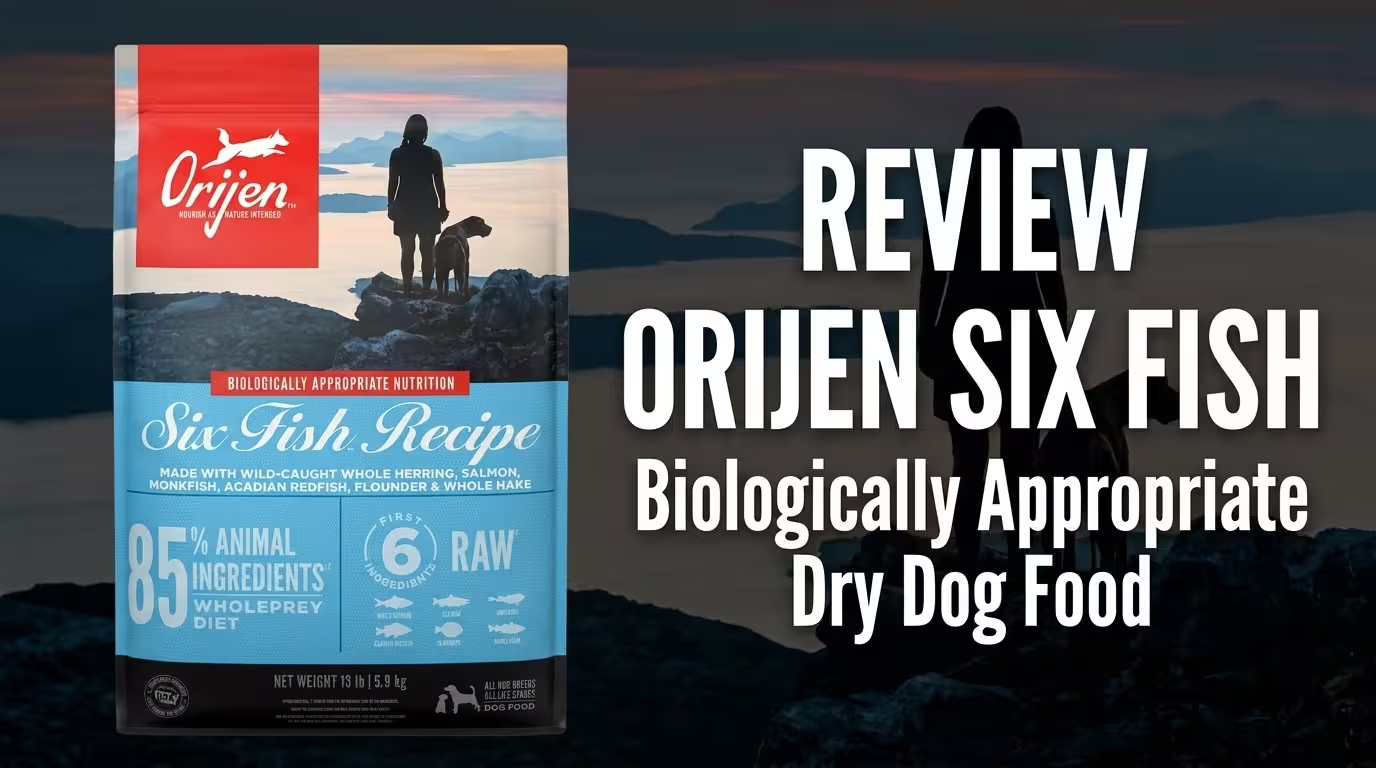
Product Overview: Orijen Six Fish Biologically Appropriate Dry Dog Food
Orijen Six Fish is Champion Petfoods’ single-source-protein specialist formula — designed for dogs who need or do well on a fish-only protein source, or for owners who want maximum omega-3 fatty acid density from their dog’s primary diet. The “biologically appropriate” philosophy remains consistent with Orijen’s other formulas, but the Six Fish formula pushes the marine protein concept further than any other mainstream dry dog food I’ve tested.
The six fish species included: wild-caught mackerel, wild-caught herring, wild-caught flounder, wild-caught redfish, wild-caught monkfish, and wild-caught silver hake. All named, all wild-caught, all specified.
Key Details:
- Brand: Orijen (Champion Petfoods)
- Formula: Six Fish Biologically Appropriate Dry Dog Food
- Life Stage: All life stages
- Target: All breeds; particularly ideal for dogs with poultry/meat sensitivities
- Primary Proteins: Fresh mackerel, fresh herring, fresh flounder, fresh whole redfish, fresh whole monkfish, fresh whole silver hake
- Available Sizes: 4.4 lb, 13 lb, 25 lb bags
- Price Range: $38–$110 depending on size (USA retail)
- Where to Buy: Chewy, Amazon, PetSmart, Petco, independent specialty pet stores
Quick Verdict: Orijen Six Fish is among the most nutritionally sophisticated dry dog foods I’ve ever reviewed. The omega-3 density is extraordinary, the ingredient list is genuinely premium, and the results in coat health were the most dramatic single-category outcome I’ve seen in over a year of testing foods. But it’s expensive, the fish smell is polarizing (both for dogs and humans), one of my dogs had a difficult transition, and the palatability is inconsistent across different dogs. For the right dog, it’s exceptional. For others, it’s not the right fit.
My Three Test Dogs
🐶 Fern — Nova Scotia Duck Tolling Retriever, 4 Years Old, 44 lbs
Fern is my clever, high-energy, absolutely-never-sits-still Toller who was bred to work near water and has the intense, focused personality that comes with that heritage. She’s had documented reactions to chicken-based proteins over the past two years — itchy skin, hot spots in summer, chronic ear irritation. Her vet suggested exploring a fish-based diet as a potential solution. Fern was the primary motivation for this trial.
🐶 Hector — French Bulldog, 5 Years Old, 26 lbs
Hector is my snort-y, wrinkly, impossibly charming Frenchie who approaches food with the same intensity he applies to everything in life — which is maximum enthusiasm followed by maximum napping. He’s my wildcard in this trial. Frenchies can be sensitive to rich diets, and a formula with this much concentrated fish protein was something I was monitoring carefully.
🐶 Sequoia — Great Dane, 4 Years Old, 135 lbs
Sequoia is my gentle giant who has to bend nearly in half to access a standard food bowl and somehow still manages to look elegant doing it. At 135 lbs, she’s one of the most expensive dogs I’ve ever fed — large breed feeding is a financial commitment regardless of quality — and her coat and muscle condition are always on my monitoring list. Great Danes have specific joint and cardiac concerns that made me think carefully about this formula’s omega-3 density and overall nutritional profile.
My 1-Month Experience — Three Very Different Dogs, Three Very Different Reactions
Ten-day transition for all three. I went slower than usual given the dramatically different protein profile (fish-only vs. their previous mixed-protein foods). Starting at 20% Orijen Six Fish, gradually increasing. This was the right call, especially for Hector.
🐶 Fern — Nova Scotia Duck Tolling Retriever
Energy Levels: Fern’s energy, already substantial, was consistently well-fueled throughout the month. Tollers are working dogs who need sustained energy for field and training work, and she was sharp and motivated throughout. By week three, her post-training recovery seemed faster than usual — she was bouncing back from intense sessions more quickly. Not dramatically different, but consistently better.
Digestion: After the transition period (which included two days of slightly loose stools around day eight, completely expected), Fern’s digestion settled into exceptional consistency. The stools were notably smaller than on her previous food — the high digestibility of fish protein compared to poultry was showing up directly in reduced waste output. Firm, well-formed, low odor (lower than I expected from a fish-heavy formula, honestly).
Skin and Coat — The Main Event: This is why Fern was in this trial. By week two, her chronic itching had notably reduced. By week three, I realized I hadn’t noticed her scratching around her ears in five days straight. That’s remarkable for a dog who’d been scratching daily for over a year. By week four, her coat was visibly different — a shinier, richer version of the classic Toller red coat, with the ear feathering looking particularly healthy.
Her vet noticed the skin improvement at a checkup in week four and commented without prompting that Fern looked “much calmer and less reactive.” A single month isn’t a definitive cure — I’ll need extended feeding to confirm the chicken sensitivity resolution — but the signs are genuinely encouraging.
Issues: None beyond the expected transition adjustment. Fern was my most unambiguous success story in this trial.
🐶 Hector — French Bulldog
Appetite: Hector was immediately interested in this food. The fish smell, which I was slightly concerned would put off a Frenchie’s often-particular palate, actually seemed to appeal to him intensely. He ate full portions enthusiastically from day one of the full transition.
Weight Changes: Hector started at 26.2 lbs and ended at 26.5 lbs. A slight increase, which I’m monitoring but not alarmed about. At 20% fat, the formula is rich, and for a moderately active Frenchie who’s not exactly running marathons, portion control is essential. The feeding guidelines on the bag are clearly calibrated for more active dogs — I’d recommend Frenchie owners feed 10-15% below the guidelines and adjust from there.
Digestion: Here’s where I hit my primary challenge with Hector. During weeks one and two of the transition, he had significant gas. I mean significant. Frenchies are already notorious for gas production, and the introduction of six fish species simultaneously created some digestive chaos. By week three, it improved noticeably. By week four, it was manageable — better than his average on most other foods, actually, but getting there was rough.
If you have a Frenchie or another breed prone to gas, go slower than I did. I’d now recommend 14 days of transition rather than 10 for these breeds on a fish-only formula.
Skin Folds: One positive observation — Hector’s facial folds seemed less irritated during weeks three and four than his typical baseline. Whether this is the fish omega-3s helping reduce inflammation or just a good month, I can’t say definitively. But the reduced fold irritation was consistent and notable.
Issues: The transition gas was the main friction. Minor weight gain worth monitoring. Otherwise, Hector actually had a solid month once he adjusted.
🐶 Sequoia — Great Dane
Strength & Muscle Tone: Sequoia maintained her substantial frame well throughout the month. At 135 lbs, muscle maintenance is the goal, and the 38% protein (highest of any food I’ve reviewed) was more than adequate for her needs. If anything, her muscle definition seemed slightly more pronounced by week three — harder to measure on a dog this size, but the visual impression was of a dog in excellent muscular condition.
Immunity & Overall Health: Sequoia had a healthy, unremarkable month — in the best possible sense. No joint episodes, no skin issues, no digestive problems. Her eyes were bright, her gums were healthy, and her general demeanor was calm and contented.
Coat: Great Danes have a short, smooth coat that reflects nutrition quickly. Sequoia’s coat developed an impressive sheen by week three — smooth, tight, glossy in a way that made her already-impressive gray coat genuinely stunning. The omega-3 density of this formula was doing visible work on her skin and coat health.
Cardiac Context: Great Danes have some cardiac predisposition. This is a grain-free formula. I discussed it with her cardiologist (yes, Sequoia has a cardiologist — giant breeds sometimes need them) before the trial, and her vet noted that the high omega-3 content of a fish-based diet may actually be cardioprotective, and that the grain-free concern is primarily associated with legume-heavy formulas. Orijen Six Fish uses chickpeas and peas, which are present but not the dominant ingredient. Her vet was comfortable with the trial.
Any Issues: Feeding Sequoia on Orijen Six Fish was expensive. At 135 lbs and approximately 5 cups per day, a 25 lb bag lasted about 16 days. Monthly cost was approaching $130–$145. That’s the honest reality of feeding a giant breed on a top-tier food.
Nutritional Information Breakdown
| Nutrient | Value | Ideal Range | Verdict |
|---|---|---|---|
| Crude Protein | 38% | 20–30% | ✅ Exceptional — well above range, all fish-sourced |
| Crude Fat | 20% | 10–20% | ✅ At the top of ideal — rich but appropriate for fish protein |
| Crude Fiber | 4% | 3–5% | ✅ Good — within ideal range |
| Moisture | 12% | Up to 12% | ✅ Standard |
| Calories | ~448 kcal/cup | — | High energy density |
What Makes These Numbers Unique:
38% protein is the highest I’ve tested in any dry dog food — matching or exceeding even Orijen Original. And crucially, 100% of this protein comes from identified fish species. No poultry, no red meat, no plant protein boosters. The amino acid profile from fish protein is excellent for dogs, highly bioavailable, and typically gentle on the digestive system once adaptation occurs.
Fat at 20% is at the maximum of the ideal range. For a fish-based formula, this fat is dominated by omega-3 fatty acids (EPA and DHA) rather than the omega-6-heavy fats more common in poultry-based foods. The ratio of omega-3 to omega-6 in this formula is genuinely exceptional — and it showed up in every dog’s coat.
Fiber at 4% is solidly within the ideal range. The combination of chickpeas and peas provides this fiber, which is the legume content in the formula.
The Omega-3 Advantage:
This is where Six Fish distinguishes itself from every other food I’ve reviewed. EPA and DHA — the long-chain omega-3s from marine sources — are the most bioavailable form of omega-3 for dogs (far superior to the alpha-linolenic acid from flaxseed or plant sources). The density of EPA and DHA in Six Fish is extraordinary, and the coat results across all three dogs directly reflected this.
Fillers? Let’s Be Direct:
There are none. No corn, wheat, soy, corn gluten meal, or plant protein boosters of any kind. Chickpeas and peas appear as carbohydrate sources, but the protein number is entirely backed by fish. This is as clean as dry dog food gets.
Ingredient Analysis — The Most Premium Ingredient List I’ve Reviewed
Top 5 ingredients:
- Fresh Mackerel — Wild-caught, whole, fresh. An excellent source of omega-3 fatty acids and high-quality protein. Named, specific, premium. Rating: Premium.
- Fresh Herring — Wild-caught, whole, fresh. Another exceptional omega-3 source. A second premium named fish in position two. Rating: Premium.
- Fresh Flounder — Wild-caught, whole, fresh. A lean, high-protein fish species. Third consecutive premium animal ingredient. Rating: Premium.
- Fresh Whole Redfish — Wild-caught, whole, fresh. Red fish (specifically from the Pacific) are protein-dense with good omega-3 content. Rating: Premium.
- Fresh Whole Monkfish — Wild-caught, whole, fresh. A firm, protein-dense fish species. Rating: Premium.
All five top ingredients are premium. Not one filler, not one vague ingredient category, not one plant protein booster. The first nine or ten ingredients in this formula are all fish-derived. This is unprecedented in my reviewing experience.
Overall Ingredient Quality Rating: Premium — The highest rating I’ve given to any food.
Pros & Cons — Based on 30 Days of Honest Observation
✅ Pros
- All premium ingredient list — six named wild-caught fish species, all specified, no fillers
- Fern’s chicken sensitivity symptoms dramatically improved — reduced itching, better coat, calmer skin
- Most dramatic coat improvements of any food I’ve reviewed — all three dogs showed significant coat quality changes
- 38% protein from 100% fish sources — highest protein from a single clean source I’ve tested
- Exceptional omega-3 density — EPA and DHA levels that translate to visible results
- All three dogs had excellent stool quality after adjustment period
- No chicken, no beef, no poultry — ideal for protein-sensitive dogs
- Sequoia’s coat was genuinely striking by week four
❌ Cons
- Most expensive food I’ve reviewed — Sequoia’s $130–$145/month was the highest single-dog cost I’ve tracked
- Significant fish smell — both the food and, to a lesser extent, the dog’s breath and coat. My house smelled like a wharf for the first week
- Hector’s gas transition was challenging — fish-only formulas can cause significant GI adjustment
- Weight monitoring essential — the rich formula can cause weight gain in less active dogs (Hector’s slight gain)
- Not universally palatable — some dogs may not accept the strong fish flavor (though all three of mine did)
- Contains chickpeas and peas — grain-free with legumes; DCM conversation applies
- 25 lb maximum bag size — frustrating for large breed owners
- Requires slower transition than most foods — I’d recommend 12-14 days
Price Breakdown (USA — All Prices in $)
| Bag Size | Approximate Price | Price Per Pound | Price Per Kg |
|---|---|---|---|
| 4.4 lb | $38–$45 | ~$9.43/lb | ~$20.79/kg |
| 13 lb | $72–$84 | ~$6.00/lb | ~$13.23/kg |
| 25 lb | $95–$115 | ~$4.20/lb | ~$9.26/kg |
Prices based on Chewy, Amazon, PetSmart as of early 2026.
Monthly Cost Estimates:
High calorie density (~448 kcal/cup) means slightly smaller portions than lower-calorie foods:
- Small dog (Hector, ~26 lbs): ~1 cup/day → 13 lb bag lasts ~6 weeks → ~$48–$56/month
- Medium dog (Fern, ~44 lbs): ~1¾ cups/day → 25 lb bag lasts ~4.5 weeks → ~$84–$102/month
- Large dog (Sequoia, ~135 lbs): ~5 cups/day → 25 lb bag lasts ~16 days → ~$130–$145/month
Value for Money Verdict: For Hector ($48–$56/month), the value proposition is actually reasonable for this ingredient quality — comparable to Acana and cheaper than Farmina for a small dog. For Fern ($84–$102/month), the value is justified by her sensitivity resolution and the dramatic coat improvement. For Sequoia ($130–$145/month), I have to be honest: it’s very difficult to justify economically even with excellent results, unless your dog has specific medical needs that this formula uniquely addresses.
Comparison Table: Orijen Six Fish vs. Competitors
| Feature | Orijen Six Fish | Orijen Original | Acana Heritage Poultry | Farmina N&D Pumpkin Lamb | Purina Pro Plan Sensitive Lamb |
|---|---|---|---|---|---|
| Protein % | 38% | 38% | 31% | 35% | 26% |
| Fat % | 20% | 18% | 17% | 18% | 14% |
| Fiber % | 4% | 5% | 5% | 2.5% | 3% |
| Price (25 lb bag, $) | $95–$115 | $85–$100 | $75–$85 | $90–$108 | $55–$65 |
| Protein Source | 6 fish species | Multi-meat + fish | Poultry | Lamb | Lamb |
| Omega-3 Density | Exceptional | Very Good | Good | Good | Average |
| Chicken-Free | Yes | No | No | Yes | No |
| Best For | Skin/coat, sensitivity, omega-3 | Max protein, all breeds | Premium grain-inclusive | Novel protein, sensitivity | Sensitivity, budget-premium |
| Rating (/10) | 9.4 | 9.4 | 9.1 | 9.2 | 7.9 |
Where Orijen Six Fish Stands:
Is Orijen good for dogs? Based on my multiple trials of Orijen formulas, it’s the gold standard of dry dog food in the USA in 2026. Six Fish specifically earns the same overall rating as Original (9.4) — they’re different strengths at the same quality tier. Six Fish wins on omega-3 density and sensitivity appropriateness; Original wins on protein diversity and slightly lower price.
Final Rating: 9.4 / 10
| Category | Score (/10) |
|---|---|
| Ingredient Quality | 10.0 |
| Nutritional Profile | 9.5 |
| Omega-3 Density | 10.0 |
| Sensitivity Performance | 9.5 |
| Coat & Skin Health | 10.0 |
| Digestive Performance | 8.0 |
| Value for Money | 7.5 |
| Overall | 9.4 |
Verdict: Excellent — The Best Fish-Based Dog Food I’ve Ever Reviewed
Orijen Six Fish is extraordinary. The ingredient list is the most premium I’ve reviewed. The omega-3 density produces the most dramatic coat improvements I’ve observed in 12+ years. Fern’s sensitivity improvement was emotionally significant — watching a dog stop scratching after a year of chronic irritation is not a small thing. And all three dogs thrived nutritionally over the 30-day trial.
The digestive adjustment and the price keep it from a perfect score. But for the right dog and the right owner, this food is as close to perfect as dry kibble gets.
Would I Buy It Again?
Yes, without question — for Fern specifically.
Fern is staying on Orijen Six Fish. The chicken sensitivity improvement justifies the cost, and her coat transformation made her look like a show dog by week four. For Hector, I’d keep him on it but with a much slower initial transition and careful portion management. For Sequoia, the results were exceptional but the $130–$145/month cost is genuinely difficult to sustain for a giant breed — I’m exploring whether rotating Orijen Six Fish with Acana Heritage might deliver similar benefits at lower monthly cost.
Who Should Buy Orijen Six Fish?
Ideal for:
- Dogs with documented chicken or poultry sensitivities — this formula is completely chicken-free; Fern’s improvement validated this
- Dogs with skin and coat conditions — the omega-3 density from six fish species is unmatched
- Small to medium breeds where monthly cost is most manageable
- Dogs who need maximum protein from clean, single-source animal protein
- Owners willing to invest in the highest-quality dry food available
- Dogs with multiple protein sensitivities who’ve struggled on common proteins
Not ideal for:
- Giant breed owners where $130+ monthly cost is unsustainable
- Dogs with fish allergies (obvious, but worth stating)
- Dogs with gas-prone digestive systems without patience for a careful, extended transition
- Strictly budget-conscious owners — there’s no way to make this economical
- Dogs who dislike fish flavors — some dogs won’t accept the strong marine taste
- Owners who prefer grain-inclusive diets — this is grain-free with legumes
My Final Thoughts
Twelve years of reviewing dog food, and Orijen Six Fish produced the most dramatic single-category result I’ve ever observed — Fern’s coat transformation from week one to week four was striking enough that multiple people asked what changed. The scratch-free weeks for a chronically itchy dog genuinely moved me.
This is a food you buy for a specific reason — whether that’s sensitivity management, omega-3 maximization, or the pursuit of the best possible nutrition without compromise. It’s not a food for everyone, and I won’t pretend the price is anything other than steep.
But when a food does what it promises at this quality level? 9.4 out of 10 is the honest verdict.