I’ve been a little back-and-forth on Blue Buffalo over the years, honestly. There’s a part of me that appreciates what they’ve built — a genuinely accessible brand that pushed the mainstream market toward cleaner labels, no by-products, no artificial colors. And there’s another part of me that wonders how much of their premium positioning is backed by actual nutritional superiority versus really effective marketing.
So in early 2026, when I had an opening in my testing schedule, I decided to put Blue Buffalo Life Protection Formula Adult Chicken & Brown Rice through a proper, tracked 30-day trial. Three different dogs, careful monitoring, weekly photographs, daily observations. No shortcuts.
I came out of it with more nuanced opinions than I expected. Here’s the complete picture.
Product Overview: Blue Buffalo Life Protection Formula Adult Chicken & Brown Rice
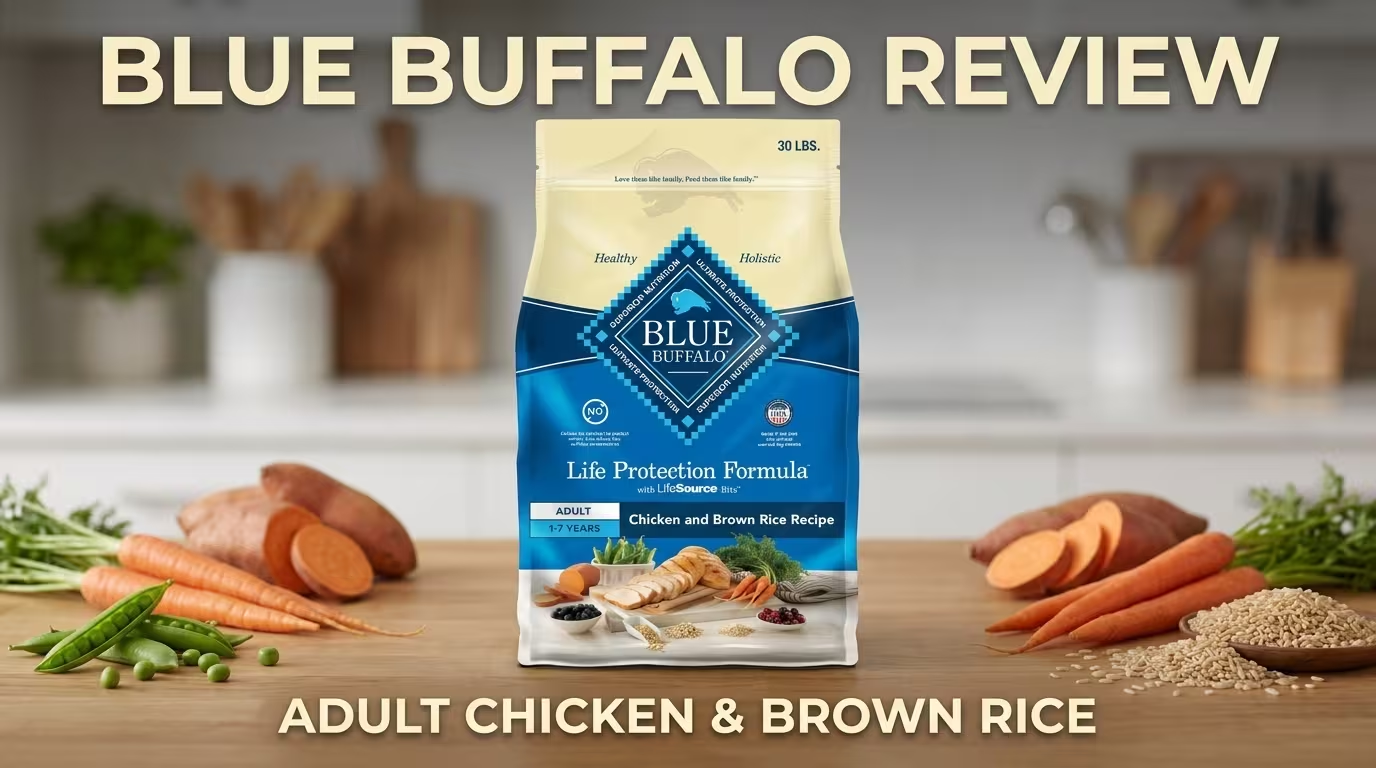
Blue Buffalo Life Protection is their flagship everyday formula — the product that most people are thinking of when they say “Blue Buffalo.” It’s grain-inclusive (brown rice, barley, oatmeal), chicken-based, and designed for adult dogs across all breeds and sizes.
Blue Buffalo was acquired by General Mills in 2018, which some people care about and some people don’t. The formulas have remained largely consistent since then, and manufacturing quality control has reportedly stayed within the brand’s established standards.
Key Details:
- Brand: Blue Buffalo (General Mills)
- Formula: Life Protection Formula Adult Chicken & Brown Rice Recipe
- Life Stage: Adult (1+ years)
- Target: All breeds, all sizes
- Primary Protein: Deboned chicken
- Available Sizes: 5 lb, 15 lb, 30 lb bags
- Price Range: $20–$72 depending on size (USA retail)
- Where to Buy: PetSmart, Petco, Chewy, Amazon, Target, Walmart
Quick Verdict: Blue Buffalo Life Protection Adult is a solid upper-mid-tier food that earns its place in the market — better than mainstream budget brands, genuinely grain-inclusive with quality grain choices, and no artificial additives. But the pea protein inclusion and the price-to-ingredient-quality ratio leave me wanting slightly more for what you pay. It’s good, not great. Consistently performs in the 7–8 range across every category I track.
Meet My Three Test Dogs
🐶 Theo — Basenji, 3 Years Old, 23 lbs
Theo is my barkless, cat-like, perpetually evaluating Basenji who communicates his opinions through extremely expressive yodeling and strategic looks of disdain. He’s fastidiously clean, self-grooms obsessively, and has a short, copper-colored coat that shows nutritional quality changes almost immediately. He’s been on a rotation of different foods over the past year as I try to find his ideal formula, and he’s never made the process easy. Basenjis have strong opinions about food.
🐶 Margot — Bernese Mountain Dog, 5 Years Old, 97 lbs
Margot is my beautiful, slow-moving, warmth-seeking tricolor Berner who genuinely believes the correct response to any human activity is to lean against the nearest person until she’s being petted. She’s got that magnificent long coat that needs serious nutritional support, and at five years old, she’s starting to show the mild joint stiffness that plagues many Berners in middle age. Her coat quality is my primary tracking metric for her.
🐶 Captain — Miniature Bull Terrier, 4 Years Old, 28 lbs
Captain is my egg-headed, fearless, absolutely-never-stops-moving Mini Bull Terrier who treats every object in the house as either a toy, an obstacle, or a challenge. He has that breed’s characteristic stubborn intensity, and he eats with the same focused determination he brings to everything. He’s had no documented health issues, making him a good baseline indicator for how a food performs on a generally healthy, active dog.
My 1-Month Experience — Three Dogs, One Month, Real Observations
I did a seven-day transition for all three dogs, mixing Blue Buffalo gradually with their previous food. All three transitioned without notable digestive upset — a positive early sign.
🐶 Theo — Basenji
Energy Levels: Theo maintained his characteristic Basenji energy throughout the month — that quiet, intense, always-assessing watchfulness punctuated by bursts of serious speed when he decides something is worth running toward. His energy was appropriate and consistent, no notable changes in either direction.
Digestion: Good overall. Theo’s stools were firm, well-formed, and consistent after the transition. One slightly soft day around day nine — probably coincidental. He never had any gas issues, which I was pleased about since Basenjis can be digestively sensitive.
Coat Condition: Theo’s copper coat — which is short, tight, and extremely transparent as a nutrition indicator — picked up a nice sheen by week two and maintained it. Not dramatically different from his previous food, but noticeably healthier looking than when he’d been on a lower-quality rotation food a few months prior. Smooth, tight, vibrant coppery color. I was satisfied with this.
Palatability: Theo’s acceptance of this food surprised me. He’s the dog who’s rejected foods I spent serious money on without a second glance. Blue Buffalo Life Protection got a one-day sniff-and-evaluate treatment, and then consistent clean-bowl eating from day two onward. Something about the chicken and brown rice combination apparently met his approval. I’ll take it without questioning it too hard.
Behavior: Same mysterious, slightly aloof, deeply watchful Theo. No behavioral changes.
Issues: None significant. Theo actually had my smoothest month of the three dogs on this food.
🐶 Margot — Bernese Mountain Dog
Appetite: Margot is the opposite of picky. She would eat the bowl if she thought it was edible. Blue Buffalo was consumed with enthusiastic efficiency at every meal throughout the month.
Weight Changes: Margot started at 97.3 lbs and ended at 97.1 lbs. Essentially stable — appropriate for a Berner at a healthy weight who gets regular exercise. The feeding guidelines were accurate for her activity level at about 3 cups per day.
Stool Quality: Solid throughout the month. Firm, appropriate volume for a large dog, consistent timing. No digestive concerns whatsoever. Her stools on Blue Buffalo were actually better than they’d been on her previous food, which had been leaving slightly higher volume and occasional loose days.
Coat: This was the result I was most invested in. Bernese Mountain Dog coats are spectacular when healthy and demanding when not. By week three, Margot’s coat had improved meaningfully — the long black topcoat was glossier, the white chest markings were brighter, and the rust-colored points looked richer. I was brushing out slightly less dead undercoat than usual, which suggests better skin health and coat retention. Her groomer commented at a mid-month appointment that her coat was “looking really well conditioned.”
Joint Health: Margot’s mild morning stiffness — which I’d been monitoring for about six months — seemed about the same throughout the trial. The glucosamine content in Blue Buffalo Life Protection (which is present but not at therapeutic levels) didn’t produce a noticeable improvement, though it also didn’t worsen anything. I continue to give her a separate glucosamine supplement.
Issues: The 30 lb bag maximum was a genuine inconvenience. Margot goes through it in about three weeks. For large breed owners, having to reorder more frequently than with 40-50 lb bag options (which some competitors offer) is mildly annoying.
🐶 Captain — Miniature Bull Terrier
Appetite: Captain ate this food like it was his last meal every single time. No drama, no selective eating, just the full intensity of a Mini Bull Terrier applied to the food bowl. Clean bowl in under three minutes, every meal.
Weight Changes: Captain started at 28.1 lbs and ended at 28.4 lbs. A very slight increase, but within the margin of normal fluctuation. I wasn’t alarmed. He remained visibly lean and muscular throughout the month.
Stool Quality: Consistently excellent. Firm, small, well-formed. Captain had the best stool quality of the three dogs on this food — possibly because he’s a healthy, young adult without any previous GI history, and the food agreed with his straightforward digestive system completely.
Activity: Captain remained the perpetual motion machine he always is. If anything, his energy seemed well-sustained and evenly distributed throughout the day rather than the burst-and-crash pattern I sometimes see on lower-quality foods. He was sharp in training, enthusiastic in play, and recovered well after activity.
Issues: No health or digestive issues. Captain’s month was unremarkable in the best possible way.
One Minor Observation: The LifeSource Bits — those small dark kibble pieces Blue Buffalo includes in their formula — seem to be a love-it-or-sort-it proposition with different dogs. Captain ate them without hesitation. Theo would occasionally nudge them to the side, eat his regular kibble, and then circle back for the LifeSource Bits afterward like they were afterthoughts. Minor, but entertaining to observe.
Nutritional Information Breakdown
| Nutrient | Value | Ideal Range | Verdict |
|---|---|---|---|
| Crude Protein | 24% | 20–30% | ✅ Good — solid mid-range |
| Crude Fat | 14% | 10–20% | ✅ Good — moderate, appropriate |
| Crude Fiber | 5% | 3–5% | ✅ Excellent — top of the ideal range |
| Moisture | 10% | Up to 12% | ✅ Standard for dry kibble |
| Calories | ~370 kcal/cup | — | Moderate energy density |
Breaking This Down:
24% protein is genuinely solid for an adult maintenance food. It’s not the high-performance tier (28-38%) but it’s well above budget-food minimums and appropriate for the average active adult dog. The protein comes primarily from deboned chicken and chicken meal — both named animal sources — which is a quality starting point.
Fat at 14% is moderate and well-calibrated for dogs across various activity levels. Not too rich, not too lean. The omega fatty acid profile supports coat health adequately — Margot’s improvement and Theo’s coat sheen both reflected this.
Fiber at 5% is at the top of the ideal range — and this is one of Blue Buffalo Life Protection’s genuine strengths. High fiber means better satiety (none of my three dogs were begging excessively between meals), better digestive health, and the stool quality results were directly connected to this.
Calories at 370 per cup are moderate — appropriate for everyday feeding without requiring dramatic portion reduction.
The Pea Protein Issue:
Pea protein appears in the ingredient list — not in the top five, but present enough to be a consideration. Pea protein is a plant-based protein that helps boost the overall protein percentage without the cost of additional animal protein. For most dogs, it’s not harmful — but it’s a quality compromise I consistently note in formulas at this price point.
LifeSource Bits — What Are They Really?
Blue Buffalo markets these as “a precise blend of antioxidants, vitamins and minerals, selected by holistic veterinarians and animal nutritionists.” They’re cold-formed (not extruded) to preserve nutrient content. In practical terms: they’re real additives that contribute genuinely to the vitamin/mineral profile. Are they transformative? Probably not. Are they a legitimate feature? Yes, more than pure marketing.
Additives Profile:
Fish oil for omega-3 fatty acids, flaxseed for additional omega-3 and fiber, dried kelp, mixed tocopherols as natural preservative. No artificial colors, flavors, or preservatives. This is a clean, respectable additive profile for a mainstream premium food.
Ingredient Analysis — Honest Evaluation of the Top Five
- Deboned Chicken — Real, fresh chicken as the first ingredient. Named, specific, a quality protein starting point. Contains water weight, which diminishes post-processing, but it’s genuine quality foundation. Rating: Good.
- Chicken Meal — Concentrated, dehydrated chicken protein — more protein-dense than fresh chicken. Having both deboned chicken and chicken meal in the top two means the animal protein foundation is genuinely substantial. Rating: Good-to-Premium.
- Brown Rice — Whole grain, nutritionally solid carbohydrate. Easily digestible, provides genuine fiber and nutrients. A noticeably better grain choice than corn or wheat. Rating: Good.
- Barley — Another quality whole grain — low glycemic index, gentle on digestion, good fiber contributor. Two quality whole grains in positions three and four is a real distinguishing feature of this formula. Rating: Good.
- Oatmeal — Whole ground oats. One of the best grain choices in dog food — nutritious, gentle, and well-tolerated. Three consecutive quality grains in positions three through five is genuinely impressive for this price tier. Rating: Good.
Overall Ingredient Quality Rating: Good. The animal protein foundation (deboned chicken, chicken meal) is solid. The grain trio (brown rice, barley, oatmeal) is genuinely impressive — these are quality grains, not cheap fillers. The pea protein further down the list and the presence of natural flavors are mild quality flags, but they don’t undermine the overall formula significantly. This ingredient list is meaningfully better than most mainstream adult foods at similar prices.
Pros & Cons — Based on 30 Real Days With Three Real Dogs
✅ Pros
- Deboned chicken and chicken meal — substantial animal protein foundation from named sources
- Quality grain trio: brown rice, barley, and oatmeal — genuinely superior grain choices
- 5% fiber — excellent for satiety and digestive health; stool quality was great across all three dogs
- No artificial colors, flavors, or preservatives — clean additive profile
- No chicken by-products — Blue Buffalo’s original positioning still holds here
- Margot’s coat improved visibly — groomer-validated improvement by month end
- Theo accepted it without his usual drama — solid palatability
- Captain’s digestion and energy were excellent throughout
- LifeSource Bits are a legitimate nutritional addition, not just a gimmick
- Widely available — you can find this at Target, Walmart, Petco, and everywhere in between
❌ Cons
- 24% protein is adequate but not outstanding — high-performance or large working breeds may need more
- Pea protein is present in the formula — not in the top five but worth noting
- Price-to-ingredient-quality ratio is average — you’re paying partly for brand recognition
- Maximum 30 lb bag — frustrating for large breed owners like Margot
- Glucosamine at levels too low for therapeutic joint support — won’t replace a dedicated supplement
- Chicken is the sole protein source — not ideal for dogs with chicken sensitivities
- General Mills ownership bothers some purists — understandable if brand independence matters to you
Price Breakdown (USA — All Prices in $)
| Bag Size | Approximate Price | Price Per Pound | Price Per Kg |
|---|---|---|---|
| 5 lb | $20–$24 | ~$4.40/lb | ~$9.70/kg |
| 15 lb | $36–$44 | ~$2.67/lb | ~$5.89/kg |
| 30 lb | $58–$72 | ~$2.17/lb | ~$4.78/kg |
Prices based on Chewy, Amazon, PetSmart, Target as of early 2026.
Monthly Cost Estimates:
At 370 kcal/cup, portioning is straightforward:
- Small dog (Theo, ~23 lbs): ~¾ cup/day → 15 lb bag lasts ~7+ weeks → ~$20–$24/month
- Medium dog (Captain, ~28 lbs): ~1 cup/day → 15 lb bag lasts ~6 weeks → ~$24–$29/month
- Large dog (Margot, ~97 lbs): ~3 cups/day → 30 lb bag lasts ~3.5 weeks → ~$66–$82/month
Value for Money Verdict: For Theo and Captain, the monthly costs are very reasonable for the quality delivered. For Margot, the $66–$82/month is on the higher end for a food with good-but-not-premium ingredient quality. At Margot’s feeding volume, Purina Pro Plan costs a similar amount with higher protein, and Merrick Classic Healthy Grains costs slightly more with beef and better grain diversity.
Blue Buffalo Life Protection sits in an honest value position: meaningfully better than budget brands (Pedigree, Beneful) and comparable to other upper-mid-tier options (Purina ONE, Iams ProActive Health Premium). Whether the quality premium over those options is worth the price difference depends on your specific priorities.
Comparison Table: Blue Buffalo Life Protection vs. Competitors
| Feature | Blue Buffalo Life Protection Adult | Royal Canin Medium Adult | Purina Pro Plan Chicken & Rice | Merrick Classic HG Beef & Rice | Iams ProActive Health |
|---|---|---|---|---|---|
| Protein % | 24% | 27% | 30% | 27% | 27% |
| Fat % | 14% | 17% | 16% | 17% | 14.5% |
| Fiber % | 5% | 1.3% | 3% | 4% | 4% |
| Price (30 lb bag, $) | $58–$72 | $58–$68 | $52–$62 | $58–$68 | $33–$38 |
| First Ingredient | Deboned Chicken | Dehydrated Poultry | Chicken | Deboned Beef | Chicken |
| Contains By-Products | No | Yes | Yes | No | Yes |
| Grain Quality | Brown rice, barley, oatmeal | Wheat, corn | Rice flour | Brown rice, barley, quinoa | Corn, sorghum |
| Artificial Additives | None | None | None | None | Check label (some BHA) |
| Best For | Clean label, natural ingredients | Breed-specific | Active/sporting | Premium grain-inclusive | Picky small breeds, budget |
| Rating (/10) | 7.8 | 7.2 | 7.9 | 8.4 | 7.2 |
Where Blue Buffalo Stands:
Is Blue Buffalo good for dogs? Based on this trial — genuinely yes. Among the best dog food in USA 2026 in the upper-mid grain-inclusive category, Blue Buffalo Life Protection Adult holds a legitimate position.
The grain quality comparison is where it stands out most clearly. Brown rice, barley, and oatmeal in the top five is meaningfully better than Royal Canin’s wheat and corn, or Iams’ corn and sorghum. The no-by-products positioning is backed by the actual ingredient list. And the results across three different dogs were consistently solid if not spectacular.
It doesn’t match Merrick Classic Healthy Grains on ingredient purity (no beef dual-protein foundation, pea protein is present). It doesn’t match Purina Pro Plan on protein content. But it beats both on fiber content and is competitive on price with Merrick and Pro Plan while being substantially more available than specialty-only options.
Final Rating: 7.8 / 10
| Category | Score (/10) |
|---|---|
| Ingredient Quality | 7.5 |
| Nutritional Profile | 7.5 |
| Grain Quality | 8.5 |
| Digestive Performance | 8.5 |
| Coat & Skin Health | 8.0 |
| Palatability | 8.0 |
| Value for Money | 7.0 |
| Overall | 7.8 |
Verdict: Good — A Reliable, Widely Available Premium-Adjacent Food That Earns Its Reputation
Blue Buffalo Life Protection Adult Chicken & Brown Rice delivered consistent, solid results across three different dogs over 30 days. No health incidents, good digestion across the board, Margot’s coat earned groomer validation, and even my picky Basenji accepted it without his usual theatrical resistance. The grain choices (brown rice, barley, oatmeal) are genuinely among the best I’ve seen in a mainstream formula.
The 7.8/10 reflects real quality with acknowledged limitations. Protein at 24% is adequate but not outstanding. Pea protein is present. The maximum 30 lb bag is genuinely inconvenient. And the price positions it against some competitors with better protein profiles.
Would I Buy It Again?
Yes — with specific context.
For Theo and Captain, absolutely. The monthly cost is manageable, the results were good, and the formula suits both dogs well. For Margot, I’m honestly wrestling with whether Merrick Classic Healthy Grains ($58–$68/month for a 25 lb bag) might be a better investment for a large Berner who needs protein and coat support. But if Blue Buffalo Life Protection is what’s available locally or what fits the budget, I’d continue it without hesitation.
It’s not the food that will make you feel like you’ve discovered something revolutionary. It’s the food that works, week after week, without drama. And after twelve years of feeding dogs, I’ve come to appreciate consistency more than I used to.
Who Should Buy Blue Buffalo Life Protection Adult?
Ideal for:
- Dog owners who want to move away from by-product-containing foods without paying true premium prices
- Owners who value clean, natural ingredient lists without artificial additives
- Dogs of all sizes with moderate activity levels — the nutrition profile is well-calibrated for maintenance
- First-time dog owners upgrading from budget brands — this is a clear and accessible step up
- Dogs who do well on chicken-based grain-inclusive diets without sensitivity concerns
- Multi-dog households with small-to-medium dogs where per-dog monthly cost is manageable
Not ideal for:
- Dogs with chicken sensitivities — the formula is chicken-focused
- High-performance or working dogs — 24% protein may not be sufficient for peak demands
- Giant breed owners who need larger bag sizes and higher protein density
- Budget-priority buyers — Iams ProActive Health or Purina ONE deliver comparable nutrition for less
- Owners seeking maximum ingredient quality — Merrick Classic Healthy Grains or Acana are better choices at similar or slightly higher prices
File size
My Final Honest Take
Blue Buffalo has built its brand on a legitimate promise — cleaner ingredients, no by-products, no artificial additives — and the Life Protection Formula Adult largely delivers on that promise. The grain choices are genuinely better than most competitors. The animal protein foundation is solid. The results across three diverse dogs were consistently good.
But the best dog food in USA 2026? That’s a higher bar than Blue Buffalo reaches here. For owners who want to do better than mainstream without going full premium, it’s a legitimate, trustworthy choice. For owners who are already researching Merrick, Acana, or Wellness CORE, Blue Buffalo Life Protection might feel like a stepping stone rather than a destination.
7.8 out of 10. Earn your rating every year — and Blue Buffalo, for this formula at least, still earns it.