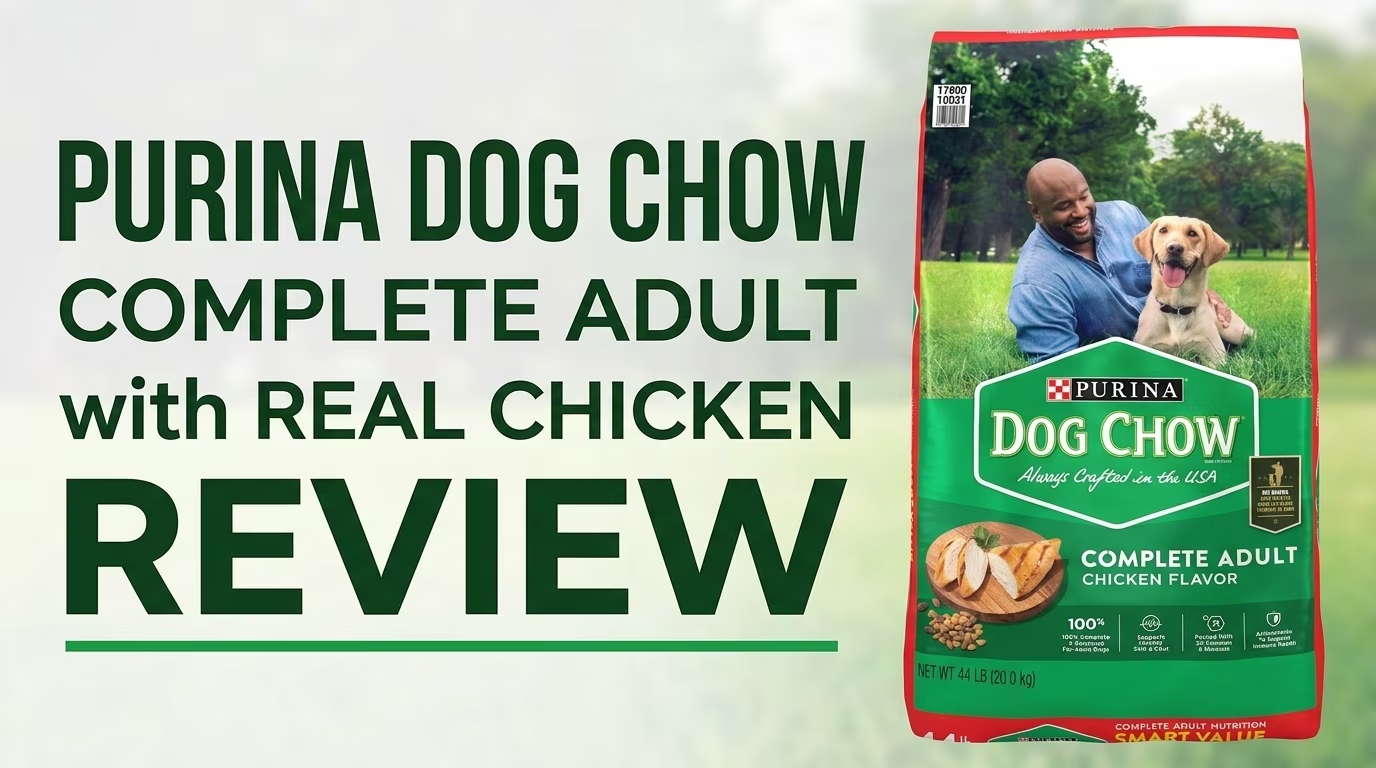
I want to be upfront about something before I get into this. I didn’t go into this test expecting to be impressed. Purina Dog Chow has always been one of those grocery store staples that sits on the bottom shelf next to the laundry detergent, and I’ve kind of mentally filed it under “last resort” for most of my twelve-plus years of raising dogs.
But here’s the thing — a lot of people feed this to their dogs every single day. Millions of bags sold every year. And some of these dog owners swear their dogs are perfectly healthy on it.
So in 2026, I figured it was only fair to actually test it properly instead of just judging it from the ingredient label. I bought a big bag, committed to 30 days, and fed it to my three dogs while tracking everything I could think of. Energy, stool, coat, appetite, mood — the works.
Some of what I found confirmed my suspicions. Some of it honestly surprised me. And some of it frustrated me enough that I need to be pretty blunt about it.
Here’s the full, unfiltered dog food review.
Product Overview: Purina Dog Chow Complete Adult with Real Chicken
Purina Dog Chow is manufactured by Nestlé Purina PetCare, one of the largest pet food companies on the planet. The “Complete Adult with Real Chicken” formula is their standard everyday option aimed at adult dogs of all breeds and sizes. It’s marketed as providing “100% complete and balanced nutrition” and prominently features the word “Real Chicken” on the packaging.
That last part is technically true but slightly misleading, which I’ll get into shortly.
Key Details:
- Brand: Purina Dog Chow (Nestlé Purina)
- Formula: Complete Adult with Real Chicken, Dry Dog Food
- Life Stage: Adult (1 year+)
- Target: All breeds, all sizes
- Primary Protein Source: Whole grain corn (yes, really — chicken comes later)
- Available Sizes: 4 lb, 16.5 lb, 18.5 lb, 32 lb, 44 lb, 52 lb bags
- Price Range: $10–$42 depending on bag size (USA retail)
- Where to Buy: Walmart, Target, Kroger, Amazon, Chewy, literally every grocery store
Quick Verdict: It’s cheap, it’s available everywhere, and your dog will probably eat it. But the ingredient quality is genuinely poor, the protein sources are questionable, and after a month of feeding it, I saw enough concerning signs that I can’t recommend it as a long-term diet for any dog I care about. If budget is your absolute ceiling, there are better options at nearly the same price point.
My 1-Month Personal Experience — 3 Dogs, 3 Honest Reports
I did a gradual seven-day transition for all three dogs this time. I typically do five to six days, but given that Purina Dog Chow has a very different ingredient profile from what my dogs were previously eating, I played it safe with a slower switch. Smart move, as it turned out.
Luna — Whippet, 4 Years Old, 31 lbs
Luna is my elegant little speedster. Sleek, lean, perpetually cold, and absolutely convinced that every blanket in the house belongs exclusively to her. She’s got a fast metabolism typical of sighthounds and she’s generally been a healthy dog with a cast-iron stomach. She’ll eat pretty much anything without complaint.
Energy Levels: For the first two weeks, Luna seemed fine. Normal energy, normal zoomies around the yard, nothing out of the ordinary. But starting around week three, I noticed something subtle. She was a little slower getting up from naps.
A little less enthusiastic about our evening runs. It wasn’t dramatic — she wasn’t lethargic or sick — but there was a noticeable dip in her usual spark. I can’t say definitively that the food caused it, but the timing was suspicious, and she bounced right back within days of switching her off Purina Dog Chow after the trial ended. Draw your own conclusions from that.
Digestion: Here’s where the problems started. Luna has historically had zero digestive issues, but around day ten on this food, she started having slightly loose stools. Not diarrhea exactly, but they were softer than normal and had this… unpleasant smell that was worse than usual. Like, noticeably worse. The high corn content is the most likely culprit. Some dogs handle corn-heavy diets just fine. Luna apparently is not one of them.
Coat Condition: Her normally sleek, shiny whippet coat lost some of its luster by the end of the month. It looked duller. Not patchy or unhealthy, just less vibrant. This is one of those things that’s hard to photograph or prove, but I see this dog every day, and the difference was clear to me.
Behavior: Luna was a bit more restless at night during weeks two through four. More repositioning, more sighing. Could be unrelated. Could be mild digestive discomfort. Either way, it wasn’t typical for her.
Chester — French Bulldog, 5 Years Old, 25 lbs
Chester is my stubborn little tank. He’s built like a small barrel with legs, he snores louder than any human I’ve ever met, and he has Opinions about food. Frenchies can be notoriously sensitive with their stomachs and skin, so Chester is always my canary-in-the-coal-mine dog when I’m testing new foods. If something’s going to cause a problem, Chester will find it.
Appetite: Chester actually liked the taste. I’ll give Purina Dog Chow that — whatever palatability enhancers they’re using, they work. He ate enthusiastically from day one and never refused a meal during the entire month. Clean bowl every time. If I were judging this food purely on taste acceptance, it would score well.
Weight Changes: This is where I got concerned. Chester went from 25.2 lbs to 26.8 lbs in one month. That’s over a pound and a half of weight gain on a small, already-stocky dog who was eating the same portion sizes as before. I followed the feeding guidelines on the bag to the letter.
The calorie content per cup isn’t dramatically different from his previous food, but I suspect the heavy reliance on corn and soy-based ingredients led to more carb-driven weight gain. For a breed already prone to obesity and joint problems, this is genuinely concerning.
Stool Quality: Not great. Chester’s stools were consistently on the soft side — not liquid, but definitely mushier than ideal. More volume, too. He was producing noticeably more waste than usual, which typically signals that the dog isn’t efficiently absorbing the nutrients from the food. A lot of what he was eating was just… passing through. This is a hallmark of filler-heavy diets, and it was pretty obvious with Chester.
Activity: About the same. Chester isn’t exactly an athlete on his best day, so changes in activity level were hard to gauge. He did seem slightly less interested in his usual tug-of-war games toward the end of the month, but Frenchies have off-days regardless of what they’re eating.
Sadie — Rhodesian Ridgeback, 3 Years Old, 78 lbs
Sadie is my big, stoic, quiet guardian. She’s regal, calm, deeply loyal, and she watches everything with those intense amber eyes. She’s also a large-breed dog with significant nutritional needs — she needs solid protein to maintain her muscle mass and enough quality fat to keep her coat and skin healthy in the dry winter months.
Strength & Muscle Tone: This was my biggest worry, and it came true. After a month on Purina Dog Chow, Sadie looked… thinner isn’t the right word. She looked less defined. Her muscle tone along her back and hindquarters seemed slightly softer.
She didn’t lose weight (she actually maintained at 78 lbs exactly), but the quality of her body composition shifted in a way I didn’t like. At 23% protein — with a significant portion of that coming from plant sources like corn gluten meal and soy — I don’t think she was getting enough bioavailable animal protein to maintain her lean muscle properly.
Immunity & Overall Health: No acute health issues during the month, thankfully. But Sadie did develop some mild dandruff around week three that she doesn’t normally have. Dry, flaky skin along her spine and behind her ears. I added some fish oil to her meals to help, which improved things slightly, but the fact that I had to supplement to compensate for the food’s shortcomings tells you something.
Coat: Drier and rougher to the touch by the end of the month. Sadie normally has this gorgeous short coat that gleams in the sunlight. By week four on Dog Chow, it just looked flat. The omega fatty acid content in this food is inadequate for a large-breed dog, in my opinion.
Any Issues: Besides the dandruff and coat degradation, Sadie also had two instances of minor gas that woke me up at night. Not a chronic issue, but notable because she almost never has gas on her regular food. Oh, and she started eating grass on walks more frequently — something she rarely does — which can be a sign of stomach upset or nutritional deficiency.
Nutritional Information Breakdown
Let’s look at the numbers, because they tell an important story.
| Nutrient | Value | Ideal Range | Verdict |
|---|---|---|---|
| Crude Protein | 23% | 20–30% | ⚠️ Low-Average — meets minimum but quality is poor |
| Crude Fat | 10% | 10–20% | ⚠️ Bottom of the range — barely adequate |
| Crude Fiber | 4.5% | 3–5% | ✅ Good — within ideal range |
| Moisture | 12% | Up to 12% | ✅ Standard for dry kibble |
| Calories | ~376 kcal/cup | — | Moderate |
Here’s the Real Problem: The numbers themselves look passable on paper. 23% protein technically falls within the acceptable range. 10% fat meets the bare minimum. But when you look at where that protein and fat actually come from, the picture gets ugly fast.
A huge chunk of the protein in this food comes from corn gluten meal and soy flour — plant-based sources that inflate the protein number without providing the same amino acid profile that dogs get from animal protein. Dogs are not vegetarians.
Their bodies are designed to digest and utilize animal protein far more efficiently than plant protein. So while the label says 23%, the actual amount of usable animal protein your dog is getting is significantly lower. This is the oldest trick in the budget dog food playbook, and it frustrates me every time I see it.
Fat at 10% is barely adequate. For a large breed like Sadie, this is simply not enough to support healthy skin, coat, and joint function without supplementation. It partly explains the dry coat and dandruff I observed.
The one bright spot is fiber at 4.5%, which actually falls nicely within the ideal 3–5% range. This is probably thanks to all the grain — ironic that the filler ingredients contribute the one genuinely decent nutritional metric.
Additives: Standard vitamin and mineral supplementation. Nothing alarming, nothing impressive. The bare minimum to meet AAFCO standards for “complete and balanced” nutrition.
Ingredient Analysis — This Is Where It Gets Ugly
Let me walk through the top five ingredients, because they reveal exactly what kind of food this actually is.
- Whole Grain Corn — The FIRST ingredient. Not chicken. Corn. This is a cheap carbohydrate filler that provides energy but very limited nutritional value for dogs. It’s difficult for many dogs to fully digest, and it’s one of the more common allergens in canine diets. Having this as the primary ingredient in a food called “with Real Chicken” is, frankly, misleading. Rating: Low-Quality.
- Poultry By-Product Meal — This is rendered poultry parts — think necks, feet, organs, and intestines. It’s not the worst protein source (organs actually contain decent nutrition), but it’s a far cry from “real chicken breast.” The vague “poultry” label also means they don’t even specify which bird it comes from. Could be chicken, turkey, or a mix. No transparency. Rating: Low-to-Average.
- Corn Gluten Meal — A processed by-product of corn manufacturing that’s used to boost the protein number on the label cheaply. It’s plant protein. Dogs can’t utilize it nearly as well as animal protein. This ingredient exists in the formula for one reason: economics, not nutrition. Rating: Low-Quality.
- Whole Grain Wheat — Another grain filler. It adds calories and bulk but contributes limited nutritional value. Also a potential allergen. Two of the first four ingredients being corn-based and the third being wheat means this food is fundamentally a grain product with some animal protein added, not the other way around. Rating: Low-to-Average.
- Soy Flour — Yet another plant-based protein booster. Soy is controversial in dog food — some studies link it to hormonal disruption, and it’s a common allergen. It’s cheap and it inflates protein numbers. That’s why it’s here. Rating: Low-Quality.
Overall Ingredient Quality Rating: Low. I want to be direct about this. Three of the top five ingredients are cheap fillers designed to keep manufacturing costs down and protein numbers up. The actual animal protein content of this food is substantially lower than the label suggests. When you consider that the packaging prominently says “Real Chicken,” and chicken doesn’t even appear as a top-five ingredient in a meaningful way, it feels actively dishonest.
This is not a premium food. It’s not even an average food. It’s a budget food with budget ingredients, and I think consumers deserve to know that clearly.
Pros & Cons — 30 Days of Honest Observations
✅ Pros
- Extremely affordable — There’s no denying this is one of the cheapest dog foods available. If you’re in a genuinely tight financial situation, the price is hard to argue with.
- Available everywhere — Every grocery store, every Walmart, every corner pharmacy practically. You’ll never have to make a special trip or wait for online delivery.
- Dogs like the taste — All three of my dogs ate it willingly. Chester loved it. Palatability is not a problem.
- Decent fiber content — At 4.5%, the fiber level is actually good for digestive regularity, even if the source of that fiber (grains) isn’t ideal.
- Huge bag options — The 44 lb and 52 lb bags bring the per-pound cost down significantly for multi-dog households on tight budgets.
❌ Cons
- Corn is the first ingredient, not chicken — The “Real Chicken” branding is misleading. This is a corn-based food, period.
- Protein quality is poor — Most of the protein comes from plant sources (corn gluten meal, soy flour), not animal protein. Dogs need animal-based amino acids.
- Caused soft stools in 2 of 3 dogs — Luna and Chester both had noticeably softer, smellier stools throughout the trial.
- Coat quality declined across the board — All three dogs showed reduced coat shine and texture by the end of the month. Sadie developed dandruff.
- Chester gained unwanted weight — Over 1.5 lbs in a month on standard portions. Not acceptable for a breed prone to obesity.
- Energy dip in Luna — My normally energetic whippet was visibly less lively by weeks three and four.
- Low fat content — At just 10%, it’s inadequate for coat health, skin health, and the needs of larger or more active breeds.
- Vague ingredient labeling — “Poultry by-product meal” doesn’t even tell you what animal it comes from. Where’s the transparency?
- Contains soy — A known allergen and hormonally active ingredient that many veterinary nutritionists recommend avoiding.
- Muscle definition decreased in Sadie — My large breed dog showed reduced muscle tone despite maintaining weight, suggesting poor protein bioavailability.
Price Breakdown (USA — All Prices in $)
| Bag Size | Approximate Price | Price Per Pound | Price Per Kg |
|---|---|---|---|
| 4 lb | $6–$8 | ~$1.75/lb | ~$3.86/kg |
| 16.5 lb | $13–$16 | ~$0.88/lb | ~$1.94/kg |
| 32 lb | $22–$26 | ~$0.75/lb | ~$1.65/kg |
| 44 lb | $28–$33 | ~$0.69/lb | ~$1.52/kg |
| 52 lb | $32–$38 | ~$0.67/lb | ~$1.48/kg |
Prices based on Walmart, Amazon, Chewy, and Target as of early 2026.
Monthly Cost Estimate:
For a medium-sized dog eating about 2½ cups per day, a 32 lb bag lasts roughly 6–7 weeks. Monthly cost per dog works out to approximately $14–$19. For all three of my dogs, I spent about $38–$52 for the month. That is undeniably cheap. No question.
Value for Money Verdict: Here’s where I have to be careful, because “value” doesn’t just mean “cheap.” Yes, the price is incredibly low. But when your dog isn’t absorbing nutrients efficiently (evidenced by increased stool volume), when coats deteriorate, when weight gain happens on standard portions — you’re not actually getting value. You’re getting a low price tag on a product that may cost you more in vet bills, supplements, and health problems down the road.
Cheap food is not the same as good value. I’ve seen this play out too many times over twelve years.
Comparison Table: Purina Dog Chow vs. Competitors
| Feature | Purina Dog Chow Complete | Royal Canin Medium Adult | Pedigree Complete | Purina ONE SmartBlend |
|---|---|---|---|---|
| Protein % | 23% | 27% | 21% | 30% |
| Fat % | 10% | 17% | 10% | 17% |
| Fiber % | 4.5% | 1.3% | 4% | 3% |
| Price (30–35 lb bag, $) | $22–$26 | $58–$68 | $22–$28 | $38–$44 |
| First Ingredient | Whole Grain Corn | Dehydrated Poultry | Corn | Chicken |
| Ingredient Quality | Low | Average | Low | Good |
| Nutrition Score (/10) | 4.5 | 7.0 | 4.0 | 7.5 |
| Best For | Strict budget only | Breed-specific needs | Strict budget only | Best budget-to-quality ratio |
| Rating (/10) | 4.8 | 7.2 | 4.5 | 7.8 |
The Key Takeaway:
If you’re looking for the best dog food in USA 2026, Purina Dog Chow isn’t even in the conversation. But here’s what’s interesting — Purina’s own higher-tier product, Purina ONE SmartBlend, is dramatically better in every category, and it only costs about $15–$18 more per month. Real chicken as the first ingredient, 30% protein, 17% fat, better overall nutrition. For less than the cost of a fast food meal, you can upgrade your dog’s entire diet.
Is Purina Dog Chow good for dogs? Honestly? I’d say it’s adequate in the strictest survival sense — it meets AAFCO minimum standards, so your dog won’t be malnourished. But “not malnourished” is a very low bar. Your dog deserves better than the bare minimum, and better options exist at barely higher price points.
Pedigree Complete sits in roughly the same tier as Dog Chow — similar problems, similar quality, similar price. If you’re choosing between the two, it’s like choosing between two flat tires. Royal Canin is better but expensive. Purina ONE hits the sweet spot of actually good nutrition without breaking the bank.
Final Rating: 4.8 / 10
| Category | Score (/10) |
|---|---|
| Ingredient Quality | 3.0 |
| Nutritional Profile | 4.5 |
| Digestive Performance | 4.0 |
| Palatability | 7.5 |
| Coat & Skin Health | 3.5 |
| Value for Money | 5.5 |
| Overall | 4.8 |
Verdict: Below Average — I would NOT recommend this dog food for long-term feeding.
I went into this trial willing to be proven wrong. I wanted to discover that maybe the ingredient snobs (myself included sometimes) were being too harsh on budget foods, and that dogs could genuinely thrive on Purina Dog Chow.
That didn’t happen. What I saw instead was declining coat quality across all three dogs, digestive issues in two of three, unexplained weight gain in one, reduced energy in another, and a large-breed dog losing muscle definition while maintaining weight — which is arguably the worst combination.
The food meets minimum nutritional standards. The dogs ate it willingly. It’s cheap. Those are facts. But meeting the minimum is not the same as being good, and “my dog will eat it” is not the same as “my dog is thriving on it.”
Would I Buy It Again?
No. Absolutely not. Not when Purina ONE SmartBlend exists at roughly $15 more per month and provides dramatically superior nutrition. Not when I watched three dogs gradually decline in condition over just thirty days. Not when the first ingredient is corn in a food that has “Real Chicken” plastered across the front of the bag.
If you’re currently feeding Purina Dog Chow and your dog seems fine, I’d encourage you to look closely. Coat dullness, soft stools, gradual weight creep, less energy — these things happen slowly enough that you might not notice until you switch to something better and see the difference. That’s been my experience over twelve years and dozens of food trials. The slow decline is the most dangerous kind because it hides in plain sight.
I don’t say this to shame anyone. I understand tight budgets. I’ve been there. But if you can stretch even slightly — even $15 a month more — please do. Your dog’s body will thank you for it.
Who Should Buy Purina Dog Chow Complete?
Might work for:
- Dog owners in genuinely severe financial hardship where any food is better than no food
- Temporary feeding situations (fostering, emergency, short-term)
- Extremely low-maintenance, iron-stomach adult dogs with minimal nutritional demands
- People supplementing heavily with fresh food, toppers, and oils (at which point, why not just buy better kibble?)
Should NOT buy if:
- You have a large or active breed that needs quality animal protein (like Sadie)
- Your dog has any skin sensitivities, allergies, or coat issues
- You have a breed prone to obesity (French Bulldogs, Pugs, Dachshunds, Basset Hounds, etc.)
- Your dog has any digestive sensitivities whatsoever
- You’re looking for long-term everyday nutrition — this simply isn’t built for it
- You can afford even $12–$15 more per month, which opens up far better options
The Bottom Line
Look, I know this review is harsh. And I genuinely don’t enjoy being negative about a product that millions of well-meaning dog owners buy because they trust the Purina name.
But part of being honest in a dog food review means saying the uncomfortable thing when the evidence points that way.
File size
Purina Dog Chow Complete Adult with Real Chicken is a corn-based kibble with minimal animal protein, low fat content, and ingredient quality that belongs in a different decade. It is not a food I would feed to any of my dogs beyond this one-month trial, and I switched all three back to their regular diets immediately afterward. Within two weeks, Luna’s energy returned, Chester’s stools firmed up, and Sadie’s coat started looking like itself again.
That tells you everything you need to know.
If budget is the constraint, look at Purina ONE. Look at Diamond Naturals. Look at Costco’s Kirkland brand. There are legitimately affordable options that don’t sacrifice your dog’s health to save a few dollars a month. Your dog can’t read ingredient labels. They trust you to make that choice for them.
Make a good one.