
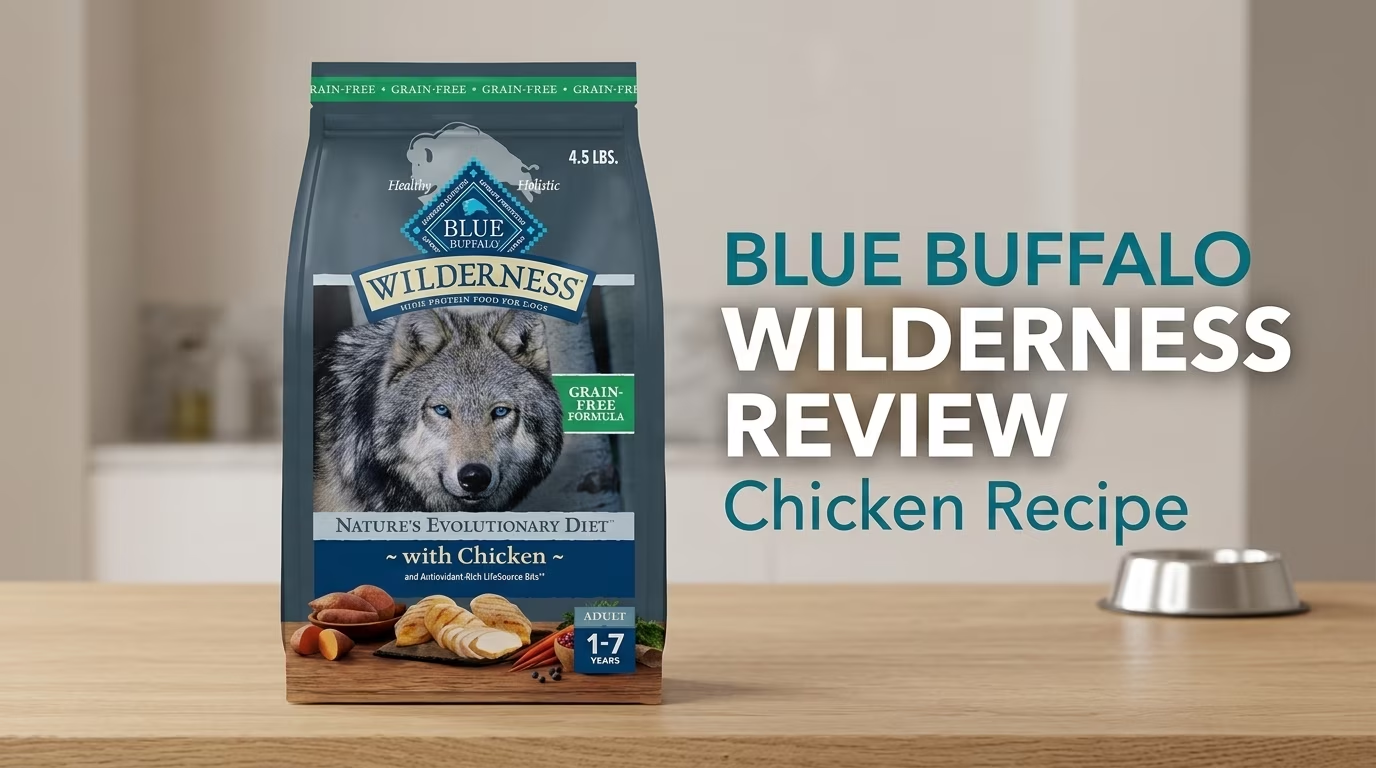
I’ve gone through more dog food brands than I care to count over the past twelve years. Some worked great, some were total disasters, and most fell somewhere in the middle. When I picked up my first bag of Blue Buffalo Wilderness High Protein back in January 2026, I wasn’t exactly bursting with optimism. I’d heard the hype — grain-free this, high protein that, inspired by wolves — but I’ve learned that marketing and reality don’t always match up when it comes to dog food.
Still, three of my dogs needed feeding, and I was willing to give it an honest month-long trial. No shortcuts, no assumptions. Just careful observation of how they actually responded to the food.
Here’s the unfiltered truth about what happened.
Product Overview: Blue Buffalo Wilderness High Protein Chicken Recipe
Blue Buffalo Wilderness is positioned as their premium grain-free line — a step above their regular Life Protection Formula. The “Wilderness” branding leans heavily into the ancestral diet angle, suggesting dogs should eat like their wolf ancestors (which is… debatable science, but that’s their pitch).
The High Protein Chicken Recipe is their flagship formula in this line, and it’s designed for adult dogs across all breeds and sizes.
Key Details:
- Brand: Blue Buffalo Wilderness (owned by General Mills)
- Formula: High Protein Grain-Free Chicken Recipe
- Life Stage: Adult (1+ years)
- Target: All breeds, grain-sensitive dogs, active dogs
- Primary Protein: Deboned chicken
- Available Sizes: 4.5 lb, 11 lb, 24 lb bags
- Price Range: $22–$72 depending on size (USA retail)
- Where to Buy: Petco, PetSmart, Chewy, Amazon, Target
Quick Verdict: This is a genuinely high-protein food (34%) that delivered real results in muscle tone and energy for my active dogs. The ingredient list is solid with real chicken leading the way. But it’s expensive, caused some digestive adjustment issues, and one of my dogs actually seemed to do worse on it. It’s good for the right dog, but it’s definitely not a one-size-fits-all solution.
Meet My Three Guinea Pigs (Er, Dogs)
🐶 Jasper — Weimaraner, 5 Years Old, 72 lbs
Jasper is my high-octane hunting dog who thinks every day is an adventure waiting to happen. He’s lean, muscular, and burns calories like a marathon runner. His energy needs are substantial, and he’s always done best on higher-protein foods. His coat is short and silvery-gray, and when his nutrition is off, it gets dull and rough almost immediately. He’s also got a sensitive stomach that’ll let me know — loudly and unpleasantly — if something doesn’t agree with him.
🐶 Mabel — Basset Hound, 6 Years Old, 52 lbs
Mabel is my perpetually food-motivated couch potato. She waddles more than walks, her ears drag on the ground, and she has perfected the art of the guilt-inducing stare when she wants treats (which is always). Basset Hounds are prone to weight gain, so portion control is critical. She’s also got those classic hound-dog digestion issues — sensitive stomach, occasional gas that could clear a room, and a tendency toward ear infections when her diet isn’t right.
🐶 Peanut — Miniature Pinscher, 8 Years Old, 11 lbs
Peanut is my tiny, neurotic tornado. He’s convinced he’s a Rottweiler trapped in an 11-pound body, barks at everything that moves, and has more attitude than dogs five times his size. Min Pins have fast metabolisms and need nutrient-dense food despite their small size. He’s also a picky eater who’ll turn his nose up at food if he decides he’s not in the mood, which makes food transitions… fun.
My 1-Month Experience — Three Dogs, Three Very Different Results
I did a slow seven-day transition, gradually mixing increasing amounts of Wilderness with their previous food. Even with that caution, things got interesting.
🐶 Jasper — Weimaraner
Energy Levels: This is where Wilderness really shined. Within about ten days, I noticed Jasper had noticeably better stamina on our long morning runs. He wasn’t flagging at the end like he sometimes does, and he recovered faster. At 34% protein, this food is built for active dogs, and Jasper is exactly that kind of dog. His energy felt more sustained and consistent throughout the day.
Digestion: This was rocky at first. Days 3-6 of the transition, Jasper had soft stools and more frequent bathroom trips. Not full diarrhea, but definitely looser than normal. I almost stopped the trial, but by day 8, things normalized. Once fully adjusted, his stools were actually better than they’d been on his previous food — smaller, firmer, less frequent. The high protein content means less waste volume, which makes sense.
Coat Condition: By week three, Jasper’s coat was noticeably shinier. That silvery-gray sheen that Weimaraners have when they’re healthy came back strong. The texture felt smoother when I petted him. I attribute this to the omega-3 and omega-6 fatty acids in the formula — they clearly made a difference.
Behavior: Same Jasper — high-energy, focused, a little obsessive about birds and squirrels. No behavioral changes, which was fine by me.
Issues: Beyond the initial digestive adjustment, my only concern was that Jasper seemed hungrier between meals. He’d stare at his empty bowl and look at me like I was starving him. I ended up increasing his portions slightly (about 10% more than the bag recommended), which seemed to satisfy him. At 34% protein and 15% fat, the calorie density is moderate (~410 kcal/cup), so active dogs may need larger portions than you’d expect.
🐶 Mabel — Basset Hound
Appetite: Mabel has never met food she didn’t love, so she dove into Wilderness with her usual enthusiasm. The problem was that she seemed to love it too much. She started begging more aggressively, whining near the food container, and generally acting like she was being underfed (classic Basset Hound manipulation, but still).
Weight Changes: This is where things went south. I weighed Mabel at the start of the trial: 52.3 lbs. After 30 days, despite following the feeding guidelines on the bag religiously: 54.1 lbs. That’s a 1.8 lb gain in a month on a dog who should be losing weight, not gaining it.
I know what happened. The combination of high protein and moderate-to-high fat (15%) was just too calorie-dense for a lazy Basset Hound. The feeding guidelines on the bag are clearly designed for more active dogs, and Mabel is… not that. I should have reduced portions further, but I was trying to follow the manufacturer recommendations. Lesson learned.
Stool Quality: Mabel had some gas during the first week — not unusual for her when switching foods. After that, her stools were fine. Firm, consistent, no major issues. The grain-free formula seemed easier on her stomach than grain-inclusive foods we’ve tried.
Activity: Mabel remained her usual low-energy self. She wasn’t sluggish or lethargic — Basset Hounds just aren’t naturally energetic dogs. No changes here.
Overall: The weight gain was a dealbreaker. This food is too rich for sedentary breeds prone to obesity. If I were to feed it to Mabel again (which I probably won’t), I’d cut portions by at least 20% below the recommended amount and monitor weight weekly.
🐶 Peanut — Miniature Pinscher
Appetite: Peanut is picky, so I was bracing for resistance. Surprisingly, he took to Wilderness almost immediately. He ate his full portions from day one, which is rare for him. The chicken flavor was clearly appealing, and the kibble size (medium-sized pieces) was manageable for his small mouth.
Weight Changes: Peanut started at 11.2 lbs and ended at 11.4 lbs. A 0.2 lb gain is pretty negligible for a dog his size, so I’m calling that stable. His body condition looked good — lean, not skinny, not chunky.
Stool Quality: Here’s where I ran into problems. Peanut had consistently softer stools throughout the entire month. Not diarrhea, but definitely on the mushy side. He normally has very firm stools, so this stood out. I’m not sure if it was the high protein, the grain-free formula, or something specific in the ingredient list, but his digestive system never fully adjusted like Jasper’s did.
Activity: Peanut had good energy — maybe even slightly more than usual. He was zooming around the house, barking at shadows, being his neurotic little self. No complaints on energy levels.
Any Issues: The persistent soft stools bothered me. For a senior dog (8 years old), I want digestive consistency. I also noticed Peanut was drinking more water than usual, which could be related to the higher protein content (more metabolic waste to process). Not necessarily a problem, but something I noted.
Verdict for Peanut: Mixed results. Good palatability and energy, but the digestive issues were concerning enough that I wouldn’t make this his long-term food.
Nutritional Information Breakdown
Let’s talk numbers, because this is where Wilderness tries to differentiate itself.
| Nutrient | Value | Ideal Range | Verdict |
|---|---|---|---|
| Crude Protein | 34% | 20–30% | ⚠️ Very High — exceeds typical range, designed for active dogs |
| Crude Fat | 15% | 10–20% | ✅ Good — moderate, well-balanced |
| Crude Fiber | 6% | 3–5% | ⚠️ High — above typical range, may cause loose stools in some dogs |
| Moisture | 10% | Up to 12% | ✅ Standard for dry kibble |
| Calories | ~410 kcal/cup | — | Moderate — lower than expected for high protein |
What This Actually Means:
The 34% protein is genuinely high. Most adult maintenance foods sit around 24-28%. This level is appropriate for working dogs, highly active breeds, or dogs who need muscle support. For a couch potato like Mabel? It’s overkill. Excess protein doesn’t hurt healthy dogs, but it also doesn’t provide extra benefits if they’re not using it.
The protein comes primarily from animal sources (deboned chicken, chicken meal, turkey meal, fish meal), which is excellent. This isn’t inflated with cheap plant proteins.
Fat at 15% is solid — enough to support skin and coat health without being excessive. This worked well for all three dogs from a coat perspective.
Fiber at 6% is higher than most dog foods. Blue Buffalo likely increased fiber to help with satiety (keeping dogs feeling full) and to support the grain-free formula’s digestive impact. For some dogs (like Jasper), this worked well. For others (like Peanut), it may have contributed to softer stools.
Calories at ~410 per cup is actually moderate, which surprised me given the high protein. This means you’ll feed larger portions than you might expect, which impacts cost.
Real Meat vs. Fillers:
Deboned chicken is the #1 ingredient — excellent start. But “deboned chicken” includes water weight, so its actual protein contribution post-cooking is less than it appears on the label.
That said, chicken meal (#2 ingredient), turkey meal, and fish meal are all concentrated protein sources that deliver serious nutritional value. The animal protein foundation here is genuinely strong.
There are peas, pea protein, and pea starch in the formula. These are grain-free substitutes that provide carbohydrates and some protein. Some dogs do great on pea-heavy foods. Others (like Peanut, apparently) have digestive sensitivity to them.
The Grain-Free Question:
As of 2026, the FDA’s investigation into grain-free diets and dilated cardiomyopathy (DCM) is ongoing. Blue Buffalo Wilderness is one of the brands implicated in case reports. The link isn’t definitively proven, but it’s worth being aware of if you have a breed predisposed to heart issues (Golden Retrievers, Dobermans, etc.). None of my three dogs fall into high-risk categories, so I felt comfortable with a 30-day trial, but I wouldn’t feed this long-term to a breed at risk without consulting a vet.
Ingredient Analysis — What’s Really Inside?
Top 5 ingredients:
- Deboned Chicken — Real, identifiable animal protein. Named source. This is what you want to see at the top. Rating: Premium.
- Chicken Meal — Concentrated chicken protein with moisture removed. Much more protein-dense than fresh chicken. Having this as #2 means substantial meat content. Rating: Premium.
- Pea Protein — A plant-based protein derived from peas. Used to boost the protein percentage without the cost of more animal protein. Dogs digest animal protein better than plant protein, so this is a cost-cutting measure. Rating: Average-to-Low.
- Peas — Whole peas used as a carbohydrate source in grain-free formulas. Provide fiber and some nutrients. Not bad, but not exceptional. Some dogs are sensitive to legumes. Rating: Average.
- Turkey Meal — Another concentrated animal protein source. Adds variety to the protein profile and boosts the overall meat content. Rating: Premium.
Overall Ingredient Quality Rating: Good-to-Premium. The animal protein foundation (chicken, chicken meal, turkey meal, fish meal further down) is excellent. The pea protein is the weak link — it’s there to inflate protein numbers cheaply. The grain-free formula relies heavily on peas, pea starch, and tapioca starch for carbs, which works great for some dogs and causes digestive issues for others.
No corn, wheat, soy, or by-products. Blue Buffalo markets this heavily, and the ingredient list backs it up.
Pros & Cons — The Unvarnished Truth
✅ Pros
- Genuinely high protein (34%) from real meat sources — Jasper’s muscle tone and energy were noticeably better
- Deboned chicken, chicken meal, and turkey meal in top 5 — substantial animal protein, not marketing fluff
- Grain-free formula — good for dogs with grain sensitivities (if that’s actually your dog’s issue)
- Excellent coat improvements — all three dogs had shinier, healthier-looking coats
- Good palatability — even picky Peanut ate it willingly
- No corn, wheat, soy, or by-products — cleaner ingredient list than many competitors
- Includes LifeSource Bits — those little dark kibbles with antioxidants (gimmick or not, the food performed well overall)
❌ Cons
- Expensive — one of the pricier options on the market, especially for large dogs
- Caused digestive adjustment issues — Jasper had soft stools for nearly a week; Peanut never fully adjusted
- Too calorie-dense for sedentary dogs — Mabel gained 1.8 lbs in a month following feeding guidelines
- Contains pea protein — plant-based protein filler that reduces ingredient quality
- Heavy on legumes — peas, pea protein, pea starch — may cause gas or loose stools in sensitive dogs
- Grain-free DCM concerns — ongoing FDA investigation links some grain-free foods to heart issues
- High fiber (6%) caused soft stools in one dog — great for some, problematic for others
- Calorie content is only moderate — you’ll feed more volume than expected, which impacts cost
Price Breakdown (USA — All Prices in $)
| Bag Size | Approximate Price | Price Per Pound | Price Per Kg |
|---|---|---|---|
| 4.5 lb | $22–$26 | ~$5.33/lb | ~$11.75/kg |
| 11 lb | $42–$48 | ~$4.18/lb | ~$9.21/kg |
| 24 lb | $64–$75 | ~$2.96/lb | ~$6.53/kg |
Prices based on Petco, Chewy, Amazon as of early 2026.
Monthly Cost Estimates:
Because the calorie density is moderate (~410 kcal/cup), you’ll feed more than you might expect for a “high protein” food.
- Small dog (Peanut, ~11 lbs): ~½ cup/day → 11 lb bag lasts ~3 weeks → ~$56–$64/month (This is HIGH for a small dog)
- Medium dog (Mabel, ~52 lbs): ~2 cups/day → 24 lb bag lasts ~4 weeks → ~$64–$75/month
- Large dog (Jasper, ~72 lbs): ~3 cups/day → 24 lb bag lasts ~2.6 weeks → ~$98–$115/month
Value for Money Verdict: This is expensive. Really expensive, especially for large dogs. Jasper’s monthly food cost was pushing $100, which is steep even for premium food. The quality is there — real chicken, high protein, good results — but you’re paying a significant Blue Buffalo brand premium. Comparable foods like Taste of the Wild or Diamond Naturals Extreme Athlete deliver similar nutrition at 20–30% less cost.
For small dogs, the cost is almost absurd. $56–$64/month to feed an 11 lb dog is ridiculous when quality alternatives exist for half that.
Comparison Table: Blue Buffalo Wilderness vs. Competitors
| Feature | Blue Wilderness High Protein | Taste of the Wild High Prairie | Orijen Original | Purina Pro Plan Sport | Diamond Naturals Extreme |
|---|---|---|---|---|---|
| Protein % | 34% | 32% | 38% | 30% | 32% |
| Fat % | 15% | 18% | 18% | 20% | 25% |
| Fiber % | 6% | 3% | 5% | 3% | 3% |
| Price (24 lb bag, $) | $64–$75 | $48–$56 | $90–$105 | $68–$78 | $48–$56 |
| First Ingredient | Deboned Chicken | Buffalo | Fresh Chicken | Chicken | Chicken Meal |
| Grain-Free? | Yes | Yes | Yes | No | No |
| Contains Pea Protein | Yes | Yes | No | No | No |
| Best For | Active dogs, grain-sensitive | Budget-conscious, active dogs | Premium buyers, max nutrition | Sporting/working dogs | Extreme athletes, sled dogs |
| Rating (/10) | 7.6 | 8.1 | 9.0 | 7.9 | 8.3 |
Where Wilderness Stands:
Is Blue Buffalo Wilderness good for dogs? For active dogs like Jasper, yes — it delivers real results. But when looking at the best dog food in USA 2026, it sits in an awkward middle tier: more expensive than Taste of the Wild and Diamond Naturals (which perform similarly), less protein-dense than Orijen, and grain-free when many vets now recommend grain-inclusive formulas.
The brand recognition and marketing are strong, but the value proposition is weak. You’re paying extra for the Blue Buffalo name without getting proportionally better nutrition.
Final Rating: 7.6 / 10
| Category | Score (/10) |
|---|---|
| Ingredient Quality | 8.0 |
| Nutritional Profile | 8.5 |
| Digestive Performance | 6.5 |
| Coat & Skin Health | 8.5 |
| Palatability | 8.0 |
| Value for Money | 5.0 |
| Overall | 7.6 |
Verdict: Good for Active Dogs — Overpriced and Not for Everyone
Blue Buffalo Wilderness High Protein is a quality food that works well for the right dog. Jasper thrived on it — better stamina, shinier coat, improved muscle tone. But Mabel gained unwanted weight, and Peanut had persistent digestive issues.
The ingredient list is solid, the protein content is legitimately high, and the results speak for themselves when the food matches the dog. But the price is hard to justify, the grain-free formula comes with potential health concerns, and the digestive adjustment period was rough.
Would I Buy It Again?
Maybe for Jasper, but probably not.
Here’s my thinking: Jasper responded really well to this food. His energy, coat, and muscle tone were all noticeably better. But at $98–$115/month, I could feed him Taste of the Wild High Prairie or Diamond Naturals Extreme Athlete for $60–$75/month and get 90% of the same results. That $30–$40/month difference adds up to $360–$480 per year. Is Wilderness $400/year better? I honestly don’t think so.
For Mabel, absolutely not. The weight gain disqualifies it immediately. For Peanut, the digestive issues and absurd monthly cost ($56–$64 for an 11 lb dog!) make it a non-starter.
If you have an active, medium-to-large breed dog with no grain sensitivities and money isn’t a concern, Wilderness is a solid choice. For everyone else, there are better options.
Who Should Buy Blue Buffalo Wilderness High Protein?
Ideal for:
- Highly active dogs — working breeds, sporting dogs, dogs who run/hike regularly
- Dogs with confirmed grain sensitivities (though verify this with a vet first)
- Owners who prioritize brand recognition and want a name they trust
- Medium-to-large athletic breeds who need muscle support
- People shopping at mainstream pet stores where Blue Buffalo is readily available
NOT ideal for:
- Sedentary or low-activity dogs — the protein and calories are overkill; Mabel proved this
- Budget-conscious owners — you’re paying a 25–40% premium over comparable foods
- Small breed owners — the monthly cost for tiny dogs is absurdly high
- Dogs with legume sensitivities — heavy on peas and pea products
- Breeds at risk for DCM — Golden Retrievers, Dobermans, etc., should avoid grain-free until research is clearer
- Senior dogs with sensitive stomachs — the high protein and fiber may cause digestive issues
My Final Honest Take
After twelve years of feeding dogs, I’ve learned that expensive doesn’t always mean better, and popular doesn’t always mean right for your dog. Blue Buffalo Wilderness is a good food. Maybe even a very good food for certain dogs. But it’s not great enough to justify the premium you’re paying.
Jasper looked fantastic on it. Mabel got chunky. Peanut had perpetually soft poops. That 7.6/10 rating feels exactly right — solidly above average, but with enough flaws and cost concerns that I can’t enthusiastically recommend it to everyone.
If you’re feeding it now and your dog is thriving, great — keep doing what works. But if you’re considering switching TO Wilderness, I’d encourage you to also try Taste of the Wild or Diamond Naturals first. You might get 90% of the results at 60% of the cost, and that’s a better deal in my book.
Your dog doesn’t care about the wolf on the bag. They care about how they feel. Make sure the food you choose actually matches their needs, not just the marketing story you want to believe.