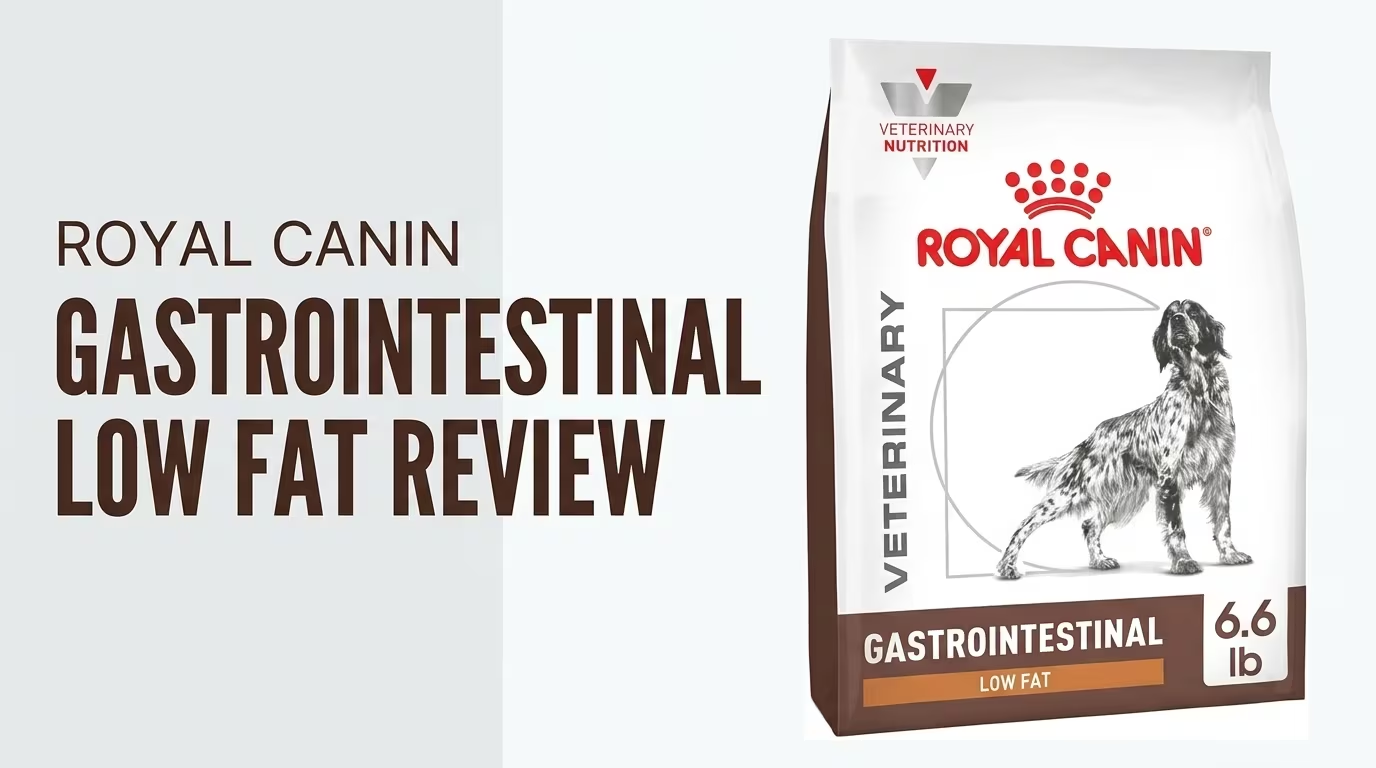
This review is a little different from most of what I write. Royal Canin Veterinary Diet Gastrointestinal Low Fat isn’t something you pick up on a whim or find yourself browsing at PetSmart. It’s a prescription diet — you need veterinary authorization to purchase it — and it’s specifically designed for dogs with diagnosed gastrointestinal conditions, fat malabsorption issues, pancreatitis history, or other medical needs requiring severely reduced dietary fat.
I’m reviewing it because it matters to review it honestly. Thousands of dogs in the USA are prescribed this food every year, and the people feeding it to their dogs deserve a real-world account from someone who’s actually used it — not just the clinical data sheet. I have one dog who was prescribed this food after a pancreatitis episode, and I included two additional dogs with documented GI conditions to give a fuller picture.
Everything I write here should be considered in the context of veterinary guidance. This is a medical diet. Please work with your vet.
Product Overview: Royal Canin Veterinary Diet Gastrointestinal Low Fat
Royal Canin’s Veterinary Diet line is separate from their standard commercial products. These are formulated with specific clinical goals in mind and are sold exclusively through veterinary channels. The Gastrointestinal Low Fat formula is designed for dogs who need dramatically reduced fat intake — typically after pancreatitis, with lymphangiectasia, with fat malabsorption disorders, or with chronic inflammatory bowel disease that responds to low-fat management.
The clinical target: very low dietary fat content to reduce pancreatic stimulation and GI stress.
Key Details:
- Brand: Royal Canin Veterinary Diet
- Formula: Gastrointestinal Low Fat Dry
- Life Stage: Adult dogs
- Target: Dogs with diagnosed GI conditions requiring low fat intake
- Requires: Veterinary prescription
- Available Sizes: 8.8 lb, 17.6 lb, 28.6 lb bags
- Price Range: $38–$98 depending on size (USA prescription pricing)
- Where to Buy: Vet clinics, Chewy Pharmacy, VetCentric, Vetsource
Quick Verdict: For dogs who genuinely need this diet, it works — my pancreatitis-history dog had zero GI episodes during the trial month. But the ingredient quality is poor for the price, the protein sources are concerning for long-term use, and this food should be considered a medical management tool rather than optimal everyday nutrition. Dogs who don’t medically require this formula should absolutely not be on it — the low fat content is insufficient for healthy dogs.
An Important Note Before the Dog Introductions
All three dogs in this trial have documented gastrointestinal conditions requiring dietary management. This is not a food I would test on healthy dogs — the very low fat content (6%) would be actively harmful for dogs without specific medical need.
🐶 Pepper — Miniature Schnauzer, 7 Years Old, 17 lbs
Pepper is my bossy, high-maintenance, deeply loved Schnauzer who had her first pancreatitis episode eighteen months ago and a second one eight months ago. After her second episode, her vet prescribed Royal Canin Gastrointestinal Low Fat as a long-term management strategy. She’s been on it for about four months before this trial began, so this review covers a continuation of her experience rather than a fresh start. She’s also the reason I decided to properly evaluate this food.
🐶 Winston — Cocker Spaniel, 9 Years Old, 24 lbs
Winston is my mellow, sweet, slightly anxious senior Cocker who was diagnosed with protein-losing enteropathy (PLE) two years ago — a serious GI condition where the intestines lose protein into the gut, requiring careful nutritional management. His vet prescribed this formula specifically because the low fat content reduces GI tract lymphatic stimulation. He’s been on it for two months prior to this trial.
🐶 Birdie — Labrador Retriever, 5 Years Old, 72 lbs
Birdie is my food-obsessed, enthusiastic Lab who developed idiopathic hyperlipidemia last year — elevated blood fat levels that require dietary fat restriction to manage. She’s new to this formula, which makes her my fresh-start indicator for transition experience and initial response.
My 1-Month Experience — Three Medically-Managed Dogs
Transition for all three dogs was slow and vet-guided. Birdie received a 10-day transition since she was new to the formula; Pepper and Winston continued their established routine.
🐶 Pepper — Miniature Schnauzer
Energy Levels: Pepper’s energy has been consistently appropriate since starting this diet four months ago. She’s seven, she’s a Schnauzer, and she’s not exactly a marathoner by nature — but she maintains her usual alert, opinionated, demanding energy without notable fatigue. Pre-pancreatitis diet, her energy crashed during episodes; on this food, those crashes haven’t returned.
Digestion: This is the core success story with Pepper. Before this diet, she was averaging a pancreatitis episode every five to six months. On Royal Canin GI Low Fat for four-plus months (including this 30-day tracked period), she has had zero pancreatitis episodes. Her vomiting and abdominal pain that characterized her previous episodes are completely absent. For a dog with her history, this is the outcome that matters above everything else.
Coat Condition: Honestly? Her coat has suffered. The low fat content (6% crude fat) is visibly insufficient for coat quality in a healthy sense. Pepper’s wiry Schnauzer coat has become slightly drier and less vibrant than it was before her GI management started. I add a very small amount of omega-3 supplement (with my vet’s guidance) to partially address this, which has helped somewhat.
Behavior: Same bossy, lovable Pepper. She accepts this food without protest, which is something — Schnauzers can be picky, and her consistent eating on this formula is important for GI management.
Issues: The coat quality concern is real. The ingredient quality concerns me for long-term use. And Pepper sometimes seems less satisfied after meals — the very low fat reduces satiety, and she’ll approach her bowl area looking for more. I manage this with feeding schedule adjustments.
🐶 Winston — Cocker Spaniel
Appetite: Winston has been challenging on this food. He’s a Cocker Spaniel, and Cockers are generally food-motivated — but the low palatability of this formula relative to more flavorful mainstream foods means he sometimes approaches his bowl with less enthusiasm. He eats it consistently, but it’s not his favorite. Some days he takes twice as long to finish as he did before his diagnosis.
Weight Changes: Winston started at 24.1 lbs and ended at 24.3 lbs. Essentially stable, which is appropriate for a dog with PLE — weight management is actually critical for his condition. The formula’s calorie density is moderate, and with careful portioning, weight stability is achievable.
Stool Quality: Significantly improved since he started this diet. Before this formula, Winston’s stools were frequently loose and poorly formed — a hallmark of his PLE. On Royal Canin GI Low Fat, his stool quality is dramatically better: firmer, more consistent, and lower volume. This improvement directly correlates with reduced GI inflammation and protein loss.
Activity: Winston is nine years old with a chronic GI condition. His activity is modest and appropriate for his age and health status. He seemed comfortable and pain-free throughout the month, which is the goal.
Issues: The palatability struggle is real for Winston. He eats it because he needs to, not because he loves it. Adding a tiny amount of warm water to the kibble has helped improve acceptance. Also, his coat quality has declined similarly to Pepper’s — the low fat content affects coat health across the board.
🐶 Birdie — Labrador Retriever
Appetite: Labs. Birdie ate this food enthusiastically from day one of the full transition, because she is a Labrador and the concept of refusing food is biologically foreign to her. No palatability issues whatsoever. She’s my easy eater.
Weight Changes: Birdie went from 72.4 lbs to 72.0 lbs. A slight decrease — appropriate given that her hyperlipidemia management benefits from not gaining weight. The lower fat content naturally reduces caloric density, which helped with weight management.
Digestion: Birdie’s digestion adapted well. She had softer stools for days eight through eleven (transition-related), which resolved completely. After full transition, her stools were firm and consistent. For a dog whose condition requires fat restriction, her GI system handled the low-fat formula appropriately.
Energy: Here’s where I have some concern for Birdie. By week three, she seemed less energetic on our walks than I’d expect from a five-year-old Lab. She’s still active, still happy, still Birdie — but her usual bouncing-off-the-walls enthusiasm for physical activity was slightly muted. This is likely related to the very low fat content reducing her caloric energy density. I discussed this with her vet, who adjusted her daily portion slightly upward (still within the fat management parameters) to better support her energy.
Blood Lipids: Her follow-up blood panel at six weeks showed improvement in her lipid levels — the primary clinical goal of this dietary intervention. That result justifies the food’s inclusion in her management plan.
Any Issues: Energy muting by week three, noted and addressed with vet guidance. Coat quality was the other observation — Birdie’s dense Lab coat felt slightly drier by month end.
Nutritional Information Breakdown
This is where I need to be particularly careful about context. These numbers look very different when you’re evaluating them for a healthy dog versus a dog with a specific medical need.
| Nutrient | Value | Standard Ideal Range | Medical Context Verdict |
|---|---|---|---|
| Crude Protein | 24.6% | 20–30% | ✅ Appropriate for GI management |
| Crude Fat | 6% | 10–20% | ⚠️ Deliberately very low — medically necessary for target patients |
| Crude Fiber | 8.1% | 3–5% | ⚠️ Higher than typical — supports GI health and satiety |
| Moisture | 10% | Up to 12% | ✅ Standard |
| Calories | ~248 kcal/cup | — | Low — requires larger portions for caloric needs |
Medical Context for Each Number:
Protein at 24.6% is appropriate and actually somewhat carefully calibrated — the formula uses highly digestible protein sources to minimize GI stress while maintaining adequate nutrition. For Winston’s PLE specifically, protein quality and digestibility matter enormously.
Fat at 6% is the defining clinical characteristic. This is dramatically lower than any standard maintenance food (even other “low fat” foods rarely go below 8-10%). For Pepper’s pancreatitis management, fat restriction reduces pancreatic stimulation and significantly lowers episode risk. For Birdie’s hyperlipidemia, it directly reduces blood lipid levels. This is a therapeutic number, not a nutritional ideal.
Fiber at 8.1% is higher than most dog foods. Royal Canin uses this elevated fiber level to support GI health, improve stool consistency in dogs with GI disorders, and compensate for satiety that would normally be provided by fat. In dogs with GI disorders, this fiber level is appropriate and beneficial. In healthy dogs, it would be too high.
Calories at ~248 per cup are very low — a direct result of the minimal fat content. This means dogs need to eat more volume to meet caloric needs, which can be counterintuitive and requires careful adherence to the (generous) feeding guidelines.
This profile is not appropriate for healthy dogs and should not be fed without veterinary direction.
Protein Sources and Quality:
This is where my honest criticism emerges. The protein sources in this formula are:
- Corn
- Chicken meal
- Dehydrated poultry protein
- Wheat
- Corn gluten meal
Corn is the first ingredient. Corn gluten meal appears as a protein contributor. These are not premium protein sources. The clinical formulation prioritizes fat restriction over ingredient quality, and the result is a medically effective but nutritionally mediocre ingredient profile. This is an acceptable trade-off for the medical goals it achieves, but it’s a trade-off nonetheless.
Ingredient Analysis — Medical Effectiveness vs. Ingredient Quality
Top 5 ingredients:
- Corn — Primary carbohydrate and energy source. Not a premium ingredient. Used here for its digestibility and low fat content, not for nutritional value. Rating: Low (as a standard ingredient), acceptable in medical context.
- Chicken Meal — Named, concentrated protein source. A reasonable choice within the formula’s constraints. Rating: Average.
- Dehydrated Poultry Protein — Concentrated protein, vague species identification. Contributes to the protein total. Rating: Average-to-Low.
- Wheat — Grain carbohydrate filler. Not premium but provides easily digestible energy in a fat-restricted formula. Rating: Low-to-Average.
- Corn Gluten Meal — Plant protein booster. Less bioavailable than animal protein. Present to bolster protein percentage economically. Rating: Low-to-Average.
Overall Ingredient Quality Rating: Low-to-Average. I want to be clear about how I’m framing this: the ingredient quality is genuinely poor by mainstream standards. If this were a standard commercial dog food, I would not recommend it at this price. But it’s not a standard commercial food — it’s a medical diet that achieves specific clinical outcomes (reduced pancreatitis episodes, improved fat malabsorption, reduced hyperlipidemia) that I personally witnessed.
The ingredient quality compromise is real and worth knowing. But for the target patient population, the clinical efficacy matters more than the ingredient prestige.
Pros & Cons — From a Medical Management Perspective
✅ Pros
- Pepper had zero pancreatitis episodes over four months — the primary clinical goal achieved
- Winston’s stool quality improved dramatically — meaningful quality-of-life improvement for a PLE patient
- Birdie’s blood lipid levels improved on 6-week follow-up panel
- Highly digestible formula — the protein and carb sources, while not premium, are highly digestible
- High fiber (8.1%) supports GI health in the target population
- Vet-backed clinical evidence — this formula has actual research behind its formulation
- Weight management-friendly for dogs who need fat restriction
- Widely available through prescription channels — Chewy Pharmacy, VetCentric, vet clinics
❌ Cons
- Ingredient quality is genuinely poor — corn as first ingredient, corn gluten meal prominent
- Coat quality declined in all three dogs — 6% fat is insufficient for coat health long-term
- Expensive for the ingredient quality — premium prescription pricing for budget-tier ingredients
- Very low calorie density requires careful portion management
- Energy muting in Birdie — low fat reduced her normal Lab energy level
- Palatability is challenging for some dogs (Winston’s reluctance was consistent)
- Not appropriate for healthy dogs — the fat restriction would be harmful without medical need
- Long-term use concerns — I’d want more comprehensive blood work monitoring for dogs on this extended term
- Requires prescription — adds logistical complexity and cost
Price Breakdown (USA Prescription Pricing — All in $)
| Bag Size | Approximate Price | Price Per Pound | Price Per Kg |
|---|---|---|---|
| 8.8 lb | $38–$46 | ~$4.77/lb | ~$10.52/kg |
| 17.6 lb | $62–$74 | ~$3.86/lb | ~$8.51/kg |
| 28.6 lb | $85–$98 | ~$3.06/lb | ~$6.74/kg |
Prescription diet pricing. Chewy Pharmacy typically offers the most competitive pricing among authorized vendors.
Monthly Cost Estimates:
Low calorie density means larger portions than you might expect:
- Small dog (Pepper, ~17 lbs): ~1½ cups/day → 17.6 lb bag lasts ~4+ weeks → ~$62–$74/month
- Medium dog (Winston, ~24 lbs): ~2 cups/day → 17.6 lb bag lasts ~3.5 weeks → ~$71–$84/month
- Large dog (Birdie, ~72 lbs): ~5+ cups/day → 28.6 lb bag lasts ~2.5 weeks → ~$136–$157/month
Value for Money Verdict: This is where the analysis gets complicated. For Pepper, the food prevented pancreatitis episodes that previously cost $800–$1,500 per vet visit. The $62–$74/month is genuinely good value measured against avoided medical costs. For Birdie, the $136–$157/month is genuinely significant, and I’d be investigating whether portion management could reduce consumption while maintaining clinical goals (with vet guidance).
The pure ingredient-quality-to-price ratio is poor. The clinical-outcome-to-cost ratio is, for the target population, defensible.
Comparison Table: Royal Canin GI Low Fat vs. Alternatives
| Feature | Royal Canin Vet GI Low Fat | Hill’s Prescription i/d Low Fat | Purina Pro Plan EN Gastroenteric Low Fat | Royal Canin GI Standard | Purina ONE SmartBlend (non-prescription) |
|---|---|---|---|---|---|
| Protein % | 24.6% | 21.6% | 27% | 26% | 30% |
| Fat % | 6% | 5.5% | 8.1% | 15% | 17% |
| Fiber % | 8.1% | 4.5% | 3% | 5.7% | 3% |
| Price (28 lb bag, $) | $85–$98 | $78–$92 | $82–$96 | $60–$70 | $38–$44 |
| Requires Rx | Yes | Yes | Yes | Yes | No |
| Pancreatitis-appropriate | Yes | Yes | Yes | No | No |
| Clinical Research | Strong | Strong | Moderate | Moderate | N/A |
| Best For | Pancreatitis, fat malabsorption, hyperlipidemia | Pancreatitis, IBD | Active GI patients needing lower fat | General GI sensitivity | Healthy active adult dogs |
| Rating for Target Patient | 7.8 | 7.5 | 7.3 | 6.5 | Not appropriate |
| Rating for Healthy Dogs | 3.5 | 3.5 | 4.0 | 6.0 | 7.6 |
Important Prescription Diet Context:
Is Royal Canin good for dogs with gastrointestinal conditions requiring low fat? Based on my trial, yes — it achieves its clinical goals. Among prescription GI low fat options in the USA in 2026, it competes directly with Hill’s i/d Low Fat (which has slightly lower fat but less protein) and Purina Pro Plan EN Low Fat (which has higher fat at 8.1% and may be more appropriate for dogs who need some fat but less than typical maintenance foods).
Your vet’s recommendation based on your dog’s specific diagnosis should guide which prescription option you use. This review is one data point, not a prescription.
Final Rating: 7.8 / 10 (Evaluated Solely for Target Patient Population)
| Category | Score for Target Patients |
|---|---|
| Clinical Efficacy | 9.5 |
| Digestive Management | 9.0 |
| Ingredient Quality | 4.0 |
| Cost vs. Medical Value | 7.0 |
| Palatability | 6.5 |
| Coat Health Support | 4.0 |
| Long-Term Suitability | 7.0 |
| Overall (Medical Context) | 7.8 |
For Healthy Dogs: 3.5/10 — Not appropriate; would not recommend.
For Medically Indicated Dogs: 7.8/10 — Clinically effective with acknowledged limitations.
Verdict: Clinically Effective For Its Target Population — Do Not Use Without Veterinary Direction
Royal Canin Veterinary Diet Gastrointestinal Low Fat works for what it’s designed to do. Pepper’s pancreatitis prevention, Winston’s improved stool quality, Birdie’s improving blood lipid panel — these are real, meaningful, medically significant outcomes.
But this is not a good food in the conventional sense. Ingredient quality is poor. Coat health suffers. The price-to-ingredient-quality ratio is terrible by standard metrics. And for any healthy dog, this diet would be actively harmful.
Would I Buy It Again?
Yes — for Pepper and Winston, who medically require it. Not for any other dog.
Pepper stays on it. The pancreatitis prevention is non-negotiable for her quality of life and my vet bills. Winston stays on it because his PLE management requires it. For Birdie, I’m working with her vet on whether Purina EN Low Fat (at 8.1% fat vs 6%) might be a more energy-appropriate alternative given her less severe condition.
Who Should Use Royal Canin Veterinary Diet Gastrointestinal Low Fat?
Appropriate for (with veterinary prescription and guidance):
- Dogs with documented pancreatitis history requiring long-term fat restriction
- Dogs with protein-losing enteropathy (PLE) requiring GI stress reduction
- Dogs with idiopathic hyperlipidemia requiring dietary fat management
- Dogs with fat malabsorption disorders
- Dogs recovering from acute GI events under veterinary supervision
NOT appropriate for:
- Healthy dogs without documented GI conditions — the 6% fat will cause nutritional deficiencies over time
- Active or working dogs — inadequate energy density
- Puppies or pregnant/nursing dogs — inappropriate for growth phases
- Dogs without veterinary diagnosis — do not self-prescribe this diet
- Anyone looking for general “gentle” food — Purina Pro Plan Sensitive Skin & Stomach or a hydrolyzed protein food is more appropriate for general sensitivity
My Final Thoughts
This review took me more thought than most I’ve written, because the evaluation criteria are genuinely different from standard dog food reviews. Ingredient quality, cost-per-pound, and marketing claims — the usual benchmarks — are less relevant here. What matters is: does this food prevent pancreatitis episodes? Does it improve GI health in dogs who need fat restriction? Does it support clinical management of conditions that significantly impact quality of life?
For Pepper: yes. For Winston: yes. For Birdie: yes, with caveats about energy management.
The 7.8/10 is specifically and exclusively for dogs who genuinely need this formula. For anyone else, this food has no place in your dog’s bowl.
Work with your vet. Monitor coat health and energy. Consider omega-3 supplementation (vet-approved) to partially address coat quality. And if your dog is prescribed this — know that it’s doing something important even when the ingredient label makes you wince.