
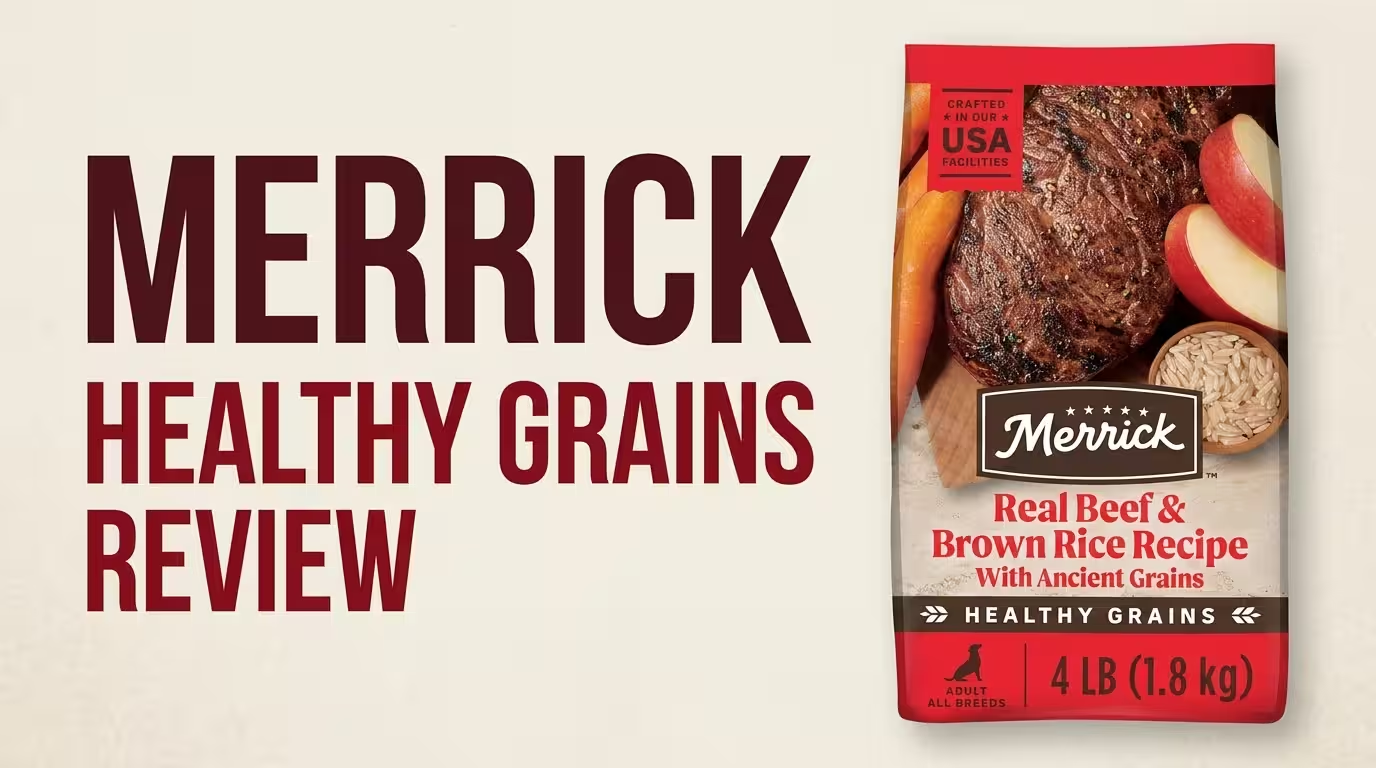
I’ve been watching the grain-free vs. grain-inclusive debate in dog nutrition for years now, and somewhere around 2024 I started actively shifting my perspective. Not because grain-free foods are inherently bad — they’re not — but because the ongoing cardiac research around legume-heavy diets made me more interested in quality grain-inclusive options for dogs who don’t specifically need grain avoidance.
Merrick Classic Healthy Grains showed up on my radar because it’s positioned as a response to exactly that concern. It’s Merrick’s grain-inclusive line, using whole grains like brown rice and barley instead of pea and lentil-heavy grain-free formulations. The “Healthy Grains” name is a direct message to owners reconsidering grain-free options.
In early 2026, I committed to a proper 30-day trial on all three of my dogs. Here’s what I actually found — not what the marketing wants you to believe.
Product Overview: Merrick Classic Healthy Grains Real Beef & Brown Rice
Merrick is owned by Nestlé Purina PetCare (they acquired Merrick Pet Care in 2015), though the brand maintains its own manufacturing and product identity. The Classic Healthy Grains line sits in the upper-mid-tier of the market — not budget, not ultra-premium, but a thoughtful step above mainstream brands.
The Real Beef & Brown Rice formula specifically targets adult dogs who do well on grain-inclusive diets, using deboned beef as the first ingredient alongside quality whole grains.
Key Details:
- Brand: Merrick (Nestlé Purina)
- Formula: Classic Healthy Grains Real Beef & Brown Rice
- Life Stage: Adult (1+ years)
- Target: All breeds, all sizes
- Primary Protein: Deboned beef
- Available Sizes: 4 lb, 12 lb, 25 lb bags
- Price Range: $22–$62 depending on size (USA retail)
- Where to Buy: Chewy, Amazon, PetSmart, Petco, independent pet stores
Quick Verdict: Merrick Classic Healthy Grains Real Beef & Brown Rice is a well-formulated, quality grain-inclusive food that delivered solid results across three different dogs. Deboned beef leads the ingredient list, the grain choices (brown rice, barley, quinoa) are genuinely quality, and the overall nutritional profile is honest and appropriate. The price is in the upper-mid range, which is justified by what’s inside the bag. My main criticism is that the protein percentage, while adequate, isn’t outstanding. But overall — this is a food I feel good recommending.
My Three Test Dogs
🐶 Stella — Weimaraner, 4 Years Old, 66 lbs
Stella is my silver-coated, intensely focused, impossibly athletic hunting dog who treats the world like one continuous search pattern. Weimaraners have a short, sleek coat that’s either gleaming and beautiful or flat and dull depending on their nutrition — no hiding room with that coat. She runs five miles with me three times a week and needs serious fuel. She’s also been on a grain-inclusive diet for the past eight months after her vet raised concerns about her grain-free food and cardiac monitoring, so this trial was particularly relevant for her long-term feeding strategy.
🐶 Cheddar — Corgi, 5 Years Old, 27 lbs
Cheddar is my low-riding, constantly-herding, highly opinionated Corgi who has decided that he’s personally responsible for managing every other living creature in my household. He’s energetic for his size, prone to weight gain (classic Corgi problem), and has a thick double coat that needs consistent nutritional support. He’s also a picky eater on his stubborn days, which makes food transitions more of a negotiation than a simple swap.
🐶 Magnus — Bernese Mountain Dog, 6 Years Old, 108 lbs
Magnus is my tricolor gentle giant who lumbers through life with a calm dignity that makes everyone he meets immediately love him. At six, he’s solidly in middle age for a Bernese Mountain Dog — a breed with a heartbreakingly short lifespan. Joint health, weight management, and quality protein for muscle maintenance are all real priorities for him. His thick, silky tri-colored coat is also a significant indicator of nutritional quality.
My 1-Month Experience — Three Dogs, Three Meaningful Results
Seven-day transition for all three. Magnus got an eight-day transition because of his size and history with digestive sensitivity on new foods. All three transitioned smoothly without significant upset, which was a positive sign.
🐶 Stella — Weimaraner
Energy Levels: Stella’s performance on our runs was consistently good throughout the month. By week two, I felt like her stamina had improved slightly — she was finishing our 5-mile routes with more reserve energy than she’d shown on the grain-free food she’d been on previously. I don’t know if the grain-inclusive formula specifically contributed to this or if it was just natural variation, but the timing was encouraging.
Digestion: Excellent across the board. Stellar digestion — firm, consistent, appropriate volume, no gas issues. After some inconsistency I’d seen with her previous grain-free food, this was genuinely satisfying to see. Three weeks of perfect digestive consistency for a dog who’d had occasional soft-stool days previously.
Coat Condition: Stella’s silver Weimaraner coat — short, tight, and very transparent in terms of nutrition — picked up a noticeable sheen by week three. She has a naturally beautiful coat when she’s healthy, and it was looking its best by the end of the trial. Glossy, smooth, vibrant silver. I photographed her weekly, and the difference between week one and week four was visible.
Behavior: Same intensely focused Stella. She ate her meals with her characteristic efficiency — no dawdling, no drama, full bowl cleaned in under two minutes. She seemed content and comfortable throughout the month.
Issues: None that I’d attribute to the food. Stella had one off-energy day around week three where she seemed less enthusiastic about our run, but she’d also had an intense training session the day before. I’m calling that coincidence.
🐶 Cheddar — Corgi
Appetite: Cheddar spent days one and two of the full transition doing his Corgi food inspection — circling the bowl, sniffing extensively, eating exactly enough to express mild approval before walking away. By day four he was eating full portions. By day seven, he was eating enthusiastically. The beef flavor seems to have genuinely won him over once he decided to commit.
Weight Changes: Cheddar started at 27.2 lbs and ended at 27.0 lbs. Essentially unchanged, with a very slight decrease — perfect for a Corgi who needs to maintain and not gain. I was feeding him about 10% below the bag recommendations for his weight, which was right on the nose.
Stool Quality: This was the standout result for Cheddar. His stools were better on this food than anything I’ve fed him in recent memory — firm, small, well-formed, easy to pick up, and remarkably consistent in timing. Three weeks of textbook stools from a Corgi is worth writing home about. The combination of beef protein and quality grains (brown rice plus barley) clearly suited his digestive system.
Activity: Same enthusiastic, herding-everything Cheddar. His energy was appropriate and consistent throughout the month. He was managing me, the other dogs, and anything else in his vicinity with his usual intensity.
Issues: The two-day palatability negotiation at the start was the only friction. And truly — that’s just Cheddar being Cheddar. Once he decided the food was acceptable, he had zero issues for the remaining 26 days.
🐶 Magnus — Bernese Mountain Dog
Strength & Muscle Tone: Magnus maintained his considerable muscle mass throughout the month. At 108 lbs and six years old, maintaining muscle is the primary goal — not building, not losing. He looked consistent from week one to week four, which is exactly what good protein-to-fat ratio and quality protein sources should deliver at his age.
Immunity & Overall Health: Magnus had a healthy, unremarkable month in the best sense of that word. No health incidents, no skin issues, no ear infections. His eyes were bright, his gums healthy, and his overall demeanor was his characteristic calm contentment.
Coat: This is where Magnus genuinely impressed me. Bernese Mountain Dog coats are thick, silky, and tricolored — they’re one of the most beautiful coats in dogdom but require consistent nutritional support to look their best. By week three, Magnus’s coat was noticeably better — softer to the touch, more lustrous, and the tricolor contrast (black, white, rust) was particularly vivid. I was brushing out slightly less dead hair than usual, which typically indicates better skin health. His regular groomer commented on the improvement at his monthly appointment.
Joint Health: Magnus moves with some expected six-year-old Berner stiffness, particularly in the mornings. By week three, I felt like his morning routine — the slow getting-up process — was marginally smoother. He still has stiffness, because he’s a large, aging dog and that’s reality, but the trend seemed positive. He remains on a separate joint supplement, which continued throughout the trial.
Any Issues: Magnus’s primary challenge is eating speed — at 108 lbs, he’s a gulper, and I use a slow feeder bowl regardless of what food he’s on. The larger kibble pieces in Merrick’s formula were actually helpful here — the size made him work slightly harder than with smaller kibble. No other issues during the month.
Nutritional Information Breakdown
| Nutrient | Value | Ideal Range | Verdict |
|---|---|---|---|
| Crude Protein | 27% | 20–30% | ✅ Good — solid mid-range |
| Crude Fat | 17% | 10–20% | ✅ Good — well-balanced |
| Crude Fiber | 4% | 3–5% | ✅ Good — within ideal range |
| Moisture | 11% | Up to 12% | ✅ Standard for dry kibble |
| Calories | ~373 kcal/cup | — | Moderate energy density |
What These Numbers Mean:
27% protein is solid and appropriate for active adult dogs. The critical differentiator is protein quality — and Merrick does this well. The protein comes primarily from deboned beef, beef meal, and salmon — named, specific animal sources with high bioavailability. There’s no corn gluten meal or soybean meal inflating this number.
Fat at 17% is excellent — well within the ideal range, high enough to support coat health (Stella and Magnus both benefited visibly), and appropriate for dogs with varying activity levels. Not excessive for weight management but not inadequate for performance support.
Fiber at 4% hits the mid-range of ideal. This contributed directly to the excellent digestive consistency across all three dogs — particularly Cheddar’s remarkable stool quality throughout the trial.
Calories at 373 per cup are moderate and well-calibrated for everyday adult feeding.
The Grain Approach:
This is what makes Merrick Classic Healthy Grains genuinely different from mainstream grain-inclusive foods. The grains used are brown rice, barley, and quinoa — not corn and wheat. This distinction matters significantly:
- Brown rice is whole grain, easily digestible, nutritionally superior to refined rice or corn
- Barley has a low glycemic index, supports digestive health, and is gentler on blood sugar than wheat or corn
- Quinoa is a complete protein source with an excellent amino acid profile — its inclusion in a dog food is somewhat unusual and genuinely adds nutritional value
This isn’t the grain-inclusive formula equivalent of Pedigree (corn and wheat fillers). This is genuine, quality grain nutrition. The distinction between “grain-inclusive” as a concept and the quality of actual grains used is enormous, and Merrick handles it correctly.
Additives:
Omega-3 fatty acids from salmon oil and flaxseed — included and clearly effective based on the coat improvements in Stella and Magnus. Probiotics for digestive support — likely contributing to the excellent digestive performance. Glucosamine and chondroitin for joint health (400 mg/kg glucosamine — moderate, not therapeutic, but present and helpful for Magnus at the margins). Vitamins and minerals at appropriate levels. No artificial colors, flavors, or preservatives. The additive profile is clean and thoughtful.
Ingredient Analysis — Among the Best Grain-Inclusive Formulas I’ve Reviewed
Top 5 ingredients:
- Deboned Beef — Fresh, named beef as the first ingredient. A real, whole animal protein from an identified source. This is exactly what you want at the top of a dog food ingredient list. Rating: Premium.
- Beef Meal — Concentrated, dehydrated beef protein. More protein-dense than fresh beef, and having it as the second ingredient means the animal protein foundation is genuinely robust — not a label trick. Rating: Premium.
- Brown Rice — Whole grain, nutritionally solid carbohydrate source. Easily digestible, gentle on the stomach, provides genuine fiber and nutrients. One of the better grain choices available. Rating: Good-to-Premium.
- Barley — A quality whole grain with a low glycemic index and good digestive benefits. Seeing barley as the fourth ingredient rather than corn or wheat is a meaningful quality indicator. Rating: Good.
- Salmon — Fresh, named fish providing omega-3 fatty acids and additional high-quality protein. The inclusion of salmon specifically (not just “fish”) in the top five is a genuine premium indicator. Rating: Premium.
Overall Ingredient Quality Rating: Good-to-Premium. Two named beef protein sources leading the formula, quality whole grains (not corn or wheat), and salmon rounding out the top five. No chicken by-products, no corn gluten meal, no soybean meal, no artificial additives. This ingredient list is genuinely impressive and justifies the upper-mid pricing.
The only thing I’d change is the inclusion of pea fiber further down the ingredient list — a small legume-based ingredient that’s present but not dominant. This is acceptable but slightly ironic in a food marketed as a grain-inclusive alternative to legume-heavy grain-free formulas.
Pros & Cons — Based on 30 Real Days of Feeding
✅ Pros
- Deboned beef and beef meal in positions 1 and 2 — excellent, transparent animal protein foundation
- Brown rice, barley, and quinoa — quality grain choices that genuinely distinguish this from mainstream grain-inclusive foods
- Salmon in the top five — real omega-3 source contributing to the coat improvements I observed
- Outstanding digestive performance across all three dogs
- Stella’s coat improved noticeably by week three — omega-3 and overall nutrition quality showing
- Magnus’s coat received groomer validation — his Berner tricolor was exceptional by month end
- Cheddar’s stool quality was the best I’ve seen from him on any food
- Probiotics included — contributing to digestive excellence
- No corn, wheat, soy, or artificial additives
- Grain-inclusive without compromising ingredient quality — the key differentiator
❌ Cons
- 27% protein is good but not exceptional — high-performance or working dogs may need more
- Glucosamine at 400 mg/kg — present but below therapeutic; separate supplementation still needed for joint-compromised dogs
- Contains small amounts of pea fiber — slightly ironic in a food marketed against legume-heavy formulas
- Maximum 25 lb bag — frustrating for large breed owners like Magnus who consume it quickly
- Expensive — upper-mid pricing that makes it significantly costlier than budget options
- Monthly cost for large dogs is substantial — Magnus ran about $95–$112/month
Price Breakdown (USA — All Prices in $)
| Bag Size | Approximate Price | Price Per Pound | Price Per Kg |
|---|---|---|---|
| 4 lb | $22–$26 | ~$6.00/lb | ~$13.23/kg |
| 12 lb | $42–$50 | ~$3.83/lb | ~$8.44/kg |
| 25 lb | $58–$68 | ~$2.52/lb | ~$5.56/kg |
Prices based on Chewy, Amazon, PetSmart as of early 2026.
Monthly Cost Estimates:
At 373 kcal/cup, portioning is moderate:
- Small-medium dog (Cheddar, ~27 lbs): ~1¼ cups/day → 12 lb bag lasts ~5 weeks → ~$34–$40/month
- Medium dog (Stella, ~66 lbs): ~2½ cups/day → 25 lb bag lasts ~4 weeks → ~$58–$68/month
- Large dog (Magnus, ~108 lbs): ~4 cups/day → 25 lb bag lasts ~2.5 weeks → ~$93–$109/month
Value for Money Verdict: The price is meaningful but justified by what you’re getting. Deboned beef and beef meal leading an ingredient list, quality grains (not corn/wheat), salmon, probiotics, and no artificial additives — this is genuinely better nutrition than the $38–$44/month mid-tier alternatives, and the health results I observed support that.
For Cheddar and Stella, the monthly cost is absolutely reasonable for premium nutrition. For Magnus, the $93–$109/month is significant — though feeding a 108 lb dog on any quality food is expensive, and Merrick is at the reasonable end of what premium feeding costs for a large breed.
Comparison Table: Merrick Classic Healthy Grains vs. Competitors
| Feature | Merrick Classic HG Beef & Brown Rice | Royal Canin Medium Adult | Purina Pro Plan Chicken & Rice | Hill’s Science Diet Adult | Blue Buffalo Life Protection |
|---|---|---|---|---|---|
| Protein % | 27% | 27% | 30% | 24.5% | 24% |
| Fat % | 17% | 17% | 16% | 15.5% | 14% |
| Fiber % | 4% | 1.3% | 3% | 2.9% | 5% |
| Price (25 lb bag, $) | $58–$68 | $58–$68 | $52–$62 | $55–$62 | $58–$68 |
| First Ingredient | Deboned Beef | Dehydrated Poultry | Chicken | Chicken | Deboned Chicken |
| Second Ingredient | Beef Meal | Wheat | Rice | Whole Grain Wheat | Chicken Meal |
| Grain Quality | Premium (brown rice, barley, quinoa) | Average (wheat, corn) | Average (rice flour) | Average-Good (wheat, barley, sorghum) | Average-Good (brown rice, barley) |
| Contains By-Products | No | Yes | Yes | No | No |
| Probiotics | Yes | No | Yes | Yes | No |
| Omega-3 Source | Salmon | Fish oil | Corn oil | Fish oil | Fish oil |
| Best For | Quality-focused owners, grain-inclusive advocates | Breed-specific | Active/sporting dogs | Sensitive stomachs | Natural ingredient seekers |
| Rating (/10) | 8.4 | 7.2 | 7.9 | 7.5 | 7.8 |
Where Merrick Stands:
Is Merrick good for dogs? Based on my 30-day trial with three different dogs — genuinely yes. Among the best dog food in USA 2026 in the grain-inclusive premium category, Merrick Classic Healthy Grains is one of my strongest recommendations.
The ingredient quality comparison with Royal Canin at the same price is particularly telling. Both cost $58–$68 for a similarly sized bag. Royal Canin’s second ingredient is wheat; Merrick’s second ingredient is beef meal. Royal Canin contains by-products; Merrick doesn’t. The quality advantage at the same price point is clear and significant.
Purina Pro Plan has higher protein (30% vs 27%) at a lower price — a real competitive advantage. But Pro Plan uses chicken by-product meal, and Merrick doesn’t. Which matters more depends on your priorities.
Final Rating: 8.4 / 10
| Category | Score (/10) |
|---|---|
| Ingredient Quality | 9.0 |
| Nutritional Profile | 8.0 |
| Digestive Performance | 9.5 |
| Coat & Skin Health | 8.5 |
| Grain Quality (vs. grain-inclusive competitors) | 9.5 |
| Value for Money | 7.0 |
| Overall | 8.4 |
Verdict: Very Good — One of the Best Grain-Inclusive Dog Foods Available in 2026
Merrick Classic Healthy Grains Real Beef & Brown Rice earned its place near the top of my grain-inclusive food rankings. The ingredient list is genuinely excellent — deboned beef leading, quality whole grains following, salmon rounding out the top five. The results across three diverse dogs were consistently positive: coat improvements in Stella and Magnus, exceptional digestive consistency in all three, and appropriate weight management throughout.
The 8.4/10 reflects genuine excellence with a small deduction for the maximum 25 lb bag size (inconvenient for large breeds), the moderate protein level (adequate but not exceptional), and a monthly cost that’s on the higher end for medium-to-large dogs.
Would I Buy It Again?
Yes — enthusiastically, for all three dogs.
Stella is staying on Merrick Classic Healthy Grains. After her vet’s recommendation to move away from grain-free, finding a grain-inclusive food that delivers this kind of quality was exactly what I was looking for. Her coat improvement and digestive consistency sealed the decision.
Cheddar’s stool quality transformation alone was enough to make me a loyal buyer for him. The “best stool quality I’ve seen from him on any food” is a bold statement for a five-year-old Corgi who’s been fed many things over the years. That’s meaningful.
For Magnus, the cost is real and I’m wrestling with it. But his coat improvement, maintained muscle condition, and the fact that he’s a six-year-old Berner who deserves the best nutrition I can reasonably afford — he stays on it too.
Who Should Buy Merrick Classic Healthy Grains?
Ideal for:
- Owners who want to move back to grain-inclusive after concerns about grain-free diets and cardiac health
- Quality-conscious owners who care about named protein sources and clean ingredient lists
- Dogs with exceptional coat needs — the omega-3 sourcing from salmon showed genuine results
- Dogs with digestive sensitivity who do well on whole grains rather than legume-based carbs
- Medium-breed owners where monthly cost is most manageable
- First-time premium food buyers stepping up from mainstream brands — this is a significant, visible upgrade
- Multi-dog households with dogs of different sizes where you want everyone on quality food
Not ideal for:
- Very large breed owners where the 25 lb bag limitation means constant reordering and high monthly costs
- Budget-conscious owners — there are decent options for less money, even if this delivers more
- Performance/working dog owners who need 30%+ protein for peak athletic demands
- Dogs with beef sensitivities — the formula is beef-forward, so novel protein needs should go elsewhere
- Strict legume-free advocates — small amounts of pea fiber are present
My Honest Final Take
After twelve years of feeding dogs and testing more foods than I can count, I’ve developed a genuine sense of when a food is actually good versus when it’s just good at being marketed.
Merrick Classic Healthy Grains Real Beef & Brown Rice is actually good.
File size
The ingredient list backs up the claims. The results I saw in three different dogs backed up the ingredient list. Stella’s coat, Magnus’s coat and groomer validation, Cheddar’s uncharacteristically excellent digestive performance — these are real, observable outcomes from thirty days of careful feeding.
If you’ve been grain-free and you’re reconsidering based on the cardiac research, or if you’ve never gone grain-free but always wanted a food that does grain-inclusive nutrition properly — this is your answer. Brown rice, barley, and quinoa are not the same thing as corn and wheat, and Merrick understands that distinction.
8.4 out of 10. Confidently recommended for the right dog and the right owner.