Eukanuba has been around since 1969, and it’s one of those brands that occupies a particular corner of the dog food market — not as cheap as Pedigree, not as trendy as Orijen, but with a long-standing reputation among breeders and serious dog sport enthusiasts that’s hard to completely ignore. I’ve recommended it to a few people over the years almost by reflex, because it was always just kind of… there, reliable, familiar.
But here’s the thing. I hadn’t done a proper, tracked trial of Eukanuba Adult Large Breed in several years, and the dog food market has changed significantly. Ingredients that were acceptable five years ago look different now that we have better alternatives available. So in early 2026, I bought a 30 lb bag and committed to feeding it to all three of my dogs for a full month.
Worth noting: Eukanuba is now owned by Mars Petcare, the same company that makes Pedigree and Royal Canin. That corporate context matters when you’re evaluating formulation choices. Let’s get into what I actually found.
Product Overview: Eukanuba Adult Large Breed Dry Dog Food
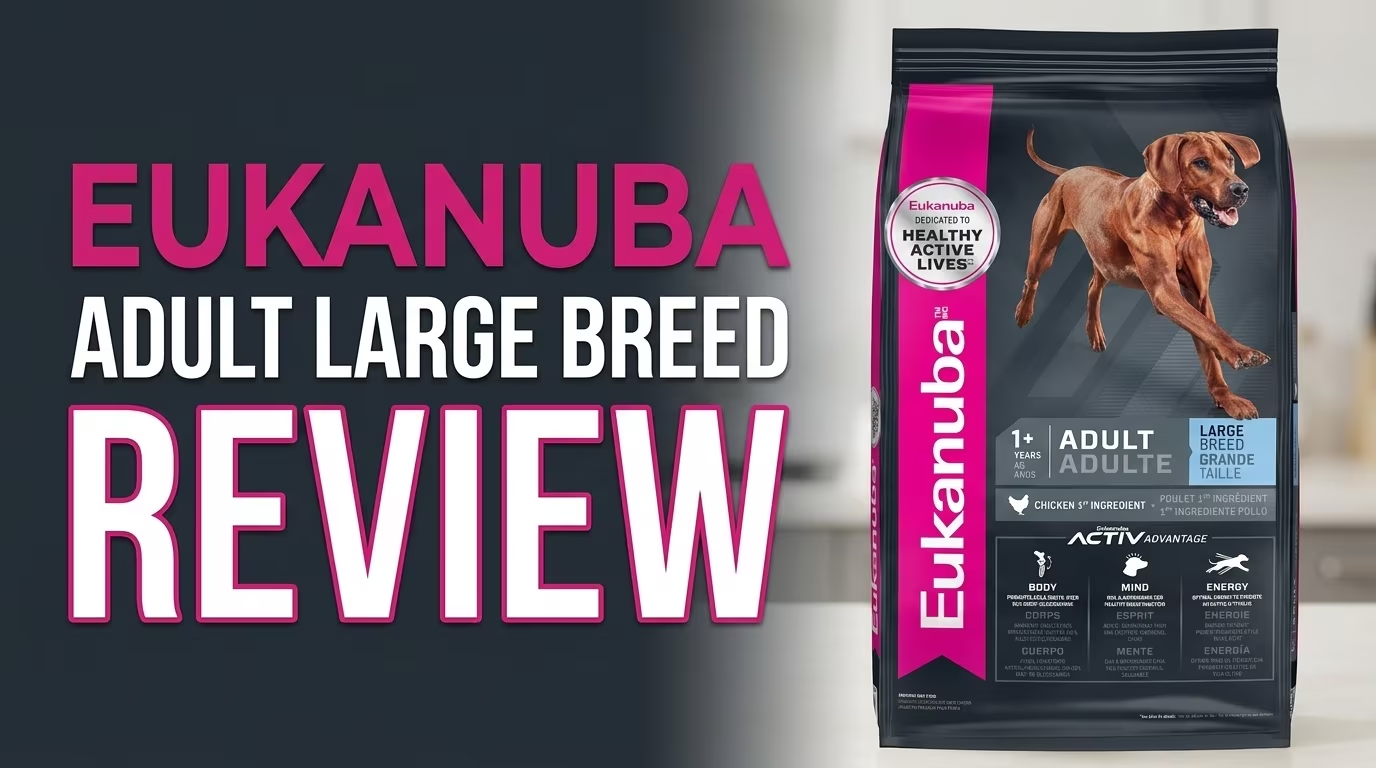
Eukanuba Adult Large Breed is formulated specifically for large breed dogs (over 55 lbs adult weight), though I included a medium-sized dog in my trial to get a broader perspective. The formula claims to support lean muscle, joint health, and what Eukanuba calls “optimal body condition” for larger dogs.
They make several specific claims: “3D DentaDefense System” for dental health, glucosamine and chondroitin for joints, and optimized fat levels for lean muscle maintenance.
Key Details:
- Brand: Eukanuba (Mars Petcare)
- Formula: Adult Large Breed Dry Dog Food
- Life Stage: Adult dogs over 55 lbs (1–6 years)
- Target: Large breed dogs; adult maintenance
- Primary Protein Source: Chicken
- Available Sizes: 15 lb, 30 lb bags
- Price Range: $32–$58 depending on size (USA retail)
- Where to Buy: Chewy, Amazon, PetSmart, Petco, some grocery stores
Quick Verdict: Eukanuba Adult Large Breed is a functional, mid-tier food that does some things reasonably well — particularly digestive consistency and the dental health features. But the ingredient list is average-to-mediocre for the price, the chicken by-product meal inclusion is disappointing, and the formula feels like it’s coasting on brand history rather than competing aggressively with the quality options now available in its price bracket. Solid but uninspiring.
Meet My Three Test Dogs
🐶 Knox — Irish Wolfhound Mix, 5 Years Old, 115 lbs
Knox is my enormous, gentle, quietly philosophical giant who moves through the world at a pace best described as “unhurried majesty.” He’s a massive dog with a rough, wiry coat and joints that need consistent attention as he ages. He’s the primary subject for this large breed formula — a genuinely large dog who needs food calibrated for his size and skeletal demands. He’s healthy, slightly prone to joint stiffness in cold weather, and eats without fussiness.
🐶 Duchess — Boxer, 4 Years Old, 62 lbs
Duchess is my square-headed, wrinkly-faced, endlessly energetic Boxer who crashes into everything with cheerful disregard for personal space — both her own and everyone else’s. She’s solidly in large-breed territory (just at the lower end), muscular, and needs good protein to maintain her build. Boxers are prone to certain heart conditions and digestive sensitivities, so I always pay extra attention when switching their food.
🐶 Rosie — Labrador Retriever, 7 Years Old, 72 lbs
Rosie is my sweet-natured, food-obsessed senior Lab who has slowed down appropriately for her age but still acts like every meal is a major life event. At seven, joint support and weight management are increasingly important. Labs are famous for gaining weight easily, so calorie management on this food was something I tracked closely.
My 1-Month Experience — Three Large Dogs, 30 Days
Seven-day transition for all three, though Knox took a bit longer given his size — I went 9 days for him to be safe. All three transitioned without significant acute digestive upset, which is a decent start.
🐶 Knox — Irish Wolfhound Mix
Energy Levels: Knox maintained his characteristic unhurried energy throughout the month. Irish Wolfhound mixes aren’t exactly sprinters at the best of times, so energy assessment requires watching for subtle changes in willingness to move, enthusiasm for walks, and general alertness. He was fine — consistent and comfortable throughout.
Digestion: This was genuinely one of the better results of the trial. Knox’s digestion was excellent throughout the full month. Firm, consistent stools, appropriate volume, no episodes of looseness or gas. For a 115 lb dog, this matters practically — good digestion means manageable cleanup. I credit the formula’s fiber profile (which uses beet pulp as a digestive fiber source) for this.
Coat Condition: Knox’s rough, wiry coat is hard to dramatically improve or worsen, but it stayed in good condition throughout the month. Clean, healthy-looking, appropriate texture for his coat type. No notable improvement, but no decline either.
Joint Health: Knox has mild age-related joint stiffness, and I was watching closely for any changes. By week three, I felt like he was getting up from lying down with slightly more ease — subtle, but I noticed it consistently enough to feel it wasn’t imagined. The glucosamine content (400 mg/kg) is below therapeutic levels but may be contributing at the margins. I maintain him on a separate joint supplement, which he continued during the trial.
Issues: The most notable thing about Knox’s month was the high kibble consumption rate. At 115 lbs, he was eating about 5 cups per day following the bag guidelines. A 30 lb bag lasted just over 2.5 weeks, which translated to meaningful monthly costs. Not a food quality issue, just a large-dog reality.
🐶 Duchess — Boxer
Appetite: Duchess is enthusiastic about food to the point of impatience — she starts doing her “bowl is empty” dance approximately two minutes before any scheduled mealtime. She ate Eukanuba with full Boxer-intensity enthusiasm from day one. No palatability concerns whatsoever.
Weight Changes: Duchess started at 62.3 lbs and ended at 62.8 lbs. A half-pound gain in a month on a dog her size. I was following the feeding guidelines exactly, so this mild gain suggests the guidelines are slightly generous. Worth monitoring if you have a Boxer at risk for weight gain.
Stool Quality: Good throughout the month. Firm, well-formed, consistent timing. No episodes of loose stools or gas that stood out. Digestion was one of the stronger category performances for this food.
Activity: Same high-energy, crash-into-everything Duchess. Her activity level was consistent and appropriate. She never seemed sluggish or under-fueled.
Issues: The half-pound weight gain in one month is something I’d watch more carefully over extended feeding. Boxers are muscular dogs, and some of that gain might be muscle rather than fat — but given that I was following portion guidelines precisely, it suggests portion adjustments may be needed for individual dogs.
One thing I also watched closely with Duchess was her heart health. Boxers have above-average risk for certain cardiomyopathies. This is a grain-inclusive food, which is appropriate for that concern, and I noticed no symptoms that would cause alarm during the trial.
🐶 Rosie — Labrador Retriever
Strength & Muscle Tone: At seven years old, Rosie’s priority is maintaining what she has rather than building anything new. She maintained her muscle condition throughout the month — no visible loss of tone, appropriate body condition for a senior Lab. The 26% protein provided adequate maintenance nutrition for her current activity level.
Immunity & Overall Health: Rosie had a healthy month with no acute issues. Her eyes stayed bright, gums healthy, and she was her usual enthusiastic self. At seven, I’m watching for any signs of the joint stiffness or weight creep that afflicts many Labs this age, and she managed both adequately.
Coat: Rosie’s thick, dense Lab coat stayed in reasonable condition. Not as shiny as I’d see on premium foods, but not dull or flaky either. Maintained essentially at baseline.
Weight: Rosie was the one I was most closely monitoring. She started at 72.1 lbs. Ended at 72.4 lbs. Negligible change, which is ideal. I was feeding her slightly below the bag guidelines (about 10% less), which prevented the mild weight gain I’d expect at full recommended portions. Labs need portion management regardless of food quality.
Any Issues: The joint support is something I care about increasingly for a seven-year-old Lab. The glucosamine content in this formula (400 mg/kg) is below what would be considered therapeutic for a dog with actual joint disease. For Rosie, who shows minor stiffness after long rest periods, I continued her separate joint supplement throughout the trial.
Nutritional Information Breakdown
| Nutrient | Value | Ideal Range | Verdict |
|---|---|---|---|
| Crude Protein | 26% | 20–30% | ✅ Good — solid mid-range |
| Crude Fat | 14% | 10–20% | ✅ Good — appropriate for large breed maintenance |
| Crude Fiber | 4% | 3–5% | ✅ Good — mid-range ideal |
| Moisture | 10% | Up to 12% | ✅ Standard |
| Calories | ~349 kcal/cup | — | Moderate — deliberate for large breed weight management |
Breaking Down the Numbers:
26% protein is respectable for a large breed adult food. Large breeds don’t necessarily need the highest protein percentages — in fact, there’s some evidence that moderately high protein (24–28%) is appropriate for large breeds who need lean muscle maintenance without excess metabolic load on aging kidneys. So the protein percentage here is actually well-calibrated.
Fat at 14% is appropriate for large breed maintenance. Large dogs need fat for energy, coat health, and fat-soluble vitamin absorption, but excessive fat accelerates weight gain in breeds already prone to obesity (looking at you, Rosie). 14% is a thoughtful choice.
Fiber at 4% is genuinely good — the use of beet pulp as a primary fiber source provides prebiotic benefits alongside digestive regulation. This explains the excellent digestive performance across all three dogs.
Calories at 349 per cup are deliberately moderate — the formula is calibrated for large breed weight management, which is exactly what I want to see.
The Glucosamine Issue:
Eukanuba markets the joint health benefits of this food quite prominently. The formula contains glucosamine at 400 mg/kg. Therapeutic glucosamine for dogs typically starts around 500–1000 mg/kg of food. The inclusion is better than nothing, but for any large breed dog with actual joint concerns — which describes Knox and increasingly Rosie — this level of glucosamine is inadequate as a standalone joint intervention. You’ll likely still need a separate supplement.
Real Meat vs. Fillers:
Chicken is the first ingredient — real, named animal protein. Positive. But chicken by-product meal appears as the second ingredient, and corn and corn meal follow. This formula has more filler content than I’d like from a food in this price range, and the chicken by-product meal as the second ingredient is a genuine quality concern I’ll address below.
Additives:
The “3D DentaDefense System” involves a specific kibble texture and coating designed to reduce tartar buildup. This is a legitimate design feature — kibble texture can help with dental health to a degree. Hexametaphosphate is included as a tartar-inhibiting agent. Whether it works significantly over a month is hard to measure objectively at home, but it’s not a made-up marketing claim.
Vitamins and minerals are standard. Omega-6 fatty acids for coat support. Beet pulp for digestive fiber. No artificial colors or flavors.
Ingredient Analysis — Where This Food Falls Short
Top 5 ingredients:
- Chicken — Real, named chicken as the first ingredient. Contains moisture, but a quality starting point. Rating: Good.
- Chicken By-Product Meal — And here’s where my enthusiasm dips. By-product meal includes rendered parts like organs, feet, and necks. It’s not worthless — organs actually contain some nutrition — but it’s vague, lower-quality protein, and seeing it as the second ingredient in a food that costs $32–$58 per bag is disappointing. For a food in this price range, chicken meal (not by-product meal) would be a more appropriate quality level. Rating: Average-to-Low.
- Corn — A grain carbohydrate filler. Provides energy but limited nutritional density. Third ingredient being corn is a mainstream food hallmark, not a premium one. Rating: Average-to-Low.
- Corn Meal — Another corn derivative, further reinforcing the grain-heavy carbohydrate foundation. Two corn-based ingredients in the top five tells you something about the formulation priorities. Rating: Low-to-Average.
- Chicken Meal — Concentrated chicken protein, a quality protein source. Its fifth-position placement means it contributes less than the by-product meal above it. Rating: Good.
Overall Ingredient Quality Rating: Average. The chicken opening is good. The chicken by-product meal as #2 and two corn ingredients in the top four are significant quality limitations for a food in this price bracket. I’d genuinely expect better from a brand that charges $42–$58 per bag. Compare this to Diamond Naturals at similar pricing — chicken, brown rice, barley — and the quality gap becomes apparent.
Pros & Cons — The Honest Month-End Assessment
✅ Pros
- Real chicken as the first ingredient
- Outstanding digestive performance — all three dogs had excellent, consistent stools
- Fiber profile (beet pulp) is genuinely well-chosen for digestive health
- Deliberate calorie management for large breed weight control — effective
- Good palatability — all three ate enthusiastically
- The dental health design is a real feature, not just marketing
- Rosie maintained healthy weight with minor portion management
- Knox’s joint stiffness showed mild improvement during the trial
- No artificial colors or flavors
- Appropriate fat content (14%) for large breed maintenance
❌ Cons
- Chicken by-product meal as the second ingredient — lower quality than named chicken meal
- Two corn ingredients in the top four — heavy grain filler presence
- Glucosamine at 400 mg/kg — below therapeutic levels for dogs with actual joint concerns
- Duchess gained a half pound on recommended portions — feeding guidelines may be generous
- Price doesn’t match ingredient quality — similar prices available for cleaner formulas
- Not available in larger bag sizes — maximum 30 lbs is frustrating for large breed owners
- Coating quality was average — no dramatic improvements I could attribute to this food
Price Breakdown (USA — All Prices in $)
| Bag Size | Approximate Price | Price Per Pound | Price Per Kg |
|---|---|---|---|
| 15 lb | $32–$38 | ~$2.33/lb | ~$5.14/kg |
| 30 lb | $48–$58 | ~$1.73/lb | ~$3.82/kg |
Prices based on Chewy, PetSmart, Amazon, Petco as of early 2026.
Monthly Cost Estimates:
At 349 kcal/cup, portions are moderate but large dogs eat a lot of cups:
- Medium-large dog (Duchess, ~62 lbs): ~2¾ cups/day → 30 lb bag lasts ~4 weeks → ~$48–$58/month
- Large dog (Rosie, ~72 lbs): ~3 cups/day → 30 lb bag lasts ~3.5 weeks → ~$55–$66/month
- Very large dog (Knox, ~115 lbs): ~5 cups/day → 30 lb bag lasts ~2.3 weeks → ~$84–$101/month
Value for Money Verdict: This is where I have the most pointed criticism. For Knox’s $84–$101/month, I can buy Purina Pro Plan Large Breed ($65–$75/month) with better ingredient quality, or Diamond Naturals Large Breed ($58–$68/month) with cleaner ingredients and no chicken by-products. The maximum 30 lb bag size means large breed owners are making more frequent purchases, which adds inconvenience.
The price reflects the Eukanuba brand name and the dental health features, but not necessarily ingredient quality. For what you pay, you can do better.
Comparison Table: Eukanuba Large Breed vs. Competitors
| Feature | Eukanuba Adult Large Breed | Royal Canin Large Adult | Purina Pro Plan Large Breed | Hill’s Science Diet Large Breed | Diamond Naturals Large Breed |
|---|---|---|---|---|---|
| Protein % | 26% | 25% | 30% | 24% | 26% |
| Fat % | 14% | 13% | 16% | 14% | 14% |
| Fiber % | 4% | 4.4% | 3% | 3% | 3.5% |
| Price (30 lb bag, $) | $48–$58 | $58–$68 | $52–$62 | $55–$62 | $38–$46 |
| First Ingredient | Chicken | Dehydrated Chicken Protein | Chicken | Chicken | Chicken |
| Contains By-Products | Yes (#2) | Yes | Limited | No | No |
| Glucosamine (mg/kg) | 400 | Not specified | Not specified | Not specified | 300 |
| Dental Health Feature | Yes (3D) | No | No | No | No |
| Best For | Large breeds, dental health | Breed-specific large | Active large breeds | Sensitive large breeds | Budget-premium large breeds |
| Rating (/10) | 7.1 | 7.2 | 8.0 | 7.5 | 8.2 |
Where Eukanuba Stands:
Is Eukanuba good for dogs? In the large breed category, it’s adequate — better than budget options, with genuinely good digestive performance and some functional extras. But when comparing the best dog food in USA 2026 for large breeds, it doesn’t lead the field. Purina Pro Plan Large Breed has higher protein and better ingredient quality at similar price. Diamond Naturals Large Breed is cheaper with cleaner ingredients.
The dental health feature is Eukanuba’s most distinctive competitive advantage. If dental health is a specific priority and your large breed dog isn’t doing well with dental chews or brushing, that feature has real value.
Final Rating: 7.1 / 10
| Category | Score (/10) |
|---|---|
| Ingredient Quality | 6.0 |
| Nutritional Profile | 7.5 |
| Digestive Performance | 9.0 |
| Coat & Skin Health | 7.0 |
| Joint Health Support | 6.5 |
| Dental Health Feature | 8.0 |
| Value for Money | 6.0 |
| Overall | 7.1 |
Verdict: Good — Better Than Average, But the Price Doesn’t Match the Ingredient Quality
Eukanuba Adult Large Breed delivered genuinely good digestive results — the best of that single category in this trial — and the dental health design is a real, not-just-marketing feature. All three dogs maintained healthy conditions throughout the month, and Knox’s mild joint improvement was encouraging.
But chicken by-product meal as the second ingredient and two corn-based ingredients in the top four are disappointing for a food at this price point. Better ingredient quality is available at similar or lower prices in the American market.
Would I Buy It Again?
Maybe — situationally.
If I had a large breed dog with specific dental issues and I wanted the 3D DentaDefense feature alongside decent large-breed calibrated nutrition, I’d consider it. The digestive performance was genuinely impressive and worth noting.
But for Knox and Rosie as everyday long-term foods? I’d probably choose Purina Pro Plan Large Breed for Knox’s protein needs or Diamond Naturals for cost efficiency. The ingredient list needs to be better before I’d enthusiastically recommend this at $48–$58 per bag.
For Duchess, I’d definitely be watching that weight gain trend before committing to Eukanuba long-term.
Who Should Buy Eukanuba Adult Large Breed?
Ideal for:
- Large breed owners with dental health concerns — the 3D DentaDefense is a legitimate feature worth paying for if dental health is a priority
- Dogs who need consistent, well-managed digestion — the beet pulp fiber profile delivered excellent results
- Owners who want breed-appropriate calorie management — the moderate calorie density is well-calibrated for large breed weight control
- Established Eukanuba users who’ve been happy with the brand and don’t want to switch
Not ideal for:
- Ingredient-quality-conscious owners — chicken by-product meal and corn in the top four are dealbreakers
- Budget-conscious large breed owners — Diamond Naturals delivers similar nutrition for less money
- Dogs with significant joint disease — glucosamine at 400 mg/kg is insufficient; you’ll still need a separate supplement
- Very large breeds (100+ lbs) — the 30 lb maximum bag size means constant reordering
- Performance or working large breeds — the protein level and ingredient quality won’t support peak performance demands
My Honest Final Thoughts
Eukanuba Adult Large Breed is a food that’s living partly off its long history and established brand reputation. There’s real functionality here — particularly in digestion and dental health — and it’s not a food I’d call bad.
But the competitive landscape in 2026 is different from what it was when Eukanuba first built its reputation, and it hasn’t kept pace.
Chicken by-product meal as the second ingredient is a choice that says something about formulation priorities. At $48–$58 per 30 lb bag, I expect better. The market has given large breed owners Purina Pro Plan, Hill’s Science Diet Adult Large Breed, Diamond Naturals, and others that compete seriously on ingredient quality at comparable or lower prices.
If dental health is your primary concern alongside large-breed nutrition, Eukanuba has a genuine argument. If you’re looking for the best overall large-breed food in the USA in 2026, look at Purina Pro Plan Large Breed or Diamond Naturals Large Breed first.
7.1 out of 10. Functional, good in specific areas, but not the best value for what it costs.