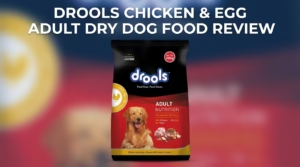
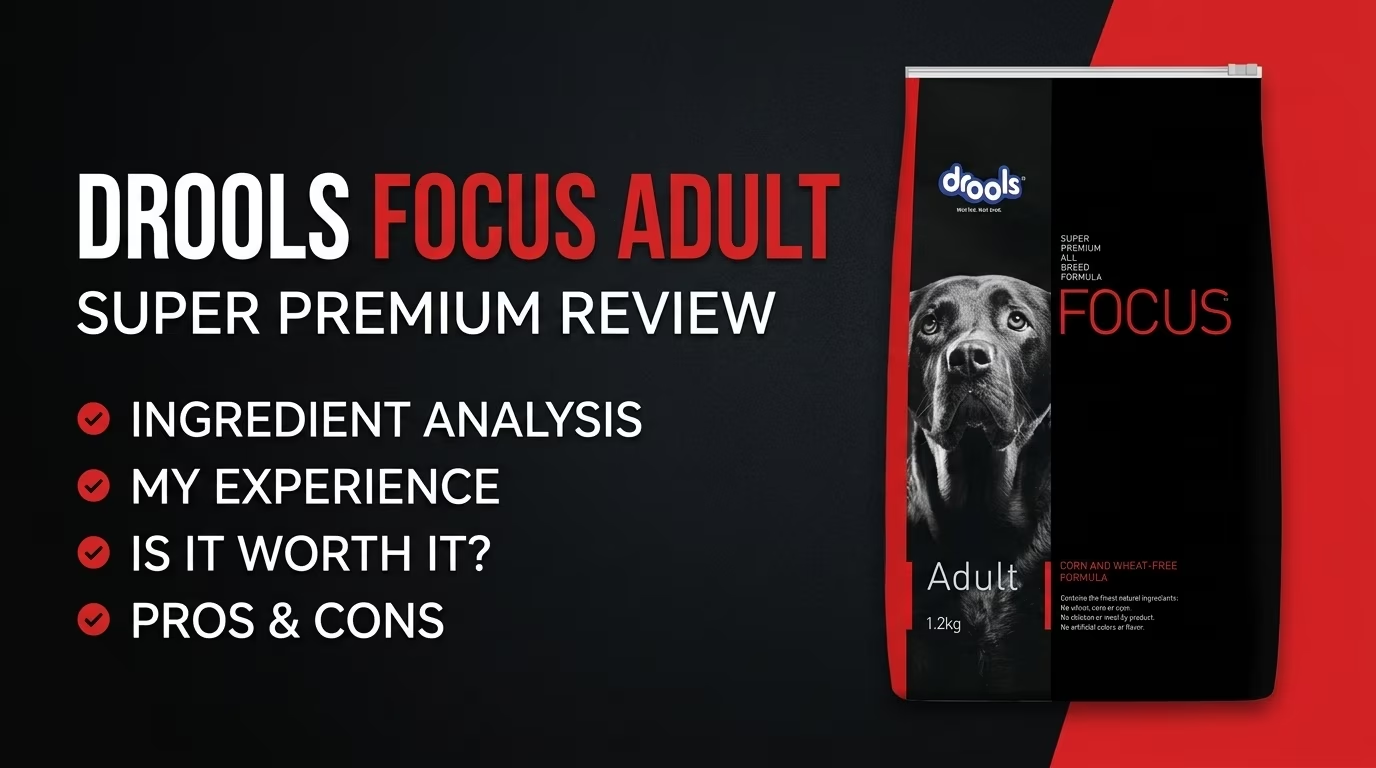
Let me be upfront about something before this review begins. Drools is an Indian brand — it’s manufactured by Drools Pet Food Pvt. Ltd. in India and is one of the most popular dog food brands on the Indian subcontinent. It’s not a mainstream American brand, and you won’t find it at Walmart or PetSmart. However, it’s available in the USA through Amazon and various international pet food import channels, and given the significant Indian-American community in the US and the number of people asking about it online, I figured it deserved a proper, honest review.
I came across it through a colleague who’d moved from Bangalore to the US and was trying to figure out whether to continue ordering Drools for her dogs or switch to an American brand. She’d been feeding it for two years back home and swore by it. I was curious enough to run a proper trial myself.
So in early 2026, I ordered Drools Focus Adult Super Premium, committed to a full thirty days, and tracked everything carefully across three dogs. Here’s what I found — good, bad, and everything in between.
Product Overview: Drools Focus Adult Super Premium
Drools positions itself as a premium Indian dog food brand in an admittedly less competitive market than the USA. The “Focus” line is their flagship adult formula, marketed as a “super premium” product with chicken as the primary protein source.
In India, Drools competes primarily against Royal Canin, Pedigree, and Purina in the mid-to-upper market segment. Against American alternatives available in the US, the competitive landscape changes significantly.
Key Details:
- Brand: Drools (Drools Pet Food Pvt. Ltd., India)
- Formula: Focus Adult Super Premium, Chicken & Egg
- Life Stage: Adult dogs
- Target: All breeds, all sizes
- Primary Protein Source: Chicken (stated)
- Available Sizes: 3 kg (~6.6 lb), 6 kg (~13.2 lb), 12 kg (~26.4 lb), 20 kg (~44 lb) bags
- Price Range (USA, imported): $18–$55 depending on size and seller
- Where to Buy in USA: Amazon (third-party sellers), Indian grocery online stores, international pet food importers
Quick Verdict: Drools Focus Adult Super Premium is a middle-of-the-road food that performs better than bottom-tier budget options but falls noticeably short of what comparable American mid-range foods deliver at similar or lower price points in the USA. It’s not a bad food — it didn’t cause acute health issues in my dogs — but it’s not the premium product the “Super Premium” label implies, and for American dog owners, better domestic options exist at the same or lower imported cost.
My Three Testing Dogs
🐶 Huckleberry — Flat-Coated Retriever, 4 Years Old, 62 lbs
Huckleberry — Huck for everyday use — is my perpetually joyful, tail-never-stops-wagging retriever who treats every single day like it’s the best day of his entire life. He’s athletic, loves water, and has a gorgeous dense black coat that needs consistent nutritional support. He’s got a reliable stomach and no documented sensitivities, making him a solid baseline indicator for food quality.
🐶 Ginger — Dachshund, 5 Years Old, 12 lbs
Ginger is my fiercely independent, hilariously stubborn little hotdog who has opinions about absolutely everything and will communicate those opinions loudly until addressed. She’s a long-haired Dachshund, so her coat is one of my primary health indicators. She’s also very food-motivated — unusual for her level of general stubbornness — which typically makes palatability testing easy. If she refuses food, it’s telling.
🐶 Apollo — Doberman Pinscher, 6 Years Old, 78 lbs
Apollo is my sleek, intelligent, athletic Doberman who approaches the world with calm intensity. He needs high-quality protein to maintain his lean, muscular build. Dobermans can be prone to heart issues, so I always pay attention to their nutritional profile. His short, glossy coat is a quick and reliable nutrition indicator, and his energy levels during our training sessions reflect food quality within a few weeks.
My 1-Month Experience — What Actually Happened
I ordered the 12 kg bag and did a seven-day transition for all three dogs, mixing Drools with their previous food in increasing proportions. All three transitioned without obvious acute digestive upset, which was encouraging.
🐶 Huckleberry — Flat-Coated Retriever
Energy Levels: Huck’s energy was fine during the first two weeks — enthusiastic as always, ready for anything, doing his usual morning sprints around the yard like he’s auditioning for a sporting event. By week three, I noticed his post-exercise recovery seemed a little longer than usual. He’d come in from a long fetch session and settle down more quickly than his typical routine. Not dramatically different, but for a dog I know extremely well, it was a perceptible change.
Digestion: Moderately good. Huck’s stools were firm and consistent for weeks one and two. Week three brought a couple of softer days — nothing alarming, resolved on its own within 48 hours. Week four returned to mostly normal. Overall digestion was acceptable but not the excellent consistency I see on better quality foods.
Coat Condition: This is where I had questions. By the end of week three, Huck’s usually glossy black coat was looking a bit flat. Not terrible, not dramatically different, but that deep-black sheen was somewhat muted. When I brushed him, I was pulling out slightly more dead hair than normal. Could be seasonal shedding — it was spring — but the timing coincided precisely with the food trial.
Behavior: Same joyful Huck. No behavioral changes worth noting.
Issues: The week-three soft stool episode and the coat quality question were my only observations. Neither was severe enough to be alarming, but both were present.
🐶 Ginger — Dachshund
Appetite: Here’s something interesting. Ginger, who usually acts like every meal is a gift from the universe, was hesitant for the first three days. She’d approach the bowl, sniff thoroughly, eat about half, and walk away. This is unusual for her. By day five she was eating full portions, but the initial resistance was notable — suggesting the flavor profile didn’t immediately appeal to her very particular palate.
Weight Changes: Ginger started at 12.1 lbs and ended at 12.3 lbs. A slight increase, about 0.2 lbs, which on a 12 lb dog is around 1.5% body weight. Not alarming, but I’d have preferred stable. I was following the bag’s feeding guidelines for her weight exactly.
Stool Quality: Mixed. Ginger had good stools in weeks one and two. Week three brought some inconsistency — alternating between firm and somewhat soft on different days. By week four, things stabilized back to mostly good. The inconsistency in the middle of the trial was notable.
Activity: Ginger remained her usual determined, ground-level explorer. No changes in activity level that I could observe. Energy was consistent.
Issues: The initial palatability resistance and the week-three digestive inconsistency were my observations for Ginger. Minor issues overall, but worth noting.
🐶 Apollo — Doberman Pinscher
Strength & Muscle Tone: Apollo maintained his overall build throughout the month, but by week three I noticed what I can only describe as a slight loss of that hard, defined look that Dobermans have when they’re at peak condition. He wasn’t losing weight — maintained at 78 lbs — but the muscle definition was softer. At 26% protein, the food provides adequate protein numerically, but the protein quality affects how that number translates to actual muscle maintenance.
Immunity & Overall Health: No health problems during the trial. Apollo stayed healthy throughout — no ear issues, no skin infections, nothing acute. His eyes were bright and his gums healthy. No immediate red flags.
Coat: Apollo’s short, glossy black-and-rust coat is one of the things that makes Dobermans so striking. By week three, his coat had lost a bit of its sheen — not dramatically, but visibly to someone who sees him every day. The difference was enough that my training partner mentioned unprompted that Apollo looked “a little different.” The fat content in this food (12%) is on the lower end of adequate, and it showed in coat quality over time.
Energy in Training: Apollo’s training sessions were fine in weeks one and two. By weeks three and four, his sustained focus and energy in longer sessions seemed slightly reduced. He performed all his exercises, but with marginally less crisp enthusiasm than his baseline. For a precision working breed, this kind of subtle change matters.
Any Issues: Muscle tone softening, slight coat dullness, and reduced training energy by month’s end. None catastrophic, but collectively concerning for a six-year-old Doberman who needs to maintain peak condition.
Nutritional Information Breakdown
| Nutrient | Value | Ideal Range | Verdict |
|---|---|---|---|
| Crude Protein | 26% | 20–30% | ✅ Good — solid mid-range |
| Crude Fat | 12% | 10–20% | ⚠️ Acceptable but lower end — may be inadequate for performance dogs |
| Crude Fiber | 4% | 3–5% | ✅ Good — within ideal range |
| Moisture | 10% | Up to 12% | ✅ Standard for dry kibble |
| Calories | ~340 kcal/cup | — | Low-to-moderate energy density |
What These Numbers Actually Mean:
26% protein is respectable on paper. The critical question — as always — is what’s producing that protein. Drools lists chicken as its primary ingredient, but the formula also includes significant soy meal as a protein contributor. Soy protein is substantially less bioavailable for dogs than animal protein, meaning the effective animal protein available to your dog is lower than the 26% figure implies. This likely explains the muscle tone softening I observed in Apollo.
Fat at 12% is technically within the acceptable range but at the lower half. For a working or active dog, 12% is barely adequate. For dogs with coat-intensive breeds, 12% may not provide enough lipid support for optimal coat health. This aligns with the coat quality observations across both Huck and Apollo.
Fiber at 4% is genuinely good — hits the mid-range of what I consider ideal, and the digestion results reflected this with mostly acceptable stool quality.
Calories at approximately 340 per cup are on the lower side, meaning you’ll feed more volume than with higher-calorie foods to meet your dog’s energy needs.
Real Meat vs. Fillers:
Chicken is the stated primary ingredient. However, soy meal appears prominently in the formula — this is a plant-based protein booster that inflates the protein percentage without providing equivalent nutritional value. The egg content (mentioned in the “Chicken & Egg” naming) contributes some high-quality protein but in small quantities. The overall animal protein fraction is lower than the headline 26% suggests.
Additives:
Standard vitamin and mineral fortification to meet basic nutritional requirements. Omega-6 fatty acids included for coat health — present but at levels that may be insufficient based on the results I observed. No artificial colors noted on the label I received. Probiotics not included, which is notable for a “super premium” claim.
Ingredient Analysis — What’s Really in the Bag
Top 5 ingredients (based on label information from the imported product):
- Chicken Meal — Concentrated, dehydrated chicken protein. Named, specific animal protein. A legitimate quality start — chicken meal is more protein-dense than fresh chicken. Rating: Good.
- Corn — A grain carbohydrate source providing energy but limited nutrition. Common filler ingredient. In a “super premium” food, seeing corn as the second ingredient is disappointing. Rating: Average-to-Low.
- Soybean Meal — Plant-based protein booster. Less bioavailable than animal protein. Its prominence in the top three explains why actual muscle maintenance in my dogs was less impressive than the 26% protein number suggests. Rating: Low-to-Average.
- Rice — A quality digestible carbohydrate. Gentle on digestion and nutritionally better than corn. Its fourth-position placement is reasonable. Rating: Average-to-Good.
- Wheat — Another grain filler providing carbohydrates. A common allergen for some dogs. In a premium food, I’d rather see this absent. Rating: Average-to-Low.
Overall Ingredient Quality Rating: Average. Chicken meal as the first ingredient is a genuine positive. But corn as the second ingredient and soybean meal as the third — in a food marketed as “Super Premium” — reveals this to be a conventional grain-and-soy food with quality chicken meal leading the list for label appeal. The overall ingredient quality is similar to mainstream American mid-tier foods like Purina ONE, but without the research investment and quality control infrastructure of established American brands.
The “Super Premium” Claim:
I need to address this directly. In the Indian market context, “super premium” positions Drools above budget options like generic grocery store brands. In the American market context, where Orijen, Acana, Wellness CORE, and even Purina Pro Plan establish what premium actually means, Drools Focus “Super Premium” would be classified as mid-range at best. The labeling is calibrated for its home market, not for comparison against American standards.
Pros & Cons — After 30 Days
✅ Pros
- Chicken meal as the first ingredient — genuine, concentrated animal protein as the foundation
- 26% protein — respectable mid-range protein content
- Good fiber content (4%) — within ideal range, contributed to mostly acceptable digestion
- No artificial colors — cleaner additive profile than many budget foods
- Rice included — one quality carbohydrate source
- All three dogs ate it — acceptable palatability (after Ginger’s initial resistance)
- No acute health emergencies — none of my dogs got seriously ill
❌ Cons
- “Super Premium” labeling overstates what this food actually delivers
- Corn as the second ingredient — filler grain in a premium-claiming food
- Soybean meal as the third ingredient — plant protein filler inflating the protein number
- Fat at 12% showed in results — coat quality declined in both Huck and Apollo
- Muscle tone softened in Apollo — animal protein quality insufficient for peak working-breed condition
- Ginger’s initial palatability resistance and week-three digestive inconsistency
- Low calorie density (340 kcal/cup) requires feeding higher volumes
- Limited USA availability — import supply is unreliable and pricing varies
- No probiotics for a food claiming super premium status
- Quality control concerns — imported foods don’t have the same US regulatory oversight as domestic brands
- At imported USA prices, better American alternatives exist for same or less money
Price Breakdown (USA Imported Pricing — All Prices in $)
Imported pricing is less consistent than domestic brands and varies by seller.
| Bag Size | Approximate USA Import Price | Price Per Pound | Price Per Kg |
|---|---|---|---|
| 6.6 lb (3 kg) | $14–$20 | ~$2.42/lb | ~$5.33/kg |
| 13.2 lb (6 kg) | $22–$32 | ~$2.04/lb | ~$4.50/kg |
| 26.4 lb (12 kg) | $38–$50 | ~$1.67/lb | ~$3.68/kg |
| 44 lb (20 kg) | $55–$70 | ~$1.42/lb | ~$3.13/kg |
Prices based on Amazon third-party sellers and international pet food sites as of early 2026. Import pricing is inconsistent.
Monthly Cost Estimates:
Low calorie density means feeding larger volumes:
- Small dog (Ginger, ~12 lbs): ~1 cup/day → 13.2 lb bag lasts ~6 weeks → ~$15–$22/month
- Medium dog (Huck, ~62 lbs): ~3 cups/day → 26.4 lb bag lasts ~3 weeks → ~$51–$67/month
- Large dog (Apollo, ~78 lbs): ~3.5 cups/day → 44 lb bag lasts ~3.5 weeks → ~$63–$80/month
Value for Money Verdict: This is where the American import context really hurts Drools. In India, it’s reasonably priced for its market. Imported to the USA, you’re paying $51–$67/month for a medium-sized dog for food that’s comparable to American mid-range options (Purina ONE, Diamond Naturals) that cost $24–$35/month and provide similar or better nutrition without import logistics headaches.
For Apollo at ~$70/month, I could feed him Acana Heritage at comparable cost and get dramatically superior nutrition. The value proposition simply doesn’t hold in the US market.
Comparison Table: Drools Focus vs. US Alternatives
| Feature | Drools Focus Adult Super Premium | Royal Canin Medium Adult | Pedigree High Protein | Purina ONE SmartBlend | Diamond Naturals Chicken & Rice |
|---|---|---|---|---|---|
| Protein % | 26% | 27% | 27% | 30% | 26% |
| Fat % | 12% | 17% | 14% | 17% | 16% |
| Fiber % | 4% | 1.3% | 3% | 3% | 3.5% |
| Price (26 lb bag, USA, $) | $38–$50 (imported) | $58–$68 | $34–$40 | $38–$44 | $38–$44 |
| First Ingredient | Chicken Meal | Dehydrated Poultry | Corn Meal | Chicken | Chicken |
| Contains Soybean Meal | Yes | No | Yes | No | No |
| US Availability | Import only | Widely available | Widely available | Widely available | Widely available |
| Quality Control | Indian manufacturing | European-standard | US Purina | US Nestlé Purina | US Diamond |
| Best For | Indian diaspora familiar with brand | Breed-specific needs | Absolute last resort | Mid-range value | Budget-quality balance |
| Rating (/10) | 5.8 | 7.2 | 4.3 | 7.6 | 8.1 |
Where Drools Stands in the US Market:
Is Drools good for dogs? In its home market context, it’s a reasonable mid-tier option. In the US market context, it’s an overpriced import that doesn’t compete well against domestic alternatives at the same price point. Looking at the best dog food in USA 2026, Drools Focus doesn’t make my recommended list.
The comparison with Diamond Naturals Chicken & Rice is particularly telling: same protein percentage, Diamond has better fat content (16% vs 12%), no soybean meal, wider US availability, and costs similar money with no import complications. The choice between them is clear.
Final Rating: 5.8 / 10
| Category | Score (/10) |
|---|---|
| Ingredient Quality | 5.5 |
| Nutritional Profile | 6.0 |
| Digestive Performance | 6.5 |
| Coat & Skin Health | 5.5 |
| Athletic Performance Support | 5.0 |
| Value for Money (USA context) | 4.5 |
| USA Availability & Reliability | 4.0 |
| Overall | 5.8 |
Verdict: Average — Acceptable in its Home Market, Outcompeted in the USA
Drools Focus Adult Super Premium is not a terrible food. It’s not Alpo or Chappi. It didn’t cause acute health crises in my dogs. Huck, Ginger, and Apollo survived thirty days on it without alarming health events.
But “survivable” is not “good,” and when I look at the muscle tone softening in Apollo, the coat quality decline in both Huck and Apollo, Ginger’s mid-month digestive inconsistency, and the overall nutritional profile versus what you can get from American foods at similar or lower imported cost — the verdict is clear. This is an average food at above-average import prices for the US market.
Would I Buy It Again?
No — not for dogs living in the USA.
If I were living in India, where Drools is a locally manufactured, locally regulated, readily available mid-range option that competes favorably in its home market? I’d consider it for dogs without high performance requirements. But in the USA, where I can buy Diamond Naturals for similar money, Purina ONE for less, or Kirkland Nature’s Domain for the best budget-quality ratio available — there’s simply no compelling reason to navigate import logistics for this food.
For my colleague who prompted this review: I’ve recommended she transition her dogs to Purina Pro Plan or Acana here in the US. The results will be noticeably better, the supply will be more reliable, and the price will likely be lower once you factor out import markups.
Who Should (and Shouldn’t) Buy Drools Focus in the USA?
Narrow use case for buying:
- Indian-American dog owners who specifically want continuity with what their dogs ate in India and are comfortable with the import logistics and pricing
- Short-term transitional feeding while switching to an American food — using up existing stock you’ve brought or ordered
- Dogs already well-established on Drools in India who are temporarily in the US and don’t need a permanent food change
Should NOT buy if:
- You’re comparing value — domestic American alternatives at the same price deliver better nutrition
- You have an active working breed — protein quality is insufficient for peak performance needs (Apollo demonstrated this)
- Your dog has coat requirements — 12% fat showed up negatively in my trial
- Supply reliability matters — imported foods are subject to availability and pricing swings
- You want quality control confidence — Indian manufacturing doesn’t face the same US regulatory framework as domestic brands
- You can access Kirkland, Diamond Naturals, Purina ONE, or any mainstream American food — all are preferable in the US context
My Final Honest Assessment
Drools Focus Adult Super Premium is a product designed for and calibrated to the Indian pet food market. In that context, it’s a reasonable mid-range option that fills a legitimate market position. I’m not going to trash it unfairly for not being something it wasn’t designed to be.
But this is a review for the US market in 2026, and in that context, the calculus is straightforward: you’re paying import premium prices for a food with corn and soybean meal in the top three ingredients, fat content that showed up as inadequate in my trial results, and nutritional performance that was noticeably inferior to American alternatives I’ve tested at similar or lower price points.
5.8 out of 10. A passing grade that’s genuinely not recommended for American dog owners when better domestic options are readily available. If you’re already using it and your dog seems fine, I’d gently encourage you to try something like Purina ONE or Diamond Naturals and compare the results over a month. My prediction is you’ll see a difference.