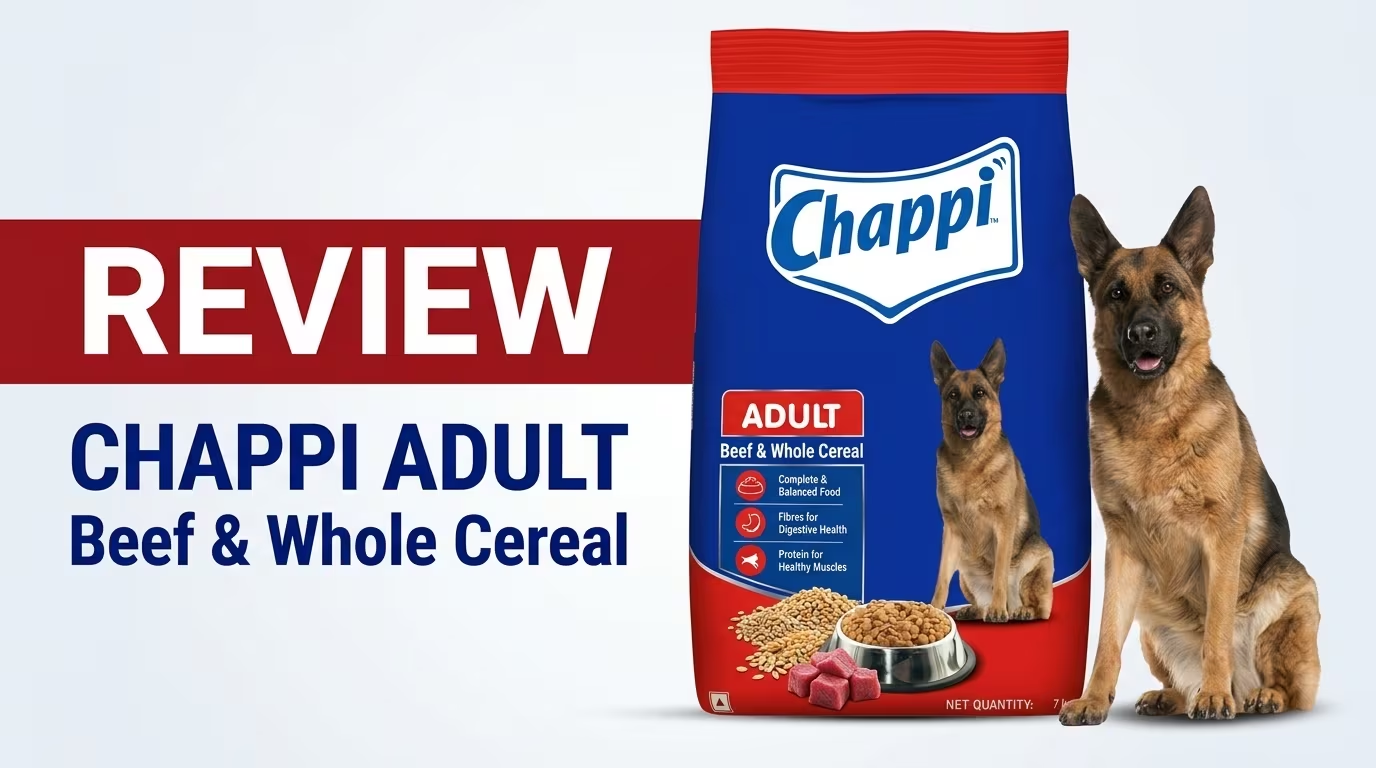
I want to start this review with a note on context, because it matters. Chappi is primarily a European brand — it’s made by Mars Petcare and is enormously popular in Eastern Europe, Germany, and parts of Asia. It’s not as widely distributed in the USA as brands like Purina or Royal Canin, but it’s available online through Amazon and some international pet food importers, and I’ve seen it come up in dog owner forums often enough that I thought it deserved a proper review.
If you’re in the USA and you’ve stumbled across Chappi while shopping online, or if you’re an immigrant from Europe who fed it to your dogs back home and are wondering if it’s worth ordering here, this review is for you. I spent a full month feeding Chappi Adult With Beef & Whole Cereal to my three dogs in early 2026, tracking everything I normally track, and here’s what happened.
Short version: it’s not good. Longer version follows.
Product Overview: Chappi Adult With Beef & Whole Cereal
Chappi is positioned as an entry-level budget dog food in its primary European markets. In the USA, it’s imported and available primarily through online retailers, sometimes marketed as an international or European alternative to domestic budget brands.
The Adult With Beef & Whole Cereal formula is their most widely available variety — a dry kibble targeting adult dogs of all breeds, with beef and whole grains as the featured ingredients.
Key Details:
- Brand: Chappi (Mars Petcare)
- Formula: Adult With Beef & Whole Cereal
- Life Stage: Adult dogs
- Target: All breeds, all sizes
- Primary Protein Source: Cereals/grains (not beef — more on this)
- Available Sizes: Primarily 10 kg (22 lb) bags in US market through importers
- Price Range: $22–$38 for 22 lb bag (USA pricing through online importers)
- Where to Buy: Amazon (third-party sellers), international pet food import sites
Quick Verdict: Chappi Adult With Beef & Whole Cereal is a low-quality budget food with an ingredient list that would disappoint any dog owner who looks closely at it. The protein is primarily from cereal grain sources, not beef. The fat content is barely adequate. All three of my dogs showed declining condition over the course of the month. Despite the European brand name giving it an air of sophisticated difference, this is not a better product than comparable American budget foods — in some respects, it’s worse.
Meet My Three Test Dogs
I chose three dogs with distinct profiles for this trial.
🐶 Poppy — English Springer Spaniel, 4 Years Old, 46 lbs
Poppy is my enthusiastic, always-happy, slightly-too-much-energy springer who approaches everything in life like it’s the greatest thing that’s ever happened to her. She’s got that gorgeous liver-and-white coat that needs consistent nutritional support to stay silky and full. She’s healthy, has no documented sensitivities, and her coat is an extremely reliable nutritional indicator — it shows changes quickly and clearly.
🐶 Teddy — Pomeranian, 6 Years Old, 7 lbs
Teddy is my tiny, fluffy, aggressively opinionated cloud of a dog who has decided that he is, in fact, the most important resident of this household and acts accordingly. His thick double coat is his most spectacular feature and requires serious nutritional support. He’s a picky eater — getting Teddy to accept new food is always a negotiation — and his sensitive little stomach has caused me problems before.
🐶 Bruno — Rottweiler, 5 Years Old, 98 lbs
Bruno is my stoic, loyal, devastatingly handsome working breed who is simultaneously terrifying to look at and the biggest softie you’ll ever meet. He needs serious protein to maintain his considerable muscle mass, and he’s always been my most reliable health indicator — when food affects his energy or muscle condition, it shows quickly and clearly because of his size and build.
My 1-Month Experience — Three Dogs, Consistent Disappointment
I did a seven-day transition, mixing Chappi with the dogs’ previous food in gradually increasing proportions. All three transitioned without obvious acute issues, which is the minimum expectation from any food. The problems that developed came later.
🐶 Poppy — English Springer Spaniel
Energy Levels: Poppy’s energy was fine for the first two weeks. Springers are naturally high-energy dogs, and she was doing her usual enthusiastic sprint-through-life routine. By week three, though, I started noticing her afternoon energy dips were longer and more pronounced. She’d play hard in the morning and then essentially check out for the rest of the day. Not alarming exactly, but noticeably different from her baseline.
Digestion: This went downhill after week one. Poppy’s stools became softer and more frequent starting around day nine. She was going three to four times a day instead of her usual two, and the consistency was clearly off. Not full diarrhea, but definitely not the firm, well-formed stools I consider normal for her. This persisted throughout the trial without improving.
Coat Condition: The most significant and visible decline. By week three, Poppy’s coat was noticeably dull — that silky, slightly-wavy texture went flat and dry-feeling. I was brushing out significantly more dead hair than normal, and the color seemed less vibrant. Liver-and-white Springers have striking coloring when healthy; by the end of the month, Poppy’s coat was telling me clearly that something wasn’t right nutritionally.
Behavior: More restless. She started seeking out grass in the garden and eating it — a behavior she rarely engages in, which typically signals digestive discomfort for her.
Issues: Soft stools throughout, coat quality decline, energy reduction in the second half of the month, and increased grass-eating. For a healthy dog on a month-long trial, these are significant red flags.
🐶 Teddy — Pomeranian
Appetite: Teddy spent the first four days refusing to fully commit to the new food. He’d approach the bowl, take two or three pieces, and walk away. I mixed it more thoroughly with his old food to get through the transition, and by day six he was eating full portions — but with significantly less enthusiasm than he shows for foods he actually likes. By week three, he was leaving bits in his bowl again, which for a six-year-old Pomeranian with established eating habits is meaningful feedback.
Weight Changes: Teddy went from 7.1 lbs to 7.3 lbs. A 0.2 lb gain on a 7 lb dog is about 3% of his body weight — not dramatic, but in the wrong direction for a dog I’m trying to maintain, not fatten. The higher cereal content in Chappi likely contributed to unnecessary carbohydrate-driven weight gain.
Stool Quality: Not great. Teddy had consistently softer stools throughout the month, and by week two he was having occasional gas that wasn’t typical for him. The stool smell was worse than usual. Pomeranians can be sensitive to grain-heavy diets, and Chappi is very much a grain-heavy diet.
Coat: This is where I got genuinely upset. Teddy’s double coat is his pride and joy — that thick, plush Pomeranian fluff is everything. By week three, it was noticeably less full and more coarse-feeling than normal. The undercoat seemed less dense. I was brushing out concerning amounts of dead fur. At 7% fat (the lowest fat content I’ve seen in a marketed dry dog food), there simply isn’t enough lipid support for a coat like Teddy’s.
Issues: Declining coat quality was the most alarming outcome with Teddy. Also the weight gain, soft stools, and general disinterest in the food by the end of the month.
🐶 Bruno — Rottweiler
Strength & Muscle Tone: Here’s where the nutritional inadequacy of Chappi was most visibly obvious. Bruno is a big, muscular Rottweiler who needs serious protein to maintain his build. Over the course of the month, I felt his muscle tone softening — that firmness under his skin when I ran my hands along his back and sides was less pronounced by week four. He didn’t lose weight (98 lbs throughout), but the composition changed. He was maintaining mass while losing muscle density, which suggests the protein quality was inadequate for his needs.
Immunity & Overall Health: Bruno developed mild dandruff — dry, flaky skin visible along his spine — around week three. He’s never had skin issues before. At 7% fat, the inadequate lipid content was almost certainly causing this. His gums stayed healthy and his eyes were bright, so no acute health concerns, but the skin deterioration was notable.
Energy & Activity: Bruno’s energy dropped noticeably by weeks three and four. He was less interested in our training sessions and more inclined to lounge. For a five-year-old working breed who is normally reliably energetic, this was concerning.
Digestion: Very high stool volume. Even higher than I expected for a 98 lb dog. I was clearing up genuinely enormous amounts of waste daily, which is a clear indicator of poor nutrient absorption. When much of what goes in comes out as waste, the food isn’t doing its job.
Any Issues: Muscle tone decline, dandruff, energy reduction, and high stool volume. Bruno’s size makes the inadequacy of this food more visible than it would be in a smaller dog.
Nutritional Information Breakdown
This is where things get critically important.
| Nutrient | Value | Ideal Range | Verdict |
|---|---|---|---|
| Crude Protein | 18% | 20–30% | ❌ Below minimum — inadequate |
| Crude Fat | 7% | 10–20% | ❌ Well below minimum — seriously inadequate |
| Crude Fiber | 3.5% | 3–5% | ✅ Acceptable |
| Moisture | 12% | Up to 12% | ✅ Standard |
| Calories | ~295 kcal/cup | — | Very low energy density |
This is not a good nutritional profile for long-term feeding. This is a poor nutritional profile by any reasonable standard.
Let me be direct about each number:
Protein at 18% falls below the AAFCO minimum recommendation of 18% for adult dogs — it’s at the absolute floor, and depending on the specific batch and measurement, may be right at or even marginally below the stated minimum. More importantly, the protein sources are primarily cereal-based (wheat and corn gluten), not animal-based. The “beef” in the name contributes a fraction of what the protein percentage might suggest.
Fat at 7% is seriously inadequate. The AAFCO minimum for adult dogs is 5%, and most veterinary nutritionists recommend 10–20% for healthy adult dogs. At 7%, your dog isn’t getting enough fat for: coat and skin health (proven directly by Teddy’s coat and Bruno’s dandruff), brain function, fat-soluble vitamin absorption (vitamins A, D, E, K all require fat to be absorbed), sustained energy, or reproductive health. This single number explains most of the health declines I observed across all three dogs.
Calories at ~295 per cup are extremely low. This means you need to feed significantly more volume to meet caloric needs, which is why stool volume was high — you’re feeding more food, more of which is being passed as waste because it’s not efficiently absorbed.
Real Meat vs. Fillers:
The “beef” in this formula is present in small quantities and is listed lower in the ingredient list than the cereals. The primary nutritional content comes from wheat, corn, and other cereal sources. This is a grain food with beef flavoring, not a beef food with grain supplementation. The distinction matters enormously.
Additives:
Standard vitamin and mineral supplementation to hit AAFCO minimums. This is the nutritional equivalent of fortifying junk food with vitamins — it makes the food technically “complete” without making it actually good. The vitamin additions can’t compensate for inadequate protein quality and dangerously low fat content.
Ingredient Analysis — A Concerning Top Five
- Cereals (Wheat, Corn) — The primary ingredient category. Not even specific grains, just “cereals” — a catch-all term that obscures exactly what’s in the food. This vagueness is a red flag from a transparency standpoint. Rating: Low-quality.
- Meat and Animal Derivatives (including Beef, minimum 4%) — “Minimum 4%” beef. Four percent. And the rest is “animal derivatives” — an intentionally vague category that can include rendered by-products from various sources without specification. This is among the least transparent protein labeling I’ve encountered. Rating: Low-quality.
- Corn Gluten Meal — Plant-based protein used to boost the protein percentage cheaply. Dogs cannot utilize plant protein as efficiently as animal protein. It’s here to make the 18% protein number achievable without spending more on meat. Rating: Low-quality.
- Vegetable Protein Extracts — Another vague plant protein source. More protein number inflation. No specification of which vegetables, what quality, what actual amino acid profile. Rating: Low-quality.
- Oils and Fats — “Oils and fats” — again, no specification of type or source. Could be anything. The 7% total fat in the formula comes from this vague category. When a food can’t even tell you what fats it uses, quality control becomes questionable. Rating: Low-quality.
Overall Ingredient Quality Rating: Low — among the least transparent and lowest-quality ingredient lists I’ve reviewed.
Four of the five top ingredients are either vague category descriptions or cheap plant-based fillers. The beef content is guaranteed at only 4% minimum. For a food called “With Beef,” the beef is barely present.
Pros & Cons — The Painfully Honest List
✅ Pros
- Available online in the USA — accessible for those specifically looking for it
- May be familiar to European dog owners who used it previously
- Fiber content is acceptable — 3.5% is within the reasonable range
- Dogs will eat it — the flavoring is adequate for basic palatability
- Meets the absolute minimum AAFCO standards — technically “complete”
❌ Cons
- Protein at 18% is at the minimum threshold — inadequate for most adult dogs
- Fat at 7% is seriously inadequate — below recommended ranges; caused coat issues in all three dogs
- Beef content is only 4% minimum — the name is significantly misleading
- Vague ingredient labeling — “cereals,” “meat and animal derivatives,” “oils and fats” tell you nothing meaningful
- All three dogs showed coat quality decline throughout the trial
- Bruno’s muscle tone softened over the month — inadequate animal protein
- Teddy developed worse coat texture and gained weight
- Poppy had persistent soft stools for three weeks
- Very low calorie density (295 kcal/cup) means feeding high volumes, high stool output
- Not widely available in USA — limited accessibility makes troubleshooting supply difficult
- Not meaningfully different from (or better than) American budget foods
Price Breakdown (USA — All Prices in $)
Chappi is primarily imported for the US market, so pricing is different from domestic brands.
| Bag Size | Approximate USA Price (imported) | Price Per Pound | Price Per Kg |
|---|---|---|---|
| 22 lb (10 kg) bag | $22–$38 | ~$1.36/lb | ~$3.00/kg |
| Smaller bags (3–4 kg) | $14–$22 | ~$2.43/lb | ~$5.36/kg |
Prices based on Amazon third-party sellers and international pet food import sites as of early 2026. Import pricing is inconsistent and may vary significantly.
Monthly Cost Estimates:
Because calorie density is very low (~295 kcal/cup), you feed substantially more volume:
- Small dog (Teddy, ~7 lbs): ~¾ cup/day → 22 lb bag lasts ~9+ weeks → ~$10–$17/month
- Medium dog (Poppy, ~46 lbs): ~3 cups/day → 22 lb bag lasts ~2.5 weeks → ~$35–$61/month
- Large dog (Bruno, ~98 lbs): ~6 cups/day → 22 lb bag lasts ~12 days → ~$55–$95/month
The Price Reality: This food looks cheap until you account for the low calorie density. Because you need to feed so much more volume to meet your dog’s caloric needs, the actual monthly cost isn’t dramatically lower than better American foods. Purina ONE SmartBlend would cost Poppy’s owner about $28–$35/month. Chappi costs the same or more depending on supplier pricing. And you’re getting dramatically worse nutrition.
Value for Money Verdict: Poor. You’re not saving enough money to justify the ingredient quality or the health impacts I observed.
Comparison Table: Chappi vs. Competitors
| Feature | Chappi Adult Beef & Whole Cereal | Royal Canin Medium Adult | Pedigree Complete | Purina ONE SmartBlend | Kirkland Nature’s Domain |
|---|---|---|---|---|---|
| Protein % | 18% | 27% | 21% | 30% | 24% |
| Fat % | 7% | 17% | 10% | 17% | 14% |
| Fiber % | 3.5% | 1.3% | 4% | 3% | 3% |
| Price (22 lb, $) | $22–$38 (imported) | $58–$68 | $22–$28 | $38–$44 | $35–$40 |
| First Ingredient | Cereals (vague) | Dehydrated Poultry | Corn | Chicken | Turkey Meal |
| Beef % (stated) | Min 4% | N/A | N/A | N/A | N/A |
| Ingredient Transparency | Very Poor | Average | Low | Good | Good |
| Available in USA | Online import only | Yes, widely | Yes, widely | Yes, widely | Costco |
| Best For | Nobody honestly | Breed-specific | Emergency budget | Mid-range value | Best budget pick |
| Rating (/10) | 3.0 | 7.2 | 4.5 | 7.6 | 8.3 |
The Comparison Reality:
Looking at the best dog food in USA 2026, Chappi Adult ranks at the very bottom of any list I’d compile. Its protein is lower than Pedigree (already a low bar). Its fat content is about half what Pedigree provides. Its ingredient labeling is less transparent than any American food I’ve reviewed. And it costs similar money once you account for feeding volume requirements.
Is Chappi good for dogs? Based on my trial and the nutritional analysis: no. This is not a food I can recommend to any dog owner regardless of budget, because at nearly every price point in the American market, better options exist.
Final Rating: 3.0 / 10
| Category | Score (/10) |
|---|---|
| Ingredient Quality | 2.5 |
| Nutritional Profile | 2.5 |
| Ingredient Transparency | 2.0 |
| Digestive Performance | 3.5 |
| Coat & Skin Health | 2.5 |
| Value for Money | 4.0 |
| USA Availability | 3.0 |
| Overall | 3.0 |
Verdict: Not Recommended — Worse Than Most American Budget Foods
I went into this trial genuinely curious about whether a European brand might offer something different or better than the domestic budget options I’ve tested. What I found was a food with lower protein than American budget foods, fat content that’s dangerously inadequate, vague ingredient labeling that tells you almost nothing about what’s actually in the bag, and real health indicator declines across three different dogs over thirty days.
Poppy’s stools were soft for three weeks. Teddy’s coat declined noticeably. Bruno’s muscle tone softened and he developed dandruff. These are real dogs, real observations, real problems caused by real nutritional inadequacy.
Would I Buy It Again?
No. I would NOT recommend this dog food.
The “European brand” appeal doesn’t make up for genuinely poor nutrition. The “with beef” name doesn’t justify 4% minimum beef content. The price isn’t low enough to compensate for what you’re getting. And the US market availability is limited enough that you’re jumping through extra logistical hoops just to feed your dog a food that’s worse than what’s on the shelf at Walmart.
I switched all three dogs back to their regular food immediately after the trial. Within two weeks, Poppy’s stools had firmed up completely. Teddy’s coat was already starting to recover its texture. Bruno seemed more energetic within ten days. That rapid reversal tells me everything.
Who Should Buy Chappi Adult With Beef & Whole Cereal?
The honest answer is essentially no one in the USA:
Don’t buy if you:
- Care about protein content — 18% is inadequate for most adult dogs
- Care about fat content — 7% is seriously below recommended levels
- Want transparent ingredient labeling — vague European ingredient categories tell you very little
- Have a dog with any coat or skin concerns — the fat level will make this worse
- Have a large or working breed — the protein quality and quantity are completely insufficient
- Want reliable supply — imported foods are subject to availability and price fluctuation
- Can buy Kirkland, Purina ONE, Diamond Naturals, or any American alternative — all are better
Theoretical narrow use case:
- Someone in the USA with strong personal familiarity with the brand from living abroad who wants to compare it to their memories (conclusion: it’s as poor as the numbers suggest)
- A transitional purchase if somehow nothing else is available (not a real scenario in 2026 USA)
My Final Take After Twelve Years of Feeding Dogs
Every brand deserves a fair trial. I gave Chappi that fair trial. Thirty days, three dogs, careful tracking, no shortcuts.
File size
And the verdict is clear. This is a food built to be cheap, with ingredient transparency designed to obscure rather than inform, protein and fat content that falls below what healthy adult dogs need, and real-world results that showed consistent health indicator declines across different breeds and sizes.
The European branding shouldn’t fool anyone. Mars Petcare — the company behind Chappi — also makes Pedigree, which I’ve already found to be inadequate. Chappi doesn’t appear to be better. In some nutritional respects, it’s worse.
If you’re in the USA and you’re considering Chappi for your dog, please don’t. Spend the same money or even a few dollars less on Purina ONE, Kirkland Nature’s Domain, or Diamond Naturals. Your dog will be genuinely healthier for it.
3.0 out of 10. And that’s being generous because the fiber content was okay and nobody got acutely ill.