Feeding puppies is a whole different ball game from feeding adult dogs. The stakes feel higher, every decision feels more consequential, and the options are genuinely overwhelming when you’re standing in the pet store aisle trying to figure out what’s actually good for a tiny, growing animal who depends entirely on you to get this right.
I’ve been raising dogs for over twelve years now, and I’ve fed my share of puppies through those years. In early 2026, I decided to do something I hadn’t done before — run a proper, tracked, 30-day trial of Hill’s Science Diet Puppy Small Bites on three different puppies at the same time. Different breeds, different sizes, different personalities, same food.
Hill’s is one of those brands that your vet almost certainly has opinions about (usually positive), and the puppy line has a reputation that’s hard to ignore. But reputation and results aren’t always the same thing. I wanted to find out for myself.
Here’s everything I found.
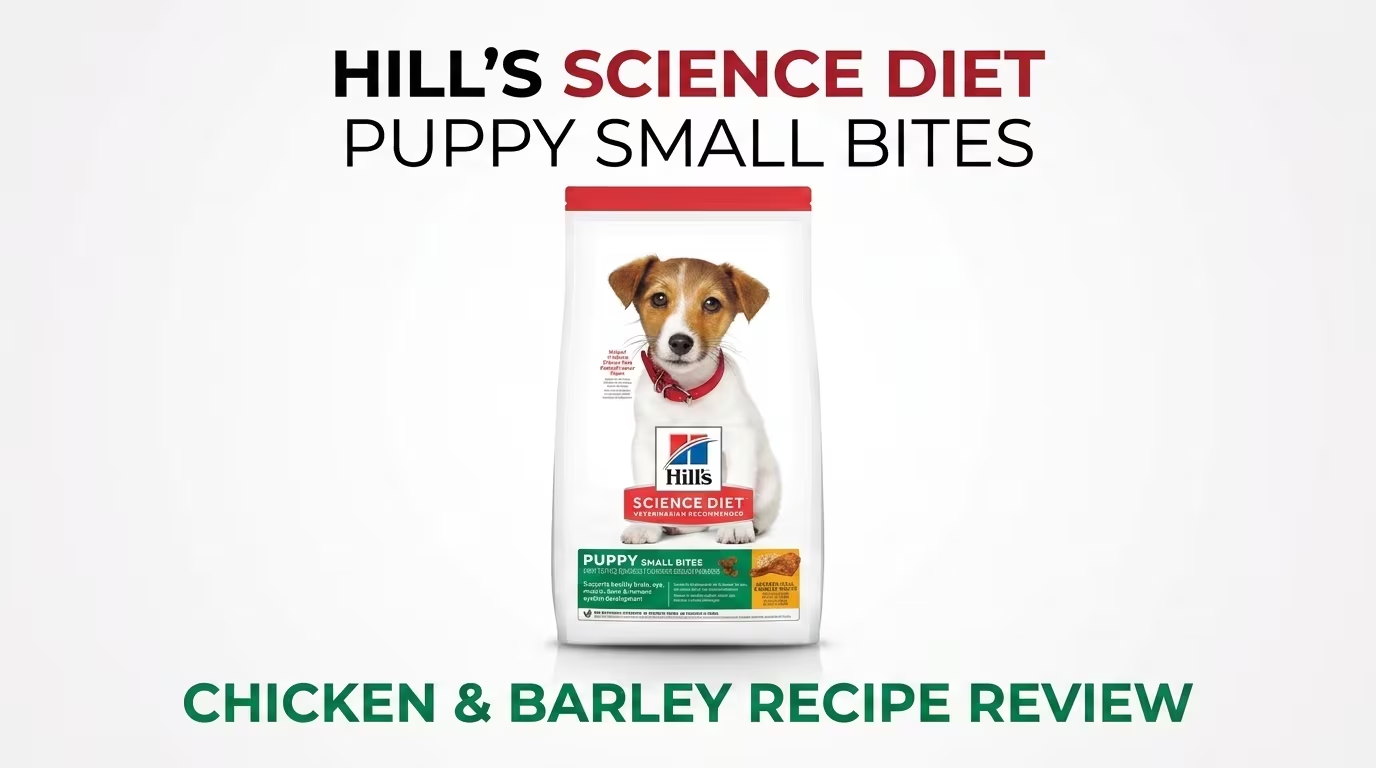
Product Overview: Hill’s Science Diet Puppy Small Bites Chicken & Barley Recipe
Hill’s Science Diet is manufactured by Hill’s Pet Nutrition (a subsidiary of Colgate-Palmolive), and they’ve built their reputation partly on veterinary relationships and research-backed formulation. The Puppy Small Bites formula is designed for small-to-medium breed puppies up to 1 year old, with smaller kibble pieces specifically sized for smaller puppy mouths.
The “Small Bites” aspect is important — this isn’t just regular puppy food made smaller. The kibble is genuinely sized for puppies who need manageable pieces, and it works for puppies of various sizes during their early growth phase.
Key Details:
- Brand: Hill’s Science Diet (Hill’s Pet Nutrition/Colgate-Palmolive)
- Formula: Puppy Small Bites Chicken & Barley Recipe
- Life Stage: Puppies up to 1 year old (all breeds; for large breeds up to 25 lbs adult weight)
- Target: Small-to-medium breed puppies
- Primary Protein: Chicken
- Available Sizes: 4.5 lb, 15.5 lb, 30 lb bags
- Price Range: $20–$68 depending on size (USA retail)
- Where to Buy: Chewy, PetSmart, Petco, Amazon, veterinary offices
Quick Verdict: Hill’s Science Diet Puppy Small Bites is a solid, reliable puppy food that delivered consistent results across three very different puppies. The ingredient list has some weaknesses I’ll be honest about, but the nutritional profile is well-calibrated for puppy growth, the digestion results were genuinely impressive, and the brand’s research backing provides real reassurance during the critical puppy development phase. Not perfect, but legitimately good.
Meet My Three Puppies
This was genuinely the most chaotic trial I’ve conducted in twelve years. Three puppies simultaneously is… a lot.
🐶 Biscuit — Miniature Schnauzer Puppy, 4 Months Old, 6 lbs
Biscuit is my tiny salt-and-pepper tornado. Schnauzers at four months are basically pure chaos wrapped in wiry fur — and Biscuit fully commits to that characterization. He’s alert, opinionated, and has absolutely no concept of personal space. His wiry double coat is just starting to come in properly, and puppy-phase nutrition matters enormously for what that coat will become. He’s also had one minor stomach upset in his first few weeks, which made me cautious about transitions.
🐶 Juniper — Australian Shepherd Puppy, 3 Months Old, 11 lbs
Juniper is my merle-colored, already-herding-everything, absolutely-exhausting Aussie puppy. Three months old and already convinced she’s responsible for the management of all household activities. She’s growing fast — Australian Shepherds hit a lot of developmental milestones quickly — and her nutritional needs are significant. She needs proper calcium and phosphorus for skeletal development, quality protein for muscle, and DHA for the brain that’s already working overtime on herding strategies.
🐶 Fig — Dachshund Puppy, 5 Months Old, 7 lbs
Fig is my long, low, perpetually dramatic sausage-in-progress. Five-month-old Dachshunds are fully convinced they are the most important creature in any room, and Fig has absolutely internalized this worldview. He’s curious, brave in a hilariously unwarranted way, and growing into those enormous ears. Dachshunds have specific developmental concerns — their long backs make proper bone and muscle development critical — so I was paying close attention to how this food supported his growth.
My 1-Month Experience — Three Puppies, One Food, Thirty Days of Chaos
Puppy transitions require extra care. I did a five-day transition (slightly shorter than I’d use for adults, since I was switching them from the breeders’ foods to something new while they were still adjusting to their new homes). Mixing 75% old food with 25% Hill’s for the first two days, 50/50 for days three and four, then transitioning to mostly Hill’s by day five.
There were also multiple 2 a.m. wake-up calls during this month that were absolutely unrelated to the food. That’s just puppies.
🐶 Biscuit — Miniature Schnauzer
Energy Levels: Biscuit had appropriate, well-sustained puppy energy throughout the month. Now, Miniature Schnauzer puppies are basically perpetual motion machines at four months, so “appropriate” is still a lot. But what I noticed was that his energy seemed even — enthusiastic play periods followed by proper rest, without the erratic hyperactivity-then-crash pattern I sometimes see in puppies on lower-quality food.
Digestion: This was my biggest positive surprise. Given Biscuit’s previous minor stomach issues, I was bracing for a bumpy transition. Instead, from day six onward (once fully transitioned), his digestion was excellent. Firm, well-formed stools, consistent timing, zero gas incidents. The barley and chicken combination seemed genuinely gentle on his developing digestive system. I was honestly relieved.
Coat Condition: At four months, Biscuit’s coat is still transitioning from puppy fluff to the classic wiry Schnauzer texture. Over the course of the month, his coat seemed to be developing nicely — better texture emerging, appropriate softness for his age. Too early to make definitive claims about adult coat quality, but the development trajectory looked good.
Behavior: Biscuit is Biscuit — opinionated, clever, and exhausting. No behavioral changes I’d attribute to the food, which is fine. He ate enthusiastically from day one, which is always reassuring.
Issues: Biscuit had two days around the three-week mark where he was slightly less interested in his food — ate about 75% of his portion and walked away. This happened twice, not in consecutive days, and resolved on its own. Honestly, puppies have off days, and I don’t attribute this to the food. But it happened and I’m noting it.
🐶 Juniper — Australian Shepherd
Energy Levels: Juniper’s energy on this food was appropriate and well-sustained. Australian Shepherd puppies need serious fuel, and Hill’s Puppy Small Bites provided it consistently. She was growing visibly week-over-week (she gained weight appropriately throughout the trial) and her activity matched her developmental stage — intense and purposeful, the way Aussie puppies are.
Digestion: Good overall. Juniper had the smoothest transition of the three puppies — no soft stools, no gas, no upset stomach at any point. This might be partly just Juniper’s constitution (some dogs are easy transitioners), but the food clearly agreed with her system from the start.
Stool Quality: Excellent. Firm, normal size, consistent timing. For a puppy eating as frequently as three times a day and growing rapidly, this was genuinely impressive digestive consistency.
Activity: Juniper’s activity was everything I’d expect from a three-month Aussie puppy — herding the other puppies (unsuccessfully), attempting to herd me (also unsuccessfully), running laps around the yard, and then sleeping deeply for exactly the amount of time needed to restore her to full chaos capacity.
Issues: Juniper grew fast during this month, and I was adjusting her portions almost weekly to keep up with her increasing weight and caloric needs. This is normal for a rapidly growing puppy, but it requires more active portion management than feeding an adult dog. The bag guidelines were helpful but needed adjustment as she grew. Not a food problem — a puppy reality.
🐶 Fig — Dachshund
Appetite: Fig approaches food with the intensity of someone who has been personally wronged by hunger. He ate every meal in record time, cleared his bowl completely, and would stare at me for several minutes afterward as if negotiating for more. No refusals. No hesitation. Full Dachshund food commitment.
Weight Changes: Fig started at 7.1 lbs and ended the month at 9.4 lbs. A 2.3 lb weight gain in a month, which sounds alarming until you remember he’s a five-month Dachshund puppy — this is normal puppy growth, not concerning weight gain. I monitored his body condition weekly and he maintained appropriate muscle tone without looking overweight.
Stool Quality: Good, though not quite as consistently perfect as Juniper. Fig had two episodes of softer stools — one during week one (probably transition-related) and one during week three for no apparent reason. Both resolved within 24 hours. Nothing serious, and his stool quality was good 27 out of 30 days, which I’d call success.
Overall Health: Fig looked like a thriving puppy throughout the month. His skin was healthy, his coat was developing appropriately (Dachshund coats at five months are still coming in), his eyes were bright and alert, and his energy was completely appropriate for his age. No health concerns.
Issues: Kibble size — the “Small Bites” description is relative. For Biscuit (6 lbs) and Fig (7 lbs), the kibble pieces were manageable but on the larger side of what I’d ideally want for very small-breed puppies. They chewed everything fine, but some pieces were crushed and eaten in fragments rather than crunched whole. This is a minor issue, but worth noting for owners of very small puppies.
Nutritional Information Breakdown
Puppy nutrition is fundamentally different from adult nutrition, and the numbers here should be evaluated with that context in mind.
| Nutrient | Value | Ideal Range (Puppies) | Verdict |
|---|---|---|---|
| Crude Protein | 25.5% | 22–32% | ✅ Good — appropriate for puppy growth |
| Crude Fat | 15.5% | 10–20% | ✅ Good — supports energy and development |
| Crude Fiber | 3% | 2–5% | ✅ Acceptable — appropriate for puppies |
| Moisture | 10% | Up to 12% | ✅ Standard for dry kibble |
| Calcium | 1.2% | 1.0–1.8% | ✅ Good — appropriate for skeletal development |
| DHA | Included | Essential for puppies | ✅ Present — supports brain development |
| Calories | ~363 kcal/cup | — | Moderate — appropriate for growth phase |
What These Numbers Mean for Growing Puppies:
25.5% protein is appropriate for puppy development. Puppies need higher protein than adult dogs for muscle growth and organ development, and 25.5% provides solid nutritional support without being excessively high. The protein comes primarily from chicken and chicken meal — which is good — plus some plant-based protein contributions from corn gluten meal (less ideal).
Fat at 15.5% supports the higher caloric needs of growing puppies. Puppies use significantly more energy per pound of body weight than adults, and they need adequate fat for brain development, nerve function, and energy.
Fiber at 3% is appropriate for puppies, whose digestive systems are still developing and can be sensitive to high-fiber diets.
The DHA Factor:
One of the genuinely important features of this formula is the inclusion of DHA (docosahexaenoic acid) from fish oil. DHA is an omega-3 fatty acid critical for puppy brain development and eye health. There’s good research supporting DHA’s role in cognitive development in puppies, and seeing it included in a mainstream puppy food is meaningful. I noticed that all three puppies seemed sharp and responsive — obviously you can’t attribute this definitively to DHA in their food, but the inclusion is nutritionally legitimate.
Calcium and Phosphorus:
The calcium (1.2%) and phosphorus ratio in this formula is designed for appropriate skeletal development. This matters especially for Fig — Dachshunds’ distinctive skeletal structure makes proper calcium and phosphorus balance important during development.
Real Meat vs. Fillers:
Chicken is the first ingredient — genuine animal protein, good start. Chicken meal appears further in the list, contributing concentrated protein. However, the formula also contains whole grain wheat, whole grain corn, and corn gluten meal — grain fillers and plant-based protein boosters that are less ideal in a puppy food. For the price point, I’d prefer a cleaner base.
Ingredient Analysis — What’s Really Feeding These Puppies?
Top 5 ingredients:
- Chicken — Real chicken as the first ingredient. Contains water weight, which diminishes post-cooking, but it’s a genuine quality start. Rating: Good.
- Whole Grain Wheat — A grain carbohydrate source. Better than refined wheat, but still a grain filler. A common allergen. Rating: Average.
- Whole Grain Corn — Another grain filler. Provides carbohydrates and energy but limited nutrition. Common allergen. Rating: Average-to-Low.
- Chicken Meal — Concentrated chicken protein with moisture removed. A genuine protein contribution that meaningfully adds to the animal protein content. Rating: Good.
- Barley — One of the better grains available in dog food. Gentle on digestion, lower glycemic index than corn or wheat, decent nutritional profile. Rating: Good.
Overall Ingredient Quality Rating: Average-to-Good. The chicken and chicken meal foundation is solid. Barley is a quality grain choice. But whole grain wheat and corn in positions two and three represent a significant filler grain presence for a premium-priced puppy food. The formula does better than budget puppy foods but doesn’t reach the ingredient quality of premium options like Orijen Puppy or Acana’s puppy line.
Pros & Cons — After 30 Days With Three Puppies
✅ Pros
- Real chicken as first ingredient plus chicken meal — meaningful animal protein foundation
- DHA included for brain development — legitimate and research-backed addition
- Excellent digestive performance — all three puppies had consistently good digestion after transition
- Appropriate calcium and phosphorus for skeletal development — critical for growing puppies
- Barley as a quality grain choice — one of the better grains you’ll find in mainstream food
- Good palatability — all three puppies ate enthusiastically (especially Fig)
- Well-calibrated calorie density — appropriate for growth without encouraging excess weight
- Vet-recommended brand — reassuring for first-time puppy owners
- No artificial colors or flavors
❌ Cons
- Whole grain wheat and corn as second and third ingredients — grain fillers in prominent positions
- Corn gluten meal further down — plant protein booster
- Kibble slightly large for very small breed puppies — Biscuit and Fig managed, but it wasn’t ideal
- Pricier than comparable quality — premium price for average-to-good ingredients
- Not designed for large breed puppies — calcium levels appropriate for small-to-medium breeds; large breed puppies need different calcium-to-phosphorus ratios
- Biscuit’s two off-eating days — minor, possibly unrelated, but noted
Price Breakdown (USA — All Prices in $)
| Bag Size | Approximate Price | Price Per Pound | Price Per Kg |
|---|---|---|---|
| 4.5 lb | $20–$24 | ~$4.89/lb | ~$10.78/kg |
| 15.5 lb | $42–$50 | ~$2.97/lb | ~$6.55/kg |
| 30 lb | $60–$68 | ~$2.13/lb | ~$4.70/kg |
Prices based on Chewy, PetSmart, Amazon as of early 2026.
Monthly Cost Estimates for Growing Puppies:
Puppies typically eat three meals per day during early development, and their portions increase as they grow. These are approximate monthly costs:
- Very small puppy (Biscuit, ~6 lbs): ~¾ cup/day total → 4.5 lb bag lasts ~3 weeks → ~$28–$32/month
- Medium puppy (Juniper, ~11 lbs and growing): ~1¼ cups/day (increasing) → 15.5 lb bag lasts ~4 weeks → ~$42–$50/month
- Small-medium puppy (Fig, ~7–9 lbs and growing): ~¾–1 cup/day → 15.5 lb bag lasts ~5–6 weeks → ~$28–$34/month
Value for Money Verdict: The price is in the upper-mid range for puppy food. You’re paying for the Hill’s brand name, the research investment, and the vet-recommendation network — and you’re getting a decent but not premium ingredient list in return. For first-time puppy owners who value vet endorsement and brand reliability, the price feels justified. For owners who care primarily about ingredient quality, there are better options at similar price points (Purina Pro Plan Puppy, Blue Buffalo Life Protection Puppy, or for premium buyers, Orijen Puppy).
Comparison Table: Hill’s Science Diet Puppy vs. Competitors
| Feature | Hill’s Science Diet Puppy | Royal Canin Puppy | Purina Pro Plan Puppy | Blue Buffalo Life Puppy | Orijen Puppy |
|---|---|---|---|---|---|
| Protein % | 25.5% | 28% | 28% | 28% | 38% |
| Fat % | 15.5% | 17% | 18% | 18% | 20% |
| Fiber % | 3% | 3.2% | 2.5% | 4.5% | 5% |
| Price (15–18 lb bag, $) | $42–$50 | $48–$58 | $38–$46 | $40–$48 | $60–$72 |
| DHA Included | Yes | Yes | Yes | Yes | Yes |
| First Ingredient | Chicken | Chicken | Chicken | Deboned Chicken | Fresh Chicken |
| Ingredient Quality | Average-to-Good | Average | Good | Good | Premium |
| Grain-Free? | No | No | No | No | Yes |
| Best For | Vet-endorsed safety, small-med puppies | Breed-specific puppies | Value + quality balance | Natural ingredient seekers | Premium puppy nutrition |
| Rating (/10) | 7.5 | 7.4 | 8.0 | 7.8 | 9.3 |
Where Hill’s Stands:
Is Hill’s Science Diet good for dogs — specifically puppies? Based on this trial, yes. It’s a legitimate, well-researched puppy food that delivers consistent results. Among the best dog food options in USA 2026 for puppies, it sits in the upper-middle tier — better than budget and mainstream options, slightly below Purina Pro Plan Puppy and Blue Buffalo on ingredient quality, and well below true premium options like Orijen Puppy.
The strong vet relationship Hill’s maintains is genuinely valuable for first-time puppy owners who need guidance — but it’s worth remembering that those relationships are partly commercial, not purely scientific.
Final Rating: 7.5 / 10
| Category | Score (/10) |
|---|---|
| Ingredient Quality | 6.5 |
| Nutritional Profile for Puppies | 8.0 |
| Digestive Performance | 8.5 |
| DHA & Development Support | 8.5 |
| Coat & Growth Support | 7.5 |
| Value for Money | 6.5 |
| Overall | 7.5 |
Verdict: Good — A Reliable, Research-Backed Puppy Food With Room for Ingredient Improvement
Hill’s Science Diet Puppy Small Bites delivered consistent, solid results across three different puppies over 30 days. Biscuit’s digestion improved dramatically. Juniper grew and developed beautifully. Fig thrived and put on appropriate puppy weight. The DHA for brain development is a genuine plus. The calorie management and calcium profile are well-calibrated.
The ingredient list holds it back from excellence — wheat and corn in the top three positions is a genuine weakness at this price point. But the nutritional outcomes were good, the vet endorsement carries real weight for peace-of-mind, and the formula clearly supports healthy puppy development.
Would I Buy It Again?
Yes, with a note.
For a first-time puppy owner who wants a vet-endorsed, reliably good food without the complexity of navigating the premium market, Hill’s Science Diet Puppy is a solid, trustworthy choice. For my specific puppies — Biscuit, Juniper, and Fig — the results were positive enough that I’d comfortably continue.
However, if I were optimizing purely for ingredient quality, I’d probably move to Purina Pro Plan Puppy (better protein profile, similar price) or Orijen Puppy (genuinely premium, higher cost). Is Hill’s the BEST puppy food? No. Is it a reliably GOOD one that I’d feed without hesitation? Yes.
For three puppies who all thrived during a month-long trial, that’s a meaningful endorsement.
Who Should Buy Hill’s Science Diet Puppy Small Bites?
Ideal for:
- First-time puppy owners who want a vet-recommended, science-backed formula for peace of mind
- Small-to-medium breed puppies (the kibble size and formula is genuinely designed for this range)
- Puppies with sensitive stomachs — the gentle digestive performance was standout
- Owners whose vet specifically recommends Hill’s — the brand relationship matters in vet settings
- Multi-puppy households where a reliable, consistent food is the priority
- Puppies transitioning from breeder food where a well-known, widely available brand provides continuity
Not ideal for:
- Large breed puppies — the calcium levels are calibrated for small-to-medium breeds; large breeds need different ratios
- Very tiny breed puppies under 4–5 lbs — kibble may be slightly too large even in “Small Bites”
- Owners who prioritize premium ingredient quality — wheat and corn in the top three will bother you
- Budget-limited puppy owners — Diamond Naturals Puppy or Purina Pro Plan Puppy offer comparable nutrition at lower cost
- Puppies with confirmed grain sensitivities — wheat and corn are prominent here
- Owners wanting truly exceptional nutrition — for maximum quality, step up to Orijen Puppy or Acana’s puppy formulas
My Honest Final Thoughts
Three puppies, 30 days, one food. Three different breeds, three different sizes, three completely different personalities.
And all three of them grew, thrived, digested well, and came through the month looking healthy and energetic on Hill’s Science Diet Puppy Small Bites.
File size
That’s a meaningful result. I went in skeptical about whether the vet endorsement translated to real-world outcomes, and I came out with genuine respect for what this formula does for puppies. The DHA inclusion is legitimate. The growth support is real. The digestive gentleness was the best outcome of the entire trial.
The ingredient list still has weaknesses I can’t ignore — wheat and corn in the top three positions is a genuine concern for a premium-priced product. But this is a food that earns its good reputation through outcomes, if not ingredients. And for a puppy owner navigating the overwhelming world of puppy nutrition for the first time, that matters.
7.5 out of 10. A solid B+ in the puppy food world. Good enough to confidently recommend, just not perfect enough to stop wondering if something better is worth the upgrade.