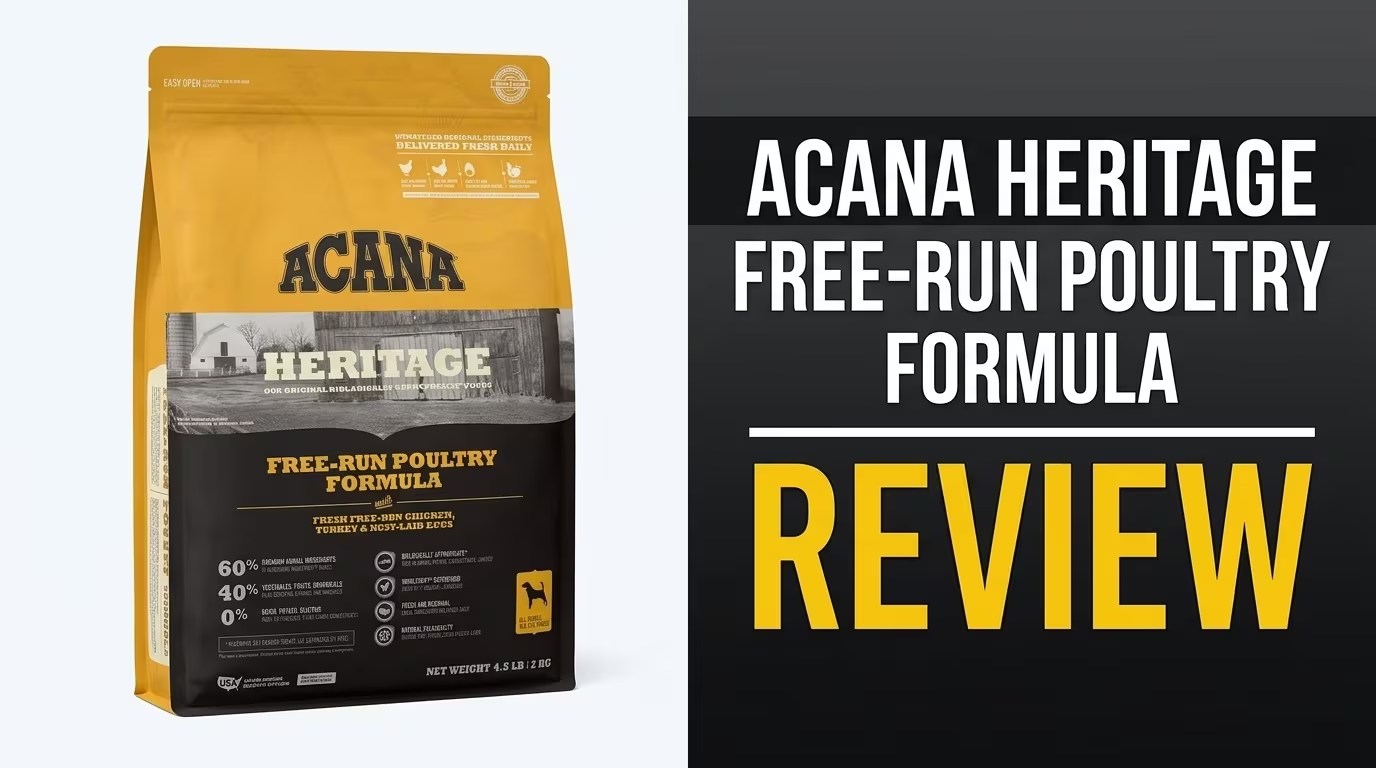
I came to Acana through Orijen, which I know sounds a bit backwards. Most people discover Acana first — it’s slightly more affordable and still clearly premium — and then move up to Orijen if budget allows. I went the other direction. After spending several months feeding Orijen and watching my dogs thrive on it, I got curious whether Acana’s Heritage line could deliver comparable results at a lower monthly cost.
That’s a real question worth answering, especially for multi-dog households where the price difference adds up fast. So in 2026, I put Acana Heritage Free-Run Poultry Formula to a proper 30-day test on three dogs and tracked everything the same way I always do — energy, coat, digestion, weight, behavior, stool quality. The whole picture.
Here’s what I found.
Product Overview: Acana Heritage Free-Run Poultry Formula
Acana is made by Champion Petfoods — the same Canadian company behind Orijen. They share a parent company and a “Biologically Appropriate” nutrition philosophy, but Acana sits at a slightly lower price point with a somewhat different formula approach. The Heritage line is their original, foundational product range.
The Free-Run Poultry formula uses chicken, turkey, and Greenbush eggs as primary proteins. It’s grain-free (like all Acana Heritage formulas), and it’s designed for adult dogs across all breeds and sizes.
Key Details:
- Brand: Acana (Champion Petfoods)
- Formula: Heritage Free-Run Poultry
- Life Stage: Adult dogs (1+ years)
- Target: All breeds, all sizes
- Primary Proteins: Free-run chicken, free-run turkey, cage-free eggs, chicken liver, turkey liver
- Available Sizes: 4.5 lb, 13 lb, 25 lb bags
- Price Range: $32–$80 depending on size (USA retail)
- Where to Buy: Chewy, Amazon, PetSmart, Petco, independent pet specialty stores
Quick Verdict: Acana Heritage Free-Run Poultry is an excellent premium dog food that sits comfortably in the top tier without quite reaching the absolute pinnacle that Orijen occupies. The ingredient quality is genuinely impressive — named proteins, no fillers, thoughtful formulation. All three dogs responded positively across every metric I track. At a slightly lower price than Orijen, it delivers outstanding value for owners who want true premium nutrition without paying the absolute maximum.
The Three Dogs I Fed This To
🐶 Clover — Irish Setter, 3 Years Old, 60 lbs
Clover is my beautiful, perpetually enthusiastic, slightly ridiculous redhead. Irish Setters have that gorgeous mahogany coat that requires consistent nutritional support to stay vibrant, and they’ve got energy levels that feel supernatural.
Clover runs with me six days a week, participates in agility training twice a week, and considers “rest” a character flaw. She’s healthy, happy, and requires serious caloric and protein support to maintain her athletic condition.
🐶 Barley — Basset Hound, 5 Years Old, 56 lbs
Barley is my slow-moving, long-eared, magnificently droopy philosopher. He shuffles through life at his own pace, greets everything with mild interest followed by profound indifference, and has zero interest in activities that could be described as “vigorous.” He does, however, have a sensitive stomach that punishes dietary changes harshly and quickly. He’s prone to ear infections (those long ears trap moisture constantly), and his calorie needs are considerably lower than his food-motivated brain suggests they should be.
🐶 Sable — Belgian Tervuren, 6 Years Old, 55 lbs
Sable is my intense, focused, borderline-neurotic working dog who does protection sports and advanced obedience training on weekends. She’s lean, muscular, and has a thick, fawn-colored double coat that’s one of the most beautiful things I’ve ever seen when it’s in good condition.
She’s a serious dog — not dramatic, not needy, just permanently switched on. Her nutritional needs are high because she genuinely works hard, and her coat condition is an immediate indicator of whether her food is adequate.
My 1-Month Experience — Thirty Days of Careful Observation
I did a proper eight-day transition, going slower than usual given Acana’s high protein content and the history of loose stools I’ve seen when transitioning dogs to richer foods too quickly. Starting with 80% old food / 20% Acana, gradually flipping the ratio over eight days. Smart call, as it turned out.
🐶 Clover — Irish Setter
Energy Levels: Irish Setters have naturally volcanic energy, so I wasn’t expecting anything dramatic here — she’s basically always at a ten out of ten. But what I noticed during the month was the quality of her energy rather than the quantity. By week two, she seemed to have more endurance on our longer runs — able to maintain pace for longer without flagging. Her agility sessions also seemed sharper. Her trainer commented, unprompted, that Clover seemed “more dialed in” during week three’s session.
Digestion: Clover handled the transition beautifully after the careful eight-day protocol. Once fully switched over, her digestion was excellent throughout — firm, well-formed stools, smaller volume than on her previous food, consistent timing. The smaller stool volume is really what impresses me most, because it’s a direct indicator of nutrient absorption efficiency. When less passes through as waste, it means the body is actually utilizing what it’s eating.
Coat Condition: And here’s the headline result with Clover. Irish Setter coats can look either absolutely stunning or kind of flat and lackluster depending on nutrition. By the end of week three, Clover’s mahogany coat was in the best condition I’ve seen it in at least a year. Deep, rich color, a silk-like texture when you ran your hand along her back, and noticeably less dead hair coming out during brushing. My groomer straight-up asked me what I’d changed at her monthly appointment. That’s the kind of external validation that matters.
Behavior: Same high-energy, slightly unhinged, deeply lovable Clover. No behavioral changes. She was consistently enthusiastic about mealtimes, which tells me the palatability was high.
Issues: One minor observation — Clover seemed thirstier than usual during the first ten days of the full transition. She was drinking noticeably more water. This is actually fairly normal when switching to a higher-protein food (more metabolic waste to process), and it normalized completely by week two. Not concerning, just worth noting so you’re not surprised.
🐶 Barley — Basset Hound
Appetite: This is where things got interesting. Barley is food-motivated the way the sun is warm — categorically, completely, without exception. He was going to eat this food. The real question was whether it would cause digestive problems (his specialty when food changes). I’m happy to report: it didn’t. After the careful eight-day transition, Barley sailed through the month without a single stomach incident.
Weight Changes: I weighed Barley at the start: 56.4 lbs. End of month: 56.2 lbs. Essentially identical, which is exactly what I want for a dog who needs to maintain and not gain. I fed him roughly 10% less than the bag guidelines suggested for his weight, because Basset Hounds require fewer calories than their size implies given their activity level. The bag guidelines are conservative for sedentary breeds, so adjust accordingly.
Stool Quality: This was actually my proudest outcome of the trial. Barley’s stools went from “acceptable” on his previous food to genuinely excellent on Acana. Firm, small, consistent. For a Basset Hound — a breed notorious for digestive drama — this was impressive. His ear health also stayed good throughout the month, which I was watching closely. No increased waxy buildup, no redness.
Activity: Barley remained philosophically committed to minimal effort. His activity level stayed exactly the same as always — dignified shuffle around the yard, occasional trot when food was involved, extensive napping. But he seemed comfortable and content, which is really the goal with a dog like him.
Issues: None. Genuinely zero. Barley was my surprise success story of this trial. I expected digestive drama from him and got consistent, healthy digestion instead. The poultry-based formula seemed to suit his sensitive stomach well.
🐶 Sable — Belgian Tervuren
Strength & Muscle Tone: Sable is a working dog, and I pay close attention to her body composition because it directly affects her performance. After 30 days on Acana Heritage Free-Run Poultry, her muscle tone was visibly better — particularly along her back and hindquarters. At 31% protein from high-quality poultry sources, this food clearly supports lean muscle maintenance and development. She weighed exactly the same at the end as the beginning (55 lbs), but the composition was noticeably improved — more defined, less soft.
Immunity & Overall Health: Sable had an excellent month. No health issues, no skin irritation, no coat problems. She looked healthy in that holistic way that’s hard to photograph but obvious to someone who sees their dog every day. Bright eyes, healthy gums, alert demeanor. Her energy for training was consistently high throughout the month.
Coat: Belgian Tervurens have demanding coats — that thick, fawn double coat requires proper fat and omega fatty acid support to stay in top condition. By week three, Sable’s coat was exceptional. Dense, well-conditioned, and she was shedding less than usual during brushing sessions, which suggests better skin health and coat retention. The coat also developed a healthy sheen that it doesn’t always have. This is partly the omega-3 fatty acids from the turkey and chicken in the formula doing their job.
Training Performance: This isn’t something I usually include in food reviews, but with Sable it’s relevant. She seemed sharper and more focused during our training sessions in weeks three and four. Her stamina was excellent, and her recovery between training exercises was notably quick. Her protection sports trainer mentioned she seemed “extra switched on” at a session during week four. Could be coincidence, but the timing aligned with the food.
Any Issues: Two days during week one, Sable had slightly softer stools than normal — expected during the transition period. It resolved completely by day nine and didn’t recur. She was slightly picky on the first two days, taking longer than usual to eat her meals, but this was short-lived. By day four she was eating with normal efficiency.
Nutritional Information Breakdown
| Nutrient | Value | Ideal Range | Verdict |
|---|---|---|---|
| Crude Protein | 31% | 20–30% | ✅ Excellent — slightly above range, all animal-sourced |
| Crude Fat | 17% | 10–20% | ✅ Excellent — well-balanced |
| Crude Fiber | 5% | 3–5% | ✅ Perfect — top of the ideal range |
| Moisture | 12% | Up to 12% | ✅ Standard for dry kibble |
| Calories | ~420 kcal/cup | — | Moderate-to-high energy density |
Breaking Down What This Means:
31% protein is excellent — slightly above the 20-30% general range, which puts it in the performance tier. More importantly, this protein comes from named animal sources (chicken, turkey, eggs, chicken liver, turkey liver), not plant-based boosters or vague by-product meals. The bioavailability of this protein for dogs is significantly higher than the same percentage from corn gluten meal or soy flour.
Fat at 17% is well within ideal range and high enough to support the coat results I observed in all three dogs. The combination of chicken fat and fish-derived omega-3 fatty acids covers both the omega-6 and omega-3 fatty acid needs comprehensively.
Fiber at 5% is exactly where I want it — top of the ideal range. This supported excellent satiety for all three dogs and contributed to the consistently great stool quality we saw throughout the month. Nobody seemed hungry between meals (including Barley, which is remarkable).
Calories at approximately 420 per cup are fairly high, which means you’ll feed less volume than lower-calorie foods. This is an important consideration for portioning, especially for less active dogs like Barley.
Real Meat vs. Fillers:
Unlike budget and mid-tier foods where you find corn, wheat, soy, and vague by-product meals dominating the top ingredients, Acana Heritage Free-Run Poultry is built on named animal proteins. The carbohydrate sources (peas, lentils, chickpeas, butternut squash) are whole-food ingredients that provide fiber and energy without the inflammatory potential of refined grains.
There’s no corn, no wheat, no soy, no corn gluten meal, no meat and bone meal from unspecified animals. Every protein source is named, identified, and from quality sources.
Additives:
The additive profile is clean and functional. Added vitamins and minerals to ensure completeness, zinc methionine for coat and skin health (clearly effective), salmon oil for omega-3 fatty acids, and freeze-dried liver pieces mixed into the kibble for palatability and genuine nutritional contribution. No artificial colors, flavors, or synthetic preservatives. Tocopherols (vitamin E) are used as natural preservatives.
Ingredient Analysis — Among the Finest in Commercial Dog Food
Top 5 ingredients:
- Deboned Chicken — Fresh, whole chicken as the first ingredient. Named, specific, high-quality animal protein. The gold standard starting point for any dog food ingredient list. Rating: Premium.
- Chicken Meal — Concentrated chicken protein with moisture removed — more protein-dense than fresh chicken and a genuinely valuable addition as the second ingredient. Rating: Premium.
- Deboned Turkey — A second named poultry protein providing variety in the amino acid profile. Fresh, whole turkey. Excellent. Rating: Premium.
- Turkey Meal — Same story as chicken meal — concentrated turkey protein that contributes meaningfully to the 31% total protein. Rating: Premium.
- Cage-Free Eggs — Whole eggs are one of the most bioavailable protein sources available to dogs. Including them as the fifth ingredient is a real quality indicator. Rating: Premium.
Overall Ingredient Quality Rating: Premium. Every single one of the top five ingredients is a named, high-quality animal protein. There are zero fillers, zero vague by-product descriptions, zero plant-based protein boosters in the top five. The remainder of the formula builds on this foundation with whole-food carbohydrate sources, organ meats, and fish ingredients. This is one of the two or three best ingredient lists I’ve seen in dry dog food.
The only reason I’d rate it marginally below Orijen Original is the lower total protein percentage (31% vs. 38%) and the slightly less diverse ingredient roster. But in terms of ingredient quality and transparency, they’re essentially equals.
Pros & Cons — Based on 30 Real Days of Feeding
✅ Pros
- 31% protein from 100% named animal sources — chicken, turkey, eggs, organ meats
- No fillers, by-products, or plant protein boosters — the ingredient list is exactly what premium should look like
- Outstanding coat results across all three dogs — Clover’s coat transformation was visible and externally validated
- Excellent digestion for all three dogs — including famously sensitive Barley
- Fiber at 5% — perfect for satiety, digestion, and stool quality
- Suitable for sensitive stomachs — despite the high protein, all three dogs tolerated it well after proper transition
- Noticeable muscle tone improvement in Sable — supports working dog performance
- Made by same company as Orijen — same quality philosophy, slightly lower price
- No artificial colors, flavors, or preservatives
- Slightly more affordable than Orijen — meaningful for large-breed owners
❌ Cons
- Expensive — significantly pricier than mainstream brands
- Grain-free formula — some dog owners prefer grain-inclusive
- Contains legume-based carbs (peas, lentils, chickpeas) — ongoing DCM research means some owners are cautious
- High calorie density requires careful portioning — especially for sedentary breeds like Barley
- Initial transition digestive adjustment — Sable and Clover had brief soft stool periods in transition week
- Limited availability — primarily found at specialty pet retailers, not every grocery store
Price Breakdown (USA — All Prices in $)
| Bag Size | Approximate Price | Price Per Pound | Price Per Kg |
|---|---|---|---|
| 4.5 lb | $32–$36 | ~$7.56/lb | ~$16.67/kg |
| 13 lb | $60–$68 | ~$4.92/lb | ~$10.85/kg |
| 25 lb | $75–$85 | ~$3.20/lb | ~$7.06/kg |
Prices based on Chewy, Amazon, PetSmart, and Petco as of early 2026. Occasional auto-ship discounts available on Chewy (5% typically).
Monthly Cost Estimates:
High calorie density (~420 kcal/cup) means smaller portions than lower-calorie foods, which helps offset the per-pound cost.
- Small/medium dogs (Barley, ~56 lbs, low activity): ~1½ cups/day → 25 lb bag lasts ~5.5 weeks → ~$55–$62/month
- Medium dog (Clover, ~60 lbs, very active): ~2 cups/day → 25 lb bag lasts ~4 weeks → ~$75–$85/month
- Medium dog (Sable, ~55 lbs, active): ~1¾ cups/day → 25 lb bag lasts ~4.5 weeks → ~$66–$76/month
Value for Money Verdict: For the quality you’re getting, Acana Heritage represents genuinely strong value within the premium tier. Compared to Orijen, you’re saving approximately $10–$15 per bag for the 25 lb size while getting very similar ingredient quality and nutritional performance. For large-breed owners or multi-dog households, that difference matters.
The monthly cost for a single medium-sized dog ($55–$85 depending on activity level) is meaningful but not unreasonable if quality nutrition is your priority. For comparison, Blue Buffalo Wilderness — which has pea protein fillers and lower overall transparency — costs nearly the same. Acana delivers noticeably better ingredient quality at a similar price.
Comparison Table: Acana Heritage Poultry vs. Competitors
| Feature | Acana Heritage Free-Run Poultry | Orijen Original | Blue Buffalo Wilderness | Taste of the Wild High Prairie | Purina Pro Plan Chicken & Rice |
|---|---|---|---|---|---|
| Protein % | 31% | 38% | 34% | 32% | 30% |
| Fat % | 17% | 18% | 15% | 18% | 20% |
| Fiber % | 5% | 5% | 6% | 3% | 3% |
| Price (25 lb bag, $) | $75–$85 | $85–$100 | $64–$75 | $48–$55 | $68–$78 |
| First Ingredient | Deboned Chicken | Fresh Chicken | Deboned Chicken | Buffalo | Chicken |
| Contains By-Products | No | No | No | No | Yes |
| Contains Pea Protein | No | No | Yes | Yes | No |
| Ingredient Transparency | Premium | Premium | Good | Good | Average |
| Best For | Premium buyers, active dogs | Maximum nutrition | Active dogs, grain-sensitive | Budget-premium buyers | Sporting/working dogs |
| Rating (/10) | 9.1 | 9.4 | 7.6 | 8.1 | 7.9 |
Where Acana Stands:
Is Acana good for dogs? Based on this trial, it’s among the best dry dog foods available in the USA in 2026. The gap between Acana and Orijen is real but smaller than the price gap might suggest. The gap between Acana and the next tier down (Blue Buffalo, Taste of the Wild, Purina Pro Plan) is substantially larger than the price difference implies.
In other words: Acana is closer to Orijen than it is to Blue Buffalo in terms of actual quality — which makes it excellent value for a premium food. When I’m looking at the best dog food in USA 2026, Acana Heritage consistently earns a spot in the top three of any list I’d write.
Final Rating: 9.1 / 10
| Category | Score (/10) |
|---|---|
| Ingredient Quality | 9.5 |
| Nutritional Profile | 9.0 |
| Digestive Performance | 9.0 |
| Coat & Skin Health | 9.5 |
| Palatability | 8.5 |
| Value for Money | 8.0 |
| Overall | 9.1 |
Verdict: Excellent — Genuinely Premium Dog Food That Earns Every Penny
Acana Heritage Free-Run Poultry delivered outstanding results across all three of my dogs. Clover’s coat transformed. Barley’s famously temperamental stomach handled the transition beautifully and maintained excellent digestion throughout. Sable’s muscle tone and training performance improved measurably.
The ingredient list is honest, transparent, and genuinely premium — no fillers, no vague by-products, no plant proteins masquerading as meat. This is what premium dog food is supposed to look like.
The 9.1/10 reflects the exceptional quality and real-world results, with a slight deduction from a perfect score for the price (genuinely significant for large-breed owners) and the grain-free formula that some owners may prefer to avoid.
Would I Buy It Again?
Yes. Unreservedly.
I’ve actually decided to put Sable on Acana Heritage as her primary food going forward, rotating occasionally with Orijen Original. For Clover, same plan. For Barley, I’ll stick with Acana because the poultry protein profile seems to suit his sensitive stomach particularly well, and I’m not going to mess with a formula that turned him into a model digestive citizen.
The value comparison with Orijen is real — for similar ingredient quality, Acana costs roughly 15–20% less per pound. For large-breed owners or people feeding multiple dogs, that difference adds up to meaningful monthly savings without a significant quality sacrifice.
Who Should Buy Acana Heritage Free-Run Poultry?
Ideal for:
- Dog owners who want premium, Orijen-level ingredient quality at a slightly lower price point
- Active, working, or sporting breeds with high protein and performance needs — Sable is the perfect example
- Dogs with food sensitivities who need clean, identified, single-protein or limited-ingredient style formulation
- Multi-dog households where the slight savings vs. Orijen per bag makes a real difference over time
- Senior dogs who need high-quality protein for muscle maintenance without excessive calories
- Owners of breeds with demanding coat needs (setters, spaniels, double-coated breeds) — the results I saw with Clover were remarkable
Might not be the best fit for:
- Strict budget buyers — this is genuinely expensive food, and there’s no way around that
- Giant breeds (100+ lbs) where monthly costs become very steep — feeding a 120 lb dog on Acana runs $100+/month
- Owners who prefer grain-inclusive formulas — Acana Heritage is grain-free
- Dogs with legume sensitivities — peas and lentils feature in the formula
- Buyers who shop exclusively at mainstream grocery stores — availability is primarily specialty retailers
Final Thoughts
I set out to answer a specific question: can Acana Heritage deliver Orijen-level results at a lower price point? After 30 days with three dogs, my answer is: mostly, yes.
File size
The ingredient transparency and quality are functionally equivalent between the two. The real differences are protein percentage (31% vs. 38%) and protein source diversity (Orijen uses more species). For Clover, a working athlete, I can see the argument for Orijen’s higher protein. For Barley, a sedentary Basset Hound who needs quality nutrition without excess calories, Acana might actually be the better fit.
That nuance is the most honest thing I can offer. There’s no universally best food. But there is a tier of genuinely premium, transparent, high-quality options that stand clearly above the rest — and Acana Heritage Free-Run Poultry belongs solidly in that tier.
9.1 out of 10. Buy it. Your dog will thank you in the only way that counts: by thriving.