Honestly, I put off trying Orijen for a long time. Not because I doubted the quality — the reputation in the dog nutrition community is pretty hard to ignore — but because that price tag made me wince every single time I looked at it. Ninety dollars for a bag of dog food felt genuinely absurd when I first started seeing it on shelves years ago.
But here’s the thing. After twelve-plus years of raising dogs, testing dozens of foods, and watching the cumulative effects of nutrition play out in real animals I love, I’ve learned that the sticker price on a bag doesn’t tell the whole story.
What matters is what’s inside, how your dogs respond, and whether the long-term health benefits justify what you’re spending month to month.
So in early 2026, I finally stopped procrastinating and bought a 23.5 lb bag of Orijen Original. Committed to a full 30-day trial on all three of my dogs. Tracked everything. And here’s what actually happened.
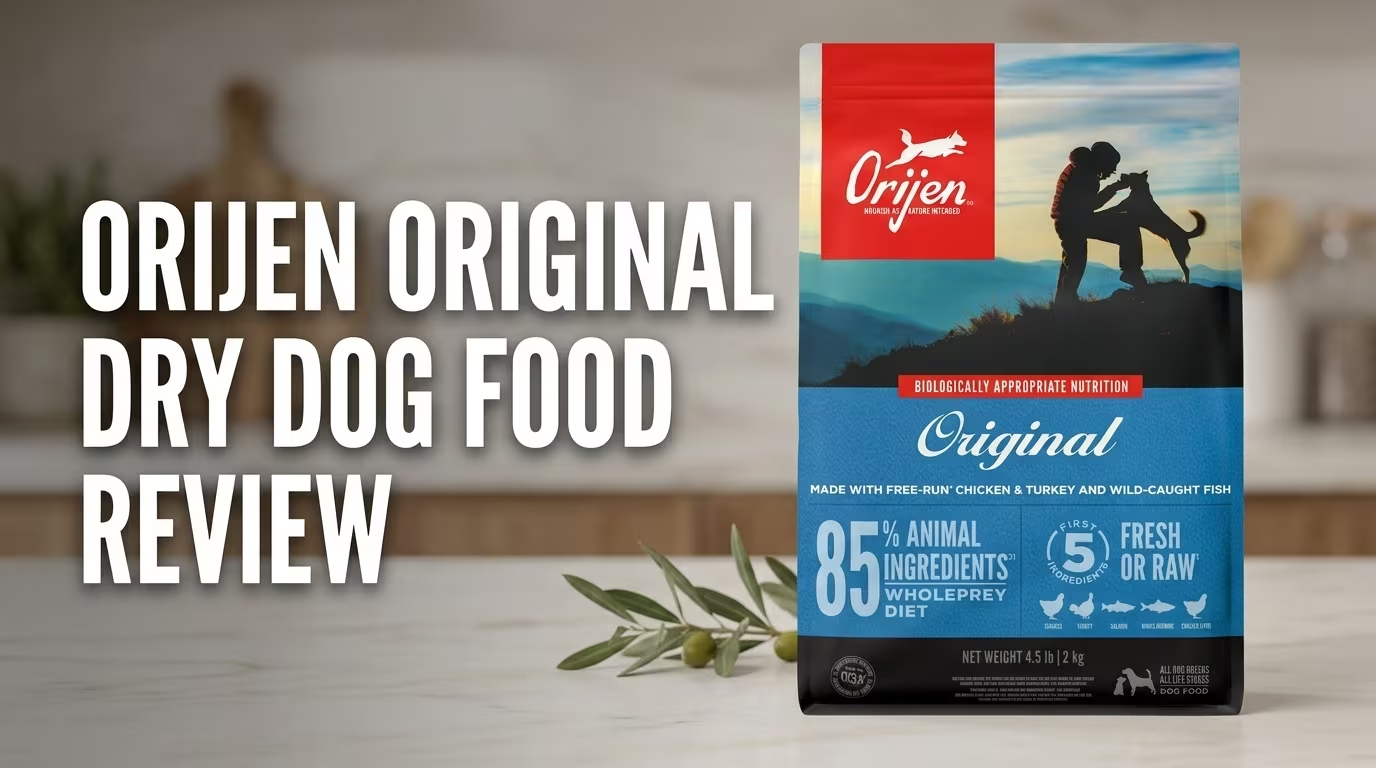
Product Overview: Orijen Original Biologically Appropriate Dry Dog Food
Orijen is made by Champion Petfoods, a Canadian company with manufacturing facilities in Kentucky (USA) and Alberta, Canada. The “Original” formula is their flagship product — their most well-known, most-tested, most-talked-about dry dog food.
The philosophy behind Orijen is what they call “Biologically Appropriate” nutrition — the idea that dogs are carnivores who thrive on a diet rich in whole prey animal ingredients rather than grain-heavy, filler-loaded kibble. They’re not wrong about the core concept, honestly. The implementation is genuinely impressive.
Key Details:
- Brand: Orijen (Champion Petfoods)
- Formula: Original Biologically Appropriate Dry Dog Food
- Life Stage: All life stages (puppies, adults, seniors)
- Target: All breeds, all sizes
- Primary Proteins: Fresh free-run chicken, fresh free-run turkey, fresh whole Atlantic mackerel, fresh chicken liver, fresh turkey liver
- Available Sizes: 4.5 lb, 13 lb, 23.5 lb bags
- Price Range: $35–$100 depending on size (USA retail)
- Where to Buy: Chewy, Amazon, PetSmart, Petco, specialty pet stores
Quick Verdict: This is the best dry dog food I’ve ever personally tested. Period. The ingredient quality is in a completely different league from everything else I’ve tried, and the results in my three dogs were visible and measurable. The price is real and steep, but after 30 days, I understand why people budget for it. This isn’t just good food — it’s excellent food.
Meet My Three Testers
🐶 River — Vizsla, 4 Years Old, 52 lbs
River is my gorgeous, velcro-dog hunting breed. He’s lean, muscular, and has energy that would exhaust most people. Vizslas are known for needing high-quality nutrition to support their active lifestyle, and River is no exception. He runs 4–5 miles with me three times a week, does occasional field work, and needs serious protein to maintain his athletic build. His rust-gold coat is one of his most striking features, and it’s a direct indicator of how his nutrition is going — healthy diet equals stunning coat; poor diet and it gets dull fast.
🐶 Hazel — Scottish Terrier, 7 Years Old, 20 lbs
Hazel is my grumpy, independent, absolutely-refuses-to-be-charmed Scottie. She has opinions about everything — where she sleeps, when she eats, who she deigns to acknowledge. She’s been dealing with some minor joint stiffness in her back legs over the past year, and her wiry, dense coat needs proper nutrition to stay in top shape. She’s a senior-ish dog (seven is middle-aged for Scotties, who often live to 12-14), and I wanted to see how Orijen’s high protein profile would affect her aging body.
🐶 Kodiak — Alaskan Malamute, 5 Years Old, 92 lbs
Kodiak is my magnificent, thick-coated, sled-dog-heart-in-a-suburban-house beast. He has the kind of double coat that requires constant brushing and high-quality nutrition to stay properly conditioned. He’s strong, independent, and stubborn in the best Malamute way. He needs serious calories and protein for his large frame, and his thick coat makes him an excellent indicator of fat and omega fatty acid adequacy in whatever food I’m feeding. If his coat looks good, the food is working. If it gets dry and rough, something’s off.
My 1-Month Experience — Three Dogs, Three Excellent Results
I did a careful 7-day transition, mixing increasing amounts of Orijen with their previous food. Because of the significant protein increase (38% is genuinely high), I wanted to give their digestive systems time to adjust without shocking them. Turned out to be the right call.
🐶 River — Vizsla
Energy Levels: Within ten days, I started noticing something different about River’s morning runs. He was finishing our usual 4.5-mile route with noticeably more energy in reserve. Not bouncing-off-the-walls hyper, but sustainably energized — the way a well-fueled athlete feels versus someone who skipped breakfast. By the end of the first week, he was recovering from runs faster than I’d seen in months. I kept waiting for this to level off or be placebo effect. It didn’t level off.
Digestion: After a slightly soft-stool period in days four through seven of the transition (expected with this protein level), River’s digestion settled into the most consistent pattern I’ve seen from him. Stools were smaller than on his previous food — significantly smaller.
This is actually a good sign. Smaller stool volume typically indicates more efficient nutrient absorption. Less passes through as waste because the body is actually using what it’s eating. The smell was also remarkably better.
Coat Condition: Okay, this was the moment that genuinely surprised me. By week three, River’s rust-gold coat was visibly different. Shinier, denser, somehow more vibrant in color. My partner noticed it without me saying anything, which felt like meaningful confirmation. When I ran my hand along his back, the texture was softer than it had been in at least a year. The omega-3 fatty acids from the fish ingredients were clearly making a difference.
Behavior: River was River — intense, affectionate, obsessive about tennis balls and birds. No personality changes, but he seemed more even-keeled, less prone to the mid-afternoon energy crashes he sometimes has.
Issues: The only concern was the digestive adjustment period in the first week. I’ll be honest — days four and five were unpleasant. The transition to a significantly higher protein diet takes some adjustment, and I’d strongly recommend going slower than you think necessary with Orijen. Seven days is probably the minimum; ten days is better.
🐶 Hazel — Scottish Terrier
Energy Levels: Hazel being Hazel, she’d never admit that anything improved. But objectively? She was noticeably more active during the month. She started requesting longer walks — well, “requesting” is generous for a Scottie; she’d position herself by the door and stare at me until I complied. She also seemed more willing to play, which for a seven-year-old Scottie is meaningful.
Digestion: Hazel has always had a reliable stomach, and Orijen didn’t disrupt that. After the initial transition period, her stools were perfect — small, firm, consistent. She actually seemed less gassy than usual, which was a welcome change for everyone sharing living space with her.
Coat Condition: Scottie coats are unique — that harsh, wiry outer coat and soft undercoat require good nutrition to maintain properly. By week three, Hazel’s coat felt richer and denser. Less dry at the tips, more resilient when I ran my hand through it. During her monthly grooming appointment, her groomer commented that her coat was in unusually good condition.
Joint Stiffness: This is the one that moved me. By week three of the trial, Hazel was getting up from her bed with noticeably less struggle. She still had some stiffness first thing in the morning — she’s seven with aging joints, not a miracle — but the improvement was real enough that I tracked it daily. I think the glucosamine in the formula, combined with the overall nutritional quality, genuinely helped her.
Issues: Hazel did spend the first week eating somewhat reluctantly. Not refusing meals, but eating more slowly and leaving bits in her bowl. I think the richer flavor was unfamiliar. By week two, she was eating with her usual brisk Scottie efficiency.
🐶 Kodiak — Alaskan Malamute
Strength & Muscle Tone: Kodiak is a big, naturally muscular dog, so I wasn’t expecting dramatic changes in body composition. But after 30 days, his muscle definition along his shoulders and back looked noticeably crisper. His weight stayed exactly the same (92 lbs), but the composition seemed slightly better — less soft, more defined. For a dog his age, that’s genuinely impressive.
Immunity & Overall Health: Kodiak sailed through the month without a single health hiccup. No ear issues, no skin irritation, no digestive problems (after the transition period). His eyes were bright, his gums stayed healthy pink, and he just… looked healthy in a way that’s hard to articulate but easy to see when you know a dog well.
Coat: This is where Orijen really showed off. Kodiak’s double coat is already his most spectacular feature, but by the end of the month, it was extraordinary. The dense undercoat felt plush and soft, and the outer coat had a healthy sheen it doesn’t always have. I was brushing out less dead fur than usual, which suggests better skin health and coat retention. His coat also smelled cleaner — fresher — which I’ve noticed correlates with good nutrition.
Any Issues: The cost. I’ll be completely honest — feeding Kodiak on Orijen for a month was expensive. At 92 lbs, he eats roughly 3 cups per day. The 23.5 lb bag at $90 lasted me almost exactly 3 weeks. Monthly feeding cost for Kodiak alone was pushing $120. That’s real money. I’m factoring that into my verdict because I want to be transparent about what it actually costs to feed a large dog on this food.
Also, Kodiak had three days of noticeably softer stools during the first week of transition — completely expected with a protein jump this dramatic, but worth mentioning.
Nutritional Information Breakdown
Let’s talk about what makes Orijen genuinely different at a numbers level.
| Nutrient | Value | Ideal Range | Verdict |
|---|---|---|---|
| Crude Protein | 38% | 20–30% | ✅ Exceptional — significantly above average, all animal-sourced |
| Crude Fat | 18% | 10–20% | ✅ Excellent — top of the ideal range |
| Crude Fiber | 5% | 3–5% | ✅ Perfect — exactly at the top of ideal |
| Moisture | 12% | Up to 12% | ✅ Standard for dry kibble |
| Calories | ~455 kcal/cup | — | High energy density |
What These Numbers Mean:
38% protein is exceptional. Most mainstream adult dog foods sit at 22–28%. Even many premium foods top out at 30–34%. At 38%, and with virtually all of that coming from named animal sources, Orijen is in a different category entirely.
The fat at 18% is at the upper end of the ideal range — providing serious energy density and the omega fatty acid content that showed up so clearly in all three dogs’ coats.
Fiber at 5% is exactly at the top of what I consider ideal. It supports satiety (dogs feel full after meals), digestive health, and consistent stool quality. After the adjustment period, all three dogs had excellent, consistent digestion.
At 455 kcal/cup, Orijen is calorically dense. This is actually important for portioning — you’ll feed significantly less volume than with lower-calorie foods, which helps offset some of the cost.
Real Meat vs. Fillers:
Here’s where Orijen genuinely separates itself from the field. The formula contains:
- Fresh free-run chicken (whole animal, with water)
- Fresh free-run turkey (whole animal)
- Fresh cage-free eggs
- Fresh whole Atlantic mackerel
- Fresh chicken liver
- Fresh turkey liver
- Fresh chicken heart
- Dehydrated chicken
- Dehydrated turkey
Plus various fish ingredients further down the list.
There are no vague “poultry by-product meals,” no “meat and bone meal,” no corn, no wheat, no soy, no corn gluten meal. The protein is real, named, identifiable, and from high-quality sources. The 38% protein number isn’t inflated with plant proteins — it’s animal protein, period.
Carbohydrates come from chickpeas, peas, and lentils — plant ingredients that provide fiber and carbs without the glycemic spikes of refined grains. Some people worry about legumes and DCM; the research as of 2026 remains inconclusive, and none of my dogs showed any cardiac concerns.
Additives:
The additive profile is clean and sophisticated. Freeze-dried liver pieces mixed into the kibble add palatability and real nutrition. Zinc, Vitamin D3, Vitamin B12, folic acid — a comprehensive micronutrient package. No artificial colors, flavors, or preservatives. Whole ingredients provide natural antioxidants.
Ingredient Analysis — The Finest Ingredient List I’ve Reviewed
Top 5 ingredients:
- Fresh free-run chicken — Whole, fresh, named chicken. Not chicken meal, not chicken by-product, not “poultry.” Fresh chicken. The gold standard for transparency. Rating: Premium.
- Fresh free-run turkey — Same story as the chicken. Fresh, named, specific. Rating: Premium.
- Fresh cage-free eggs — Whole eggs are one of the most bioavailable protein sources on the planet. Including them as the third ingredient is genuinely impressive. Rating: Premium.
- Fresh whole Atlantic mackerel — Named fish species, fresh, whole. An excellent source of omega-3 fatty acids, which absolutely explained the coat improvements across all three dogs. Rating: Premium.
- Fresh chicken liver — Organ meat is genuinely nutrient-dense — high in vitamins A, D, E, K, B12, and iron. Named, species-specific, fresh. Rating: Premium.
Overall Ingredient Quality Rating: Premium. Every single ingredient in the top five is named, specific, high-quality, and from identifiable sources. There are no fillers, no by-products, no cheap plant proteins masquerading as meat protein. This is the ingredient list I’d write if someone asked me to design an ideal dry dog food.
Pros & Cons — After 30 Days of Real Feeding
✅ Pros
- 38% protein from 100% identified animal sources — no plant protein inflation, no fillers
- Dramatic coat improvements across all three dogs — Kodiak’s coat was genuinely spectacular by week four
- Noticeable energy and stamina improvement in River — measurable difference in endurance
- Hazel’s joint stiffness improved — meaningful for a senior dog
- Exceptional digestive performance after adjustment — small, firm stools indicate excellent absorption
- Clean, transparent ingredient list — every protein is named and specific
- No corn, wheat, soy, artificial colors, or preservatives
- Suitable for all life stages — one food for the whole pack
- Made in USA (Kentucky facility) — domestic manufacturing adds traceability
- Calorie density means smaller portions — partially offsets the high price per pound
❌ Cons
- Very expensive — $90 for 23.5 lbs is genuinely hard on a budget
- Monthly cost for large dogs is significant — Kodiak cost me ~$120/month
- Transition period requires extra patience — high protein causes temporary digestive adjustment
- Hazel took a week to fully accept the flavor — richer than she was used to
- Grain-free formula — if you prefer grain-inclusive, this isn’t it
- High calorie density requires careful portioning — easy to accidentally overfeed
- Legume-based carbs (chickpeas, peas, lentils) — some owners avoid this due to ongoing DCM discussion
Price Breakdown (USA — All Prices in $)
| Bag Size | Approximate Price | Price Per Pound | Price Per Kg |
|---|---|---|---|
| 4.5 lb | $35–$40 | ~$8.33/lb | ~$18.37/kg |
| 13 lb | $68–$78 | ~$5.62/lb | ~$12.39/kg |
| 23.5 lb | $85–$100 | ~$3.87/lb | ~$8.53/kg |
Prices based on Chewy, Amazon, PetSmart, and Petco as of early 2026.
Monthly Cost Estimates:
The high calorie density (~455 kcal/cup) means you feed smaller portions than most foods. A medium-sized dog doesn’t need as many cups per day as you might expect.
- Small dog (Hazel, ~20 lbs): ~¾ cup/day → 13 lb bag lasts ~6 weeks → ~$45–$52/month
- Medium dog (River, ~52 lbs): ~1¾ cups/day → 23.5 lb bag lasts ~4.5 weeks → ~$75–$88/month
- Large dog (Kodiak, ~92 lbs): ~3 cups/day → 23.5 lb bag lasts ~2.5 weeks → ~$110–$130/month
Value for Money Verdict: This requires honest context. For River and Hazel, I’d call it good value. The results I saw — improved stamina, better coat, Hazel’s reduced joint stiffness — have real health implications that could save vet costs down the road. For Kodiak, the $110–$130/month is steep.
I’m considering rotating him between Orijen and a slightly less expensive premium food like Acana to manage costs while maintaining quality.
But “value” isn’t only about price. If this food keeps my dogs healthier for longer, reduces vet bills, and gives them better quality of life — the math changes. I’m still calculating that one.
Comparison Table: Orijen Original vs. Competitors
| Feature | Orijen Original | Royal Canin Medium Adult | Pedigree High Protein | Blue Buffalo Wilderness | Purina Pro Plan 30/20 |
|---|---|---|---|---|---|
| Protein % | 38% | 27% | 27% | 34% | 30% |
| Fat % | 18% | 17% | 14% | 15% | 20% |
| Fiber % | 5% | 1.3% | 3% | 6% | 3% |
| Price (23–25 lb bag, $) | $85–$100 | $58–$68 | $34–$40 | $64–$75 | $68–$78 |
| First Ingredient | Fresh Chicken | Dehydrated Poultry | Corn Meal | Deboned Chicken | Chicken |
| Contains By-Products | No | Yes | Yes | No | Yes |
| Artificial Colors/Flavors | None | None | Yes | None | None |
| Ingredient Transparency | Exceptional | Average | Poor | Good | Average |
| Best For | Premium buyers, health-focused owners | Breed-specific | Extreme budget (not recommended) | Active dogs | Sporting/working dogs |
| Rating (/10) | 9.4 | 7.2 | 4.3 | 7.6 | 7.9 |
The Bottom Line on Competition:
When looking at the best dog food in USA 2026, Orijen Original occupies a tier by itself among dry kibble options. The gap between Orijen and the next-best option I’ve tested is genuinely significant — not marginal.
Blue Buffalo Wilderness has decent ingredients but includes pea protein as a plant-based filler. Purina Pro Plan uses chicken by-product meal. Royal Canin is vague about protein sources and has significantly lower protein.
Is Orijen good for dogs? Based on my 30-day trial with three different breeds, it’s not just good — it’s the best I’ve ever tested.
Final Rating: 9.4 / 10
| Category | Score (/10) |
|---|---|
| Ingredient Quality | 10.0 |
| Nutritional Profile | 9.5 |
| Digestive Performance | 9.0 |
| Coat & Skin Health | 9.5 |
| Palatability | 8.5 |
| Value for Money | 7.0 |
| Overall | 9.4 |
Verdict: Excellent — The Best Dry Dog Food I’ve Tested in Twelve Years
Orijen Original earned every bit of its premium reputation. The results across three very different dogs — a high-energy hunting breed, a senior small breed with joint issues, and a large-breed working dog — were consistent and impressive. Better coats, better digestion, better energy, measurable improvement in Hazel’s mobility.
The only thing keeping it from a perfect 10 is the price. It’s genuinely expensive, and for large-breed owners, the monthly cost is a real financial consideration. But the quality is unimpeachable.
Would I Buy It Again?
Yes. Absolutely and without hesitation.
River and Hazel are staying on Orijen. I’ve already ordered the next bag for them. For Kodiak, I’m exploring a rotation between Orijen and Acana to manage costs while keeping ingredient quality high — both are made by Champion Petfoods and share similar nutrition philosophies.
If someone asked me for a single recommendation for the best dry dog food available in the USA in 2026 — regardless of budget — this is what I’d say: Orijen Original. Nothing I’ve tested comes close.
Who Should Buy Orijen Original?
Perfect for:
- Dog owners who prioritize ingredient quality above all else — this is the food for you
- Active, working, or sporting breeds with high protein and calorie needs
- Dogs with food sensitivities who need clean, identified protein sources
- Senior dogs who need high-quality protein for muscle maintenance — like Hazel
- Multi-life-stage feeding — suitable for puppies, adults, and seniors
- People willing to invest in long-term health to potentially reduce vet costs
- Small-to-medium breeds where the monthly cost is most manageable
Might not be the best fit for:
- Strict budget buyers — the price is genuinely hard to justify on tight budgets
- Giant breeds (100+ lbs) where monthly cost gets very steep
- Dog owners who prefer grain-inclusive formulas — Orijen is grain-free
- People uncomfortable with legume-based carbs given ongoing DCM research
- Households with multiple large dogs — feeding three 80+ lb dogs on Orijen is a significant monthly expense
- Dogs with low activity levels — the high calorie density requires careful portioning
My Final Honest Thoughts
Look, I went into this trial skeptical that any dog food could justify $90 a bag. I came out the other side genuinely converted.
The difference between Orijen and the other foods I’ve tested isn’t subtle or theoretical. It showed up in River’s coat, in Hazel’s knees, in Kodiak’s muscle tone. It showed up in the quality of stools, the consistency of energy, the brightness of eyes. These are real, observable changes that happened in 30 days.
I’ve been critical of plenty of expensive foods over the years — foods that charge premium prices for mediocre ingredients hidden behind slick marketing. Orijen isn’t that. The price is real, and so is the quality that justifies it.
Is it for everyone? Honestly, no. If you have a giant breed or multiple large dogs, the monthly cost is a genuine hardship that I won’t pretend away. But if you can budget for it, or if you have a small-to-medium breed where the monthly cost is manageable — this is the food you want to be feeding.
Your dog’s diet is one of the biggest levers you have on their long-term health. Orijen pulls that lever as hard as any dry kibble on the market.
9.4 out of 10. Highly recommended.