Joint health is something I’ve been thinking about a lot lately. When you’ve been raising dogs for over twelve years, you inevitably watch some of them slow down. You notice the hesitation before jumping onto the couch. The stiffness after a nap.
The way a dog who used to sprint toward the door now walks a little more carefully on cold mornings. It’s one of the harder parts of having older dogs, and it makes you pay attention to nutrition in a different way than you did when they were young and seemingly indestructible.
So when I came across Purina ONE Plus Joint Health Formula in 2026, I was genuinely curious. Not just because it claimed to support joint health — plenty of foods make that claim — but because I wanted to see if a mainstream, accessible, reasonably-priced food could actually deliver on that specific promise. I bought a 27.5 lb bag, committed to 30 days, and ran my usual tracking protocol across all three of my dogs.
Here’s what I observed.
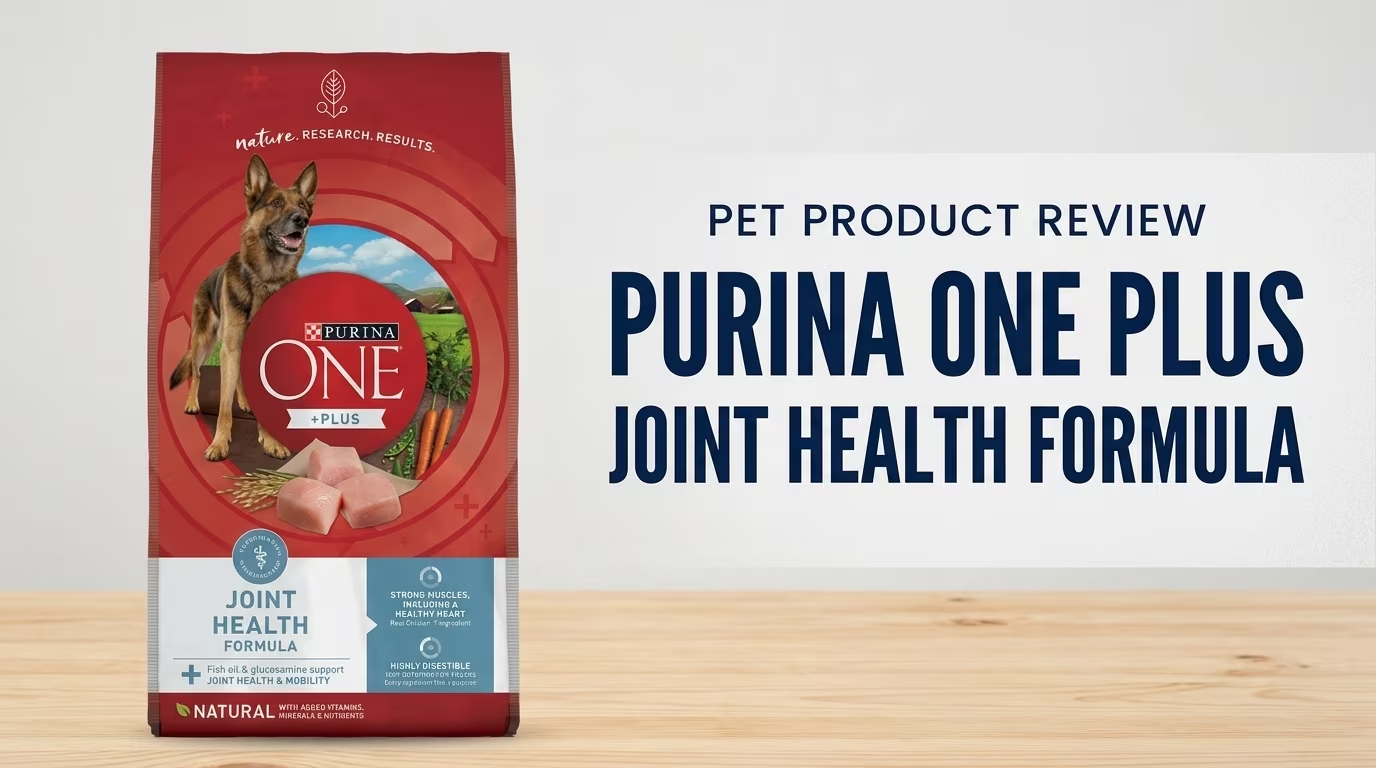
Product Overview: Purina ONE Plus Joint Health Formula
Purina ONE sits above the Purina Dog Chow and Purina Beneful lines in terms of quality, but below the Pro Plan tier. The “Plus” range within Purina ONE is their functional food line — formulas designed to address specific health concerns beyond basic maintenance nutrition.
The Joint Health formula targets adult dogs experiencing or at risk for joint stiffness and reduced mobility. It’s grain-inclusive (chicken and rice base), enriched with glucosamine for joint support, and positioned as an everyday food rather than a supplement.
Key Details:
- Brand: Purina ONE (Nestlé Purina)
- Formula: Plus Joint Health Formula
- Life Stage: Adult dogs (1+ years)
- Target: All breeds, especially medium-to-large breeds with joint concerns
- Primary Protein: Real chicken
- Available Sizes: 8 lb, 16.5 lb, 27.5 lb, 40 lb bags
- Price Range: $18–$55 depending on size (USA retail)
- Where to Buy: Chewy, Amazon, Walmart, Target, Petco, PetSmart
Quick Verdict: Purina ONE Plus Joint Health is a solid mid-range food that does several things well — decent protein, clean enough ingredient list, and real chicken as the first ingredient. The joint health claims are partially supported (glucosamine is present, though at lower levels than dedicated joint supplements). All three dogs did reasonably well on it, though results varied depending on the individual dog. Not a premium food, but meaningfully better than budget options at a price that most people can manage.
Meet My Three Test Dogs
🐶 Archie — Brittany Spaniel, 8 Years Old, 38 lbs
Archie is my senior-ish bird dog who has spent eight years convincing himself that he’s still two years old, but his hips are increasingly honest about the truth. He’s still got that classic Brittany energy and enthusiasm, but he’s been showing signs of mild hip stiffness for the past year — slower to get up from lying down, occasionally reluctant to jump into the car. I started him on a joint supplement about six months ago, and I wanted to see how a food with built-in glucosamine compared or complemented that approach.
🐶 Nori — Shiba Inu, 4 Years Old, 22 lbs
Nori is my clean, self-sufficient, deeply unimpressed-by-everything Shiba. She grooms herself like a cat, eats with precision, and has exactly zero interest in making my life easier when it comes to food transitions. She’s healthy, young, and doesn’t have joint concerns yet — she’s in this trial because I wanted a baseline comparison from a dog who’s at peak health. Her coat quality and digestion are good indicators of how a food performs in a healthy, active dog.
🐶 Bear — Newfoundland, 6 Years Old, 128 lbs
Bear is my enormous, drooling, would-die-for-you gentle giant. Newfoundlands have a relatively short lifespan compared to smaller breeds, and joint issues — particularly hip dysplasia — are endemic to the breed. Bear has had mild hip dysplasia since he was two, managed with supplements and weight monitoring. At six years old, joint support in his daily food is not optional for me; it’s essential. He’s the primary reason I picked up this formula.
My 1-Month Experience — Three Very Different Dogs, Three Different Stories
I did a careful seven-day transition, which for Bear especially was important. Changing food too fast on a 128 lb dog with hip issues means extra digestive stress on a body that doesn’t need it.
🐶 Archie — Brittany Spaniel
Energy Levels: Archie’s energy was good throughout the month. Not dramatically different from his baseline, but consistently solid. He was still demanding his twice-daily walks and getting visibly offended if they were shorter than he expected. Eight-year-old Brittanys are still proper sporting dogs at heart, and Archie’s energy held up fine on this food.
Digestion: Excellent. Archie has always had a reliable stomach, and Purina ONE Joint Health didn’t disrupt that. His stools were firm and consistent throughout the entire month. I noticed his stool volume was slightly higher than on premium foods I’ve fed him before (which usually indicates slightly less efficient nutrient absorption), but it wasn’t problematic — just a mild indicator of the grain content.
Coat Condition: Archie’s coat stayed in good shape. His orange-and-white markings looked healthy, and his medium-length fur had decent shine. Not as dramatic as I’d seen on truly premium foods, but appropriate for a well-maintained healthy coat. No dullness, no excessive shedding beyond his normal amount.
Joint Mobility: This is what I was really watching. And honestly? I saw modest but real improvement in Archie’s morning stiffness. By week three, he was getting up from his bed more easily than he had been before the trial. The difference wasn’t dramatic — he’s not suddenly a puppy again — but he was noticeably less hesitant about standing up in the morning. I continued his joint supplement alongside this food, so I can’t isolate how much credit goes to the food specifically, but the combined result was encouraging.
Issues: Nothing significant. Archie is a pretty easy dog to feed. My only observation is that he seemed to drink slightly less water than usual, which made me wonder about the food’s sodium content. Not concerning enough to be a problem, but I noted it.
🐶 Nori — Shiba Inu
Appetite: Nori is a Shiba Inu, which means she has opinions, and those opinions include whether today is a day she deigns to eat enthusiastically or a day she eats precisely three-quarters of her bowl and walks away to make a point.
Purina ONE Joint Health got a mixed reception from her. She ate it consistently, but without any particular enthusiasm. Day-to-day she’d leave a few pieces at the bottom of her bowl, which for Nori is somewhere between “I’m making a statement” and “this food is merely adequate.”
Weight Changes: Nori started at 22.0 lbs and ended at 21.9 lbs. Essentially no change. She’s at a healthy weight, so this is ideal. The feeding guidelines for her size worked accurately — about ¾ cup per day split into two meals.
Stool Quality: Nori’s stools were good — firm, consistent, normal volume. No issues throughout the month. She tends to have reliable digestion as long as the food doesn’t disagree with her, and this one didn’t.
Activity: Same Nori — intense, focused walks where she clearly believes she’s the one in charge, and then complete indifference to me for the rest of the day. Her energy was normal and consistent.
Coat: Shiba Inus have that beautiful plush double coat, and Nori’s stayed in good condition throughout the month. Dense, clean-feeling, decent sheen. Not significantly improved from her baseline, which was already pretty good, but definitely maintained.
Issues: Nori’s pickiness was the main “issue,” and that’s really more of a Shiba thing than a food thing. She also occasionally ate the kibble in a very particular way — eating some pieces and nosing others around the bowl before eventually eating them. I genuinely cannot explain Shiba Inu behavior and I’ve stopped trying.
🐶 Bear — Newfoundland
Strength & Muscle Tone: Bear maintained his body mass well throughout the month. At 128 lbs, he eats a lot, and I was feeding about 5 cups per day following the bag guidelines for his weight. His muscle condition stayed consistent — big, solid, that characteristic Newf bulk. He didn’t gain weight (a chronic concern with large dogs who have reduced activity from joint issues) and didn’t lose any either. Good result.
Immunity & Overall Health: Bear had a healthy month. No infections, no skin issues, no ear problems. His eyes were bright, his gums stayed healthy, and his energy for our daily walks was appropriate for a six-year-old giant breed with hip dysplasia — meaning he was willing, just pacing himself more than a young dog would.
Joint Health: Okay, this is the section I know you’re reading this review for if you have a dog like Bear. Here’s my honest assessment.
By week three, Bear was moving with what I’d describe as modestly better ease. His morning routine — which typically involves a slow, careful process of getting up from his bed — seemed slightly smoother. He was still stiff in cold mornings, still took a minute to fully get going, but there was a subtle improvement that I noticed consistently in weeks three and four.
I want to be careful about overstating this. One month on a food with moderate glucosamine levels (400 mg/kg in this formula) is not a cure for hip dysplasia. It’s also not long enough to see the full effects of glucosamine supplementation, which typically requires 6–8 weeks for meaningful impact.
But the early signs were mildly positive, and importantly, Bear didn’t get worse during the trial — which matters when you have a dog with existing joint issues.
Any Issues: Bear’s stool volume was high. This is almost inevitable with a 128 lb dog eating 5 cups of food per day, but on Purina ONE compared to more premium foods I’ve fed him, the output was noticeably larger. Higher stool volume in a large dog is genuinely impactful on daily walks, so I mention this as something large-breed owners will feel practically.
He also had two days of loose stools during the transition, which resolved by day eight.
Nutritional Information Breakdown
| Nutrient | Value | Ideal Range | Verdict |
|---|---|---|---|
| Crude Protein | 30% | 20–30% | ✅ Good — at the top of the ideal range |
| Crude Fat | 17% | 10–20% | ✅ Good — well-balanced |
| Crude Fiber | 3% | 3–5% | ⚠️ Low — at the minimum threshold |
| Moisture | 12% | Up to 12% | ✅ Standard for dry kibble |
| Calories | ~400 kcal/cup | — | Moderate energy density |
| Glucosamine | 400 mg/kg | 500–1000 mg/kg (therapeutic) | ⚠️ Present but below therapeutic dose |
Breaking Down the Numbers:
30% protein is legitimately good — it’s at the top of the general “ideal range” for adult dogs and competitive with many premium formulas. The source of that protein is somewhat mixed (real chicken plus other sources including corn gluten meal), which I’ll address in the ingredient analysis.
Fat at 17% is solid — supports energy, skin, and coat health appropriately for an average-to-moderately-active dog.
Fiber at 3% is right at the minimum threshold. This contributed to Nori and Bear feeling satisfactorily full between meals (mostly), but it’s the lower end of what I consider ideal. Dogs with sensitive stomachs or weight management needs would benefit from higher fiber.
The Glucosamine Question:
This is probably the most important nutritional detail for anyone buying this food specifically for joint health. Purina ONE Plus Joint Health contains 400 mg/kg of glucosamine. Therapeutic glucosamine doses for joint support in dogs typically range from 500–1000 mg/kg of food or more, depending on the dog’s weight and severity of joint issues.
At 400 mg/kg, the glucosamine in this food is meaningful but below therapeutic levels for a dog with actual joint disease like Bear’s hip dysplasia. For a younger dog with early or preventive joint support needs, it might be sufficient. For a senior dog or a dog with established joint problems, you’ll still likely need a separate glucosamine supplement in addition to this food.
This is honest information that I wish was clearer on the packaging, because “Joint Health” as a label suggests more than 400 mg/kg actually delivers.
Real Meat vs. Fillers:
Real chicken is the first ingredient, which is genuinely good. However, the formula also includes corn gluten meal and wheat as significant carbohydrate and protein sources. These are filler ingredients that inflate the protein percentage without providing the same bioavailability as animal protein. The 30% protein number is partially dependent on these plant-based protein contributors, which means the actual usable animal protein content is somewhat lower than the label suggests.
Additives:
Beyond glucosamine, the formula includes standard vitamins and minerals, omega-6 fatty acids for coat health, and a probiotic for digestive support. No artificial colors or flavors, which is good. Antioxidants from natural sources. The additive profile is clean and appropriate for a mid-tier mainstream food.
Ingredient Analysis — Honest Evaluation
Top 5 ingredients:
- Chicken — Real, named chicken as the first ingredient. Contains water weight, so its actual contribution shrinks post-cooking, but it’s a quality starting point. Rating: Good.
- Rice Flour — Processed rice as a carbohydrate source. Easily digestible, gentle on the stomach, but refined rather than whole grain. Not the worst carb source, not the best. Rating: Average.
- Corn Gluten Meal — A plant-based protein derived from corn. Used to cheaply boost the protein percentage. Dogs don’t utilize plant protein as efficiently as animal protein. Seeing this as the third ingredient is a genuine concern — it means a significant portion of that 30% protein is coming from corn. Rating: Low-to-Average.
- Poultry by-product meal — Rendered poultry parts including organs, necks, and feet. It’s not the worst protein source — organ meats have nutritional value — but “poultry” is vague (which species?) and by-product meal is lower quality than named chicken meal. Rating: Average-to-Low.
- Whole Grain Wheat — Another grain filler providing carbohydrates. A common allergen for some dogs. Rating: Average-to-Low.
Overall Ingredient Quality Rating: Average. The real chicken starting point is good, but the formula quickly reveals its mainstream budget-conscious roots with corn gluten meal, poultry by-product meal, and wheat following in quick succession.
The ingredient list is better than Pedigree or Dog Chow, but it’s not competing with Purina Pro Plan, Diamond Naturals, or any premium option. For a food positioning itself on joint health claims, I’d like to see cleaner, higher-quality base ingredients.
Pros & Cons — After 30 Real Days
✅ Pros
- Real chicken as the first ingredient — not corn, not by-product meal
- 30% protein — at the top of the ideal range
- Glucosamine included — joint support built into everyday food
- All three dogs maintained healthy weight on this food
- Archie’s morning stiffness showed modest improvement — partial credit to the glucosamine
- Bear showed subtle mobility improvement by weeks three and four
- Good palatability — all three dogs ate consistently (even Nori, in her Shiba way)
- Includes probiotics for digestive health — nice addition at this price point
- No artificial colors or flavors
- Widely available at mainstream retailers
❌ Cons
- Corn gluten meal as the third ingredient — plant protein filler that drags down overall quality
- Glucosamine at 400 mg/kg is below therapeutic levels — misleading for dogs with actual joint disease
- Poultry by-product meal — vague, lower-quality protein source
- Fiber at only 3% — minimum acceptable level, may not satisfy larger dogs between meals
- Stool volume was higher than premium foods — indicates less efficient nutrient absorption
- Wheat as a top-five ingredient — common allergen
- Dogs with serious joint conditions will still need separate supplementation
- Bear’s stool volume on 5 cups/day was significant — large-breed owners, manage expectations
Price Breakdown (USA — All Prices in $)
| Bag Size | Approximate Price | Price Per Pound | Price Per Kg |
|---|---|---|---|
| 8 lb | $18–$22 | ~$2.50/lb | ~$5.51/kg |
| 16.5 lb | $30–$36 | ~$2.00/lb | ~$4.41/kg |
| 27.5 lb | $42–$50 | ~$1.67/lb | ~$3.68/kg |
| 40 lb | $50–$60 | ~$1.37/lb | ~$3.02/kg |
Prices based on Chewy, Amazon, Walmart, and Petco as of early 2026.
Monthly Cost Estimates:
- Small/medium dog (Nori, ~22 lbs): ~¾ cup/day → 16.5 lb bag lasts ~7 weeks → ~$17–$21/month
- Medium dog (Archie, ~38 lbs): ~1¾ cups/day → 27.5 lb bag lasts ~5 weeks → ~$34–$40/month
- Large dog (Bear, ~128 lbs): ~5 cups/day → 40 lb bag lasts ~2.5 weeks → ~$80–$96/month
Value for Money Verdict: For small-to-medium dogs, the monthly cost is very reasonable. $17–$40/month for decent nutrition with glucosamine is genuinely good value — you’re essentially getting joint support baked in without paying separately for a supplement.
For large dogs like Bear, the math changes. At $80–$96/month, you’re spending meaningful money on a food with average ingredient quality. At that spending level, I’d seriously consider whether Kirkland Nature’s Domain ($55–$65/month for Bear with better ingredients) plus a separate glucosamine supplement ($15–$20/month) gives better overall value.
Comparison Table: Purina ONE Joint Health vs. Competitors
| Feature | Purina ONE Plus Joint Health | Royal Canin Medium Adult | Hill’s Science Diet Adult | Purina Pro Plan Joint Care | Nutramax Dasuquin + Mid-Range Food |
|---|---|---|---|---|---|
| Protein % | 30% | 27% | 24.5% | 26% | N/A + varies |
| Fat % | 17% | 17% | 15.5% | 13% | N/A |
| Fiber % | 3% | 1.3% | 2.9% | 3.5% | N/A |
| Glucosamine (mg/kg) | 400 | Not specified | Not specified | 400 | 900+ (supplement) |
| Price (27–30 lb bag, $) | $42–$50 | $58–$68 | $55–$62 | $48–$58 | $35–$44 + $18–$25 supplement |
| First Ingredient | Chicken | Dehydrated Poultry | Chicken | Chicken | Varies |
| Ingredient Quality | Average | Average | Average-to-Good | Average | Depends on base food |
| Best For | Moderate joint support, all dogs | Breed-specific | Sensitive stomachs | Active joints, younger dogs | Dogs with serious joint disease |
| Rating (/10) | 7.2 | 7.2 | 7.5 | 7.4 | Varies |
Where Purina ONE Joint Health Stands:
Is Purina ONE good for dogs? In this formula, yes — it’s a legitimate step above budget foods with a functional health benefit added. Among the best dog food in USA 2026 options in the functional/joint health category, it sits in the middle of the pack. Better than having no glucosamine in your dog’s food, but not a replacement for dedicated joint therapy in dogs with established disease.
The honest comparison: if your dog has significant joint issues, food-level glucosamine at 400 mg/kg is a starting point, not a solution. If your dog is healthy and you want preventive joint support baked into everyday food, this formula delivers that reasonably well at a fair price.
Final Rating: 7.2 / 10
| Category | Score (/10) |
|---|---|
| Ingredient Quality | 6.0 |
| Nutritional Profile | 7.5 |
| Joint Health Efficacy | 6.5 |
| Digestive Performance | 7.5 |
| Coat & Skin Health | 7.0 |
| Value for Money | 7.5 |
| Overall | 7.2 |
Verdict: Good — A Solid Mid-Range Choice With Honest Limitations
Purina ONE Plus Joint Health Formula does what it says within reason — it provides decent nutrition with glucosamine included, at a price that most dog owners can manage. Archie’s mild stiffness showed modest improvement. Bear’s mobility was mildly better by week three. Nori had no issues and maintained excellent condition.
The ingredient quality is middle-of-the-road, the glucosamine levels are below therapeutic for serious joint disease, and the fiber content is at minimum thresholds. These are real limitations. But for a mainstream food trying to address joint health at this price point, it’s a reasonable effort.
Would I Buy It Again?
Yes, with caveats.
I’d buy it again for Archie as part of a joint health routine that also includes his separate glucosamine supplement. The combination seems to be helping, and having it in the food is a convenient baseline.
For Bear, I’m still evaluating. The monthly cost at his size is significant for average ingredient quality, and I think a dedicated joint supplement plus a better-ingredient food might be a smarter approach long-term. Bear deserves both quality nutrition and proper joint support — and this food makes me feel like I’m getting halfway there on each rather than fully there on both.
For Nori, honestly, she doesn’t need the joint focus yet. I’d probably move her to Purina ONE SmartBlend or something similar without the joint-specific formulation.
Who Should Buy Purina ONE Plus Joint Health?
Ideal for:
- Senior dogs showing early signs of joint stiffness who aren’t yet on dedicated joint therapy
- Medium breeds at risk for joint issues where preventive support makes sense
- Dog owners who want joint support baked into everyday food without managing multiple supplements
- Budget-conscious owners of small-to-medium dogs where monthly cost is manageable
File size
- First-time senior dog owners who want a vet-accessible brand with functional health benefits
Not ideal for:
- Dogs with established moderate-to-severe joint disease — the glucosamine level is below therapeutic; you’ll still need a supplement
- Large or giant breed owners where cost-per-month becomes high relative to ingredient quality
- Dogs with corn or wheat sensitivities — both are prominent in the formula
- Owners who prioritize ingredient purity — corn gluten meal and poultry by-product meal are dealbreakers for many
- Premium buyers who want Orijen or Acana-level nutrition — this doesn’t compete there
- Highly active working dogs who need maximum protein quality and caloric density
My Final Thoughts
After thirty days with three dogs, Purina ONE Plus Joint Health landed exactly where I expected it to: solidly decent, with real benefits and real limitations. It’s not the best dog food in USA 2026. It’s not trying to be. It’s trying to be a good, accessible, functional food for adult dogs that need joint support without requiring their owners to navigate the complexity of premium nutrition.
For Archie, a mildly stiff eight-year-old Brittany, it’s working well as part of a joint support routine. For Bear, my dysplastic Newfoundland, it’s helping modestly but I’m not sure it’s optimized for his specific needs at his size. For Nori, who’s perfectly healthy and didn’t need the joint formula anyway, it was fine — neither remarkable nor problematic.
7.2 out of 10. A genuine, useful middle-ground food that’s worth considering for dogs in its target demographic. Just go in with clear eyes about what the glucosamine level can and can’t do.