
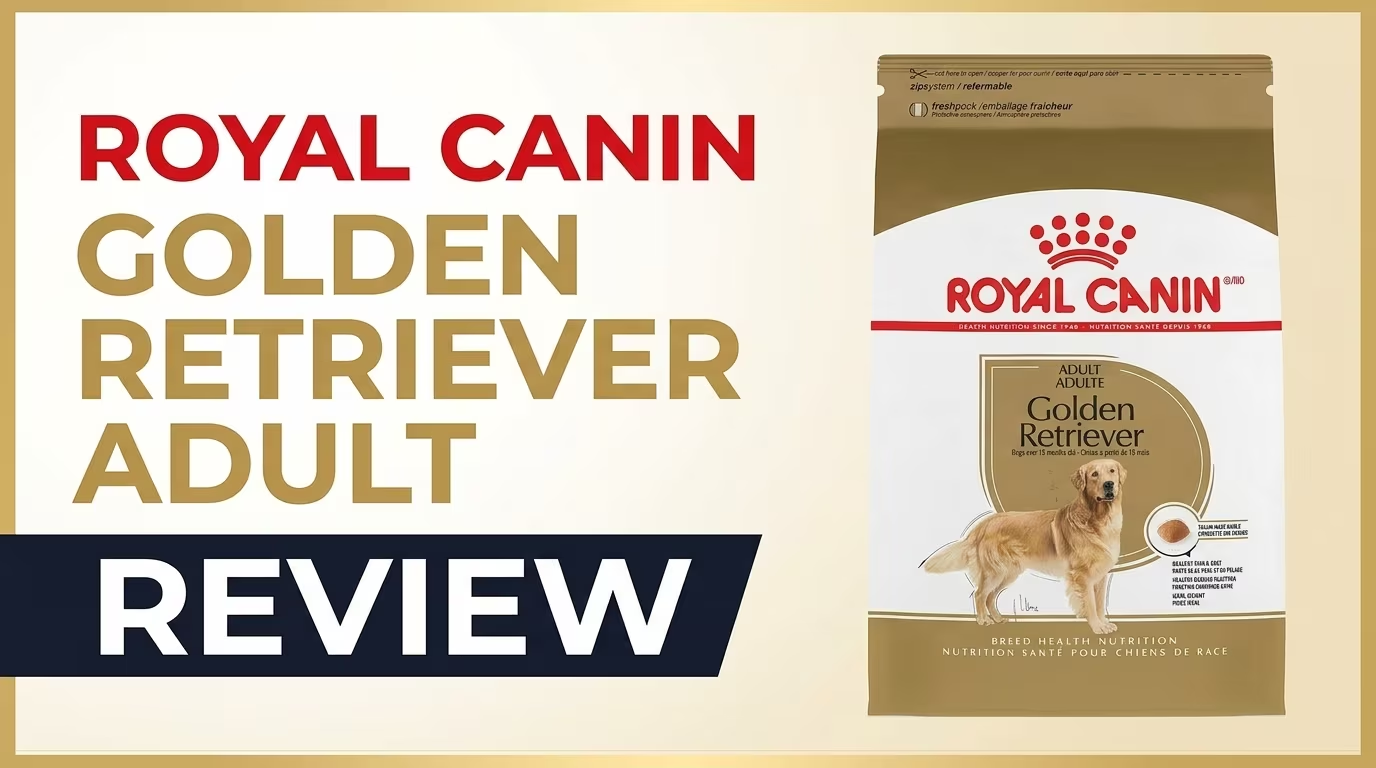
I want to start by acknowledging something a little unusual about this review. Royal Canin’s Golden Retriever Adult formula is, by definition, designed for one specific breed. So why am I testing it on three dogs? Because I think breed-specific foods deserve scrutiny from multiple angles — not just “does it work for the target breed,” but also “what exactly is it doing that a good general formula couldn’t accomplish?” and “is the premium price justified by the results?”
I’ve been raising dogs for over twelve years now, and I’ve always been somewhat skeptical of breed-specific dog food marketing. The cynic in me wonders how much is genuine nutritional science and how much is market segmentation strategy. So when a friend with three Goldens swore by this formula in early 2026, I decided to test it myself and form my own opinion.
I’ll be honest with you: the results were more nuanced than I expected.
Product Overview: Royal Canin Golden Retriever Adult Breed Specific
Royal Canin’s breed-specific line is their most specialized product category — formulas designed with the particular physical characteristics, health predispositions, and nutritional needs of specific breeds in mind. The Golden Retriever Adult formula targets Goldens between 15 months and 8 years old.
According to Royal Canin, this formula addresses three primary Golden Retriever concerns: coat and skin health (Goldens have dense double coats that need significant nutritional support), cardiovascular health (Goldens have above-average risk for heart conditions), and maintaining a healthy weight (the breed has a notorious tendency toward obesity).
Key Details:
- Brand: Royal Canin (Mars Petcare)
- Formula: Golden Retriever Adult Breed Specific
- Life Stage: Adult (15 months to 8 years)
- Target: Golden Retrievers specifically (though the company recommends it only for the target breed)
- Primary Protein Source: Dehydrated poultry protein
- Available Sizes: 6 lb, 17 lb, 30 lb bags
- Price Range: $26–$84 depending on size (USA retail)
- Where to Buy: Chewy, PetSmart, Petco, Amazon, veterinary offices
Quick Verdict: Royal Canin Golden Retriever Adult delivers on several specific promises — particularly coat quality and weight management — that matter specifically to Golden owners. But the ingredient list is disappointingly average for the premium price, and the “breed-specific” formulation involves some genuinely useful additions alongside some things that could generously be called marketing. Worth considering if you have a Golden with specific health concerns; less compelling if you’re just looking for quality everyday nutrition.
The Three Dogs I Tested This With
Here’s where I need to be upfront: because this is a Golden Retriever specific formula, one of my three dogs is a Golden Retriever. The other two are different breeds. I intentionally kept the other two in the trial because I wanted to see how a breed-specific food performed on dogs it wasn’t designed for — which tells you something about the actual nutritional value versus the breed-specific marketing claims.
🐶 Sunny — Golden Retriever, 5 Years Old, 68 lbs
Sunny is my primary subject for this review. She’s a classic, full-coat Golden — that rich golden color, those kind eyes, the perpetual tail wag that makes everyone who meets her feel like they’re her favorite person on earth. She’s not actually an athlete, but she’s active enough — daily walks, weekend hikes, backyard play sessions with the kids. She’s been borderline overweight for the past year (Goldens and their love of food…), and she has a history of mild skin itching that flares periodically.
🐶 Chester — Chesapeake Bay Retriever, 4 Years Old, 70 lbs
Chester is my rugged, water-loving, not-quite-as-friendly-as-his-looks-suggest retriever breed. He’s a working breed who gets serious exercise — we swim regularly in summer and run through winter. He’s similar in size to Sunny, which made him a useful comparison dog for this trial. He doesn’t have Golden’s specific health predispositions, but he’s a similarly-sized retriever-type dog, so I could observe whether the Golden-specific formulation made real differences.
🐶 Pippa — Welsh Springer Spaniel, 6 Years Old, 40 lbs
Pippa is my enthusiastic, bird-crazy, slightly anxious spaniel. She’s significantly smaller than the other two, and she’s got no business eating food formulated for Golden Retrievers — which is exactly why I included her. I wanted to see how the formula performed on a completely different size and breed profile, and whether the “Golden Retriever specific” aspects of the food served or hindered a dog they weren’t designed for.
My 1-Month Experience — Thirty Days, Three Different Results
Seven-day transition for all three. Smooth for everyone — no digestive upset during the switch, which was encouraging.
🐶 Sunny — Golden Retriever
Energy Levels: Sunny maintained her usual moderate energy throughout the month. No dramatic changes, which is honestly fine — she’s not an athlete, she just needs to feel good on daily walks and weekend hikes. She was consistently enthusiastic about exercise without being hyper or sluggish. Energy felt appropriate and stable.
Digestion: Excellent throughout the entire month. Sunny’s digestion has been reliable on most reasonable foods, and Royal Canin kept that pattern. Her stools were firm, well-formed, and consistent. No gas issues, no stomach complaints. The psyllium husk in the formula (included specifically to help Goldens maintain healthy weight by increasing satiety) seemed to be working — she appeared satisfied after meals and begged less between feedings than she usually does. That’s meaningful for a Golden.
Coat Condition: This is the headline result with Sunny. Her dense double coat — which had been looking a bit dull and flat for the past few months — was noticeably improved by week three. More luster, better texture, and noticeably reduced shedding during our weekly brushing sessions. The formula’s emphasis on omega-3 and omega-6 fatty acids specifically calibrated for Golden’s coat density was visibly effective. Her groomer commented on it at her appointment at the end of the month.
Weight Management: Sunny started at 68.2 lbs — slightly above her ideal weight. By the end of the month, she was at 67.4 lbs. That’s only 0.8 lbs, but it’s the right direction without me reducing her portions, which is genuinely noteworthy. The formula’s calorie management and fiber content seem to be supporting this.
Skin Health: Sunny’s mild skin irritation — which typically shows up as occasional scratching around her neck and belly — was quieter during this month. Not completely gone, but less frequent. Whether that’s the food or just a good month without allergen exposure, hard to say. But the timing was encouraging.
Issues: Sunny actually had a pretty great month on this food. My one mild complaint is about ingredient quality (more on that below) — the results were good, but I always want to understand what is producing those results, and the ingredient list left me with some questions.
🐶 Chester — Chesapeake Bay Retriever
Appetite: Chester is a serious dog who eats seriously. He ate this food consistently and efficiently — clean bowl, every meal, no fuss. The kibble shape (Royal Canin designs their breed-specific kibbles with specific shape and size considerations) was fine for his jaw size, though it’s designed for Golden mouths specifically, not Chessie mouths.
Weight Changes: Chester started at 70.1 lbs and ended at 70.4 lbs. Essentially no change, which is exactly right for an already healthy-weight working dog. The calorie density was appropriate for his activity level at the feeding amounts I used.
Stool Quality: Good. Firm, consistent, normal volume. No digestive issues throughout the month. Chester’s cast-iron stomach handled the formula without any problems.
Activity: Chester maintained his full activity level — no decline in stamina or enthusiasm for swimming and running. He seemed content and well-fueled throughout the trial.
Issues: Here’s the honest observation about Chester. He did fine on this food, but I didn’t see any benefits that were specific to the “Golden Retriever” formulation. His coat was fine — it was fine before the trial too. His digestion was good — it’s always good. The food kept him healthy and energized, but the breed-specific aspects that presumably distinguish this formula from a generic adult formula weren’t relevant to him. This is actually informative: the Golden-specific benefits only showed up in the Golden.
🐶 Pippa — Welsh Springer Spaniel
Appetite: Pippa ate it willingly, though with slightly less enthusiasm than her usual food. She was consistent — no refusals, no leaving bowls half-empty — but not dramatically excited by it either.
Weight Changes: Pippa started at 40.1 lbs and ended at 39.6 lbs. A slight decrease, which I was monitoring. The formula is calibrated for a Golden Retriever’s specific caloric needs and metabolism, and Pippa — smaller, different activity pattern, different breed physiology — doesn’t match that profile. I was feeding her less than the bag guidelines suggested (which are clearly written for Goldens), so the slight weight dip was manageable.
Stool Quality: Mostly good. Firm and consistent throughout the month. One episode of softer stools around day twelve that resolved the next day. Not significant.
Activity: Pippa maintained her usual enthusiastic, slightly-anxious spaniel energy. No changes.
Any Issues: The kibble size and shape was noticeably too large for Pippa’s smaller spaniel mouth. She had to work harder to crunch the pieces than she should have, occasionally leaving slightly crushed bits around her bowl that she’d come back to later. This is a functional issue — Royal Canin’s Golden Retriever kibble is designed for the specific jaw and bite characteristics of a Golden, and a 40 lb spaniel has a meaningfully different mouth size and chewing pattern. This is actually the most concrete example of “breed-specific design” that I observed: the kibble size genuinely wasn’t ideal for Pippa.
Nutritional Information Breakdown
| Nutrient | Value | Ideal Range | Verdict |
|---|---|---|---|
| Crude Protein | 25% | 20–30% | ✅ Good — solid mid-range |
| Crude Fat | 13% | 10–20% | ✅ Good — moderate, weight-management appropriate |
| Crude Fiber | 5% | 3–5% | ✅ Excellent — top of ideal range |
| Moisture | 10% | Up to 12% | ✅ Standard |
| Calories | ~349 kcal/cup | — | Lower energy density — deliberate for weight management |
Breaking Down the Numbers:
The 25% protein is respectable and appropriate for an adult maintenance food. It’s not outstanding, but it’s solid mid-tier nutrition. The protein comes from dehydrated poultry protein as the primary source, which I’ll address in the ingredient analysis.
Fat at 13% is deliberately moderate — lower than most active dog formulas. This is a conscious design choice for weight management, which makes sense given Goldens’ obesity predisposition. If your Golden is already at a healthy weight and very active, you might find 13% fat insufficient; if your Golden is like Sunny (moderately active, slightly overweight), it’s appropriate.
Fiber at 5% is excellent — the highest fiber content I’ve seen in a mainstream formula, and it’s here for a specific reason: satiety. The formula uses fiber to help Golden Retrievers feel fuller between meals, reducing begging and overeating behavior. It clearly worked with Sunny.
Calories at ~349 kcal/cup are notably lower than most adult dog formulas (which typically run 370–420 kcal/cup). This is also deliberate — supporting weight management by reducing calorie density.
The Cardiac Health Claim:
Royal Canin includes specific mention of cardiac health support in this formula’s marketing, which matters because Goldens have elevated risk for certain heart conditions. The food includes EPA and DHA (omega-3 fatty acids from fish oil), which have some evidence supporting cardiovascular health. However, the amounts in a daily serving of kibble are modest, and I wouldn’t rely on this food as a substitute for cardiac monitoring in a Golden with known heart concerns.
Real Meat vs. Fillers:
Dehydrated poultry protein is the primary protein source. It’s concentrated, which means high protein density, but it’s vague — “poultry” doesn’t specify the species. Beyond that, wheat and corn feature prominently in the formula, both as carbohydrate fillers and as protein boosters via corn gluten meal. For a food at this price, this is where I get critical.
Ingredient Analysis — Premium Price, Average Ingredients
Top 5 ingredients:
- Dehydrated Poultry Protein — The primary protein source. Concentrated and high in protein, but vague about species. Not as transparent as “deboned chicken” or “chicken meal.” Rating: Average.
- Brown Rice — A quality whole grain carbohydrate. Digestible, nutritious, and one of the better grain choices. Rating: Good.
- Wheat — A filler grain. Provides carbohydrates and some protein. Common allergen for dogs. At the third position, it’s a significant component. Rating: Average-to-Low.
- Corn — Another grain filler providing carbohydrates. Not a terrible ingredient, but not impressive in a premium-priced food. Rating: Average-to-Low.
- Wheat Gluten — A plant-based protein extracted from wheat, used to boost the protein percentage cheaply. Not ideal — plant proteins aren’t as bioavailable as animal proteins. Rating: Low.
Overall Ingredient Quality Rating: Average. For a food that costs this much, I expect better. The ingredient list is dominated by grain fillers (wheat, corn, wheat gluten) after the first protein ingredient. The protein sources are vague (dehydrated poultry, not specific species). There’s no fresh meat, no named fish, no organ meats. Compare this to what Acana or Orijen provide at similar or slightly higher price points, and the gap is substantial.
Royal Canin’s argument is that the specific balance and formulation of these ingredients — plus the targeted additions like psyllium husk, EPA/DHA, and specific fiber levels — is what makes the breed-specific difference. That argument has some merit (the results with Sunny were real), but I’d argue that better base ingredients would make those additions even more effective.
Pros & Cons — Based on 30 Days of Real Observation
✅ Pros
- Genuinely impressive coat results in Sunny — the omega fatty acid profile clearly works for Golden coats
- Weight management is real — Sunny lost 0.8 lbs in a month without portion reduction
- Excellent fiber content (5%) — the satiety effect was observable and meaningful for a food-motivated breed
- Lower calorie density deliberately designed for Golden’s obesity risk
- Good digestive performance for all three dogs
- Skin health improvement in Sunny — reduced itching and irritation
- Psyllium husk inclusion supports weight management intelligently
- Brown rice as a quality grain choice
- Kibble shape and size are genuinely designed for Golden anatomy
❌ Cons
- Very expensive for the ingredient quality — wheat, corn, and wheat gluten in the top five is not premium
- Dehydrated poultry protein is vague — which species? what quality?
- Wheat and wheat gluten as top-five ingredients — allergen concerns for sensitive dogs
- Corn gluten meal further down the list — plant protein boosting
- Not suitable for non-Goldens — Chester got adequate nutrition but no breed-specific benefits; Pippa had kibble size issues
- Protein at 25% is merely adequate — not impressive for the price
- Fat at 13% may be too low for very active Goldens
- Brand-specific marketing makes you pay premium for average base ingredients
Price Breakdown (USA — All Prices in $)
| Bag Size | Approximate Price | Price Per Pound | Price Per Kg |
|---|---|---|---|
| 6 lb | $26–$30 | ~$4.67/lb | ~$10.30/kg |
| 17 lb | $55–$62 | ~$3.47/lb | ~$7.65/kg |
| 30 lb | $75–$84 | ~$2.67/lb | ~$5.89/kg |
Prices based on Chewy, Amazon, PetSmart as of early 2026.
Monthly Cost Estimates:
At ~349 kcal/cup, you feed slightly more volume than with higher-calorie foods.
- Average Golden (Sunny, ~68 lbs): ~2⅔ cups/day → 30 lb bag lasts ~3.5 weeks → ~$85–$96/month
That’s genuinely expensive. For a single medium-large dog, you’re looking at $85–$96/month for a food with average ingredient quality. Compare this to Acana Heritage ($75–$85/month) with a dramatically better ingredient list, or Purina Pro Plan ($52–$62/month) with comparable mainstream-quality nutrition.
Value for Money Verdict: This is my biggest frustration with Royal Canin’s breed-specific line. The results with Sunny were real and meaningful — coat improvement, weight management, skin health — but I’m paying premium prices for average ingredients. Some of what you’re paying for is genuine formulation research and breed-specific customization. Some of it is marketing and brand positioning. It’s hard to know the exact ratio, and that ambiguity bothers me.
Comparison Table: Royal Canin Golden Retriever vs. Competitors
| Feature | RC Golden Retriever Adult | Purina Pro Plan Chicken & Rice | Hill’s Science Diet Adult | Acana Heritage Poultry | Blue Buffalo Life Protection |
|---|---|---|---|---|---|
| Protein % | 25% | 30% | 24.5% | 31% | 24% |
| Fat % | 13% | 16% | 15.5% | 17% | 14% |
| Fiber % | 5% | 3% | 2.9% | 5% | 5% |
| Price (30 lb bag, $) | $75–$84 | $52–$62 | $55–$62 | $75–$85 | $58–$68 |
| First Ingredient | Dehydrated Poultry Protein | Chicken | Chicken | Deboned Chicken | Deboned Chicken |
| Key Feature | Breed-specific, weight mgmt, coat | Performance, protein | Sensitive stomach | Premium ingredients | Natural, no by-products |
| Ingredient Quality | Average | Average-to-Good | Average-to-Good | Premium | Good |
| Best For | Golden Retrievers specifically | Active/sporting dogs | Sensitive stomachs | All premium buyers | Health-conscious buyers |
| Rating (/10) | 7.4 | 7.9 | 7.5 | 9.1 | 7.8 |
Where Royal Canin Golden Retriever Stands:
Is Royal Canin good for dogs? In this specific formula for Golden Retrievers, yes — it delivers real breed-specific benefits that I observed and measured. But when comparing the best dog food in USA 2026 for overall nutrition and value, it’s outcompeted at its own price point by foods with better ingredient quality. The breed-specific value proposition is real but narrow — it matters specifically for Goldens, and less so otherwise.
Final Rating: 7.4 / 10
| Category | Score (/10) |
|---|---|
| Ingredient Quality | 5.5 |
| Nutritional Profile | 7.0 |
| Coat & Skin Health | 9.0 |
| Weight Management | 8.5 |
| Digestive Performance | 8.0 |
| Value for Money | 5.5 |
| Breed-Specific Efficacy | 8.5 |
| Overall | 7.4 |
Verdict: Good for Golden Retrievers — Overpriced for the Ingredient Quality
Royal Canin Golden Retriever Adult Formula delivered genuine, measurable results in my Golden (Sunny) over 30 days. The coat improvement was visible and validated externally. The weight management was real. The skin health was better. These are meaningful outcomes for a breed with specific, known health vulnerabilities.
But I’m paying premium prices for a formula built on dehydrated poultry protein, wheat, corn, and wheat gluten. The brand-specific additions (psyllium husk, targeted fiber, EPA/DHA) are valuable, but they’re embedded in a base ingredient list I’d expect from a mid-tier mainstream food, not a premium breed-specific formula.
Would I Buy It Again?
Yes, but with a caveat — only for Sunny.
If I have a Golden Retriever who needs weight management and coat support, and I can justify the $85–$96/month cost, this food delivers on its core promises. Sunny is staying on it for the next few months to see whether the improvements continue and whether the weight trend persists.
For Chester, absolutely not — he’d do better on Purina Pro Plan or Acana at a similar or lower price. For Pippa, definitely not — wrong kibble size, wrong formula, and she’s not a breed this food was designed for.
The 7.4/10 reflects this reality: excellent breed-specific performance for Goldens, average-to-poor value for everyone else.
Who Should Buy Royal Canin Golden Retriever Adult?
Ideal for:
- Golden Retriever owners — specifically and primarily
- Goldens prone to weight gain — the lower calorie density and high fiber are genuinely effective
- Goldens with coat or skin concerns — the omega fatty acid profile showed real results
- Owners of Goldens with mild food-motivated behavior — the psyllium satiety effect reduces begging
- Golden owners whose vet specifically recommends Royal Canin — the brand has strong veterinary relationships
Not ideal for:
- Non-Golden breeds — Chester got adequate nutrition; Pippa had functional problems with kibble size
- Budget-conscious owners — $85–$96/month is steep for average ingredient quality
- Owners who prioritize premium ingredients — the ingredient list doesn’t justify the premium price
- Very active Goldens — 13% fat may be insufficient for high-energy working dogs
- Goldens with wheat or corn allergies — these are prominent in the formula
- Anyone looking for the best ingredient quality at this price point — Acana Heritage delivers more for similar money
My Final Honest Take
After twelve-plus years of feeding dogs, I’ve learned to separate what I want to believe about a product from what I actually observe. With Royal Canin Golden Retriever Adult, what I observed was genuinely positive for Sunny — better coat, modest weight loss, improved skin. Those results are real.
But I also know that some of those results could potentially come from a cleaner, better-ingredient food at a similar price. The breed-specific formulation adds value — the fiber approach to weight management is smart, the targeted omega ratios for Golden coats clearly work. Whether those additions justify the premium over a better-ingredient general formula is a question I’m still working through.
If you have a Golden Retriever with specific coat, skin, or weight management concerns — and your budget allows $85–$96/month — this is a legitimate, evidence-backed choice. If you’re looking for the best overall nutritional value for your Golden, I’d consider Acana or Purina Pro Plan first.
Royal Canin gets it right where it matters most for Goldens. I just wish it got the ingredient list right too.