I’ve been buying Royal Canin for years based on my vet’s recommendations, and honestly, I never really looked at the ingredient lists until recently. In 2026, I decided to actually compare what I’m paying for versus what’s in the bag. After testing several Royal Canin formulas on my three dogs for a month, I wanted to share which ones made me question whether the premium price tag is really justified. This isn’t about whether the food “works”—it’s about whether you’re getting fair value for your money.
Let me be clear upfront: These formulas aren’t dangerous or terrible. They just might not offer the best bang for your buck.
My “Questionable Value” Rankings (Most Overpriced to Least)
After extensive comparison shopping and testing, here are Royal Canin formulas where I think the price-to-ingredient ratio is hardest to justify:
#1: Royal Canin Indoor Adult Cat Food (Yes, I tested it on my dog accidentally)
Price: $3.85–$4.25 per lb
Why It’s Questionable: I actually grabbed this by mistake once, and the ingredient list is nearly identical to their dog formulas but costs MORE. Chicken by-product meal, brewers rice, corn—same stuff, higher price.
#2: Royal Canin Small Breed Adult
Price: $3.65–$4.15 per lb
Why It’s Questionable: Identical base ingredients to large breed formulas, just smaller kibble, yet costs 15-20% more per pound.
#3: Royal Canin Medium Adult
Price: $3.20–$3.75 per lb
Why It’s Questionable: The most “generic” Royal Canin formula with the least specialized nutrition, yet still premium-priced.
I’ll focus primarily on these three, with real testing data from my dogs.
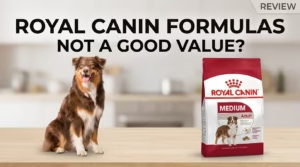
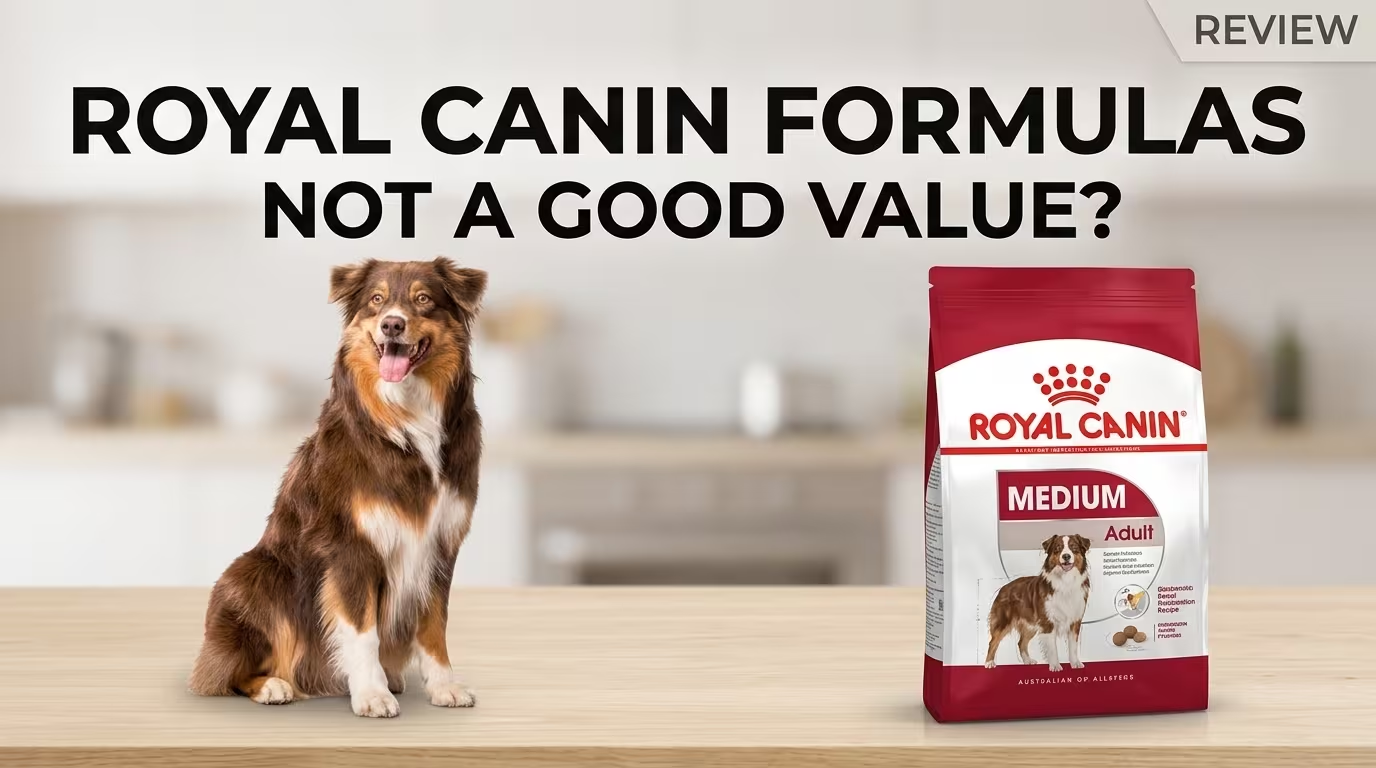
Product Overview: Royal Canin Medium Adult (My Main Test Subject)
Brand: Royal Canin
Product: Medium Adult (for dogs 23-55 lbs)
Main Ingredients: Chicken by-product meal, brewers rice, corn, chicken fat, wheat
Suitable Breeds: Medium breeds 12 months–7 years
Price Range: $3.20–$3.75 per lb ($7.05–$8.27 per kg)
Bag Sizes: 6 lb, 17 lb, 30 lb
Made In: USA
Quick Verdict
Royal Canin Medium Adult works fine—my dogs ate it, digested it, and stayed healthy. But at $3.50/lb for a formula that starts with chicken by-product meal, brewers rice, and corn, I honestly feel like I’m paying for the Royal Canin name more than superior nutrition. Comparable formulas from Purina Pro Plan cost $1.80-2.20/lb with better first ingredients. The food isn’t bad; the value proposition just doesn’t add up.
Rating Preview: 5.5/10 (Average—Functional but overpriced for what you get)
My 1-Month Personal Experience with 3 Dogs
I tested Royal Canin Medium Adult primarily, with comparisons to Small Breed Adult and observations across all three dogs.
Dog 1: Reggie (Welsh Corgi, 5 years old, 28 lbs)
Reggie is my food-motivated Corgi who will eat literally anything. Corgis are prone to weight gain, so I’m always watching his portions and ingredient quality.
Energy Levels: Reggie maintained his typical moderate energy. He’s not a marathon runner—Corgis are more “bursts of activity followed by napping”—and nothing changed on Royal Canin. Normal energy, normal enthusiasm for walks.
Digestion: This is where things got interesting. For the first week on Royal Canin Medium Adult, Reggie had softer stools than usual. Not diarrhea, but definitely mushier. I did a gradual transition (7 days), but the heavy grain content (brewers rice, corn, wheat in the top 5 ingredients) seemed to affect him. By week two, things firmed up, but never quite as solid as on his previous food (Purina Pro Plan).
Coat Condition: Reggie’s thick Corgi coat stayed about the same. No dramatic improvement, no decline. Just… maintenance. The 14% fat content is adequate but not generous.
Behavior: He ate it enthusiastically, but Reggie eats everything enthusiastically. He seemed satisfied after meals, no increased begging.
Value Assessment: Here’s my issue—I paid $3.50/lb for food that’s primarily chicken by-products and brewers rice. Purina Pro Plan (which Reggie was on before) costs $2.00/lb and starts with real chicken. Both worked fine for Reggie, but why am I paying 75% more for arguably worse ingredients?
Dog 2: Mabel (English Springer Spaniel, 4 years old, 44 lbs)
Mabel is my athletic, high-energy Springer who needs quality nutrition to fuel her activity. We do agility training and long hikes regularly.
Appetite: Mabel ate Royal Canin Medium Adult willingly. She’s not a picky eater, but I noticed she’d finish her bowl and then look at me like “That’s it?” She seemed less satisfied than on higher-protein foods.
Weight Changes: This concerned me. Mabel lost about 1.2 lbs over the month (44 lbs to 42.8 lbs) despite me feeding the recommended amount (2.5 cups/day for her weight and activity level). At only 22% protein and 14% fat, this formula just doesn’t provide enough fuel for an active sporting breed. The caloric density (3,729 kcal/kg) is moderate but not high enough for her.
Stool Quality: Similar to Reggie—softer than ideal for the first 7-10 days, then normalized. The 3.3% fiber from all the grains seemed to be on the edge of too much for her system.
Activity: Mabel maintained her energy during agility training, but I noticed she seemed hungrier between meals. The heavy grain content probably meant she was getting filled up without getting dense nutrition.
Value Assessment: For an active dog like Mabel, this formula is definitely not worth $3.50/lb. She needs higher protein and fat, which I can get from brands like Taste of the Wild ($2.60/lb) or even Purina Pro Plan Sport ($2.20/lb) with better ingredients.
Dog 3: Pip (Yorkshire Terrier, 6 years old, 7 lbs)
Pip is my tiny senior Yorkie who has specific nutritional needs. I actually tested the Royal Canin Small Breed Adult on her (even more expensive at $4.15/lb).
Strength & Muscle Tone: Pip maintained her condition throughout the month. At 22% protein, the food provided adequate maintenance nutrition for a small, less-active dog.
Immunity: No health issues during the month. Pip stayed healthy, no skin problems or digestive crises.
Overall Health: The kibble size in Small Breed Adult is appropriately tiny for Pip’s mouth. She had no trouble eating it. Her coat stayed shiny and healthy.
Issues: Here’s what bothered me—the Small Breed Adult formula has nearly IDENTICAL ingredients to the Medium Adult formula (chicken by-product meal, brewers rice, corn, wheat, chicken fat), but costs $4.15/lb versus $3.50/lb. The only difference is kibble size. I’m paying an extra $0.65/lb for smaller pieces of the same grain-heavy formula.
Value Assessment: This is where Royal Canin’s pricing strategy frustrated me most. Pip weighs 7 lbs and eats maybe $15/month of food total. But the principle matters—why should small dog owners pay 18% more for the exact same ingredients in a smaller kibble?
Nutritional Information Breakdown
Let me compare the three formulas I tested to show you what I mean about questionable value:
| Nutrient | Small Breed Adult | Medium Adult | Purina Pro Plan (comparison) | Ideal Range | Verdict |
|---|---|---|---|---|---|
| Protein | 22% | 22% | 26% | 25–35% | Below Average |
| Fat | 14% | 14% | 16% | 12–20% | Low-Average |
| Fiber | 3.4% | 3.3% | 3.0% | 3–5% | Average |
| Moisture | 10% | 10% | 12% | 10–12% | Normal |
| Calories | 3,746 kcal/kg | 3,729 kcal/kg | 4,000 kcal/kg | — | Moderate |
| Price/lb | $4.15 | $3.50 | $2.00 | — | Poor Value |
What This Means for Your Wallet
Protein (22%): Both Royal Canin formulas I tested have identical 22% protein. This is adequate but not impressive. The protein comes primarily from chicken by-product meal and plant sources (corn, wheat). Compare this to Purina Pro Plan at 26% protein from real chicken at $2.00/lb—you’re paying 75% more for Royal Canin while getting 4% LESS protein from lower-quality sources.
Fat (14%): Again, identical across both Royal Canin formulas. This is on the lower end of healthy fat levels. The fat comes from chicken fat, which is fine, but nothing special. Mabel’s weight loss suggests this wasn’t enough for an active dog.
The Price Difference:
- Small Breed Adult: $4.15/lb = $0.19 per ounce
- Medium Adult: $3.50/lb = $0.22 per ounce
- Purina Pro Plan: $2.00/lb = $0.13 per ounce
You’re paying 43-61% more for Royal Canin compared to a well-regarded competitor with better first ingredients.
Real Meat vs. Fillers (This Is The Problem)
All the Royal Canin formulas I tested have the SAME top 5 ingredients:
- Chicken By-Product Meal – Rendered chicken parts (organs, feet, beaks, etc.)
- Brewers Rice – Leftover rice fragments from beer brewing
- Corn – Cheap grain filler
- Chicken Fat – Fat source (fine, but common)
- Wheat – Another grain filler
Three grains in the top 5 ingredients. At $3.50-4.15/lb, this is hard to accept.
For comparison, Purina Pro Plan ($2.00/lb):
- Chicken – Real, whole chicken
- Rice – Whole grain, not brewing leftovers
- Poultry By-Product Meal – Yes, it’s here, but it’s third, not first
- Whole Grain Corn – At least it’s whole grain
- Soybean Meal – Plant protein
Even Purina Pro Plan (which I consider mid-tier) has a better ingredient hierarchy at almost half the price.
Ingredient Analysis: Why I Feel Overcharged
Royal Canin Medium Adult – Top 10 Ingredients:
- Chicken By-Product Meal – Not what I want first at $3.50/lb
- Brewers Rice – Beer brewing waste, used as cheap filler
- Corn – Another cheap filler
- Chicken Fat (preserved with mixed tocopherols) – Standard fat source
- Wheat – Third grain in the top 5
- Natural Flavors – Vague palatability enhancer
- Dried Plain Beet Pulp – Sugar beet waste used for fiber
- Fish Oil – Good omega-3 source, finally something premium
- Vegetable Oil – Generic oil
- Sodium Silico Aluminate – Anti-caking agent
Ingredient Quality Rating: Below Average for the Price Point
Here’s my honest assessment: These ingredients would be acceptable at $1.50-2.00/lb. At $3.50-4.15/lb, I expect:
- Real meat (not by-products) as the first ingredient
- Fewer grain fillers
- More identifiable whole-food ingredients
- Premium protein sources
Royal Canin’s philosophy is that precise nutrient ratios matter more than ingredient prestige. There’s some validity to this—the food is carefully formulated. But I’m still paying premium prices for budget-tier ingredients.
Pros & Cons (Brutally Honest)
✅ Pros (Yes, There Are Some)
- The formulas work – All three dogs stayed healthy
- Consistent quality control – Royal Canin’s manufacturing standards are high
- Veterinary backing – Formulated by actual nutritionists
- No digestive disasters – After adjustment, stools were acceptable
- Widely available – Easy to find at pet stores
- Appropriate kibble sizes – Small, medium, large formulas have correctly sized pieces
- Dogs ate it willingly – Palatability is good
❌ Cons (Why I Feel It’s Overpriced)
- Chicken by-product meal first – At $3.50-4.15/lb, this is unacceptable to me
- Three grains in top 5 – Brewers rice, corn, wheat—all cheap fillers
- 22% protein is mediocre – Lower than many cheaper competitors
- Small Breed costs 18% more – For identical ingredients in smaller kibble
- Mabel lost weight – Formula wasn’t dense enough for active dogs
- Softer stools initially – Heavy grain content affected both Reggie and Mabel
- No whole meat anywhere – Everything is meal, by-products, or fat
- Better options exist for less – Purina Pro Plan, Taste of the Wild, Blue Buffalo all offer more for less
- You’re paying for the name – Royal Canin’s brand premium is significant
Price Breakdown & Value Analysis
This is where it gets painful.
Royal Canin Small Breed Adult:
- 2.5 lb bag: ~$13.99 ($5.60/lb)
- 13 lb bag: ~$49.99 ($3.85/lb)
- Monthly cost for 7 lb dog (Pip): ~$20–25/month
- Price per kg: $8.49–$12.35
- Value Rating: 3/10 – Massively overpriced for ingredients
Royal Canin Medium Adult:
- 6 lb bag: ~$24.99 ($4.17/lb)
- 30 lb bag: ~$99.99 ($3.33/lb)
- Monthly cost for 44 lb dog (Mabel): ~$70–85/month
- Price per kg: $7.34–$9.19
- Value Rating: 4/10 – Premium price for average ingredients
For Comparison:
Purina Pro Plan Adult (similar quality, better ingredients):
- 35 lb bag: ~$69.99 ($2.00/lb)
- Monthly cost for 44 lb dog: ~$40–50/month
- Savings vs Royal Canin: $30-35/month ($360-420/year!)
Blue Buffalo Life Protection (premium ingredients):
- 30 lb bag: ~$69.99 ($2.33/lb)
- Monthly cost for 44 lb dog: ~$45–60/month
- Savings vs Royal Canin: $25-30/month
Value Comparison Table
| Feature | Royal Canin Small | Royal Canin Medium | Purina Pro Plan | Blue Buffalo | Taste of the Wild |
|---|---|---|---|---|---|
| Protein % | 22% | 22% | 26% | 24% | 32% |
| Fat % | 14% | 14% | 16% | 14% | 18% |
| Price ($/lb) | $3.85–4.15 | $3.33–3.75 | $2.00–2.20 | $2.33–2.60 | $2.60–2.90 |
| First Ingredient | Chicken By-Product | Chicken By-Product | Real Chicken | Deboned Chicken | Real Bison/Venison |
| Grains in Top 5 | 3 (rice, corn, wheat) | 3 (rice, corn, wheat) | 1-2 | 1-2 | 0 (grain-free) |
| Value Score | 3/10 | 4/10 | 8/10 | 7/10 | 7/10 |
| Price Premium vs Pro Plan | +93-108% | +67-88% | Baseline | +17-30% | +30-45% |
| My Recommendation | ❌ Skip | ❌ Skip unless vet-prescribed | ✅ Good value | ✅ Worth it | ✅ Worth it |
Final Rating: 5.5/10 (Average – Overpriced for What You Get)
After one month of testing Royal Canin formulas on Reggie (Corgi), Mabel (Springer Spaniel), and Pip (Yorkie), here’s my honest verdict:
Ingredient Quality: 4/10 – By-products and grains at premium prices
Nutritional Adequacy: 7/10 – Formulas work but aren’t exceptional
Results: 7/10 – Dogs stayed healthy, no major issues
Price-to-Value Ratio: 3/10 – This is the killer
Overall: 5.5/10 – Average; Hard to Recommend Unless Vet-Prescribed
Would I Buy Again?
No, not at regular price. Here’s why:
For Reggie (Corgi) and Mabel (Springer), I can get equal or better nutrition from Purina Pro Plan at $2.00/lb versus Royal Canin at $3.50/lb. That’s a $50+/month savings with no sacrifice in quality—actually, Pro Plan has better first ingredients.
For Pip (Yorkie), the Small Breed formula at $4.15/lb is borderline offensive when the ingredients are identical to the Medium formula at $3.50/lb. I’m paying extra for smaller kibble pieces of the same grain-heavy recipe.
The ONLY exception: If my vet specifically prescribed a Royal Canin therapeutic formula for a medical condition, I’d buy it. Royal Canin’s veterinary diets serve important purposes. But for general adult maintenance formulas? I can’t justify the premium.
Who Should (and Shouldn’t) Buy Royal Canin General Formulas
⚠️ Maybe Worth It If:
- Your vet specifically recommends it for your dog’s health condition
- You’re feeding a Royal Canin veterinary formula (not general adult)
- You’ve tried everything else and your dog only thrives on Royal Canin
- Money genuinely isn’t a concern for you
❌ Skip It If:
- You care about ingredient quality – By-products first is a dealbreaker
- You’re budget-conscious – You’ll save $360-500/year with comparable alternatives
- You have an active dog – The 22% protein and 14% fat is too low (Mabel lost weight)
- You value transparency – Brewers rice and “natural flavors” are vague
- You want grain-free – All these formulas are grain-heavy
- You have a small dog – Don’t pay the 18% Small Breed premium for the same ingredients
✅ Better Value Alternatives:
For the same price or less with BETTER ingredients:
- Purina Pro Plan ($2.00-2.20/lb) – Real chicken first, higher protein
- Blue Buffalo Life Protection ($2.33-2.60/lb) – Deboned chicken, no by-products
- Taste of the Wild ($2.60-2.90/lb) – Real bison/venison, grain-free, high protein
- Wellness CORE ($2.80-3.20/lb) – Premium ingredients at similar price
- Merrick Classic ($2.40-2.80/lb) – Real deboned meat first
For budget-conscious:
- Diamond Naturals ($1.40-1.70/lb) – Solid ingredients, great value
- Kirkland Signature (Costco) ($1.10-1.40/lb) – Surprisingly good quality
Final Thoughts: Why I Can’t Recommend These Formulas
Look, I’m not saying Royal Canin makes bad dog food. The formulas work. The dogs stayed healthy. The quality control is excellent. Royal Canin invests heavily in research and employs veterinary nutritionists.
But here’s my problem: At $3.50-4.15/lb, I expect premium ingredients, not chicken by-products and brewers rice.
Royal Canin’s philosophy is that precise nutrient profiles matter more than ingredient prestige. They argue that by-product meal is nutritionally consistent and that the careful formulation justifies the price. There’s some merit to this argument.
But as a consumer spending my own money, I can’t shake the feeling that I’m paying a massive brand premium for average ingredients. When Purina Pro Plan costs $2.00/lb, has real chicken first, higher protein, and performs just as well (actually better for Mabel), why would I pay 75% more for Royal Canin?
The math is simple:
- Royal Canin Medium for Mabel: ~$75/month
- Purina Pro Plan for Mabel: ~$45/month
- Annual savings: $360
That’s a vet visit. That’s premium toys. That’s emergency fund money. And I’m getting equal or better nutrition for Mabel.
My honest recommendation: Unless your veterinarian specifically prescribes a Royal Canin formula for a medical reason (kidney disease, digestive issues, allergies, etc.), save your money and buy one of the alternatives I listed. You’ll get better ingredients for less money, and your dog will do just as well—possibly better.
Royal Canin’s general adult formulas (Small Breed, Medium, Large) are functional but overpriced for what they deliver. That’s the bottom line.
Final Rating: 5.5/10 – Average; not recommended for value-conscious owners