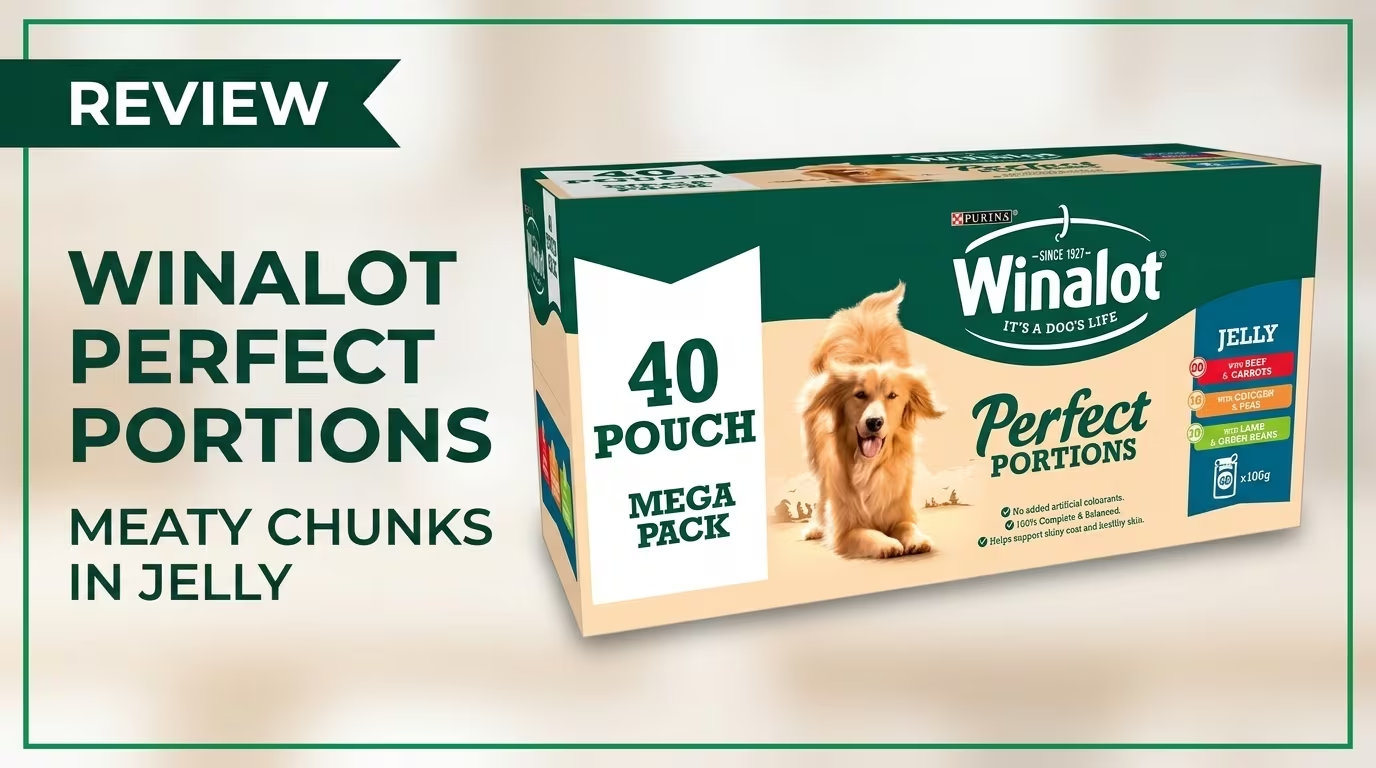
I’ve been feeding dogs for over a decade now, and I’m always curious to test different brands—especially the ones I see heavily advertised or sitting on the shelves at every grocery store. In early 2026, I decided to give Winalot Perfect Portions Meaty Chunks in Jelly a proper month-long trial with my three dogs. I wanted to see if this budget-friendly UK brand actually delivers decent nutrition or if it’s just another filler-heavy option hiding behind colorful packaging.
Spoiler: I have mixed feelings about this one.
Product Overview
Brand: Winalot (owned by Nestlé Purina)
Type: Wet dog food (pouches/trays)
Main Ingredients: Meat and animal derivatives, cereals, vegetable protein extracts, minerals, various sugars
Suitable For: Adult dogs (all sizes)
Price Range: $7–$10 per kg (approximately $0.60–$0.85 per 100g pouch)
Country of Origin: United Kingdom
Quick Verdict
Winalot Perfect Portions is a budget wet food that your dog will probably eat without complaint, but the ingredient quality is mediocre at best. It’s heavy on by-products and vague “meat derivatives,” which is a red flag for me. That said, it’s affordable, convenient, and won’t poison your dog—it’s just not something I’d feed long-term if I had better options.
Rating: 5.5/10 (Average, budget-tier)
My 1-Month Personal Experience with 3 Dogs
I tested Winalot Perfect Portions on three very different dogs over four weeks. Here’s what actually happened.
Dog 1: Charlie (Cavalier King Charles Spaniel, 5 years old, 18 lbs)
Charlie is my food-obsessed Cavalier who will literally eat anything—socks, crumbs off the floor, you name it. So I wasn’t surprised when he inhaled his first bowl of Winalot like it was gourmet steak.
Energy Levels: No noticeable change. Charlie’s always been moderately active, and that stayed consistent throughout the month.
Digestion: This is where things got slightly messy (pun intended). Around week two, I noticed his stools became softer than usual—not full-on diarrhea, but definitely mushier. I suspected it was the high moisture content combined with cereals and sugars in the formula.
Coat Condition: His coat looked… fine. Not worse, not better. Just the same silky texture he’s always had. No extra shine or improvement.
Behavior: Charlie remained his usual cheerful, tail-wagging self. No allergic reactions, itching, or mood changes.
Overall: He ate it happily, but I wasn’t thrilled about the stool quality decline.
Dog 2: Daisy (Border Collie, 3 years old, 42 lbs)
Daisy is my picky eater. She’s turned her nose up at premium brands before, so I was genuinely curious how she’d react to Winalot.
Appetite: Surprisingly, she ate it without hesitation for the first two weeks. By week three, though, she started leaving a few chunks in her bowl—almost like she got bored of the flavor.
Weight Changes: No significant weight gain or loss. She stayed right around 42 lbs.
Stool Quality: Daisy’s digestion seemed fine at first, but similar to Charlie, her stools got a bit softer around the middle of the trial. Nothing alarming, but definitely noticeable.
Activity: Daisy is high-energy by nature (Border Collie life), and I didn’t see any drop in her stamina during our morning runs. But I also didn’t see any boost—she was just… normal.
Overall: She tolerated it well but clearly wasn’t in love with it by the end.
Dog 3: Bruno (Boxer, 6 years old, 68 lbs)
Bruno is my big, goofy Boxer with a sensitive stomach. I was most nervous about testing this food on him because he’s had issues with low-quality foods in the past.
Strength & Muscle Tone: Bruno’s a strong boy, and I didn’t notice any muscle loss or weakness during the month. He maintained his build just fine.
Immunity: No infections, upset stomachs, or vet visits—so that’s a win.
Overall Health: He seemed generally healthy, but I did notice he was drinking more water than usual. I suspect the high sodium content in the jelly was making him thirstier.
Issues: Week three hit him harder than the smaller dogs. He had two days of loose stools that cleared up on their own. I’m pretty sure it was the cereals and lack of fiber in the formula.
Overall: He survived the month without major drama, but I wouldn’t risk feeding him this long-term.
Nutritional Information Breakdown
Let me be blunt: Winalot’s nutritional profile is not impressive.
Here’s the breakdown (wet food percentages):
| Nutrient | Winalot Value | Ideal Range (Wet Food) | Verdict |
|---|---|---|---|
| Protein | 7.0% | 8–12% | Below Average |
| Fat | 4.5% | 5–8% | Low |
| Fiber | 0.3% | 1–2% | Very Low |
| Moisture | 84% | 75–85% | High (normal) |
| Ash | 2.5% | — | — |
| Calories | ~80 kcal/100g | — | Low |
What This Means in Plain English:
Protein (7.0%): This is on the lower end, even for wet food. And here’s the kicker—the protein comes from “meat and animal derivatives,” which is industry jargon for “mystery meat parts we won’t specify.” Could be organs, could be beaks, could be hooves. You just don’t know.
Fat (4.5%): Pretty lean. Not terrible, but nothing to write home about. Fat is essential for coat health and energy, and this food is cutting it close.
Fiber (0.3%): This is where I have a real problem. Fiber is crucial for healthy digestion, and Winalot barely has any. This likely explains why all three of my dogs had softer stools.
Moisture (84%): Totally normal for wet food. High moisture is fine—it keeps dogs hydrated—but it also means you’re paying a lot for water.
The Bottom Line:
This is not a nutritionally dense food. If you’re feeding this as a main diet, your dog is getting just enough to survive, but not thrive. For occasional feeding or mixing with kibble? Sure. As a sole diet? I wouldn’t recommend it long-term.
Ingredient Analysis
Let’s dig into what’s actually in this stuff.
Top 5 Ingredients:
- Meat and animal derivatives (minimum 4% chicken in the chicken variety)
- Cereals
- Vegetable protein extracts
- Minerals
- Various sugars
My Breakdown:
“Meat and animal derivatives” – This is the #1 red flag for me. It’s a vague, catch-all term that doesn’t tell you what actual meat is in there. The fact that they only guarantee a minimum of 4% chicken (in the chicken flavor) is laughable. The rest could be leftover scraps from the processing floor.
Cereals – More filler. Not inherently toxic, but not exactly nutritious either, especially for dogs. Some dogs are sensitive to grains, and this food is loaded with them.
Vegetable protein extracts – Basically plant-based protein (likely soy) used to bump up the protein percentage cheaply. It’s not as bioavailable as animal protein.
Various sugars – WHY? Dogs don’t need added sugar. This is purely for palatability—to make dogs eat food that might otherwise be bland.
Ingredient Quality Rating: Low to Average
This is classic budget dog food. Lots of fillers, vague sourcing, minimal real meat. It’s not dangerous, but it’s not quality either.
Pros & Cons (Based on Real 1-Month Use)
✅ Pros
- Affordable: You can feed a dog for under $30/month, which is huge for budget-conscious owners.
- Convenient portioning: The single-serve pouches make mealtime easy—no measuring, no mess.
- Palatable: All three of my dogs ate it willingly (at least initially).
- Widely available: You can grab it at most UK supermarkets and some online retailers that ship internationally.
- No major health crises: None of my dogs got sick or had allergic reactions.
❌ Cons
- Poor ingredient quality: Vague meat sources, heavy on cereals and fillers.
- Low protein and fiber: Not nutritionally robust for long-term feeding.
- Caused softer stools: Two out of three dogs had digestive issues.
- Contains added sugar: Unnecessary and unhealthy.
- Not suitable as a sole diet: You’d need to supplement with better food or nutrients.
- Made my Boxer extra thirsty: Likely due to high sodium in the jelly.
Would I buy this again?
Honestly, probably not as a primary food. I might grab a pouch or two in a pinch or use it as a topper for kibble, but I wouldn’t feed it daily. There are better options at just slightly higher price points.
Price Breakdown (USA Pricing Estimates)
Winalot is a UK brand, so availability in the USA is limited (mostly through import retailers or Amazon). Here’s the estimated cost breakdown:
- Price per pouch (100g): ~$0.70–$0.90
- Price per kg: ~$7.00–$9.00
- Monthly cost for a 40 lb dog: Approximately $35–$50 (feeding ~300–400g per day)
Value for Money:
For the price, it’s okay—you get what you pay for. It’s cheaper than premium brands like Royal Canin or Hill’s, but the quality reflects that. If budget is your main concern and your dog tolerates it well, it’s passable. But if you can stretch your budget by $10–$15/month, you’d be better off with something like Purina Pro Plan or even Pedigree Choice Cuts (which, while not premium, at least has clearer ingredient sourcing).
Comparison Table: Winalot vs. Other Wet Dog Foods
| Feature | Winalot Perfect Portions | Royal Canin Adult Wet | Pedigree Choice Cuts | Purina Pro Plan Savor |
|---|---|---|---|---|
| Protein % | 7.0% | 8.5% | 8.0% | 10.0% |
| Price ($/kg) | $7–$9 | $14–$18 | $5–$7 | $12–$15 |
| Ingredient Quality | Low-Average | High | Low | Average-High |
| Nutrition Score | 5.5/10 | 8/10 | 5/10 | 7.5/10 |
| Best For | Budget feeding, toppers | Breed-specific diets | Extreme budget | Active dogs |
| Contains Fillers? | Yes (cereals, sugars) | Minimal | Yes | Minimal |
| Overall Rating (/10) | 5.5 | 8.5 | 5.0 | 7.5 |
Takeaway: Winalot sits right in the budget tier alongside Pedigree. It’s better than the absolute cheapest options, but nowhere near premium.
Final Rating: 5.5/10 (Average, Budget-Tier)
Here’s my honest, no-BS final verdict:
Winalot Perfect Portions Meaty Chunks in Jelly is a mediocre, budget wet food that works in a pinch but shouldn’t be your go-to for long-term canine nutrition. The ingredient quality is poor, the nutritional profile is underwhelming, and two out of my three dogs had minor digestive issues.
That said, it’s not actively harmful. If you’re in a tight financial spot or need something quick and easy, it’ll keep your dog fed. But if you care about optimal health, coat quality, and long-term wellbeing, I’d strongly suggest investing a bit more in a better food.
Would I Buy This Again?
No, not as a main diet. I might use it as a kibble topper occasionally or keep a few pouches on hand for emergencies, but I wouldn’t feed it daily. My dogs deserve better, and honestly, there are affordable alternatives that offer more nutritional value.
Who Should Buy Winalot Perfect Portions?
✅ Good For:
- Extreme budget constraints: If you’re truly struggling financially and need cheap wet food.
- Occasional use/toppers: Mixing a pouch into dry kibble to add moisture and flavor.
- Emergency backup: Keeping a few pouches in the pantry for days you run out of regular food.
- Non-picky eaters: Dogs who eat anything and have iron stomachs.
❌ NOT Recommended For:
- Dogs with sensitive digestion: The low fiber and cereals caused issues for my dogs.
- Performance/working dogs: Not enough protein or fat for high-energy needs.
- Puppies or senior dogs: They need more nutrient-dense food.
- Long-term primary diet: You’ll likely see deficiencies over time.
- Owners seeking premium nutrition: This ain’t it.
Final Thoughts from a Real Dog Owner
Look, I get it. Dog food is expensive, and not everyone can afford $60/month on premium brands. Winalot fills a gap in the market for budget-conscious owners, and I won’t demonize it for that.
But let’s be real: this is bottom-tier nutrition dressed up in convenient packaging. The vague ingredient sourcing, added sugars, and low fiber content are legitimate concerns. My dogs ate it, tolerated it (mostly), and didn’t get sick—but they also didn’t thrive.
If Winalot is all you can afford right now, it’s better than feeding table scraps or nothing at all. But if you can swing an extra $10–$15/month, please consider upgrading to something with clearer meat sources, higher protein, and actual fiber.
Your dog’s long-term health is worth the investment.
Final Score: 5.5/10 – It does the bare minimum, but nothing more.