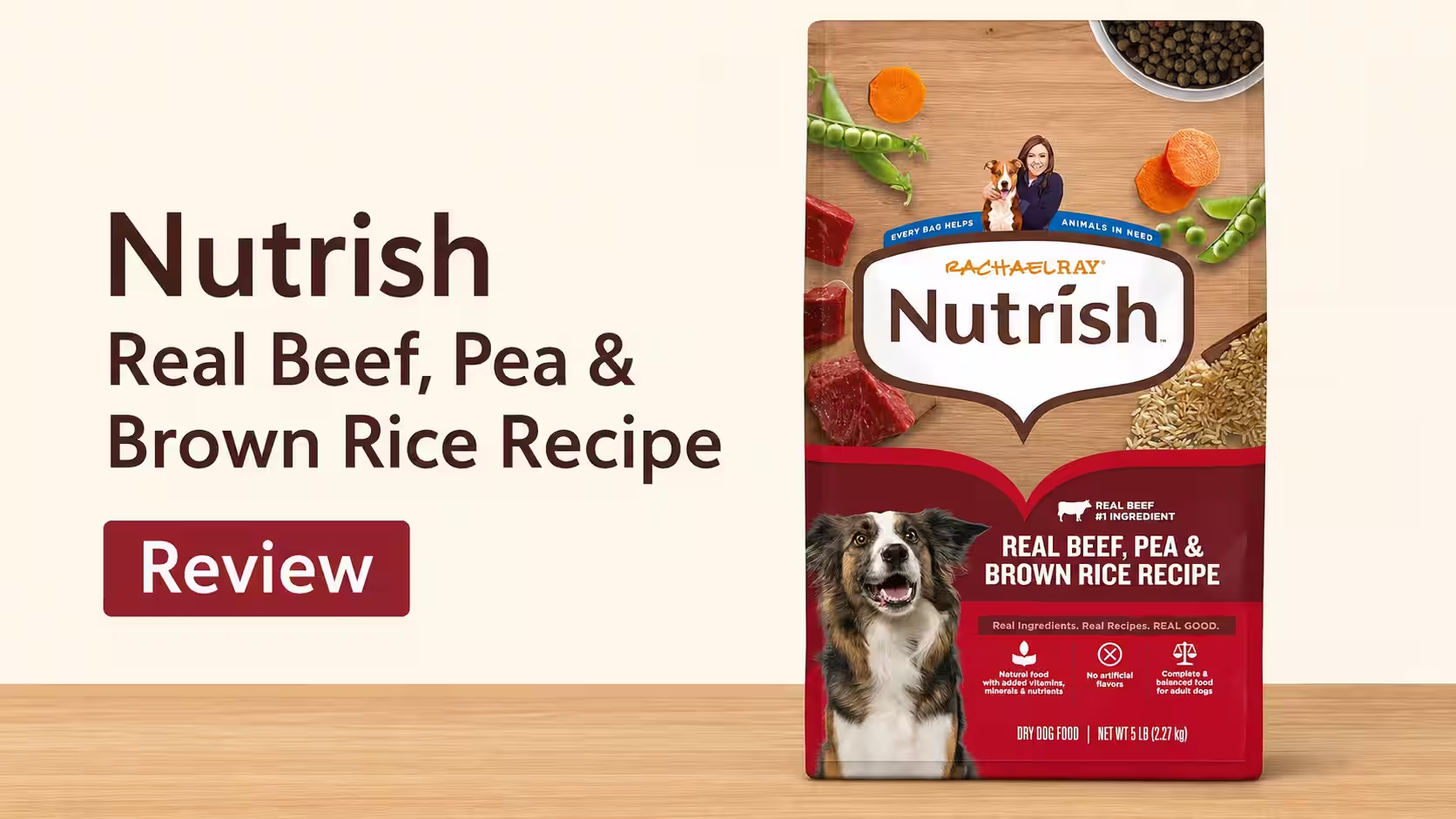
After feeding my dogs various brands over the years, I kept seeing Rachael Ray Nutrish pop up at different pet stores and online, and honestly, I was curious. It sits in that middle price range—not dirt cheap like grocery store brands, but not premium pricing either. In February 2026, I picked up a bag and committed to testing it for a full month on my three very different dogs to see if it’s actually worth the hype or just celebrity branding.
Here’s what I learned.
Product Overview
Brand: Rachael Ray Nutrish
Formula: Real Beef, Pea & Brown Rice Recipe
Main Ingredients: Beef, pork meal, ground rice, dried peas, beef fat
Suitable For: Adult dogs, all breeds
Price Range: $1.30–$1.60 per lb ($2.87–$3.53 per kg)
Bag Sizes: 6 lb, 14 lb, 28 lb, 40 lb
Made In: USA
Quick Verdict
Rachael Ray Nutrish is a solid mid-tier dog food that delivers decent nutrition at a reasonable price. It features real beef as the first ingredient, no poultry by-products, and avoids artificial preservatives and colors. After one month, my dogs did well on it overall—better digestion than budget foods, good energy, and healthy coats. However, it does contain a fair amount of peas and legumes, which some owners might want to avoid. It’s not the absolute best food on the market, but it’s a reliable choice for most dog owners looking for quality without breaking the bank.
Rating Preview: 7/10 (Good—Quality mid-tier option)
My 1-Month Personal Experience with 3 Dogs
I tested Nutrish on three completely different dogs to get a well-rounded picture. Let me walk you through how each one responded.
Dog 1: Milo (Boston Terrier, 3 years old, 18 lbs)
Milo is my little clown—energetic, stubborn, and prone to some digestive sensitivity. Boston Terriers can be a bit gassy anyway, but Milo takes it to another level sometimes.
Energy Levels: Right from week one, Milo maintained his normal high energy. He was zooming around the apartment, playing tug-of-war, doing his usual Boston 500s around the living room. No drop-off, no hyper spikes—just consistent, normal energy throughout the month.
Digestion: This is where I was pleasantly surprised. Milo’s gas actually decreased compared to the Purina Pro Plan he’d been on before. I’m not saying he became odorless (he’s still a Boston Terrier), but there was a noticeable improvement. His stools were firm and consistent—no diarrhea, no straining. The transition was smooth, too, which doesn’t always happen with him.
Coat Condition: Milo has short, smooth fur, and it looked really good by week three. Shiny, healthy, no dry patches. I didn’t notice a dramatic transformation, but it definitely maintained quality.
Behavior: No changes here. He remained his goofy, affectionate self. No mood swings, irritability, or unusual behavior. He seemed satisfied after meals and wasn’t begging as much as he does with some foods.
Overall: Milo did great on Nutrish. I was genuinely impressed with how well his sensitive stomach handled it.
Dog 2: Ruby (Cocker Spaniel, 6 years old, 28 lbs)
Ruby is my sweet, food-motivated Cocker who will literally eat anything. She’s not picky, but she does have a tendency to pack on weight if I’m not careful with portions.
Appetite: Ruby loved this food. Like, loved it. She’d start dancing around when she heard me scooping her bowl. She finished every meal in under a minute, licked the bowl clean, and looked at me like “Is that all?” The beef is clearly appealing to her.
Weight Changes: I weighed Ruby at the start and end of the month. She went from 28.2 lbs to 28.4 lbs—basically no change, which is exactly what I wanted. I was feeding her the recommended amount (about 1 cup per day split into two meals), and it kept her stable. The calorie density seems appropriate for maintenance.
Stool Quality: Perfect. Firm, consistent, easy to pick up (sorry, but this matters to dog owners). No changes from week to week. Ruby’s always had a pretty solid digestive system, and Nutrish kept that going.
Activity: Ruby is moderately active—we walk twice a day, play fetch in the yard, and she likes to sunbathe. Her energy levels stayed exactly where they should be. She wasn’t sluggish, but she also wasn’t bouncing off the walls. Just right for a six-year-old Cocker.
Overall: Ruby thrived on this food. No complaints whatsoever.
Dog 3: Atlas (Great Dane, 4 years old, 142 lbs)
Atlas is my gentle giant. Feeding a Great Dane properly is always a concern because of their risk for bloat and joint issues. They need quality nutrition without overfeeding, and they can be sensitive to certain ingredients.
Strength & Muscle Tone: Atlas maintained his muscle mass beautifully. Great Danes are naturally lean and muscular, and I didn’t see any loss of definition or tone. He looked strong and healthy throughout the month.
Immunity: No issues here. No skin infections, ear problems, or mystery ailments. His immune system seemed solid.
Overall Health: This is where I paid closest attention. Atlas has always been prone to some joint stiffness (common in giant breeds), and I didn’t notice any worsening. His mobility stayed consistent. He was getting up and down without issue, climbing stairs normally, no limping. The glucosamine isn’t super high in Nutrish, but it didn’t seem to negatively impact him.
Issues: Here’s my one concern with Atlas—he seemed slightly more thirsty than usual during weeks two and three. Not excessively, but I refilled his water bowl maybe once more per day than normal. I checked for other symptoms of diabetes or kidney issues (which can cause increased thirst), but everything else was normal. My guess is the sodium content was a bit higher than his previous food. It wasn’t alarming, but it was noticeable.
Also, feeding a 142 lb dog can get expensive with any food. I was going through the 40 lb bag pretty quickly—about every 3.5 weeks.
Overall: Atlas did well, with one minor thirst increase that I’m still not 100% sure was the food or just coincidence. Nothing major.
Nutritional Information Breakdown
Let’s look at what Rachael Ray Nutrish actually delivers nutrition-wise:
| Nutrient | Nutrish Value | Ideal Range (Dry Food) | Verdict |
|---|---|---|---|
| Protein | 26.0% | 25–35% | Good |
| Fat | 14.0% | 12–20% | Good |
| Fiber | 4.0% | 3–5% | Good |
| Moisture | 10.0% | 10–12% | Normal |
| Omega-6 | 2.5% | 1.5–3.5% | Good |
| Omega-3 | 0.3% | 0.3–1.0% | Acceptable |
| Calcium | 1.0% | 0.5–1.8% | Good |
| Phosphorus | 0.8% | 0.4–1.6% | Good |
| Glucosamine | 350 mg/kg | 300–800 mg/kg | Acceptable |
What This Means in Real Terms
Protein (26%): This is solidly in the good range for adult maintenance. It’s not super high (like grain-free, meat-heavy formulas at 32-38%), but it’s well above the bare minimum. And importantly, the protein comes primarily from real beef and pork meal, not just plant sources. Pork meal is a concentrated protein source that’s actually pretty quality—it’s rendered meat with moisture removed, which concentrates the nutrients.
Fat (14%): Right in the sweet spot for most adult dogs. Enough to support coat health, energy, and nutrient absorption without being excessive. The primary fat source is beef fat (preserved with mixed tocopherols, which are natural preservatives), which is much better than generic “animal fat” or “poultry fat.”
Fiber (4%): Healthy fiber level that supports digestion without causing loose stools. This comes from the brown rice, peas, and dried beet pulp.
Omega Fatty Acids: The omega-6 to omega-3 ratio is about 8:1, which is decent but not optimal (ideal is closer to 5:1 or less). The food does contain fish oil and flaxseed oil for omega-3s, but I’d love to see a bit more.
Real Meat vs. Fillers
The first ingredient is real beef, which is fantastic. That means by weight (before cooking), beef is the primary ingredient. The second ingredient is pork meal, which is a concentrated protein source. These two meat sources make up a significant portion of the formula.
However, ingredients 3-5 are ground rice, dried peas, and soybean meal. So yes, there are fillers and plant proteins. The peas especially are worth noting—there’s been ongoing research about pea-heavy diets potentially contributing to DCM (dilated cardiomyopathy) in dogs, though nothing conclusive yet. Nutrish isn’t grain-free, so it’s not as pea-heavy as some formulas, but it’s definitely present.
Additives
The Good:
- No artificial flavors, colors, or preservatives
- Preserved with mixed tocopherols (vitamin E)
- Added vitamins and minerals (chelated for better absorption)
- Contains prebiotics (dried chicory root)
The Not-So-Good:
- Contains soybean meal (not terrible, but not ideal)
- Garlic powder (used for flavor, but some people prefer to avoid it)
My Honest Assessment
This is a good nutritional profile for regular feeding. It’s not cutting-edge, grain-free, or ultra-premium, but it’s well-balanced, uses real meat as the primary protein, and avoids the worst offenders (corn, wheat, by-products, artificial additives). For the price point, I’m satisfied with what you’re getting.
Ingredient Analysis
Let’s break down the full ingredient list (first 10):
Top 10 Ingredients:
- Beef – Real meat, excellent first ingredient
- Pork Meal – Concentrated protein source, quality ingredient
- Ground Rice – Digestible carbohydrate, not a filler per se
- Dried Peas – Plant protein and carbohydrate (some concern about DCM links)
- Beef Fat (preserved with mixed tocopherols) – Quality fat source
- Soybean Meal – Plant protein, less ideal
- Natural Flavor – Fairly standard, vague but not terrible
- Dried Beet Pulp – Fiber source, good for digestion
- Fish Oil – Omega-3 source, great addition
- Flaxseed Meal – Additional omega-3s and fiber
What Stands Out:
Real Beef First: This is huge. You’re getting actual meat, not “beef meal” or “beef by-product.” It’s the foundation of the formula.
Pork Meal Second: Another quality protein. Meal is more nutrient-dense than whole meat because the moisture is removed. Some people mistakenly think “meal” means low-quality, but that’s not the case—it’s different from “by-product meal.”
Rice Instead of Corn: Ground rice is much more digestible than corn and less likely to cause allergies. It’s a reasonable carbohydrate source.
Peas and Soy: These are the weaker ingredients. They’re plant-based proteins used to boost the overall protein percentage more cheaply than adding more meat. They’re not harmful in moderation, but they’re not optimal.
Fish Oil and Flaxseed: These additions show the formula is trying to provide balanced omega fatty acids, which I appreciate.
Potential Concerns:
Peas: As mentioned, there’s ongoing research about legume-heavy diets and heart issues in dogs. Nutrish isn’t as legume-heavy as grain-free formulas, but it does contain dried peas and pea protein further down the list.
Garlic Powder: Used for flavoring. In tiny amounts (like here), it’s generally considered safe, but some owners prefer to avoid it entirely.
Soybean Meal: Not toxic, but not the highest quality protein. Some dogs are sensitive to soy.
Ingredient Quality Rating: Average to Good
This isn’t a premium, meat-only formula like Orijen or Acana. But it’s significantly better than budget brands. I’d rate the ingredients as solidly mid-tier—good meat sources, reasonable grains, some plant proteins, no junk additives.
Pros & Cons (Based on Real 1-Month Experience)
✅ Pros
- Real beef as the first ingredient – Actual quality meat, not by-products
- No artificial colors, flavors, or preservatives – Clean formula
- Good palatability – All three of my dogs loved the taste
- Improved digestion – Milo’s gas decreased significantly
- Consistent, firm stools – No digestive upset during or after transition
- Healthy coat appearance – Maintained shine and texture
- Made in the USA – Domestic production with quality control
- Reasonable price point – Good value for the quality ($1.30–$1.60/lb)
- Widely available – Easy to find at most pet stores and online
- Stable energy levels – No crashes or hyperactivity
- Added fish oil – Bonus omega-3s for joint and coat health
- Portion control friendly – Didn’t cause weight gain in Ruby
❌ Cons
- Contains peas and legumes – Potential DCM concerns (though not conclusive)
- Soybean meal included – Not the highest quality protein source
- Omega-3 levels could be higher – Not bad, but not optimal
- Atlas seemed slightly more thirsty – Could be higher sodium (though I’m not certain)
- Moderate protein percentage – Not ideal for highly active or working dogs
- Garlic powder – Some owners prefer to avoid this
- Gets expensive for large dogs – Atlas went through a 40 lb bag in under a month
Would I Buy This Again?
Yes, I would. For the price and quality balance, Rachael Ray Nutrish is a solid everyday food for most dogs. It’s not the absolute best on the market, but it’s far from the worst, and it delivered real results with my three dogs. Milo’s improved digestion alone made it worthwhile.
That said, if I had an extremely active dog (like a working Border Collie or a sled dog), I’d probably go with something higher in protein and fat. And if I had unlimited budget, I’d choose a more premium brand. But for normal, everyday feeding of average adult dogs, this works well.
Price Breakdown (USA Pricing)
Here’s what you’re actually spending with Rachael Ray Nutrish:
Retail Prices (as of 2026):
- 6 lb bag: ~$9.99 ($1.67/lb)
- 14 lb bag: ~$21.99 ($1.57/lb)
- 28 lb bag: ~$39.99 ($1.43/lb)
- 40 lb bag: ~$53.99 ($1.35/lb)
Price per kg: Approximately $2.97–$3.68 per kg
Monthly Cost Estimates:
- Small dog (20 lbs): ~$18–22/month (feeding ~3/4 cup per day)
- Medium dog (40 lbs): ~$30–38/month (feeding ~1.5 cups per day)
- Large dog (80 lbs): ~$55–70/month (feeding ~3 cups per day)
- Giant dog (140 lbs like Atlas): ~$95–115/month (feeding ~5+ cups per day)
Value for Money
At roughly $1.35–$1.67 per pound, Nutrish sits squarely in the mid-tier price range. It’s about 2-3x more expensive than budget brands like Pedigree or Purina Dog Chow, but 30-50% cheaper than premium brands like Royal Canin, Hill’s Science Diet, or Blue Buffalo.
Is it worth the price?
In my opinion, yes. You’re getting:
- Real meat as the first ingredient
- No artificial junk
- Made in the USA
- Balanced nutrition
- Good digestibility
Compare that to spending $0.70/lb on Pedigree (where the first ingredient is corn) or $2.50/lb on Royal Canin (which is excellent but pricey), and Nutrish hits a sweet spot.
For most dog owners, I think this is a smart financial choice. You’re not settling for bottom-barrel nutrition, but you’re also not overpaying for fancy packaging and marketing.
Comparison Table: Rachael Ray Nutrish vs. Other Dry Dog Foods
| Feature | Rachael Ray Nutrish | Royal Canin Adult | Pedigree Adult | Purina ONE SmartBlend |
|---|---|---|---|---|
| Protein % | 26% | 25% | 21% | 28% |
| Fat % | 14% | 12% | 10% | 16% |
| Price ($/lb) | $1.35–1.67 | $2.80–3.50 | $0.75–1.00 | $1.40–1.75 |
| First Ingredient | Real Beef | Chicken By-Product | Corn | Real Chicken |
| Artificial Additives | No | No | Yes | No |
| Ingredient Quality | Average-Good | High | Low | Average-Good |
| Made In | USA | USA | USA | USA |
| Nutrition Score | 7/10 | 8.5/10 | 4.5/10 | 7/10 |
| Best For | Average adult dogs | Breed-specific | Extreme budget | Active adult dogs |
| Overall Rating (/10) | 7.0 | 8.5 | 4.5 | 7.0 |
Key Takeaway: Rachael Ray Nutrish competes directly with Purina ONE in quality and price. Both are solid mid-tier options. Royal Canin is noticeably better quality but significantly more expensive. Pedigree is cheaper but much lower quality.
Final Rating: 7.0/10 (Good – Solid Mid-Tier Choice)
After one full month of testing Rachael Ray Nutrish Real Beef, Pea & Brown Rice Recipe on three different dogs, here’s my honest final verdict:
Quality: 7/10 – Real meat first, no artificial junk, some plant proteins
Nutrition: 7/10 – Well-balanced for adult maintenance, not exceptional
Palatability: 8/10 – All three dogs loved it, finished every meal
Digestibility: 8/10 – Excellent stool quality, improved Milo’s gas issues
Value: 8/10 – Fair pricing for the quality you’re getting
Overall: 7.0/10 – Good, Recommended for Most Dogs
Would I Buy This Again?
Yes, absolutely. Rachael Ray Nutrish delivered exactly what I hoped for—quality nutrition at a reasonable price with real, visible results. Milo’s improved digestion, Ruby’s consistent weight maintenance, and Atlas’s healthy appearance all confirmed that this food works.
It’s not a miracle food, and it’s not ultra-premium, but it’s a reliable, well-formulated option that I’d confidently feed long-term.
My Final Honest Opinion
In the crowded dog food market of 2026, Rachael Ray Nutrish holds its own as a trustworthy mid-tier brand. It proves that you don’t need to spend $80+ per bag to feed your dog well, but you also shouldn’t settle for $20 bags of corn-based filler.
The celebrity branding (Rachael Ray) might make some people skeptical, but the formula speaks for itself. Real beef first, no junk ingredients, made in the USA, and my dogs genuinely thrived on it.
My only real hesitation is the pea content for owners who are specifically worried about DCM research. If that’s a major concern for you, look for a formula without legumes. Otherwise, I think Nutrish is a smart choice.
If you’re looking for a best dog food in USA 2026 that balances quality and affordability, Rachael Ray Nutrish deserves serious consideration.
Who Should Buy Rachael Ray Nutrish?
✅ Great For:
- First-time dog owners – Easy to find, straightforward nutrition, good results
- Budget-conscious owners – Quality without premium pricing
- Dogs with mild food sensitivities – No corn, wheat, or artificial additives
- Adult dogs with average activity levels – Perfect maintenance formula
- Owners who want real meat first – No ambiguity about primary protein source
- Multi-dog households – Affordable enough to feed multiple dogs well
- Small to medium breeds – Especially well-suited (Milo and Ruby did fantastic)
⚠️ Maybe Not Ideal For:
- Dogs with diagnosed heart issues – Talk to your vet about the pea content
- Highly active working dogs – Might need more protein/fat (30%+ protein)
- Dogs with soy sensitivities – Contains soybean meal
- Owners avoiding all legumes – Contains dried peas and pea protein
- Puppies – They need puppy-specific formulas (Nutrish does make those separately)
- Senior dogs with joint issues – Glucosamine levels are adequate but not high
✅ Better Alternatives If:
If you need grain-free: Try Taste of the Wild or Merrick Grain-Free (though be aware of DCM research)
If you have unlimited budget: Go with Orijen, Acana, or Fromm Gold
If you need higher protein: Look at Purina Pro Plan Sport or Diamond Naturals Extreme Athlete
If you want even better value: Costco’s Kirkland Signature is comparable quality for less money (if you have a membership)
Final Thoughts: Is Rachael Ray Nutrish Good for Dogs in 2026?
Yes, it genuinely is.
After 12+ years of raising dogs and testing countless foods, I can confidently say Rachael Ray Nutrish Real Beef, Pea & Brown Rice Recipe is a good, honest dog food that delivers on its promises. It’s not revolutionary, but it doesn’t need to be. Sometimes you just need a reliable, well-made food that your dog will eat happily and thrive on—and that’s exactly what this is.
Milo’s improved digestion, Ruby’s perfect weight maintenance, and Atlas’s continued health all proved that this formula works in real life, not just on paper.
My recommendation: If you’re shopping in the $1.30–$1.60/lb price range and want something better than grocery store brands but don’t want to spend $3+/lb, buy Rachael Ray Nutrish. Feed it consistently, monitor your dog’s response, and I think you’ll be pleased with the results.
It’s not perfect, but it’s pretty darn good.
Final Rating: 7/10 – Good, Recommended