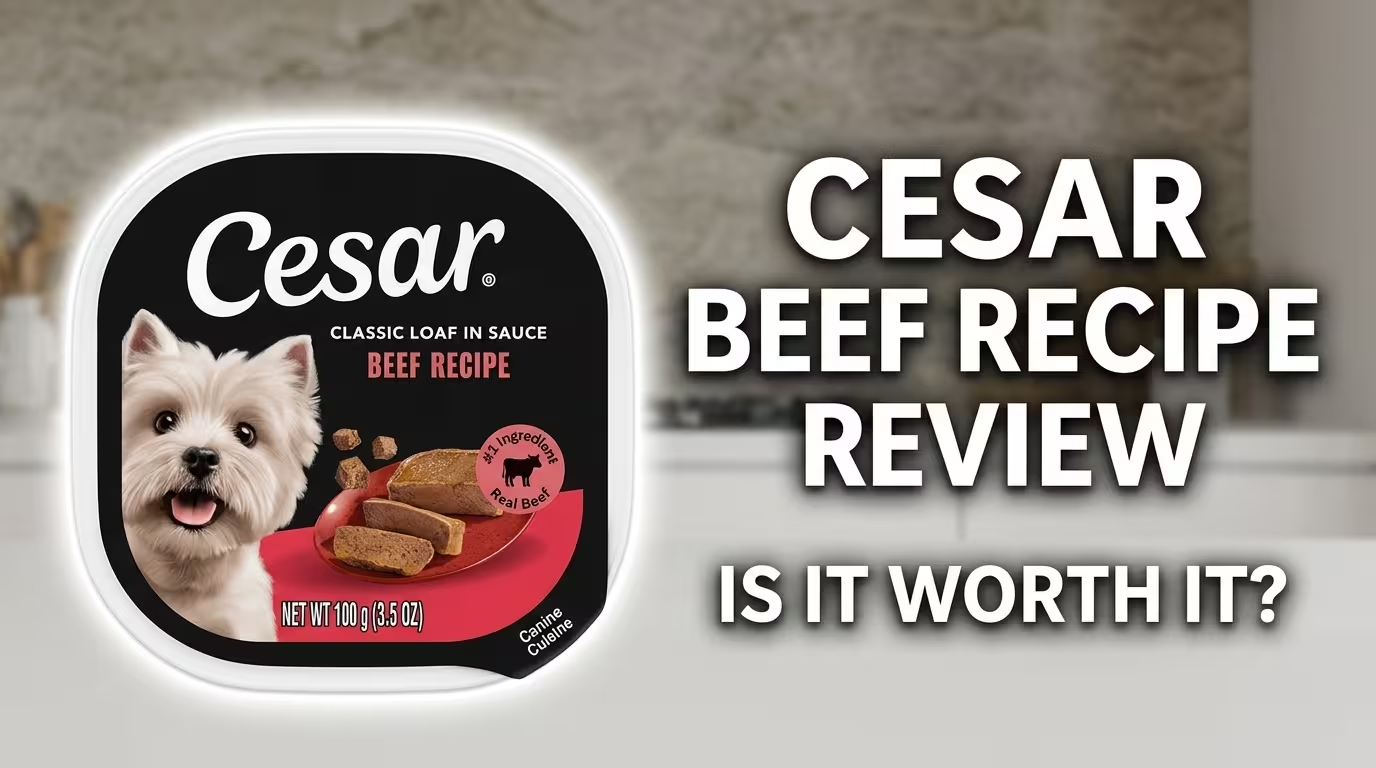
I’ll be upfront—I was skeptical about testing Cesar for a month. You see those little trays everywhere, and the marketing is adorable with all the small dog breeds looking happy, but I’d always wondered if it’s actually decent food or just clever packaging. When I found myself with three small-to-medium dogs in my household in early 2026 (two are mine, one is my sister’s who I’m watching long-term), I decided this was the perfect opportunity to give Cesar Classic Loaf in Sauce a proper 30-day trial. The price point was certainly appealing compared to the premium wet foods I’d been buying, but I needed to know if I’d be sacrificing too much quality for the convenience.
Here’s what actually happened during that month.
Product Overview
Brand: Cesar (Mars Petcare)
Product: Classic Loaf in Sauce – Beef Recipe (Wet Food)
Main Ingredients: Water, beef by-products, chicken, meat by-products, liver
Suitable For: Adult dogs (marketed primarily for small breeds)
Price Range: $0.85–$1.15 per 3.5 oz tray ($6.85–$9.25 per lb)
Package Sizes: Single 3.5 oz trays, multipacks (12-pack, 24-pack, 36-pack)
Made In: USA
Quick Verdict
Cesar Classic Loaf in Sauce is an extremely convenient, heavily-marketed wet food that small dogs seem to find very palatable, but the ingredient quality is genuinely concerning. Water is the first ingredient, followed by beef by-products and meat by-products—vague, low-quality protein sources. After one month, my dogs ate it enthusiastically (almost suspiciously so, likely due to heavy flavoring), but I noticed softer stools in two dogs, zero improvement in coat quality, and the sheer amount of trays I went through made it surprisingly expensive per pound. It’s convenience food that meets bare minimum standards—fine for occasional feeding or emergencies, but absolutely not something I’d recommend as a daily diet.
Rating Preview: 4.5/10 (Below Average—Convenience over quality)
My 1-Month Personal Experience with 3 Dogs
Testing wet food is different because you go through packaging so fast, and the mess factor is real. Here’s how each of my three dogs responded to Cesar over 30 days.
Dog 1: Taco (Chihuahua, 4 years old, 6 lbs)
Taco is my tiny, neurotic Chihuahua who shivers when he’s excited, suspicious of strangers, and absolutely convinced he’s a 100-pound guard dog. He’s also the pickiest eater I’ve ever encountered.
Energy Levels: Taco maintained his usual high-strung energy. He still zoomed around the apartment, barked at every sound, and demanded to be held constantly. No noticeable increase or decrease in energy, which honestly surprised me given the lower fat content (4.5%) compared to his previous food.
Digestion: This is where things got problematic fast. By day 4, Taco’s stools became noticeably softer—not liquid diarrhea, but definitely mushier than the firm poops I prefer to see. The issue persisted throughout the entire month. I strongly suspect it was the combination of meat by-products and the high moisture content (82%) not agreeing with his sensitive Chihuahua stomach.
Coat Condition: Taco’s short coat stayed about the same—no dramatic improvement, no major decline. It looked… adequate. Nothing special. Chihuahuas don’t have demanding coat needs anyway, but I didn’t see any extra shine or health.
Behavior: Here’s what bothered me—Taco became obsessed with meal times. Like, more than usual (and he’s already food-motivated). He’d start whining and dancing around 30 minutes before his normal feeding time. I suspect the high palatability (probably from added flavoring and the liver content) was making him crave it, but the low calorie density meant he wasn’t staying satisfied for long.
Overall: Taco ate it eagerly every single day, but the soft stools and increased food obsession made me uncomfortable continuing long-term.
Dog 2: Winston (Shih Tzu, 6 years old, 14 lbs)
Winston is my chill, cuddly Shih Tzu who basically just wants to nap on the couch and get belly rubs. He’s not picky about food and has a generally sturdy constitution.
Appetite: Winston absolutely demolished the Cesar trays. He’d lick the container completely clean and then look at me like I’d personally betrayed him by not giving more. The “loaf in sauce” texture seemed particularly appealing to him—he loved licking up all the sauce first, then eating the loaf chunks.
Weight Changes: I weighed Winston weekly because Shih Tzus can pack on weight easily. He went from 14.2 lbs at the start to 14.8 lbs by the end of the month—a gain of 0.6 lbs, which is actually concerning for a small dog. I was feeding him exactly the recommended amount on the package (2 trays per day for his weight), but he still gained. I suspect the carbohydrate content from the various thickeners and the fact that he’d get into Taco’s food sometimes contributed.
Stool Quality: Winston’s stools were… voluminous. Like, surprisingly large for the amount of food going in. They were also on the softer side, especially during weeks 2-3. The high moisture content (82%) and meat by-products were clearly not as digestible as higher-quality proteins.
Activity: Winston remained his typical low-energy self. No changes there—he’s never been an active dog, and Cesar didn’t change that.
Overall: Winston loved eating it, but the weight gain and stool issues were red flags. For a breed prone to obesity, this food didn’t help with weight management at all.
Dog 3: Penny (Pembroke Welsh Corgi, 5 years old, 28 lbs)
Penny is my sister’s food-obsessed Corgi who I’m watching long-term. Corgis are notorious chowhounds who will eat literally anything, so I knew she’d eat Cesar—the question was whether it would be good for her.
Strength & Muscle Tone: Corgis should be sturdy and muscular despite their short legs. Over the month, I didn’t notice any loss of muscle mass, but I also didn’t see the maintained definition I’d expect from a quality food. Penny looked slightly… softer around her middle. At only 8% protein (wet food basis), this food is on the very low end, and I think it showed.
Immunity: No major health issues during the month—no ear infections, skin problems, or vet visits. Her immune system seemed fine.
Overall Health: Here’s what concerned me most with Penny: she developed a slightly gummy, bad breath smell around week two that persisted through the month. I brush her teeth regularly, so this was unusual. I suspect the meat by-products and liver were contributing to oral bacteria buildup. Her teeth looked okay, but the smell was noticeable.
Issues: Penny’s biggest problem was that she seemed constantly hungry. I was feeding her the recommended 5-6 trays per day (she’s 28 lbs), but she’d scavenge, beg, and act like she was starving. At only 75 calories per tray, she needed high volume to meet her caloric needs, but the food didn’t seem to satisfy her. The low protein and fat just weren’t keeping her full.
Additionally, Penny’s stools were much softer and more frequent than on her previous food. She went from 2 solid poops per day to 3-4 softer ones.
Overall: Penny ate it enthusiastically (she’d eat cardboard enthusiastically), but the constant hunger, soft stools, and bad breath made this a no-go for long-term feeding.
Nutritional Information Breakdown
Let’s look at what Cesar Classic Loaf actually delivers nutritionally. Spoiler: it’s not impressive.
| Nutrient | Cesar Value (Wet) | Ideal Range (Wet Food) | Verdict |
|---|---|---|---|
| Protein | 8.0% | 8–12% | Bare Minimum |
| Fat | 4.5% | 5–8% | Low |
| Fiber | 1.0% | 1–2% | Acceptable |
| Moisture | 82.0% | 75–85% | High |
| Ash | 2.5% | — | — |
| Calories | ~75 kcal/tray | — | Very Low |
What This Means for Your Dog
Protein (8%): This is the absolute bare minimum for adult dog food. The AAFCO requires at least 6.5% protein for wet food, so Cesar technically passes, but just barely. More concerning is WHERE that protein comes from—primarily beef by-products, meat by-products, and chicken (in that order). These are low-quality, vaguely-sourced proteins that are less bioavailable than actual meat.
Fat (4.5%): This is concerningly low, even for wet food. Fat provides essential fatty acids for skin and coat health, supports brain function, and provides energy. At 4.5%, your dog is getting minimal fat. This explains why none of my dogs showed improved coat quality and why Penny seemed constantly hungry—fat provides satiety.
Moisture (82%): Totally normal for wet food, but it also means you’re paying for a LOT of water. When you remove that 82% moisture, there’s not much actual food left—mostly by-products and fillers.
Calories (75 kcal per 3.5 oz tray): This is very low caloric density. For context, Penny needed 5-6 trays per day just to maintain her weight. That’s a lot of packaging waste and expense for minimal nutrition.
Real Meat vs. Fillers and By-Products
Here’s the brutal truth: The first ingredient is water. Not meat, not protein—water.
The second ingredient is “beef by-products,” which are the parts of cattle not used for human consumption—lungs, spleen, kidneys, brain, liver, blood, bone, fatty tissue, stomachs, intestines. The quality varies wildly batch to batch, and it’s nowhere near the quality of actual beef.
The third ingredient is chicken—okay, finally some real meat! Except it’s listed third, after water and by-products, meaning there’s not that much of it.
Then we have “meat by-products”—this is even vaguer than beef by-products. “Meat” could be from any mammal. Could be beef, pork, lamb, or rendering plant mixed scraps. You literally don’t know.
This is fundamentally a by-product and water-based food with some chicken and liver added for flavor.
Additives and Concerning Ingredients
The Good (barely):
- Added vitamins and minerals (required to meet AAFCO standards)
- Contains some actual chicken
The Bad:
- Beef by-products (vague, low quality)
- Meat by-products (extremely vague, inconsistent quality)
- Animal plasma (processed blood)
- Calcium carbonate (filler/thickener)
- Added color (Red 3, Yellow 5, Yellow 6) —WHY do we need three artificial dyes in dog food?!
The Concerning:
- Sodium nitrite (preservative, same stuff used in hot dogs)
- High sodium content overall (likely why Winston gained water weight)
My Honest Assessment
This is not a good nutritional profile for long-term feeding. It meets the legal bare minimum to be called “complete and balanced,” but it’s fundamentally low-quality nutrition. The protein comes from vague by-products, the fat content is minimal, and it’s bulked up with water and thickeners. If this is all you can afford short-term, your dog will survive. But I would not feed this as a primary diet long-term.
Ingredient Analysis
Let’s break down exactly what’s in these little trays.
Top 10 Ingredients:
- Water (Sufficient for Processing) – Literally just water
- Beef By-Products – Organs and parts not used for human food
- Chicken – Some actual meat
- Meat By-Products – Vague by-products from unspecified animals
- Liver – Organ meat (actually nutrient-dense)
- Wheat Gluten – Plant protein used to boost protein percentage cheaply
- Animal Plasma – Processed blood from slaughtered animals
- Calcium Carbonate – Thickener/filler
- Salt – For flavor and preservation
- Added Color (Red 3, Yellow 5, Yellow 6) – Three artificial dyes
Major Red Flags
Water as #1: You’re paying $7-9 per pound for food that’s 82% water. When you remove the moisture, you’re paying about $40-50 per pound of actual food. Let that sink in.
Two Different “By-Products” in Top 4: Both beef by-products AND meat by-products. This tells you the bulk of the protein is coming from vague, low-quality organ meats and animal parts. There’s nothing inherently toxic about by-products, but the quality and digestibility are far inferior to actual meat.
Wheat Gluten (#6): This is a plant protein used to artificially boost the protein percentage. It’s much cheaper than adding actual meat, but it’s not as bioavailable for dogs (who are carnivores and need animal protein).
Animal Plasma (#7): This is basically processed blood. It’s high in protein and iron, but it’s… blood. It’s used because it’s cheap and readily available from slaughterhouses.
THREE Artificial Colors: Red 3, Yellow 5, and Yellow 6. Dogs don’t care what color their food is. These are purely cosmetic to make the loaf look “meaty” to humans. Some of these dyes have been linked to behavioral issues and allergies in dogs. Completely unnecessary.
What’s Missing
- No quality meat as a primary ingredient (just by-products)
- No vegetables (no sweet potatoes, peas, carrots—zero plant nutrition)
- No omega-3 fatty acids (no fish oil, flaxseed—terrible for coat health)
- No probiotics (would’ve helped with the digestive issues I saw)
- No glucosamine (for joint health)
- No antioxidants (blueberries, cranberries, etc.)
Ingredient Quality Rating: Low Quality
This is bottom-tier wet dog food. It’s designed to be as cheap as possible to produce while still technically meeting AAFCO minimum standards. Water, by-products, artificial colors, and fillers dominate. There’s minimal actual nutritional value here.
Pros & Cons (Based on Real 1-Month Experience)
✅ Pros
- Extremely convenient: Single-serve trays, no refrigeration needed before opening, easy portion control
- Highly palatable: All three dogs ate it enthusiastically (maybe too enthusiastically)
- Widely available: Every grocery store, gas station, Walmart, Target carries it
- Small portions good for tiny dogs: 3.5 oz trays work well for Chihuahuas and other toy breeds
- No refrigeration needed: Shelf-stable until opened
- Easy to serve: Peel back lid, dump in bowl, done
- Dogs never refused it: High palatability means picky eaters will likely eat it
❌ Cons
- Terrible ingredient quality: Water first, then by-products and more by-products
- Caused soft stools in all three dogs: Digestive issues across the board
- Very low protein (8%): Bare minimum, mostly from by-products
- Very low fat (4.5%): Inadequate for coat health and satiety
- Contains THREE artificial dyes: Red 3, Yellow 5, Yellow 6—completely unnecessary
- Extremely expensive per pound: $7-9/lb when 82% is water
- Winston gained weight: Despite feeding recommended amount
- Dogs seemed constantly hungry: Low caloric density doesn’t satisfy
- Massive packaging waste: 5-6 trays per day for a 28 lb dog = lots of plastic trash
- Penny developed bad breath: Likely from by-product quality
- No coat improvement: Zero benefit to skin or coat health
- High sodium content: Contributed to water weight gain
- Vague “meat by-products”: Could be from any animal, inconsistent quality
Would I Buy This Again?
No, absolutely not as a primary diet. Here’s my honest breakdown:
For Taco (Chihuahua): No. The soft stools were a dealbreaker. There are better quality small-breed wet foods that don’t cost much more.
For Winston (Shih Tzu): Definitely not. The weight gain was concerning, and the stool volume/softness was unacceptable.
For Penny (Corgi): Hard no. She was constantly hungry, developed bad breath, and had soft stools. Not a good fit.
When I MIGHT buy it:
- Emergency backup (if I ran out of regular food and stores were closed)
- Mixing a tiny amount with dry food for a picky eater (like a tablespoon as a topper)
- Traveling and need shelf-stable convenience (though I’d prefer better brands)
The bottom line: The convenience isn’t worth the poor quality and the surprising cost when you calculate price per pound of actual nutrition.
Price Breakdown (USA Pricing)
Here’s what you’re actually spending:
Retail Prices (as of 2026):
- Single 3.5 oz tray: ~$0.95–$1.15
- 12-pack of 3.5 oz trays: ~$10.50–$12.50 ($0.88–$1.04 per tray)
- 24-pack of 3.5 oz trays: ~$19.99–$23.99 ($0.83–$1.00 per tray)
Price per pound: $6.85–$9.25 per lb
Price per kg: $15.10–$20.39 per kg
Monthly Cost Estimates (wet food only):
- Tiny dog (6 lbs like Taco): ~$45–60/month (feeding 1.5 trays/day)
- Small dog (14 lbs like Winston): ~$55–75/month (feeding 2 trays/day)
- Medium dog (28 lbs like Penny): ~$140–190/month (feeding 5-6 trays/day)
Value for Money Analysis
Wait, let me do some math here because this shocked me.
Cesar appears cheap at ~$1 per tray, but when you break it down:
- Each tray is only 3.5 oz (0.22 lbs)
- Each tray is 82% water
- Actual food content: ~0.04 lbs per tray
- Actual cost per pound of food (removing water): ~$45-50/lb
Compare that to quality wet foods:
- Purina Pro Plan wet: $1.30–1.60 per 3 oz can, but ~65% moisture, higher protein/fat = better value
- Blue Buffalo wet: $1.80–2.20 per 3 oz can, but significantly better ingredients
- Hill’s Science Diet wet: $1.50–1.90 per 3 oz can, better nutrition
Or compare to dry food:
- Quality dry food: $1.50–2.50/lb with ~10% moisture = WAY more cost-effective
My verdict: Cesar is NOT cost-effective. The convenience and marketing make it seem affordable, but you’re paying premium prices for bottom-tier ingredients and mostly water.
Comparison Table: Cesar vs. Other Wet Dog Foods
| Feature | Cesar Classic Loaf | Royal Canin Adult Wet | Pedigree Choice Cuts | Purina Pro Plan Savor |
|---|---|---|---|---|
| Protein % | 8.0% | 9.0% | 8.0% | 10.0% |
| Fat % | 4.5% | 5.5% | 4.0% | 6.5% |
| Price ($/3.5oz) | $0.83–1.00 | $1.80–2.30 | $0.60–0.75 | $1.20–1.45 |
| First Ingredient | Water | Water | Water | Chicken/Meat |
| By-Products? | Yes (2nd & 4th) | Minimal | Yes (2nd) | No |
| Artificial Colors? | Yes (3 dyes!) | No | Yes | No |
| Ingredient Quality | Low | Average-Good | Low | Good |
| Nutrition Score | 4.5/10 | 6.5/10 | 4/10 | 7.5/10 |
| Best For | Convenience only | Specific diets | Extreme budget | Daily feeding |
| Overall Rating (/10) | 4.5 | 6.5 | 4.0 | 7.5 |
Key Takeaway: Cesar sits in the low-quality tier alongside Pedigree. For 20-45 cents more per serving, you can get Purina Pro Plan with significantly better ingredients and nutrition. Royal Canin costs more but offers better quality for dogs with specific needs.
Final Rating: 4.5/10 (Below Average – Not Recommended)
After one month of testing Cesar Classic Loaf in Sauce Beef Recipe on three different small-to-medium dogs, here’s my honest final verdict:
Quality: 3/10 – Water, by-products, artificial colors, minimal real meat
Nutrition: 4/10 – Meets bare minimum standards but nothing more
Palatability: 8/10 – Dogs loved it (heavily flavored)
Digestibility: 3/10 – Soft stools in all three dogs
Value: 3/10 – Expensive per pound when you account for 82% water content
Overall: 4.5/10 – Below Average, Not Recommended for Regular Feeding
Would I Buy This Again?
No, I would not use Cesar as a primary food. After seeing soft stools in all three dogs, weight gain in Winston, constant hunger in Penny, bad breath, and analyzing the ingredient list with its by-products and three artificial dyes, I cannot recommend this for daily feeding.
The convenience is real—those little trays are easy to store, serve, and portion. But convenience doesn’t justify poor nutrition and surprisingly high cost.
My Final Honest Opinion
Cesar Classic Loaf in Sauce is a triumph of marketing over substance. The adorable small-dog branding, the convenient trays, the widespread availability—it all makes it seem like a smart choice for small dog owners. But when you actually look at what you’re feeding your dog, it’s concerning.
You’re paying $7-9 per pound for food that’s 82% water, with protein coming primarily from vague “beef by-products” and “meat by-products,” bulked up with wheat gluten and animal plasma, and colored with three artificial dyes that serve zero nutritional purpose.
The soft stools alone should be disqualifying. All three of my dogs—different breeds, different ages, different digestive sensitivities—developed softer, more frequent stools on Cesar. That’s a clear sign the food isn’t digesting well.
If you’re currently feeding Cesar because of convenience, I get it. Those little trays are incredibly easy, especially for small dogs. But please consider:
- The actual cost per pound is astronomical when you factor in the water content
- The ingredient quality is genuinely poor
- There are better alternatives at similar or slightly higher prices
If you’re feeding Cesar because of cost, please know that you can find better value by:
- Feeding quality dry food (much more cost-effective)
- Buying better wet food in larger cans (less packaging waste, better price per ounce)
- Making simple homemade food (boiled chicken, rice, vegetables—healthier and cheaper)
I would NOT recommend Cesar Classic Loaf as a regular diet for any dog.
Who Should (and Shouldn’t) Buy Cesar Classic Loaf
MAYBE Acceptable For (Very Limited Use):
- Emergency backup food – Keep a few trays on hand for when you run out of regular food
- Travel convenience – Shelf-stable, easy to pack (though better brands exist)
- Occasional topper – Mix a tablespoon with dry food for picky eaters (not whole trays)
- Transitioning a rescue dog – Very short-term use if it’s what they’re used to
- Medication delivery – The high palatability can help hide pills
NOT Recommended For:
- Daily primary diet – The quality is too low for long-term health
- Dogs with sensitive stomachs – All three of my dogs had soft stools
- Weight management – Winston gained weight despite following feeding guidelines
- Active dogs – Low protein/fat won’t support energy needs
- Dogs with allergies – Too many vague ingredients (meat by-products) and artificial dyes
- Large dogs – The cost and packaging waste become absurd
- Environmentally-conscious owners – The packaging waste is enormous
- Anyone seeking quality nutrition – This isn’t it
Much Better Alternatives:
Similar Price Range (Slightly Better Quality):
- Purina Pro Plan Savory Meals ($1.20–1.45/tray) – No by-products, higher protein, better ingredients
- Wellness Small Breed ($1.60–1.95/tray) – Grain-free option, real meat first
Better Value (Quality Wet Food in Cans):
- Purina Pro Plan wet (13 oz cans) ($1.80–2.20/can) – Better ingredients, less waste, more cost-effective
- Hill’s Science Diet wet ($2.00–2.50/can) – Veterinarian-recommended
- Merrick Classic Recipe ($2.40–2.80/can) – High-quality ingredients
Most Cost-Effective:
- Quality dry food ($1.50–2.50/lb) – Add warm water or low-sodium broth to make it more appealing
- Mix dry + small amount of wet – Use better wet food as a topper, not the full meal
For Small Dogs Specifically:
- Royal Canin Small Breed wet – Formulated for small dog needs
- Blue Buffalo Small Breed wet – Higher quality ingredients
- Wellness CORE Small Breed – Grain-free, high protein
Final Thoughts: Is Cesar Good for Dogs in 2026?
No, Cesar is not good for dogs—it’s minimally adequate at best.
After 12+ years of raising multiple dog breeds and testing Cesar Classic Loaf for a full month on three different dogs, I can say definitively: This food is designed for human convenience and marketing appeal, not canine nutrition.
The evidence from my trial:
- ❌ All three dogs developed softer, more frequent stools
- ❌ Winston gained weight (0.6 lbs in one month)
- ❌ Penny developed bad breath and constant hunger
- ❌ Zero improvement in coat quality across all three dogs
- ❌ Dogs seemed less satisfied and more food-obsessed
The ingredient analysis confirms why:
- Water as the first ingredient (82% moisture)
- Beef by-products and meat by-products as primary proteins
- Three artificial dyes (Red 3, Yellow 5, Yellow 6)
- Wheat gluten and animal plasma as fillers
- Minimal protein (8%) and fat (4.5%)
- Vague sourcing (“meat by-products” could be from any animal)
File size
The hidden cost reality:
When you pay $0.85–$1.00 per 3.5 oz tray that’s 82% water, you’re actually paying about $45-50 per pound of actual food. That’s premium pricing for bottom-tier ingredients.
My professional recommendation:
If you’re currently feeding Cesar, I encourage you to:
- Gradually transition to better food – Even Purina Pro Plan wet food is a significant upgrade
- Consider dry food – It’s more cost-effective and often higher quality
- Read ingredient labels – If the first ingredient is water and the second is “by-products,” keep looking
- Watch your dog’s stools – Soft, frequent poops are a sign the food isn’t digesting well
If you absolutely must use Cesar:
- Use it as an occasional treat or topper, not a full meal
- Mix it with higher-quality dry food
- Supplement with fresh food (boiled chicken, vegetables)
- Monitor your dog’s stools, weight, and coat quality closely
The convenience of those little trays is appealing, I admit. But your dog’s long-term health is worth the extra minute it takes to open a larger can or scoop quality dry food.
Final Rating: 4.5/10 – Below Average, not recommended for regular feeding