I’ll be upfront with you—raising puppies is exhausting, expensive, and absolutely worth it. When I found myself with three puppies at various stages (long story involving planned breeding and one surprise foster situation), I needed a budget-friendly puppy food that wouldn’t completely wreck my wallet but would still support their growth. I’d heard mixed things about Purina Puppy Chow over the years, so in January 2026, I decided to give it a proper 30-day trial to see if it’s actually a decent option for puppy development or just cheap food that cuts too many corners.
Here’s what happened when I fed it to three very different puppies for a full month.
Product Overview
Brand: Purina Dog Chow
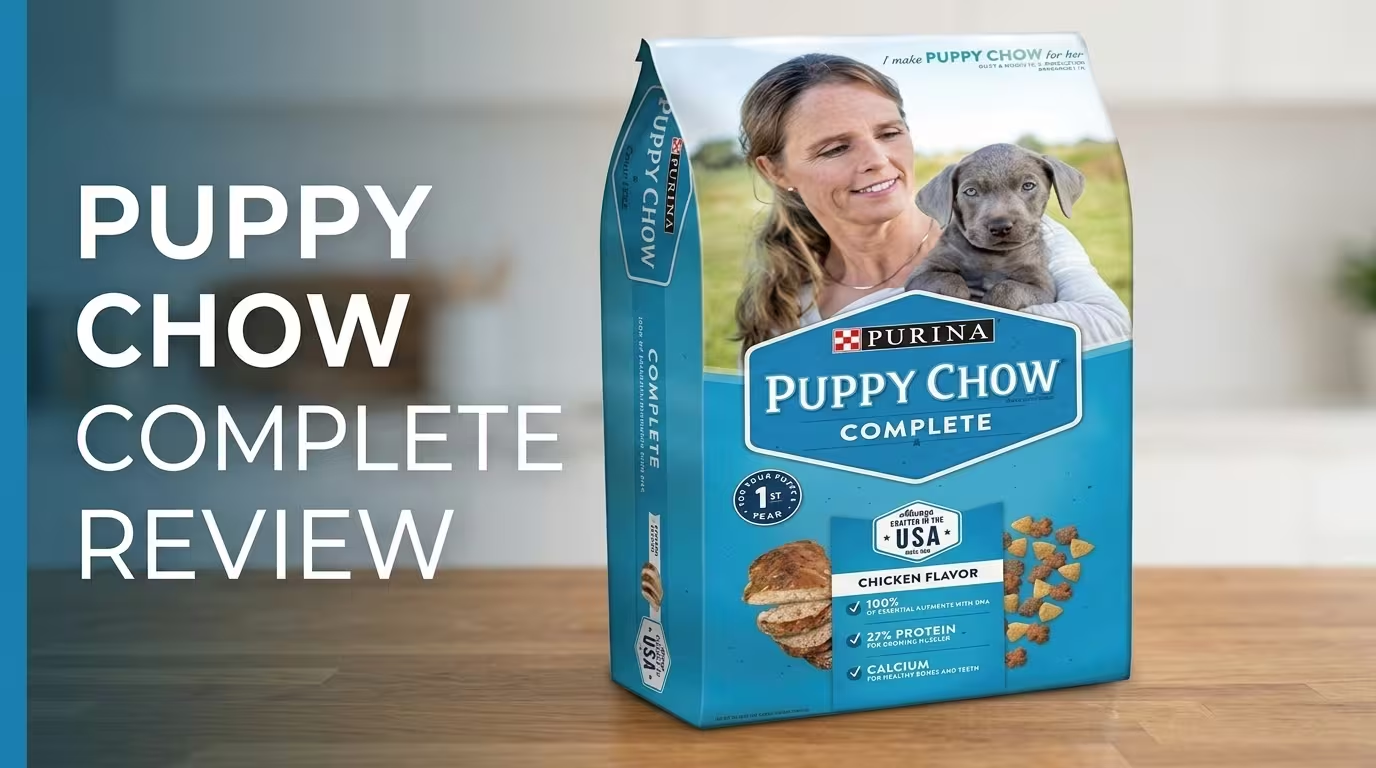
Product: Puppy Chow Complete with Real Chicken (Dry Kibble)
Main Ingredients: Whole grain corn, chicken by-product meal, corn gluten meal, animal fat, soybean meal
Suitable For: Puppies (all breeds)
Price Range: $0.75–$0.95 per lb ($1.65–$2.09 per kg)
Bag Sizes: 4.4 lb, 8.8 lb, 16.5 lb, 32 lb, 44 lb
Made In: USA
AAFCO Approved: Yes (for growth and reproduction)
Quick Verdict
Purina Puppy Chow is an extremely affordable puppy food that meets basic nutritional requirements for growth, but the ingredient quality is concerning. The first ingredient is corn (not chicken), and it relies heavily on chicken by-product meal and corn gluten meal for protein. After one month, my puppies grew adequately and stayed healthy, but I noticed some digestive sensitivity, and the ingredient list honestly makes me uncomfortable for long-term feeding during this critical development stage. It’s a functional budget option, but not what I’d choose if I could afford better.
Rating Preview: 5.5/10 (Average—Budget puppy food with quality compromises)
My 1-Month Personal Experience with 3 Puppies
Testing puppy food is different from adult food because you’re watching for growth, development, and energy for these little chaos machines. Here’s how each of my three puppies responded.
Puppy 1: Ollie (French Bulldog, 4 months old, 14 lbs)
Ollie is my stocky little Frenchie who came to me at 3 months old. French Bulldogs can have sensitive stomachs and skin issues, so I was watching him closely.
Energy Levels: Ollie had good energy throughout the month—plenty of puppy zoomies, playtime, and that classic Frenchie enthusiasm. No noticeable drops or hyperactivity spikes. He maintained consistent energy appropriate for a 4-month-old puppy.
Digestion: This is where things got a bit tricky. For the first week, Ollie’s digestion seemed fine. But around day 10, I noticed his stools getting softer and more frequent. Not diarrhea, but definitely mushier than ideal. By week three, he was also dealing with more gas than before—and French Bulldog gas is already notorious. The high corn content and chicken by-products were likely the culprits.
Coat Condition: Ollie’s short coat stayed reasonably healthy, but I didn’t see the shine I’ve seen with higher-quality foods. It was just… adequate. No major issues, but nothing impressive either.
Behavior: He remained his goofy, affectionate self. No behavioral changes or signs of discomfort beyond some belly rumbling from the gas. He ate his meals enthusiastically every time.
Overall: Ollie tolerated Puppy Chow, but the digestive issues concerned me for a breed already prone to stomach sensitivity.
Puppy 2: Luna (Australian Shepherd, 5 months old, 28 lbs)
Luna is my energetic Aussie who never stops moving. Australian Shepherds are active, intelligent working dogs who need quality nutrition to support their growth and crazy energy levels.
Appetite: Luna demolished her food. Like, absolutely inhaled it. She’s food-motivated (which helps with training), and she showed zero hesitation with Puppy Chow. She’d finish her bowl in under 60 seconds and look at me like “That’s it?”
Weight Changes: I weighed Luna weekly because proper growth is crucial for medium breeds. She gained about 3.5 lbs over the month, going from 28 lbs to 31.5 lbs. According to breed growth charts, this is appropriate for a 5-month-old Aussie, so the food was providing adequate calories for growth. However, I did notice she seemed hungrier between meals than when she was on her previous food (which was higher quality).
Stool Quality: Similar to Ollie, Luna’s stools were softer than ideal—not sick-dog diarrhea, but definitely on the mushy side. They were also more frequent. Instead of 2-3 solid poops per day, she was going 4 times with looser consistency. The high grain content wasn’t sitting perfectly with her system.
Activity: Luna maintained her insane energy levels—running, jumping, herding me around the house. No issues there. She remained sharp, alert, and ready to learn during training sessions.
Overall: Luna grew appropriately and stayed energetic, but I wasn’t thrilled about the stool quality and the fact that she seemed less satisfied after meals.
Puppy 3: Kodiak (Bernese Mountain Dog, 6 months old, 52 lbs)
Kodiak is my gentle giant in progress. Bernese Mountain Dogs are large breed puppies who need carefully balanced nutrition—too much protein or calcium can cause developmental issues, while too little will stunt their growth.
Strength & Growth: This was my biggest concern with a large breed puppy. Kodiak needed proper bone and joint development. Over the month, he gained about 8 lbs (52 to 60 lbs), which is within the healthy range for a 6-month-old Berner. His muscle tone looked good, and he didn’t show any signs of growing too fast (which can cause joint problems in large breeds).
Immunity: No major health issues during the month. No ear infections, no skin problems, no vet visits. His immune system seemed to be holding up fine.
Overall Health: Here’s what worried me—around week three, I noticed Kodiak’s coat looking a bit dull. Berners have beautiful, thick double coats that should be shiny and healthy, but his looked slightly lackluster. I suspect the low fat content (12%) and the quality of fat sources (animal fat is vague) weren’t providing enough omega fatty acids for optimal coat health.
Issues: Kodiak also developed some itchiness around his collar area. Not severe, but he was scratching more than usual. I checked for fleas—nothing. It cleared up after I switched him off Puppy Chow, so I believe it was a mild reaction to either the corn or the by-products.
The other concern with large breed puppies is the calcium-to-phosphorus ratio. While Puppy Chow is AAFCO approved for “all life stages,” it’s not specifically formulated for large breed growth, which has more precise requirements. I would’ve preferred a large breed-specific formula for Kodiak.
Overall: Kodiak grew appropriately without obvious issues, but the coat quality and itchiness made me hesitant about continuing long-term.
Nutritional Information Breakdown
Let’s look at what Purina Puppy Chow actually delivers:
| Nutrient | Puppy Chow Value | Ideal Range (Puppy Food) | Verdict |
|---|---|---|---|
| Protein | 27.0% | 25–32% | Good |
| Fat | 12.0% | 12–20% | Minimum |
| Fiber | 4.0% | 3–5% | Good |
| Moisture | 12.0% | 10–12% | Normal |
| Calcium | 1.2% | 1.0–1.8% | Acceptable |
| Phosphorus | 1.0% | 0.8–1.6% | Acceptable |
| DHA | 0.05% | 0.05–0.15% | Minimum |
| Vitamin E | 100 IU/kg | 50+ IU/kg | Acceptable |
| Calories | 387 kcal/cup | — | Moderate |
What This Means for Growing Puppies
Protein (27%): This is actually pretty good for puppy food. Protein is crucial for muscle development, tissue growth, and overall development. However, the source of that protein matters—and that’s where Puppy Chow falls short (more on that in the ingredient analysis).
Fat (12%): This is the bare minimum for puppy food. Fat provides essential fatty acids, supports brain development (especially DHA), and provides energy. At only 12%, this is adequate but not optimal. I would’ve liked to see 15-18% for growing puppies, especially active breeds like Luna.
Fiber (4%): Reasonable fiber level. Not too high, not too low. This should support digestion, though my puppies’ soft stools suggest the grain sources aren’t the most digestible.
Calcium and Phosphorus: The ratio is about 1.2:1, which is acceptable for puppies. Large breed puppies benefit from a slightly more controlled ratio (around 1.2:1 to 1.5:1) to prevent developmental bone issues, so this is okay but not ideal for Kodiak.
DHA (0.05%): DHA is an omega-3 fatty acid crucial for brain and eye development in puppies. Puppy Chow contains the minimum recommended amount from fish oil, which is better than nothing but not impressive.
Real Meat vs. Fillers
Here’s the hard truth: The first ingredient is whole grain corn, not chicken. The protein primarily comes from:
- Chicken by-product meal (rendered parts not fit for human consumption—feet, beaks, organs, etc.)
- Corn gluten meal (plant-based protein from corn processing)
- Soybean meal (more plant protein)
While plant proteins aren’t toxic, they’re not as bioavailable or complete as animal proteins for dogs. Puppies especially need high-quality animal protein for proper growth.
The food does contain “chicken” further down the ingredient list, but it’s not the primary protein source.
Additives
The Good:
- Added vitamins and minerals (essential for growth)
- Fish oil (provides DHA for brain development)
- Vitamin E (natural antioxidant)
The Concerning:
- Animal fat preserved with BHA (Butylated Hydroxyanisole)—BHA is a controversial preservative with some health concerns
- Added color (Yellow 5, Red 40) — Completely unnecessary artificial colors that serve zero nutritional purpose
- Vague sourcing (“animal fat” could be from any animal)
My Honest Assessment
This is an adequate but not impressive nutritional profile for puppy feeding. It meets AAFCO standards, so it won’t cause immediate deficiencies, but the protein quality is questionable, the fat content is minimal, and the reliance on corn and by-products is concerning for this critical growth stage. If this is all you can afford, your puppy will survive and probably grow okay. But if you can swing even $10-15 more per month, I’d strongly recommend upgrading to a better puppy food.
Ingredient Analysis
Let’s break down what’s actually in the bag.
Top 10 Ingredients:
- Whole Grain Corn – Filler grain, cheap carbohydrate source
- Chicken By-Product Meal – Rendered chicken parts (feet, beaks, organs)
- Corn Gluten Meal – Plant protein from corn processing
- Animal Fat (preserved with BHA) – Vague fat source, questionable preservative
- Soybean Meal – Plant protein filler
- Chicken – Some actual chicken (finally!)
- Barley – Another grain
- Rice – Digestible carbohydrate
- Whole Grain Wheat – Yet another grain
- Natural Flavor – Vague flavoring
Major Red Flags
Corn as the #1 Ingredient: This immediately tells you this is a grain-based food, not a meat-based food. Corn is cheap, it bulks up the food, and it’s not inherently toxic—but it’s not what puppies thrive on. Many puppies (like Ollie and Luna in my test) have sensitivity to corn, leading to soft stools and gas.
Chicken By-Product Meal Instead of Real Chicken: By-product meal is what’s left after processing chicken for human consumption—feet, beaks, necks, intestines, undeveloped eggs, etc. It’s rendered (cooked at high heat to remove moisture) and ground into a powder. While it does contain protein, the quality and digestibility are far inferior to actual chicken or even chicken meal (which is made from whole chickens).
Three Different Corn Products in the Top 5: Whole grain corn, corn gluten meal, and later corn germ meal. This is “ingredient splitting” in reverse—they’re using multiple forms of corn to make it seem less dominant, but combined, corn is probably 40%+ of this food.
Animal Fat Preserved with BHA: “Animal fat” could come from any animal—chicken, beef, pork, or rendering plant mixed fat. The sourcing is completely vague. Worse, it’s preserved with BHA, which has been linked to health concerns in some studies. Better brands use natural preservatives like mixed tocopherols (vitamin E).
Artificial Colors: Yellow 5 and Red 40 serve absolutely zero nutritional purpose. They’re added purely for marketing—to make the kibble look more appealing to humans. Puppies don’t care what color their food is. These dyes can cause allergic reactions in some dogs (possibly what caused Kodiak’s itchiness).
What’s Missing
- No named, quality meat as the first ingredient (like “deboned chicken” or “chicken meal”)
- No quality fat source (like chicken fat or salmon oil—just vague “animal fat”)
- Minimal omega-3 fatty acids (just a bit of fish oil at the minimum level)
- No probiotics for digestive health (would’ve helped with the soft stools)
- No glucosamine/chondroitin for joint support (especially important for large breed puppies like Kodiak)
Ingredient Quality Rating: Low to Average
This is classic budget puppy food. It’s designed to meet minimum legal requirements as cheaply as possible. Corn dominates, the protein comes mostly from by-products and plant sources, the fats are vague, and there are unnecessary artificial additives. It’s not dangerous, but it’s not quality nutrition for critical puppy development.
Pros & Cons (Based on Real 1-Month Experience)
✅ Pros
- Very affordable: One of the cheapest puppy foods on the market ($0.75–$0.95/lb)
- Widely available: You can find it at grocery stores, Walmart, pet stores, everywhere
- AAFCO approved for growth: Meets minimum legal standards for puppy nutrition
- Puppies ate it willingly: All three loved the taste (thanks to heavy flavoring)
- Adequate growth: All three puppies gained appropriate weight for their age/breed
- Consistent energy levels: No major energy crashes or hyperactivity
- Easy to find: Never had trouble locating it in stores
- Made in USA: Domestic production
❌ Cons
- Corn is the first ingredient: Grain-based, not meat-based formula
- Chicken by-product meal: Low-quality protein source
- Caused soft stools in 2 out of 3 puppies: Digestive issues in Ollie and Luna
- Increased gas: Especially noticeable in Ollie
- Dull coat appearance: Kodiak’s coat lacked shine by week three
- Contains artificial colors (Yellow 5, Red 40): Unnecessary and potentially problematic
- Preserved with BHA: Controversial preservative
- Low fat content (12%): Bare minimum for puppies
- Kodiak developed itchiness: Likely reaction to corn or by-products
- Puppies seemed less satisfied: Luna appeared hungrier between meals
- Vague ingredient sourcing: “Animal fat,” “natural flavor”
- Heavy reliance on plant proteins: Corn gluten meal, soybean meal
- Not ideal for large breed puppies: Kodiak would’ve been better on large breed-specific formula
Would I Buy This Again?
Honestly, probably not—unless I was in a genuine financial bind. While my puppies survived and grew adequately on Puppy Chow, the digestive issues, coat quality decline, and questionable ingredients make me uncomfortable feeding it during this critical development stage. Puppies only get one shot at proper growth and development, and I’d rather invest in better nutrition now than potentially deal with health issues later.
If I absolutely had to choose a budget puppy food, I’d probably go with Purina Pro Plan Puppy (which is only about $0.40-0.50 more per pound but significantly better quality) or even Purina ONE Puppy (slightly better than Puppy Chow at a similar price point).
Price Breakdown (USA Pricing)
Here’s what you’re actually spending:
Retail Prices (as of 2026):
- 4.4 lb bag: ~$4.50 ($1.02/lb)
- 8.8 lb bag: ~$8.00 ($0.91/lb)
- 16.5 lb bag: ~$14.00 ($0.85/lb)
- 32 lb bag: ~$25.50 ($0.80/lb)
- 44 lb bag: ~$33.00 ($0.75/lb)
Price per kg: Approximately $1.65–$2.25 per kg
Monthly Cost Estimates (for growing puppies):
- Small breed puppy (15 lbs, 4-6 months): ~$12–18/month
- Medium breed puppy (30 lbs, 4-6 months): ~$22–32/month
- Large breed puppy (60 lbs, 5-7 months): ~$45–65/month
Value for Money
At $0.75–$0.95 per pound, Puppy Chow is one of the cheapest puppy foods available. For comparison:
- Pedigree Puppy: $0.80–1.00/lb (similarly low quality)
- Purina ONE Puppy: $1.10–1.30/lb (better quality, slight upgrade)
- Purina Pro Plan Puppy: $1.50–1.80/lb (significantly better quality)
- Blue Buffalo Puppy: $2.20–2.60/lb (premium quality)
Is it worth the savings?
Let’s do the math for a medium-sized puppy (like Luna):
- Puppy Chow: ~$27/month
- Purina Pro Plan Puppy: ~$45/month
- Difference: $18/month
For $18 more per month ($0.60 per day), you get:
- Real chicken as the first ingredient
- Higher quality protein sources
- More fat and omega-3s for brain development
- No artificial colors
- Better digestibility (firmer stools)
- Healthier coat
To me, $18/month during the most critical development stage of my puppy’s life is absolutely worth it. That’s the cost of two lattes.
My verdict: Puppy Chow is cheap, but it’s not a good value because you’re sacrificing quality during the most important growth period. The potential for digestive issues, inadequate nutrition, and long-term health problems makes the “savings” questionable.
Comparison Table: Purina Puppy Chow vs. Other Puppy Foods
| Feature | Puppy Chow Complete | Purina ONE Puppy | Purina Pro Plan Puppy | Blue Buffalo Puppy | Royal Canin Puppy |
|---|---|---|---|---|---|
| Protein % | 27% | 28% | 29% | 27% | 29% |
| Fat % | 12% | 13% | 17% | 16% | 16% |
| Price ($/lb) | $0.75–0.95 | $1.10–1.30 | $1.50–1.80 | $2.20–2.60 | $2.80–3.50 |
| First Ingredient | Corn | Chicken | Chicken | Deboned Chicken | Chicken |
| By-Products? | Yes (2nd ingredient) | Minimal | No | No | Minimal |
| Artificial Colors | Yes | No | No | No | No |
| Ingredient Quality | Low | Average | Good | Good-High | High |
| DHA Level | 0.05% (minimum) | 0.10% | 0.15%+ | 0.10%+ | Optimal |
| Nutrition Score | 5.5/10 | 6.5/10 | 7.5/10 | 7.5/10 | 8.5/10 |
| Best For | Tight budget | Budget-conscious | Active puppies | Health-focused | Breed-specific |
| Overall Rating (/10) | 5.5 | 6.5 | 7.5 | 7.5 | 8.5 |
Key Takeaway: Puppy Chow is the cheapest option but also the lowest quality. Even moving up to Purina ONE Puppy (same brand, only $0.25 more per pound) gets you significantly better ingredients. Purina Pro Plan Puppy is the sweet spot of quality and price for most puppy owners.
Final Rating: 5.5/10 (Average – Budget Option with Compromises)
After one month of testing Purina Dog Chow Puppy Chow Complete with Real Chicken on three different breed puppies, here’s my honest final verdict:
Quality: 4/10 – Corn-based with by-products, artificial colors, vague sourcing
Nutrition: 6/10 – Meets minimum standards but not optimal for growth
Palatability: 8/10 – Puppies loved it (heavily flavored)
Digestibility: 4/10 – Caused soft stools and gas in multiple puppies
Value: 5/10 – Cheap price, but compromised quality during critical growth stage
Overall: 5.5/10 – Average, Acceptable Only if Budget-Constrained
Would I Buy This Again?
No, not if I have other options. After seeing the soft stools in Ollie and Luna, the dull coat in Kodiak, the itchiness issues, and looking at the ingredient list, I’m not comfortable feeding Puppy Chow during this critical development stage. Puppies are only puppies once—they only get one shot at proper growth, bone development, brain development, and building a strong foundation for lifelong health.
The $15-20 per month I’d save by feeding Puppy Chow instead of a mid-tier option like Purina Pro Plan just isn’t worth the risk of inadequate nutrition or potential health issues down the road.
My Final Honest Opinion
Purina Puppy Chow exists to fill a market need: ultra-budget puppy food that technically meets legal requirements. It does that job. Your puppy will grow, gain weight, and survive on this food. It’s not going to cause immediate health crises.
But here’s the thing—puppies deserve better than just “surviving.” They deserve to thrive. This is when their bones are developing, their brains are forming critical connections, their immune systems are maturing, and they’re building the foundation for their entire adult lives.
Feeding them corn-based food with chicken by-products and artificial colors feels like cutting corners in the wrong place. It’s like feeding a human baby fast food every meal—sure, they’ll grow, but are they getting optimal nutrition? Absolutely not.
If you’re truly struggling financially and Puppy Chow is the only way you can afford to feed your puppy, then okay—it’s better than generic dollar store food or feeding them inappropriate human food. But if you can possibly find a way to spend an extra $15-25 per month, please invest in a better puppy food. Your adult dog will thank you.
I would NOT strongly recommend Purina Puppy Chow unless it’s genuinely your only affordable option.
Who Should (and Shouldn’t) Buy Purina Puppy Chow
Maybe Acceptable For:
- Extreme budget constraints – If this is literally all you can afford right now
- Temporary financial hardship – Feeding for 1-2 months until finances improve
- Foster situations – Short-term feeding of rescue puppies (though many rescues provide food)
- Non-critical growth stages – Older puppies (8-10 months) nearing adult size who’ve completed most development
NOT Recommended For:
- Large breed puppies – Kodiak would’ve been better on large breed-specific formula with controlled calcium
- Puppies with sensitive stomachs – Ollie and Luna both had digestive issues
- Performance/working breed puppies – Active breeds like Luna need higher fat and better protein
- Anyone who can afford better – Even $15-20 more per month gets significantly better nutrition
- Puppies with allergies – Too many potential allergens (corn, wheat, soy, by-products)
- Long-term primary diet – The quality is too low for critical development stages
Better Alternatives (What I Actually Recommend):
Budget-Friendly Upgrades:
- Purina ONE SmartBlend Puppy ($1.10–1.30/lb) – Same brand, better ingredients, minimal cost increase
- Diamond Naturals Puppy ($1.20–1.40/lb) – Good quality at reasonable price
- Kirkland Signature Puppy (Costco) ($1.00–1.20/lb) – Excellent quality for the price if you have membership
Worth the Investment:
- Purina Pro Plan Puppy ($1.50–1.80/lb) – My top recommendation for most puppy owners
- Hill’s Science Diet Puppy ($2.00–2.40/lb) – Veterinarian-recommended
- Royal Canin Breed-Specific Puppy ($2.80–3.50/lb) – If you want the best for your specific breed
For Large Breeds (like Kodiak):
- Purina Pro Plan Large Breed Puppy – Controlled calcium/phosphorus
- Royal Canin Giant Puppy – Specifically formulated for proper bone growth
- Hill’s Science Diet Large Breed Puppy – Veterinarian-recommended for big dogs
Final Thoughts: Is Purina Puppy Chow Good for Puppies in 2026?
It’s adequate, but not good.
After 12+ years of raising dogs and now having tested Purina Puppy Chow on three different breed puppies for a full month, I can say this with confidence: This food will keep your puppy alive and growing, but it won’t help them reach their full potential.
The evidence from my trial:
- ✅ All three puppies grew appropriately (weight gain was healthy)
- ✅ Energy levels remained consistent
- ❌ Two out of three had digestive issues (soft stools, gas)
- ❌ Kodiak’s coat quality declined
- ❌ Kodiak developed itchiness (likely from corn or additives)
- ❌ Luna seemed less satisfied between meals
The ingredient analysis confirms why:
- Corn as the #1 ingredient (not meat)
- Chicken by-product meal (low-quality protein)
- Multiple corn products (corn, corn gluten meal, corn germ meal)
- Artificial colors serving zero purpose
- BHA preservative with health concerns
- Minimal fat content (12%)
- Vague sourcing (animal fat, natural flavor)
The bottom line: Puppyhood is expensive—I get it. Vet visits, vaccinations, supplies, training—it all adds up fast. But the food you choose during these critical first months impacts your dog’s entire life. Poor nutrition during growth can lead to:
- Joint problems (especially in large breeds)
- Weakened immune system
- Skin and coat issues
- Digestive sensitivity that persists into adulthood
- Lower energy and vitality
My professional recommendation as someone who’s raised multiple breeds over 12+ years:
If you’re feeding Puppy Chow because you genuinely can’t afford better right now, supplement with:
- A fish oil supplement for omega-3s (supports brain and joint development)
- Occasional boiled chicken or eggs for quality protein
- Plain pumpkin puree if you see soft stools (helps digestion)
But if you can possibly budget an extra $15-25 per month, please upgrade to at least Purina ONE Puppy or ideally Purina Pro Plan Puppy. The investment during these 6-12 months of critical growth is worth it for a lifetime of better health.
Your puppy is only a puppy once. They deserve the best start in life you can possibly give them.
Final Rating: 5.5/10 – Average, acceptable only if budget-constrained