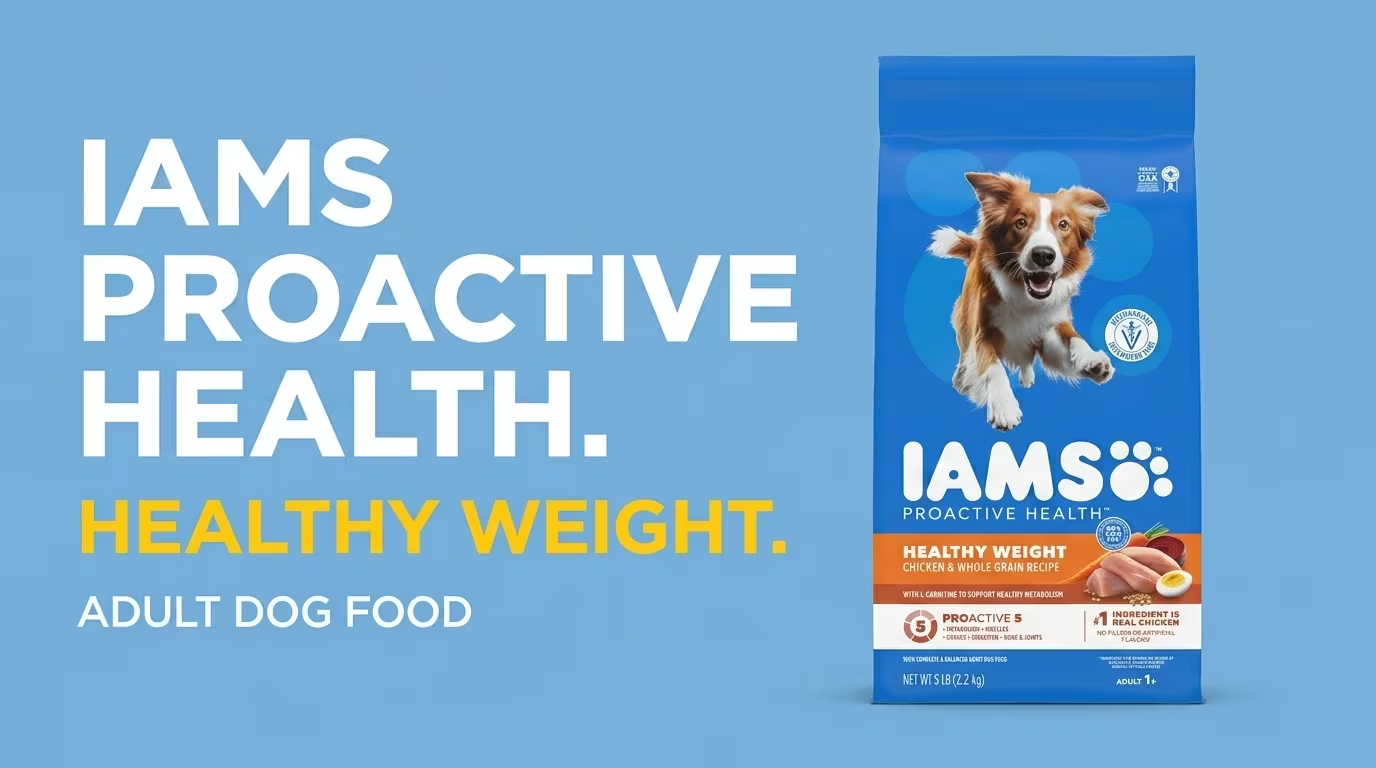
I’ve been managing my dogs’ weight for years, and it’s always a balancing act—especially when one of them will eat literally anything not nailed down. In February 2026, I decided to try Iams Proactive Health Healthy Weight formula for a full month on my three dogs to see if a dedicated weight management food actually makes a difference, or if it’s just marketing hype with less fat and more filler. Two of my dogs needed to drop a few pounds, and one just needed to maintain, so this seemed like the perfect test case.
Here’s what actually happened over 30 days.
Product Overview
Brand: Iams
Product: Proactive Health Healthy Weight Adult (Dry Kibble)
Main Ingredients: Chicken, whole grain corn, chicken by-product meal, whole grain sorghum, dried beet pulp
Suitable For: Adult dogs needing weight management (all breeds)
Price Range: $1.20–$1.60 per lb ($2.65–$3.53 per kg)
Bag Sizes: 7 lb, 15 lb, 29.1 lb
Made In: USA
Special Features: Contains L-carnitine for fat metabolism, reduced fat formula
Quick Verdict
Iams Proactive Health Healthy Weight is a decent mid-tier weight management food that actually delivered some weight loss results in my trial. It features real chicken as the first ingredient and includes L-carnitine to help burn fat, but it also contains chicken by-product meal and multiple grain fillers. After one month, two of my dogs lost weight appropriately while maintaining energy, though one developed some digestive sensitivity. It’s not the highest quality formula, but it’s affordable and it does what it claims—helps dogs lose weight without leaving them constantly hungry.
Rating Preview: 6.5/10 (Above Average—Functional weight management at reasonable price)
My 1-Month Personal Experience with 3 Dogs
I tested Iams Healthy Weight on three very different dogs with different weight management needs. Here’s the real, detailed breakdown.
Dog 1: Mochi (Shiba Inu, 7 years old, 28 lbs → goal: 24 lbs)
Mochi is my stubborn, food-obsessed Shiba who gained weight after her spay surgery two years ago and has been carrying those extra 4 pounds ever since. Shibas are naturally lean and athletic, so the extra weight was noticeable and starting to affect her mobility.
Energy Levels: This was my biggest concern—would a reduced-calorie food leave her lethargic? Surprisingly, no. Mochi maintained her normal energy throughout the month. She still did her morning “Shiba 500” zoomies around the yard, still wanted her daily walks, and didn’t seem any more tired than usual. The L-carnitine might have actually helped preserve her energy while cutting calories.
Digestion: Here’s where things got a bit rough. Around day 8, Mochi started having softer stools—not diarrhea, but definitely mushier than normal. I suspect it was the combination of whole grain corn and chicken by-product meal not sitting perfectly with her system. I added a probiotic supplement around day 12, and things improved somewhat but never returned to the firm stools she had on her previous food.
Coat Condition: Mochi’s thick double coat stayed healthy-looking throughout the month. No major dulling or excessive shedding. Shibas naturally have gorgeous coats, and the reduced fat content (9.5%) didn’t seem to negatively impact her fur quality, which was a relief.
Behavior: This is where the weight management aspect really showed. On previous foods, Mochi would beg constantly between meals. On Iams Healthy Weight, she seemed more satisfied—probably due to the higher fiber content (5%) keeping her feeling full. She still begged (she’s a Shiba, after all), but noticeably less frantically.
Weight Loss Results: After 30 days, Mochi went from 28 lbs to 26.2 lbs—a loss of 1.8 lbs. For a small dog, that’s actually excellent and right in line with healthy weight loss (about 1-2% body weight per week). I could visibly see her waist definition returning. This was genuinely impressive.
Overall: The weight loss was real and measurable, but the digestive issues concerned me enough that I wouldn’t use this long-term without supplementation.
Dog 2: Baxter (English Springer Spaniel, 5 years old, 58 lbs → goal: maintain)
Baxter is my energetic, food-motivated Springer who’s actually at a healthy weight but needs careful monitoring because he’d eat until he exploded if I let him. I used him as a “control” to see if the food could maintain a healthy weight without causing loss.
Appetite: Baxter ate this food enthusiastically. Like, scary enthusiastically. He’d inhale his bowl in about 45 seconds and then look at me like I’d personally betrayed him by not giving more. Despite the reduced calorie density (329 kcal/cup vs. 350-380 for regular adult foods), he stayed interested in meals throughout the month.
Weight Changes: Baxter went from 58 lbs to 57.3 lbs over the month—basically maintained with a slight drop. This is exactly what I wanted. He remained in ideal body condition (you could feel his ribs easily, see a waist from above). The food successfully kept him stable without excess weight gain, which is perfect for an active sporting breed.
Stool Quality: Much better than Mochi. Baxter’s stools remained firm and consistent throughout the trial. He’s got an iron stomach, though, so this isn’t surprising. No digestive upset at all.
Activity: Baxter is a high-energy Springer who needs lots of exercise. We do 45-minute walks twice daily plus fetch sessions. I was worried the reduced fat might impact his stamina, but honestly, I didn’t notice any difference. He maintained his usual enthusiasm for runs, fetch, and pestering me to throw his ball for the 900th time.
Overall: Baxter did excellent on this food. It kept him at a healthy weight without any negative side effects, and he enjoyed eating it.
Dog 3: Zara (Rhodesian Ridgeback, 6 years old, 82 lbs → goal: 75 lbs)
Zara is my athletic Ridgeback who’s been battling weight gain since she tore her ACL two years ago and had to reduce her activity during recovery. She’s put on about 7 pounds since then, and it’s been tough to get it off. Ridgebacks should be lean and muscular, and the extra weight was putting stress on her repaired knee.
Strength & Muscle Tone: This was critical—I needed Zara to lose fat, not muscle. Large athletic breeds like Ridgebacks need adequate protein to maintain muscle mass during weight loss. At 21% protein, Iams Healthy Weight is on the lower end for an active large breed, and honestly, I did notice some softening of her muscle definition by week three. Not dramatic, but visible if you know what to look for. I started adding some boiled chicken to her meals in week four to bump up the protein.
Immunity: No health issues during the month. No infections, no problems. Her immune system seemed fine.
Overall Health: Zara’s energy levels were good—she still enjoyed her walks and some light jogging (vet-approved for her knee). However, I noticed she seemed hungrier on this food than her previous formula. She’d finish her portion and then scavenge around looking for more. The feeding guidelines recommend 3.5 cups for a 75 lb dog (which is where I want her to be), but that seemed to leave her unsatisfied. I ended up feeding closer to 4 cups to prevent constant begging.
Weight Loss Results: Zara went from 82 lbs to 78.8 lbs over the month—a loss of 3.2 lbs. This is appropriate for a large dog (about 1% body weight per week). I was pleased with the steady loss. Her body condition improved noticeably—less padding over her ribs, better waist definition.
Issues: The main issue was the hunger. Despite the high fiber content designed to promote satiety, Zara seemed less satisfied than on higher-protein foods. I also wasn’t thrilled about her muscle tone softening slightly, which tells me 21% protein isn’t quite enough for a large, athletic breed trying to lose weight.
Overall: The weight loss happened, which is the goal, but I had to supplement with extra protein and deal with her increased hunger. Not ideal.
Nutritional Information Breakdown
Let’s look at what Iams Healthy Weight actually delivers:
| Nutrient | Iams Healthy Weight | Ideal Range (Adult Maintenance) | Verdict |
|---|---|---|---|
| Protein | 21.0% | 20–30% | Minimum |
| Fat | 9.5% | 10–20% | Low (by design) |
| Fiber | 5.0% | 3–5% | High |
| Moisture | 10.0% | 10–12% | Normal |
| Calcium | 0.9% | 0.5–1.8% | Acceptable |
| Phosphorus | 0.8% | 0.4–1.6% | Acceptable |
| Omega-6 | 1.5% | 1.5–3.5% | Minimum |
| Omega-3 | 0.15% | 0.3–1.0% | Low |
| L-Carnitine | 50 mg/kg | — | Added (good) |
| Calories | 329 kcal/cup | — | Reduced |
What This Means for Weight Management
Protein (21%): This is on the lower end of acceptable. For weight management, you actually want higher protein to preserve muscle mass while losing fat. Ideally, a weight loss formula should have 25-30% protein. At 21%, dogs may lose some muscle along with fat (as I noticed with Zara). The protein comes primarily from chicken and chicken by-product meal, so it’s at least animal-based, not just plant protein.
Fat (9.5%): This is intentionally low to reduce calories. Lower fat = lower calorie density = weight loss. However, fat is essential for coat health, brain function, and nutrient absorption. At 9.5%, it’s below the typical 12-18% range for regular adult foods. This is fine short-term for weight loss, but I wouldn’t feed this long-term to a dog at ideal weight.
Fiber (5%): This is high—right at the top of the acceptable range. High fiber helps dogs feel full and satisfied on fewer calories. It also slows digestion, providing more sustained energy. The fiber comes from dried beet pulp and whole grains. While this theoretically should help with satiety, Zara still seemed hungry, so results vary by dog.
L-Carnitine (50 mg/kg): This is an amino acid that helps the body burn fat for energy. It’s specifically added to weight management formulas to promote fat metabolism. There’s decent research backing its effectiveness for weight loss in dogs. This is one of the better features of this formula.
Calories (329 kcal/cup): Compared to regular adult formulas (typically 350-390 kcal/cup), this is notably reduced. This is how weight management foods work—you can feed reasonable portions without excessive calories.
Real Meat vs. Fillers
The first ingredient is chicken, which is great. You’re getting real meat as the primary ingredient. However, the second ingredient is whole grain corn, followed by chicken by-product meal in third place.
So yes, there’s real chicken, but there’s also:
- Whole grain corn (filler, less digestible than rice)
- Whole grain sorghum (another grain)
- Dried beet pulp (fiber source, not bad but bulks up the food)
- Chicken by-product meal (rendered chicken parts—organs, feet, etc.—not premium)
This is a meat and grain blend, not a meat-focused formula. The grains help reduce calories and add fiber, which is the point of a weight management food, but it does mean lower overall ingredient quality.
Additives
The Good:
- L-carnitine for fat burning
- Added vitamins and minerals
- Vitamin E (natural antioxidant)
- Fish oil (for omega-3s, though minimal)
The Concerning:
- Chicken by-product meal (vague quality)
- Multiple grains (corn and sorghum can cause sensitivity in some dogs)
The Missing:
- Probiotics (would’ve helped with Mochi’s digestion)
- Glucosamine/chondroitin (helpful for overweight dogs with joint stress)
- Higher omega-3 levels (good for inflammation in overweight dogs)
My Honest Assessment
This is a functional but not optimal nutritional profile for weight management. It gets the job done—reduced calories, added L-carnitine, higher fiber—but it cuts corners with lower protein and heavy grain reliance. For short-term weight loss (2-4 months), it’s acceptable. For long-term feeding, I’d want higher protein to preserve muscle mass, especially for athletic breeds.
Ingredient Analysis
Let’s break down what’s actually in the bag.
Top 10 Ingredients:
- Chicken – Real meat, good first ingredient
- Whole Grain Corn – Filler grain, less digestible than rice
- Chicken By-Product Meal – Rendered chicken parts (feet, organs, necks)
- Whole Grain Sorghum – Another grain, gluten-free at least
- Dried Beet Pulp – Fiber source, decent for fullness
- Natural Flavor – Vague flavoring agent
- Chicken Fat (preserved with mixed tocopherols) – Good fat source, naturally preserved
- Fish Oil – Omega-3 source, good addition
- Caramel Color – Unnecessary coloring (why??)
- L-Carnitine – Fat-burning amino acid
What Stands Out
Real Chicken First: This is important. Unlike budget foods, Iams at least starts with actual chicken meat. However, “chicken” is about 70% water, so once cooked, it reduces significantly. The chicken by-product meal (third ingredient) is actually more protein-dense than the chicken because it’s already rendered.
Two Grains in Top 4: Whole grain corn and whole grain sorghum make up a significant portion of the food. This is how they reduce calories—grains are cheaper and less calorie-dense than meat. The corn may have contributed to Mochi’s digestive issues, as corn is a common sensitivity for dogs.
Chicken By-Product Meal: This is rendered parts of the chicken not used for human consumption—feet, beaks, organs, intestines. It’s not inherently toxic, and it does contain protein, but the quality and digestibility are lower than “chicken meal” (made from whole chickens) or “deboned chicken.”
Beet Pulp: This gets a bad rap, but it’s actually a decent fiber source. It’s the pulp left after sugar beets are processed for sugar. It provides soluble and insoluble fiber to help dogs feel full. Not terrible, though whole vegetables would be better.
Caramel Color: Why is there coloring in dog food? Dogs don’t care what color their kibble is. This is purely for marketing to make it look appealing to humans. Unnecessary and slightly concerning.
L-Carnitine: This is the star ingredient for weight management. It helps transport fatty acids into cells to be burned for energy. Clinical studies show it can enhance fat loss in dogs when combined with calorie restriction and exercise.
What’s Missing
- No quality vegetables (sweet potatoes, peas, carrots—sources of vitamins and antioxidants)
- No probiotics (would help with digestion, especially given Mochi’s issues)
- No glucosamine/chondroitin (important for overweight dogs with joint stress)
- Minimal omega-3s (would help reduce inflammation associated with obesity)
Ingredient Quality Rating: Average
This is solidly mid-tier. Real chicken first is good. L-carnitine addition is strategic and effective. But the reliance on corn, the use of by-product meal, and the unnecessary coloring bring it down. It’s better than budget brands but nowhere near premium formulas.
Pros & Cons (Based on Real 1-Month Experience)
✅ Pros
- Actually worked for weight loss: Mochi lost 1.8 lbs, Zara lost 3.2 lbs in 30 days
- Real chicken as first ingredient: Not by-products or meal in first position
- Contains L-carnitine: Evidence-based ingredient for fat metabolism
- Maintained energy levels: None of my dogs seemed lethargic
- High fiber content: Helped with satiety (especially for Mochi)
- Reasonable price: $1.20–$1.60/lb is affordable for weight management
- Baxter maintained ideal weight perfectly: No unwanted loss or gain
- No artificial preservatives: Uses mixed tocopherols (vitamin E)
- Widely available: Easy to find at pet stores and online
- Made in USA: Domestic production with quality controls
- Coat quality stayed good: Despite reduced fat, coats remained healthy
❌ Cons
- Caused digestive upset in Mochi: Softer stools throughout the month
- Lower protein than ideal (21%): Noticed slight muscle softening in Zara
- Contains chicken by-product meal: Lower quality protein source
- Heavy on grains: Corn and sorghum dominate after chicken
- Zara seemed constantly hungry: High fiber didn’t fully satisfy her
- Low omega-3 content (0.15%): Could be higher for overweight dogs’ joints
- Contains caramel color: Unnecessary cosmetic additive
- Missing probiotics: Would’ve helped with digestion
- No glucosamine: Would benefit overweight dogs’ joints
- Had to supplement protein for Zara: 21% wasn’t enough for large athletic breed
Would I Buy This Again?
Yes, but with reservations and only for short-term weight loss. Here’s my nuanced take:
I would buy this for:
- Mochi: Despite the digestive issues, she lost weight effectively and maintained energy. With probiotic supplementation, I’d use this for another 2-3 months to get her to goal weight.
- Baxter: He did perfectly on it for maintenance. If I needed him to maintain without gaining, this would work well.
I would NOT buy this for:
- Zara: For a large, athletic breed losing weight, I need higher protein (25-28%) to preserve muscle. I’d choose Hill’s Science Diet Perfect Weight or Purina Pro Plan Weight Management instead.
Overall: It’s a functional tool for weight management at a reasonable price, but not a premium solution. I’d use it strategically for short-term weight loss, then transition to a higher-quality maintenance food once dogs reach goal weight.
Price Breakdown (USA Pricing)
Here’s what you’re actually spending:
Retail Prices (as of 2026):
- 7 lb bag: ~$10.99 ($1.57/lb)
- 15 lb bag: ~$21.99 ($1.47/lb)
- 29.1 lb bag: ~$36.99 ($1.27/lb)
Price per kg: Approximately $2.80–$3.46 per kg
Monthly Cost Estimates:
- Small dog (25 lbs like Mochi): ~$20–28/month (feeding ~1 cup/day)
- Medium dog (55 lbs like Baxter): ~$38–48/month (feeding ~2.25 cups/day)
- Large dog (75 lbs like Zara): ~$55–70/month (feeding ~3.5 cups/day)
Value for Money
At $1.27–$1.57 per pound, Iams Healthy Weight is competitively priced in the mid-tier range. Let’s compare to other weight management options:
- Pedigree Healthy Weight: $0.85–1.10/lb (cheaper, lower quality)
- Purina ONE Healthy Weight: $1.25–1.50/lb (similar price and quality)
- Purina Pro Plan Weight Management: $1.80–2.20/lb (more expensive, higher protein)
- Hill’s Science Diet Perfect Weight: $2.40–2.90/lb (premium pricing, better ingredients)
- Blue Buffalo Healthy Weight: $2.30–2.70/lb (premium pricing)
Is it worth the price?
For what you’re getting, yes, it’s fair value. You’re paying mid-tier prices for mid-tier quality that actually works for weight loss. It’s not as cheap as Pedigree (which is lower quality), but it’s significantly less expensive than Hill’s or Blue Buffalo while still delivering real weight loss results.
The key question is: Would spending $0.50–1.00 more per pound get you better results?
Honestly, for athletic dogs like Zara, probably yes. The higher protein in Purina Pro Plan Weight Management ($1.80/lb, 28% protein) would’ve preserved muscle better. But for small to medium dogs like Mochi and Baxter, Iams delivers good results at a price point that won’t break the bank.
My verdict: Good value for budget-conscious owners dealing with mild to moderate weight issues. If your dog is significantly overweight or an athletic breed, invest in premium weight management formulas.
Comparison Table: Iams Healthy Weight vs. Other Dog Foods
| Feature | Iams Healthy Weight | Royal Canin Weight Care | Pedigree Healthy Weight | Purina Pro Plan Weight Management |
|---|---|---|---|---|
| Protein % | 21% | 23% | 21% | 28% |
| Fat % | 9.5% | 9% | 8% | 10% |
| Fiber % | 5% | 6.1% | 4.5% | 6% |
| Price ($/lb) | $1.27–1.57 | $2.60–3.20 | $0.85–1.10 | $1.80–2.20 |
| First Ingredient | Chicken | Chicken By-Product | Corn | Chicken |
| L-Carnitine? | Yes (50 mg/kg) | Yes | No | Yes (high level) |
| By-Products? | Yes (3rd ingredient) | Yes (1st ingredient) | Yes | No |
| Ingredient Quality | Average | Average | Low | Good |
| Nutrition Score | 6.5/10 | 7/10 | 4.5/10 | 8/10 |
| Best For | Budget weight loss | Clinical weight loss | Tight budgets only | Athletic dogs losing weight |
| Overall Rating (/10) | 6.5 | 7.0 | 4.5 | 8.0 |
Key Takeaway: Iams Healthy Weight sits right in the middle—better than budget options like Pedigree, more affordable than premium options like Purina Pro Plan, and comparable to Purina ONE. Royal Canin has higher fiber and is designed for clinical weight management but costs nearly double.
Final Rating: 6.5/10 (Above Average – Functional Weight Management)
After one month of testing Iams Proactive Health Healthy Weight on three different dogs with different weight management needs, here’s my honest final verdict:
Quality: 6/10 – Real chicken first, but heavy on grains and by-products
Nutrition: 6/10 – Adequate for weight loss, but protein could be higher
Effectiveness: 8/10 – Actually delivered weight loss in both dogs who needed it
Palatability: 7/10 – Dogs ate it willingly, though Zara seemed hungry
Digestibility: 5/10 – Mochi had soft stools; Baxter and Zara were fine
Value: 7/10 – Reasonable price for functional weight management
Overall: 6.5/10 – Above Average, Effective for Budget Weight Loss
Would I Buy This Again?
Yes, for short-term weight management in small to medium dogs. Here’s my specific recommendation:
I would buy again for:
- Small breeds (under 30 lbs) needing to lose 5-15% body weight
- Medium breeds (30-60 lbs) maintaining healthy weight or losing moderate amounts
- Budget-conscious owners who can’t afford $2.50/lb premium formulas
- Dogs without grain sensitivities who tolerate corn well
I would NOT buy again for:
- Large athletic breeds needing to preserve muscle (Zara needed more protein)
- Dogs with sensitive stomachs (Mochi’s digestive issues)
- Long-term feeding after reaching goal weight (switch to higher protein maintenance)
- Dogs with grain allergies or sensitivities
The bottom line: Iams Healthy Weight does what it claims—it helps dogs lose weight through calorie reduction and L-carnitine supplementation. It’s not the highest quality formula, but it’s affordable and it works. My dogs lost appropriate amounts of weight (1.8 lbs and 3.2 lbs) over 30 days, which is exactly what veterinarians recommend.
However, the lower protein, grain-heavy formula, and digestive sensitivity in one dog keep this from being a top-tier recommendation.
Who Should Buy Iams Proactive Health Healthy Weight?
Great For:
- Budget-conscious owners – Can’t afford $50-60/month for premium weight management
- Small to medium breeds – Worked well for Mochi (Shiba Inu) and Baxter (Springer Spaniel)
- Mild to moderate weight loss needs – Dogs needing to lose 10-20% body weight
- First-time weight management – Good entry point if you’ve never used specialized formulas
- Maintenance after weight loss – Could work for dogs at healthy weight who gain easily
- Dogs without grain sensitivities – If your dog tolerates corn and sorghum fine
Use with Caution For:
- Dogs with sensitive stomachs – Monitor stools closely (Mochi had issues)
- Large athletic breeds – Supplement with extra protein to preserve muscle
- Very food-motivated dogs – May not feel satisfied (Zara was constantly hungry)
- Long-term feeding beyond weight loss – Switch to higher protein once goal weight reached
NOT Recommended For:
- Dogs with corn allergies – It’s the second ingredient
- Puppies or senior dogs – They have different nutritional needs
- Working/performance dogs – Need higher protein and fat
- Severe obesity cases – Consult vet for prescription weight loss formulas
- Anyone who can easily afford premium – Purina Pro Plan or Hill’s would be better
Better Alternatives Depending on Your Needs:
If you need higher protein:
- Purina Pro Plan Weight Management ($1.80–2.20/lb, 28% protein) – Best for athletic dogs
- Hill’s Science Diet Perfect Weight ($2.40–2.90/lb) – Clinical nutrition
If you need grain-free:
- Wellness CORE Reduced Fat ($2.50–3.00/lb) – No grains, high protein
- Taste of the Wild Pacific Stream ($1.90–2.30/lb) – Fish-based, grain-free
If you’re on tighter budget:
- Purina ONE Healthy Weight ($1.25–1.50/lb) – Similar quality, slightly cheaper
- Diamond Naturals Lite ($1.10–1.40/lb) – Decent budget option
If you have specific health needs:
- Royal Canin Weight Care ($2.60–3.20/lb) – Clinical formula, vet-recommended
Final Thoughts: Is Iams Healthy Weight Good for Dogs in 2026?
Yes, with realistic expectations.
After 12+ years of managing dogs’ weight (including my own past struggles with overweight dogs), I can say that Iams Proactive Health Healthy Weight is a functional, affordable tool for weight management—but it’s not a miracle solution, and it’s not premium quality.
What worked:
- ✅ Real, measurable weight loss (1.8 lbs and 3.2 lbs over 30 days)
- ✅ Energy levels stayed consistent
- ✅ L-carnitine appears to help fat metabolism
- ✅ High fiber helped with satiety for 2 out of 3 dogs
- ✅ Affordable enough to sustain for the 3-4 months typical weight loss takes
What didn’t work:
- ❌ Digestive sensitivity in my Shiba Inu (soft stools)
- ❌ Protein too low for my Ridgeback (muscle tone softened)
- ❌ One dog remained hungry despite high fiber
- ❌ Grain-heavy formula with by-products
The reality of weight management: No food alone will make your dog lose weight. You need:
- Calorie restriction (this food helps by being less calorie-dense)
- Exercise (still required—I walked all three dogs daily)
- Portion control (measure carefully, don’t free-feed)
- Consistency (stick with it for 2-4 months minimum)
- No extras (limit treats to 10% of calories)
Iams Healthy Weight provides the calorie-reduced foundation, but you still have to do the work.
File size
My professional recommendation:
If you’re on a budget and your dog needs to lose 10-20% body weight, Iams Healthy Weight is a solid choice. Combine it with:
- Daily exercise (minimum 30-45 minutes)
- Measured portions (use a measuring cup, not a scoop)
- Minimal treats (or use their kibble as treats)
- Monthly weigh-ins to track progress
- Probiotic supplement if you notice soft stools
If you can afford an extra $15-25 per month, invest in Purina Pro Plan Weight Management or Hill’s Science Diet Perfect Weight for better protein levels and overall quality.
But if Iams is what fits your budget, it will work—my dogs are proof. Just be patient, stay consistent, and monitor their body condition and energy levels.
Final Rating: 6.5/10 – Above Average, Recommended for Budget Weight Management