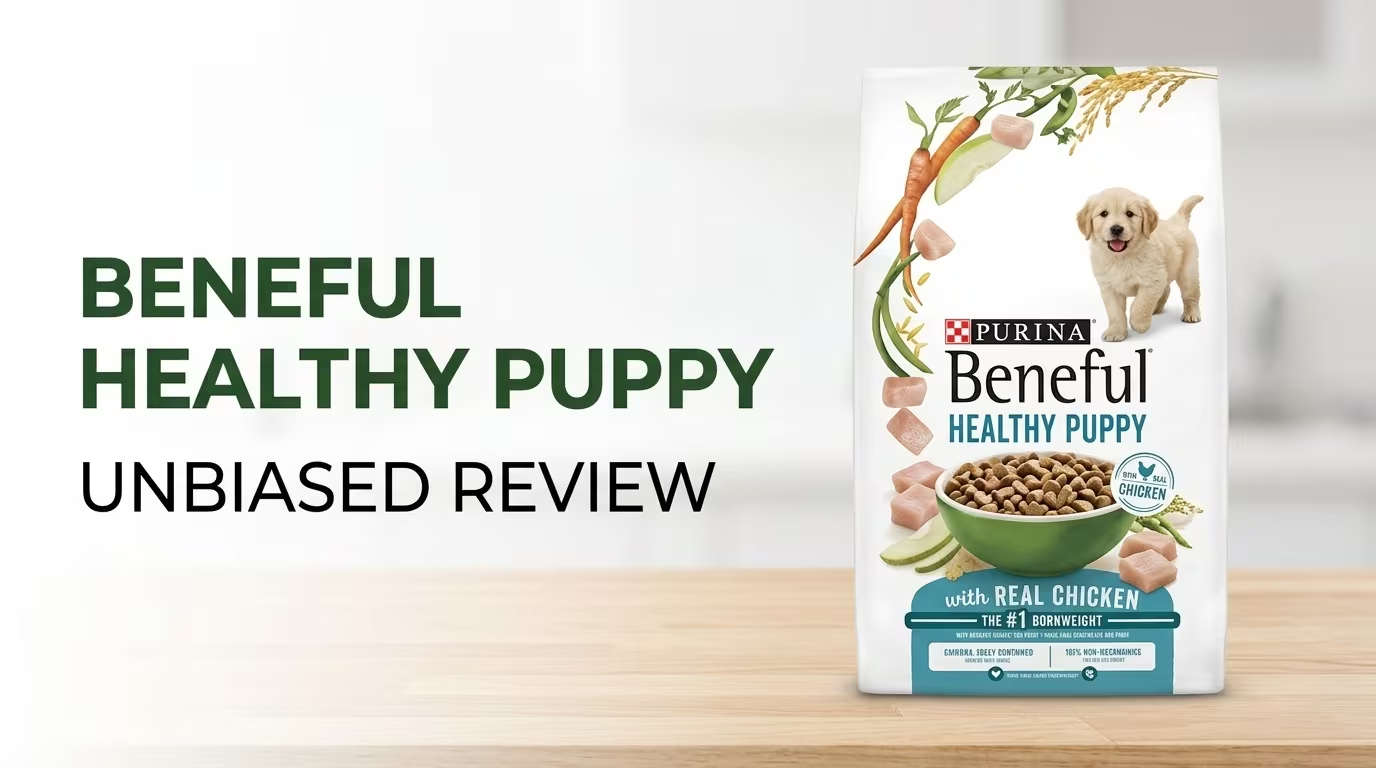
Raising puppies is equal parts joy and chaos, and when I ended up with three puppies from different litters in early 2026 (two planned, one foster-turned-permanent), I needed to find an affordable puppy food that could handle feeding all three without completely draining my bank account. I’d seen Beneful Healthy Puppy at pretty much every store, and the price was definitely appealing compared to the premium brands I’d been eyeing. So I decided to give it a proper 30-day test to see if this budget-friendly option could actually support healthy puppy growth, or if I’d be sacrificing too much quality for the savings.
Here’s what really happened during that month.
Product Overview
Brand: Beneful (Purina/Nestlé)
Product: Healthy Puppy with Real Chicken (Dry Kibble)
Main Ingredients: Chicken, whole grain corn, chicken by-product meal, whole wheat flour, beef fat
Suitable For: Puppies up to 1 year (all breeds)
Price Range: $0.90–$1.20 per lb ($1.98–$2.65 per kg)
Bag Sizes: 3.5 lb, 15.5 lb, 31.1 lb
Made In: USA
AAFCO Approved: Yes (for growth and reproduction)
Quick Verdict
Beneful Healthy Puppy is an affordable, widely-available puppy food that meets basic nutritional requirements but cuts corners on ingredient quality. It features chicken as the first ingredient, but immediately follows with corn, wheat, and chicken by-product meal. After one month, my puppies grew appropriately and maintained good energy, but I noticed some digestive sensitivity, itchy skin in one pup, and the ingredient list honestly concerns me for long-term feeding during this critical growth stage. It’s functional if you’re on a tight budget, but it’s not what I’d choose if I could afford even $10-15 more per month.
Rating Preview: 5/10 (Average—Budget puppy food with significant quality compromises)
My 1-Month Personal Experience with 3 Puppies
Testing puppy food feels different than testing adult food because you’re watching these little goofballs grow and develop so rapidly. Every choice matters more. Here’s how each of my three very different puppies responded to Beneful.
Puppy 1: Pepper (Miniature Schnauzer, 4 months old, 8 lbs)
Pepper is my feisty, mouthy little Schnauzer who thinks she’s a guard dog in a tiny package. Mini Schnauzers can be prone to pancreatitis and skin issues, so I was watching her closely.
Energy Levels: Pepper had plenty of energy on Beneful—maybe too much. She was bouncing off the walls, which is normal for a 4-month-old puppy, but I noticed she seemed almost jittery after meals for the first couple of weeks. Not hyperactive exactly, just… wired. I suspect the grain-heavy formula was causing some blood sugar spikes. By week three, her energy evened out a bit, though I’m not sure if that was her adjusting or just puppy development.
Digestion: This is where things got problematic. Pepper had soft, mushy stools for the first two weeks. Not diarrhea, but definitely not the firm poops you want to see in a healthy puppy. Around day 15, things firmed up somewhat, but she continued having more frequent bowel movements (3-4 times per day instead of the usual 2-3). The high grain content—corn AND wheat in the top 5 ingredients—was clearly not sitting perfectly with her system.
Coat Condition: Here’s what really concerned me. Pepper’s wiry Schnauzer coat should be coarse and healthy-looking, but by week two, I noticed her scratching more than usual. By week three, she had some dry, flaky skin under her beard and on her back. I checked for fleas—nothing. The scratching persisted through the entire month. I strongly suspect it was either the wheat (a common allergen) or the artificial colors in Beneful.
Behavior: Beyond the scratching, Pepper remained her spunky, stubborn self. She ate her meals enthusiastically, though she’d sometimes leave a few pieces in her bowl—unusual for a food-motivated Schnauzer.
Overall: Pepper survived the month, but the soft stools and skin itchiness made me seriously question whether this food is appropriate for her breed’s sensitivities.
Puppy 2: Rusty (Vizsla, 5 months old, 32 lbs)
Rusty is my velcro Vizsla pup who literally follows me from room to room and has endless energy. Vizslas are athletic, lean hunting dogs who need quality nutrition to support their rapid growth and high activity levels.
Appetite: Rusty inhaled this food. Like, absolutely demolished his bowl in 30 seconds flat. He’s always been food-motivated, but he seemed particularly enthusiastic about Beneful. I suspect the beef fat and “natural flavors” make it very palatable. However, he’d start begging for food again within a couple hours of eating, which made me think the food wasn’t keeping him satisfied for very long.
Weight Changes: I weighed Rusty weekly because proper growth is crucial for medium-sized athletic breeds. He gained about 5.5 lbs over the month (32 to 37.5 lbs), which is appropriate for a 5-month-old Vizsla according to growth charts. So the food was providing adequate calories for growth. However, I noticed he looked slightly less lean than before—a bit more padding over his ribs. Vizslas should be naturally lean and muscular, so this concerned me slightly.
Stool Quality: Better than Pepper’s, but still not ideal. Rusty’s stools were on the softer side for the first week, then normalized to mostly firm but occasionally mushy. Volume was high—probably because of all the corn and wheat fillers that aren’t fully digested.
Activity: This is where I saw the biggest issue. Rusty is normally a high-energy rocket who can run for hours. During weeks two and three, I noticed he’d crash harder after exercise and sometimes seemed less enthusiastic about our afternoon training sessions. Not sick or lethargic, just… less vibrant than usual. At 27% protein and 13% fat, Beneful is on the lower end for an active sporting breed puppy. I think he needed more protein and fat to sustain his energy levels.
Overall: Rusty grew appropriately and ate willingly, but I wasn’t seeing the lean muscle development and sustained energy I’d expect from a quality puppy food for an active breed.
Puppy 3: Moose (Saint Bernard, 6 months old, 68 lbs)
Moose is my gentle giant who’s already the size of some adult dogs and still has another year of growing to do. Saint Bernards and other giant breed puppies have very specific nutritional needs—they need controlled growth to prevent developmental bone and joint problems.
Strength & Growth: This is my biggest concern with feeding Beneful to a giant breed puppy. Over the month, Moose gained about 12 lbs (68 to 80 lbs), which is within the range for a 6-month-old Saint Bernard, but on the higher end. Giant breed puppies need to grow slowly and steadily, not too fast. The calcium-to-phosphorus ratio in Beneful (1.0% calcium, 0.8% phosphorus) is acceptable, but it’s not specifically formulated for large breed puppies, which need more controlled ratios to prevent skeletal issues.
Immunity: No major health problems during the month—no ear infections, no digestive crises. His immune system seemed to be holding up okay.
Overall Health: Moose’s thick coat stayed reasonably healthy-looking, though not as shiny as it had been on his previous food (which was a large breed-specific formula). I didn’t notice major issues, but I also didn’t see the robust health I’d expect. He just seemed… average.
Issues: The main issue is what I couldn’t see—the impact on his developing bones and joints. While Beneful is AAFCO-approved for “all life stages,” which technically includes large breed puppies, it’s not optimized for them. Large breed puppies need precise calcium, phosphorus, and calorie control to prevent too-rapid growth that can cause hip dysplasia, elbow dysplasia, and other orthopedic issues. Beneful doesn’t have the specific formulation I’d want for a 150+ lb adult dog.
By week three, I also noticed Moose seemed slightly stiff getting up from his bed in the mornings. Not limping, just a bit slower to rise. This could’ve been coincidence, but it worried me enough that I added a glucosamine supplement and decided I’d be switching him back to a large breed-specific formula after the trial.
Overall: Moose survived the month without obvious problems, but I would NOT feel comfortable continuing to feed a generic puppy food to a giant breed puppy during this critical growth stage.
Nutritional Information Breakdown
Let’s look at what Beneful Healthy Puppy actually delivers:
| Nutrient | Beneful Puppy Value | Ideal Range (Puppy Food) | Verdict |
|---|---|---|---|
| Protein | 27.0% | 25–32% | Acceptable |
| Fat | 13.0% | 12–20% | Low-Average |
| Fiber | 3.0% | 3–5% | Acceptable |
| Moisture | 12.0% | 10–12% | Normal |
| Calcium | 1.0% | 1.0–1.8% | Minimum |
| Phosphorus | 0.8% | 0.8–1.6% | Minimum |
| DHA | 0.05% | 0.05–0.15% | Bare Minimum |
| Vitamin E | 125 IU/kg | 50+ IU/kg | Acceptable |
| Calories | 372 kcal/cup | — | Moderate |
What This Means for Growing Puppies
Protein (27%): This is technically within the acceptable range for puppies, but it’s on the lower end. More importantly, WHERE the protein comes from matters enormously. Beneful’s protein comes from:
- Chicken (good, but it’s mostly water)
- Chicken by-product meal (rendered chicken parts—feet, organs, beaks)
- Corn gluten meal (plant protein, not ideal for dogs)
So yes, there’s 27% protein on paper, but the quality and bioavailability are questionable. Rusty’s less-lean appearance and lower energy suggest this protein profile wasn’t optimal for an athletic breed.
Fat (13%): This is on the lower end for puppies, especially active ones. Fat is crucial for brain development (puppies’ brains are still forming), energy, coat health, and nutrient absorption. At 13%, you’re getting adequate but not optimal fat levels. I would’ve preferred 15-18% for growing puppies. The primary fat source is “beef fat,” which is fine, but I’d prefer named sources like “chicken fat” or omega-rich sources like salmon oil.
Fiber (3%): Reasonable. Not too high, not too low. Should support digestion, though Pepper’s soft stools suggest the grain sources aren’t the most digestible.
DHA (0.05%): DHA is an omega-3 fatty acid absolutely critical for puppy brain and eye development. Beneful contains the bare minimum from fish oil. Premium puppy foods contain 0.10-0.15% DHA. This is one area where Beneful clearly cuts corners.
Calcium and Phosphorus: The ratio is about 1.25:1, which is acceptable for puppies. However, for large/giant breed puppies like Moose, you want more precise control—typically around 1.2:1 and not exceeding certain maximum levels to prevent developmental bone disease. Beneful’s “one size fits all” approach is risky for giant breeds.
Real Meat vs. Fillers
The first ingredient is chicken—that’s good, right? Well, sort of. “Chicken” is about 70% water. Once it’s cooked and the moisture is removed, it shrinks dramatically. So while chicken is listed first by pre-cooking weight, after processing, the corn and wheat probably make up more of the actual kibble.
Then we have:
- Whole grain corn (filler, cheap, less digestible than rice)
- Chicken by-product meal (rendered leftovers)
- Whole wheat flour (another grain filler, common allergen)
- Corn gluten meal (plant protein used to boost protein % cheaply)
This is fundamentally a grain-based food with chicken added, not a chicken-based food.
Additives and Concerning Ingredients
The Good:
- Added vitamins and minerals (necessary)
- Fish oil (provides bare minimum DHA)
- Vitamin E (natural antioxidant)
The Concerning:
- Added colors (Yellow 5, Red 40, Yellow 6, Blue 2) – FOUR artificial dyes! Puppies don’t care what color their kibble is. These are purely cosmetic for marketing and can cause allergic reactions (possibly what caused Pepper’s itching).
- Chicken by-product meal – Vague, inconsistent quality
- Natural flavors – Undefined flavoring agents
- High grain content – Corn AND wheat in top 5 ingredients
My Honest Assessment
This is a minimally adequate nutritional profile that meets legal requirements but doesn’t excel in any area. It provides enough calories and nutrients to keep puppies growing, but the quality of those nutrients is questionable. The low DHA, moderate protein quality, artificial colors, and grain-heavy formula make me uncomfortable feeding this during the critical first year of development.
If this is all you can afford, your puppy will survive. But survival ≠ thriving.
Ingredient Analysis
Let’s break down what’s actually in the bag.
Top 10 Ingredients:
- Chicken – Real meat (good, but mostly water)
- Whole Grain Corn – Cheap grain filler
- Chicken By-Product Meal – Rendered chicken parts (feet, organs, beaks, intestines)
- Whole Wheat Flour – Grain filler, common allergen
- Beef Fat (preserved with mixed tocopherols) – Fat source
- Corn Gluten Meal – Plant protein from corn processing
- Rice – Finally, a decent grain!
- Natural Flavors – Vague flavoring
- Fish Oil – Omega-3 source (good!)
- Added Color (Yellow 5, Red 40, Yellow 6, Blue 2) – Artificial dyes
Major Red Flags
THREE Corn Products in the Top 10: Whole grain corn (#2), corn gluten meal (#6), and later you’ll find more corn derivatives. This is “ingredient splitting”—using multiple forms of the same ingredient so it doesn’t appear as dominant. Combined, corn likely makes up 30-40% of this food.
Chicken By-Product Meal as #3: This is rendered parts of chickens not used for human consumption—feet, necks, intestines, undeveloped eggs, etc. It’s cooked at high temperatures to remove moisture and fat, then ground into powder. While it does contain protein, the quality and digestibility are far inferior to “chicken meal” (made from whole chickens) or actual chicken meat.
Whole Wheat Flour (#4): Another grain, and wheat is one of the more common dog food allergens. I strongly suspect this contributed to Pepper’s skin itching.
FOUR Artificial Colors: Yellow 5, Red 40, Yellow 6, and Blue 2. Let me be absolutely clear: These serve ZERO nutritional purpose. They’re added purely so the kibble looks colorful and appealing to humans when they open the bag. Puppies literally do not care. These dyes have been linked to hyperactivity and allergic reactions in some dogs. There’s no good reason for them to be in puppy food.
What’s Missing
- No quality vegetables (sweet potatoes, peas, carrots—sources of natural vitamins)
- No probiotics (would help with digestion, especially given Pepper and Rusty’s soft stools)
- No glucosamine/chondroitin (important for joint development, especially in large breeds)
- Minimal omega-3s (just a touch of fish oil for minimum DHA)
- No superfoods (blueberries, cranberries, kelp—seen in premium formulas)
Ingredient Quality Rating: Low to Average
This is textbook budget dog food trying to look better than it is. Real chicken gets top billing for marketing, but the bulk of the food is corn and wheat with some chicken by-products. It’s designed to meet minimum legal standards as cheaply as possible, not to provide optimal nutrition for critical puppy development.
Pros & Cons (Based on Real 1-Month Experience)
✅ Pros
- Very affordable: One of the cheapest puppy foods at $0.90–$1.20/lb
- Widely available: Every grocery store, pet store, and Walmart carries it
- Puppies ate it willingly: High palatability (thanks to beef fat and flavoring)
- AAFCO approved: Meets minimum legal standards for puppy growth
- Appropriate weight gain: All three puppies grew at healthy rates
- Maintained energy: Despite concerns, puppies stayed active
- Made in USA: Domestic production
- Easy transition: No extreme digestive upset during initial switch
❌ Cons
- Caused soft stools in 2 out of 3 puppies: Digestive issues in Pepper and Rusty
- Pepper developed itchy, flaky skin: Likely from wheat or artificial colors
- Contains FOUR artificial dyes: Yellow 5, Red 40, Yellow 6, Blue 2—completely unnecessary
- Heavy on grains: Corn AND wheat dominate after chicken
- Chicken by-product meal: Low-quality protein source
- Lower fat than ideal (13%): Not optimal for active puppies or brain development
- Bare minimum DHA (0.05%): Critical for puppy brain development
- Rusty seemed less vibrant: Lower energy during weeks 2-3
- Not ideal for giant breeds: Moose showed some morning stiffness
- High stool volume: Due to grain fillers that aren’t fully digested
- Multiple grain fillers: Corn, wheat, corn gluten meal, rice
- Puppies seemed hungry between meals: Lack of satiety, probably from lower protein/fat
Would I Buy This Again?
No, I would not—unless I was in genuine financial crisis. Here’s my honest breakdown:
For Pepper (Mini Schnauzer): Absolutely not. The skin issues and soft stools were red flags. Schnauzers are prone to skin problems and pancreatitis; they need better quality food.
For Rusty (Vizsla): No. An athletic, high-energy sporting breed needs higher protein (28-32%) and fat (15-18%) to support their development and activity level. The decreased energy I noticed was concerning.
For Moose (Saint Bernard): Definitely not. Giant breed puppies need specialized nutrition, and Beneful’s generic formula is risky for proper skeletal development.
The bottom line: My puppies survived the month and grew appropriately, but I saw enough concerning signs—digestive issues, skin problems, lower energy, and questionable ingredient quality—that I can’t recommend this as a primary puppy food.
Price Breakdown (USA Pricing)
Here’s what you’re actually spending:
Retail Prices (as of 2026):
- 3.5 lb bag: ~$4.25 ($1.21/lb)
- 15.5 lb bag: ~$16.99 ($1.10/lb)
- 31.1 lb bag: ~$28.99 ($0.93/lb)
Price per kg: Approximately $2.05–$2.67 per kg
Monthly Cost Estimates:
- Small breed puppy (10 lbs, 4-5 months): ~$10–15/month
- Medium breed puppy (35 lbs, 5-6 months): ~$28–38/month
- Large breed puppy (70 lbs, 6-7 months): ~$55–75/month
Value for Money
At $0.93–$1.21 per pound, Beneful Puppy is very affordable—cheaper than most puppy-specific formulas. For comparison:
- Pedigree Puppy: $0.85–1.05/lb (similarly low quality)
- Purina ONE Puppy: $1.30–1.55/lb (better quality, slight price increase)
- Purina Pro Plan Puppy: $1.70–2.10/lb (significantly better quality)
- Blue Buffalo Puppy: $2.40–2.90/lb (premium quality)
- Royal Canin Puppy: $2.80–3.40/lb (premium, often vet-recommended)
Is the savings worth it?
Let’s do the math for a medium puppy like Rusty:
- Beneful Puppy: ~$33/month
- Purina Pro Plan Puppy: ~$52/month
- Difference: $19/month ($0.63/day)
For $19 more per month, I’d get:
- Higher protein (29% vs. 27%)
- Higher fat (17% vs. 13%)
- DOUBLE the DHA (0.10% vs. 0.05%)
- NO artificial colors
- NO chicken by-products
- Real meat as majority protein source
- Better digestibility
To me, $19/month during the most critical developmental stage of my puppy’s life is absolutely worth it. That’s less than one pizza delivery. That’s three lattes. That’s nothing compared to potential vet bills from poor nutrition affecting development.
My verdict: Beneful Puppy is cheap, but it’s not a good value because you’re compromising quality during a stage where nutrition impacts your dog’s entire life.
Comparison Table: Beneful Puppy vs. Other Puppy Foods
| Feature | Beneful Healthy Puppy | Purina ONE Puppy | Purina Pro Plan Puppy | Blue Buffalo Puppy | Royal Canin Puppy |
|---|---|---|---|---|---|
| Protein % | 27% | 28% | 29% | 27% | 30% |
| Fat % | 13% | 13% | 17% | 15% | 16% |
| DHA | 0.05% | 0.08% | 0.10%+ | 0.09% | Optimal |
| Price ($/lb) | $0.93–1.21 | $1.30–1.55 | $1.70–2.10 | $2.40–2.90 | $2.80–3.40 |
| First Ingredient | Chicken | Chicken | Chicken | Deboned Chicken | Chicken |
| By-Products? | Yes (#3 ingredient) | Yes (lower) | No | No | Minimal |
| Artificial Colors? | Yes (4 dyes!) | No | No | No | No |
| Ingredient Quality | Low-Average | Average | Good | Good-Premium | Premium |
| Nutrition Score | 5/10 | 6.5/10 | 8/10 | 7.5/10 | 9/10 |
| Best For | Tight budgets only | Budget-conscious | Active puppies | Health-focused | Optimal growth |
| Overall Rating (/10) | 5.0 | 6.5 | 8.0 | 7.5 | 9.0 |
Key Takeaway: Beneful is the cheapest option but also the lowest quality. Even moving up to Purina ONE (same parent company, only $0.30 more per pound) eliminates artificial colors and improves ingredient quality. Purina Pro Plan is the sweet spot for quality and price.
Final Rating: 5.0/10 (Average – Budget Food with Too Many Compromises)
After one month of testing Beneful Healthy Puppy with Real Chicken on three different breed puppies, here’s my honest final verdict:
Quality: 4/10 – Grain-heavy with by-products and four artificial dyes
Nutrition: 5/10 – Meets minimum standards but not optimal for critical growth
Palatability: 8/10 – Puppies loved it (heavily flavored)
Digestibility: 4/10 – Soft stools in 2/3 puppies, skin issues in one
Value: 4/10 – Cheap price, but poor quality during critical development stage
Overall: 5.0/10 – Average, NOT Recommended Unless Absolutely Necessary
Would I Buy This Again?
No, absolutely not—unless I literally could not afford anything else. After seeing Pepper’s skin issues, the soft stools in multiple puppies, Rusty’s decreased energy, and looking at that ingredient list with FOUR artificial colors and by-products as the third ingredient, I cannot in good conscience recommend feeding this to puppies during their critical first year.
Puppies only get one chance at proper development. The nutrition they receive during months 2-12 impacts their bone development, brain development, immune system, muscle formation, and overall foundation for life. Cutting corners to save $15-25 per month feels like penny-wise and pound-foolish.
My Final Honest Opinion
Beneful Healthy Puppy exists to fill a market gap: ultra-budget puppy food that technically meets legal requirements. It does that job. Your puppy will grow, gain weight, and survive on this food.
But here’s the reality I learned over 12+ years of raising dogs: You get what you pay for, especially with puppy food.
The artificial colors alone make me angry. They serve NO purpose except marketing. The fact that Beneful includes FOUR different dyes tells me they’re prioritizing aesthetics over nutrition. Add in the chicken by-products, the corn-heavy formula, the bare minimum DHA for brain development, and the digestive/skin issues I witnessed, and I just can’t recommend this.
If you’re truly struggling financially and Beneful is the only way you can afford to feed your puppy, then okay—it’s better than feeding inappropriate human food or starvation. But please:
- Add a fish oil supplement for omega-3s
- Consider adding boiled chicken or eggs for quality protein
- Watch closely for skin issues or allergies
- Plan to switch to better food as soon as financially possible
If you can possibly find a way to spend an extra $15-30 per month, please upgrade to at least Purina ONE Puppy or ideally Purina Pro Plan Puppy. The investment during these 6-12 months of critical growth is worth it for a lifetime of better health.
I would NOT recommend Beneful Healthy Puppy except as an absolute last resort.
Who Should (and Shouldn’t) Buy Beneful Healthy Puppy
Maybe Acceptable For (Short-Term Only):
- Extreme budget constraints – If this is genuinely all you can afford right now
- Temporary financial hardship – Using for 1-2 months until finances improve
- Foster situations – Very short-term feeding of rescue puppies
- Mixed with better food – Using as a small portion mixed with higher quality food to stretch budget
NOT Recommended For:
- Giant breed puppies – They need specialized formulas (Moose needs better)
- Puppies with sensitive stomachs – Pepper and Rusty both had issues
- Active/sporting breed puppies – They need higher protein/fat (Rusty needed more)
- Puppies with skin allergies – Too many potential allergens
- Anyone who can afford $20 more per month – The upgrade is worth it
- Long-term primary diet – The quality is too low for critical development
- Health-conscious owners – The artificial colors alone should be disqualifying
Much Better Alternatives:
Budget-Friendly Upgrades:
- Purina ONE SmartBlend Puppy ($1.30–1.55/lb) – Same brand, no artificial colors, better ingredients
- Diamond Naturals Puppy ($1.35–1.65/lb) – Good quality, reasonable price
- Kirkland Signature Puppy (Costco) ($1.10–1.35/lb) – Excellent quality for the price if you have membership
Worth the Investment:
- Purina Pro Plan Puppy ($1.70–2.10/lb) – My top recommendation for most puppy owners
- Hill’s Science Diet Puppy ($2.20–2.70/lb) – Veterinarian-recommended
- Taste of the Wild Puppy ($1.90–2.40/lb) – Grain-free option, high protein
For Large/Giant Breeds (like Moose):
- Purina Pro Plan Large Breed Puppy – Controlled calcium/phosphorus for proper bone growth
- Royal Canin Giant Puppy – Specifically formulated for 100+ lb adult breeds
- Hill’s Science Diet Large Breed Puppy – Veterinarian-recommended for big dogs
Final Thoughts: Is Beneful Puppy Good for Dogs in 2026?
No, it’s not good—it’s merely adequate.
After 12+ years of raising multiple breeds and now testing Beneful Healthy Puppy on three very different puppies for a full month, I can say definitively: This food will keep your puppy alive and growing, but it will not help them reach their full health potential.
The evidence from my trial:
- ✅ All three puppies grew at appropriate rates (weight gain was healthy)
- ✅ They ate it willingly (highly palatable)
- ❌ 2 out of 3 had digestive issues (soft stools)
- ❌ Pepper developed skin problems (itching, flaking)
- ❌ Rusty had decreased energy and less lean muscle development
- ❌ Moose showed morning stiffness (concerning for a giant breed)
The ingredient analysis confirms why:
- Grain-heavy formula (corn #2, wheat #4, corn gluten meal #6)
- Chicken by-product meal as #3 ingredient
- FOUR artificial colors (Yellow 5, Red 40, Yellow 6, Blue 2)
- Bare minimum DHA for brain development (0.05%)
- Lower fat than ideal for active puppies (13%)
The reality check:
Puppyhood is expensive—trust me, I know. Three puppies means three sets of vet visits, three sets of vaccinations, three crates, three of everything. The costs add up fast, and I completely understand the temptation to save money on food.
But here’s what I’ve learned the hard way over the years: Poor nutrition during the critical first year will cost you MORE in the long run.
Inadequate nutrition during growth can lead to:
- Skeletal issues (especially in large breeds)
- Compromised immune system
- Chronic digestive problems
- Skin and coat issues
- Lower energy and vitality throughout life
Those problems mean more vet visits, more medications, more expensive interventions down the road. The $15-25 per month you “save” by buying Beneful instead of a quality puppy food will likely cost you hundreds or thousands in vet bills over your dog’s lifetime.
My professional recommendation:
If you’re currently feeding Beneful because of budget constraints:
- Supplement strategically:
- Add fish oil for omega-3s (brain development)
- Mix in boiled chicken or eggs for quality protein
- Consider a probiotic if you see soft stools
- Add glucosamine if you have a large breed puppy
- Plan to upgrade:
- Set a goal to switch to better food within 2-3 months
- Even moving to Purina ONE would be an improvement
- Look for sales on Purina Pro Plan or Hill’s Science Diet
- Watch your puppy closely:
- Monitor stools for changes
- Check skin regularly for itching or flaking
- Track energy levels and muscle development
- Don’t hesitate to switch if you see problems
If you can possibly afford it, skip Beneful and invest in Purina Pro Plan Puppy, Hill’s Science Diet Puppy, or Royal Canin Puppy. Your dog will only be a puppy once. Give them the best start in life you possibly can.
Final Rating: 5/10 – Average, not recommended except as last resort